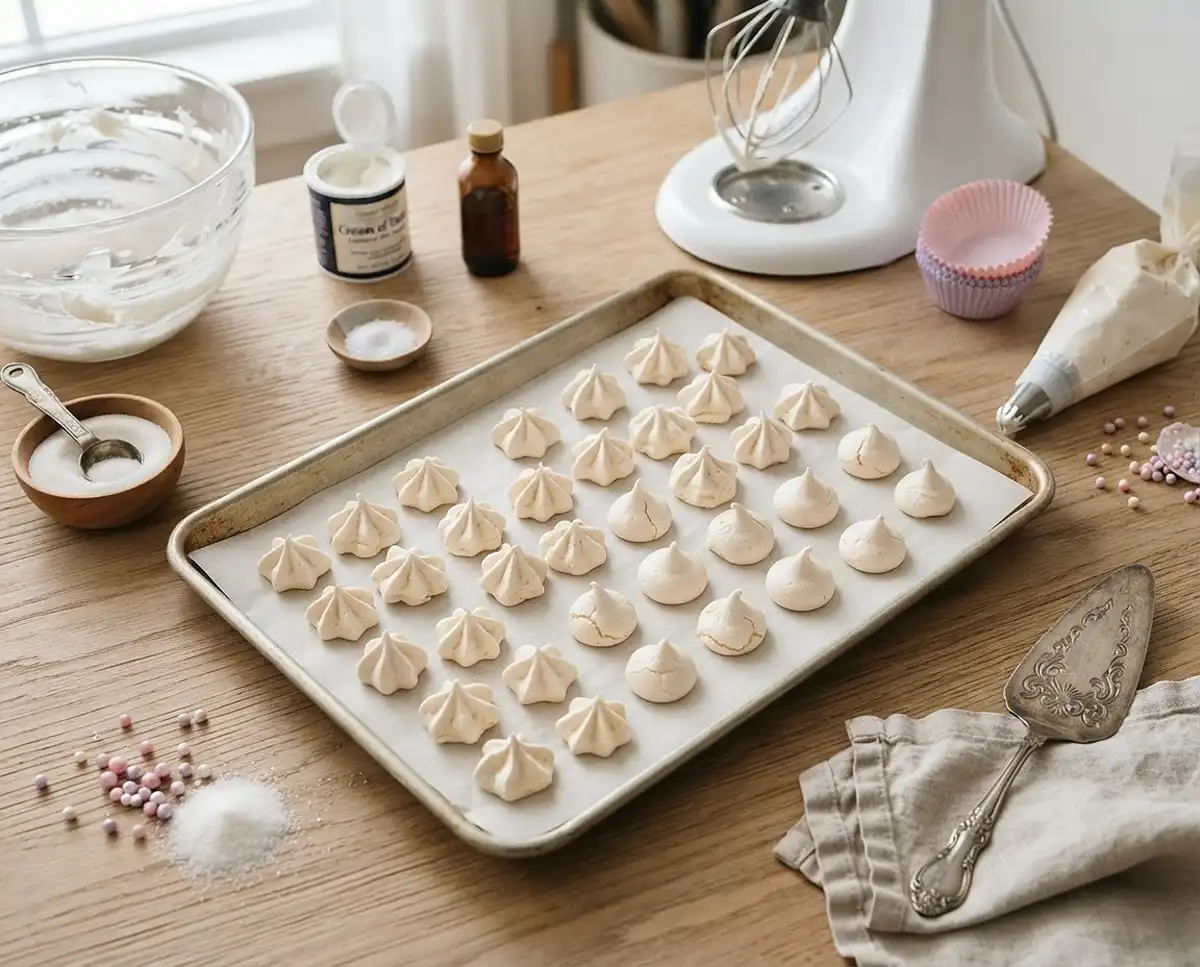
Easy Meringue Cookies Recipe
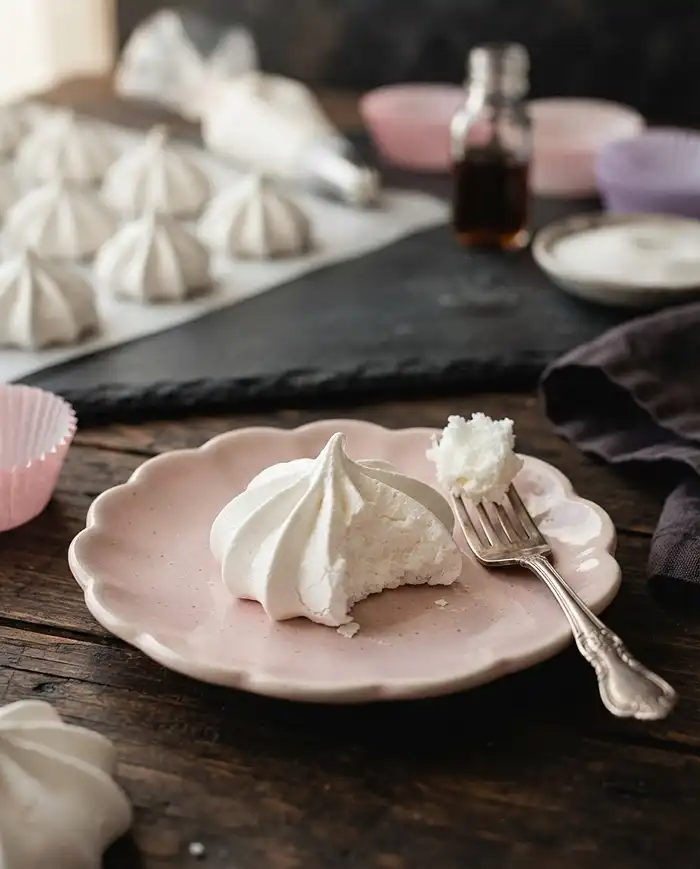
Light, airy meringue cookies that melt on your tongue—crisp on the outside, cloud-like inside—made with just five simple ingredients and minimal fuss.
I’ll be honest—I used to be terrified of meringue cookies. Something about whipping egg whites into stiff peaks felt impossibly fancy. But once I realized how forgiving they actually are (and how impressive they look when you pull them off), they became my go-to for everything from holiday cookie trays to quick desserts when I need something sweet but not too heavy.
This easy meringue cookie recipe is the one I return to again and again. No fancy equipment, no hard-to-find ingredients, just a handful of pantry staples and a little patience. The result? Perfectly crisp, melt-in-your-mouth cookies that look like you spent all day in the kitchen.
Table of Contents
What Makes This Easy Meringue Cookie Recipe So Good
These meringue cookies are sweet, light, and satisfying without being rich. They practically dissolve on your tongue, leaving just a whisper of vanilla and sugar. Plus, they’re naturally gluten-free, fat-free, and endlessly customizable with food coloring, extracts, or even mix-ins like mini chocolate chips.
What I love most is how approachable this recipe is. You don’t need a culinary degree or a fancy stand mixer (though it helps). Just clean bowls, a little elbow grease, and the willingness to let your oven do most of the work while you move on with your day.
They also store beautifully for weeks in an airtight container, making them perfect for gifting, bake sales, or just having a sweet little treat on hand whenever the craving strikes.
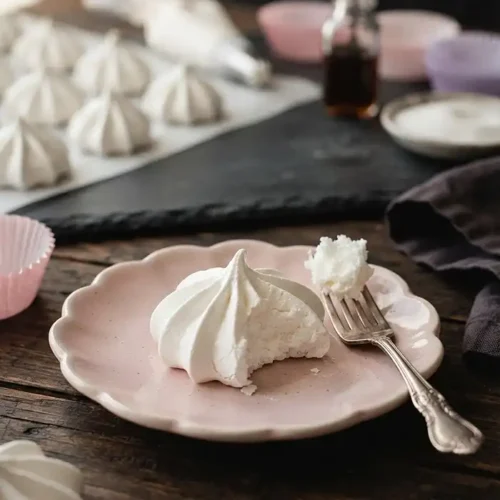
Easy Meringue Cookie Recipe
Ingredients
Ingredients
- 4 large egg whites room temperature
- ½ teaspoon cream of tartar
- ⅛ teaspoon salt
- 1 cup granulated sugar
- 1 teaspoon vanilla extract¹
Instructions
- Preheat oven to 225F (105C) and line a large cookie sheet (or two regular-sized cookie sheets — make sure they will fit in your oven together) with parchment paper. Set aside.
- Combine egg whites, cream of tartar, and salt in a large, completely clean, completely grease-free bowl².
- Using an electric mixer or a stand mixer (with either the whisk or paddle attachment), stir on low speed until mixture becomes foamy.
- Increase speed to high.
- With mixer on high, gradually add sugar, about 1 Tablespoon at a time, stirring after each addition until sugar is dissolved (about 15-20 seconds between each addition).
- Beat until mixture is thick, shiny, and has increased in volume. Mixture should have stiff peaks and sugar should be completely dissolved (you can test this by rubbing a small bit of the mixture between your fingers, if it feels gritty, the sugar isn’t dissolved).
- Stir in vanilla extract and any other extract you may like to use. If using food coloring, add the food coloring at this stage, too.
- Fit a large disposable piping bag with a large tip (I used Ateco 846, but any large star tip will work or you can just snip the edge of the piping bag for a “kiss” formation) and transfer meringue to prepared piping bag and pipe onto prepared cookie sheet. The meringue cookies can be pretty close to each other as they won’t spread, and you will want to bake all of the cookies at the same time, so make sure you make enough space.
- Bake on 225F (105C) for 1 hour. Turn off the oven once the baking time has passed, and do not open the oven. Leave the oven door closed and allow cookies to cool completely in the oven (1-2 hours) before removing.
- Meringue cookies should be crisp and can be stored in an airtight container. Keep away from heat and moisture as it can soften your meringues.
Ingredients You’ll Need for Easy Meringue Cookies
This recipe keeps things simple. You probably have most of these ingredients already, and the ones you don’t are easy to grab at any grocery store. The key is using room temperature egg whites and making absolutely sure your bowl and beaters are completely clean and grease-free—any trace of fat will prevent the egg whites from whipping up properly.
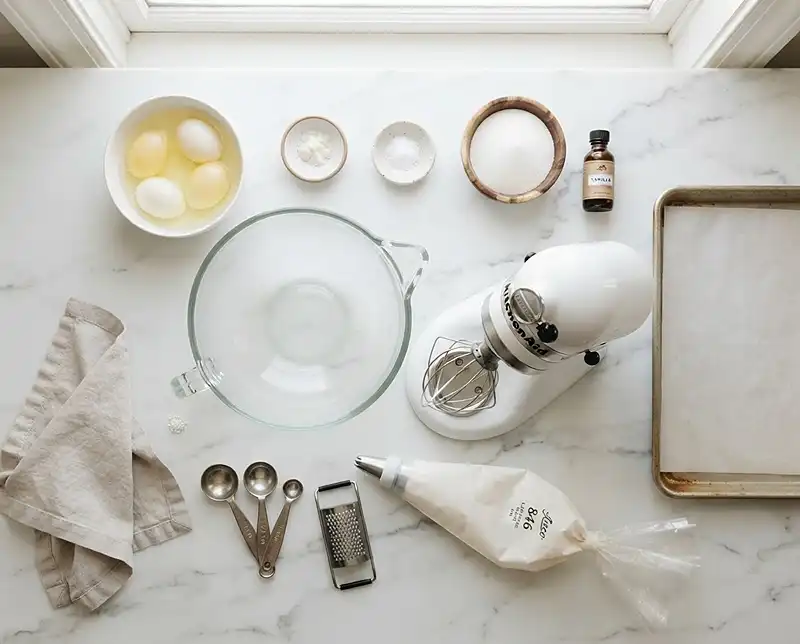
| Ingredient | Amount | Notes |
|---|---|---|
| Large egg whites | 4 | Room temperature is crucial for volume |
| Cream of tartar | ½ teaspoon | Stabilizes the egg whites |
| Salt | ⅛ teaspoon | Balances sweetness |
| Granulated sugar | 1 cup | Regular white sugar works best |
| Vanilla extract | 1 teaspoon | Or try almond, peppermint, or lemon extract |
Room temperature egg whites whip up faster and create more stable peaks. I usually set mine out on the counter about 30 minutes before I start baking. If you’re in a hurry, you can place the eggs (still in their shells) in a bowl of warm water for about 10 minutes.
Cream of tartar is a game-changer here. It’s an acid that helps stabilize the egg white foam, so your meringue stays glossy and doesn’t weep or collapse. You can find it in the spice aisle of most grocery stores, and a little jar lasts forever.
Step-by-Step Instructions for Perfect Meringue Cookies
The secret to perfect meringue cookies is patience. You can’t rush the sugar dissolving, and you definitely can’t rush the baking and cooling. But trust me, the hands-on time is minimal, and the results are always worth the wait.
- Preheat your oven to 225°F (105°C) and line a large cookie sheet (or two regular-sized sheets that will fit in your oven at the same time) with parchment paper. This low temperature is key—you’re drying the meringues out more than baking them.
- Combine the egg whites, cream of tartar, and salt in a large, completely clean, completely grease-free bowl. Even a tiny bit of oil or yolk will prevent the whites from whipping properly, so wipe your bowl with a little white vinegar or lemon juice if you want to be extra sure.
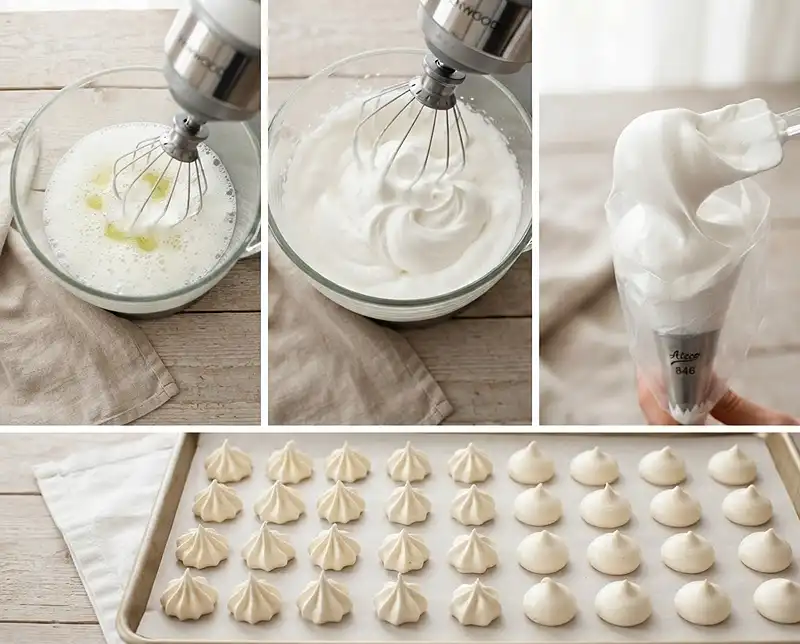
- Using an electric mixer or stand mixer (with either the whisk or paddle attachment), stir on low speed until the mixture becomes foamy. It’ll look bubbly and loose at this stage—that’s perfect.
- Increase the speed to high. Now the magic starts happening. You’ll see the egg whites begin to thicken and turn white.
- With the mixer running on high, gradually add the sugar about 1 tablespoon at a time, stirring after each addition until the sugar dissolves. This takes about 15-20 seconds between each addition. Yes, it feels slow, but adding sugar too quickly can deflate your meringue or leave it gritty.
- Beat until the mixture is thick, shiny, and has increased in volume. You’re looking for stiff peaks—when you lift the beaters, the meringue should stand straight up without drooping. To test if the sugar is fully dissolved, rub a small bit of the mixture between your fingers. If it feels gritty, keep beating. If it’s smooth, you’re good to go.
- Stir in the vanilla extract and any other extracts or food coloring you’d like to use. I love adding a few drops of gel food coloring to make pastel meringues for spring or bold colors for holidays. Just fold it in gently so you don’t deflate all that beautiful volume you just created.
- Fit a large disposable piping bag with a large tip (I used Ateco 846, but any large star tip will work, or you can just snip the edge of the bag for a classic “kiss” shape) and transfer the meringue to the bag. Pipe onto your prepared cookie sheet. The meringue cookies can be pretty close together since they won’t spread at all during baking. Just make sure you pipe all of them so they can bake together.
- Bake at 225°F (105°C) for 1 hour. Once the timer goes off, turn off the oven but do not open the door. Leave the meringue cookies inside with the door closed and let them cool completely in the oven. This takes about 1-2 hours and helps them dry out completely, giving you that signature crisp texture.
- Remove the cooled meringue cookies from the oven. They should be crisp, dry to the touch, and easy to peel off the parchment. Store them in an airtight container away from heat and moisture to keep them from softening.
Expert Tips for Meringue Cookie Success
Use a completely clean, dry bowl. This is the number one reason meringues fail. Any trace of grease, oil, or egg yolk will prevent the egg whites from whipping properly. Glass or metal bowls work best—avoid plastic, which can hold onto grease even after washing.
Add sugar gradually. I know it’s tempting to dump it all in at once, but slow and steady wins the race here. Adding sugar too fast can deflate your meringue or leave undissolved granules that make your cookies gritty.
Don’t skip the cooling step. Leaving the cookies in the oven as it cools is what makes them crisp all the way through. If you pull them out too soon, they’ll be soft or chewy in the center instead of that perfect light crunch.
Pipe them all at once. Since meringue cookies don’t spread, you can fit a lot on one or two baking sheets. This also ensures they all bake evenly together. If you bake in batches, the meringue sitting in the piping bag can start to deflate or weep.
Check your oven temperature. Ovens can run hot or cold, and meringues are sensitive. If your cookies are browning, your oven is too hot. If they’re still soft after cooling, it wasn’t hot enough. An oven thermometer is a worthwhile investment if you bake often.
Variations to Try
Chocolate meringue cookies: Sift 2 tablespoons of cocoa powder into the finished meringue and fold gently until just combined. You’ll get gorgeous, lightly chocolate-flavored cookies with a delicate cocoa color.
Peppermint meringues: Swap the vanilla extract for peppermint extract and add a few drops of red or green food coloring. These are perfect for the holidays and pair beautifully with hot chocolate.
Lemon meringue cookies: Use lemon extract instead of vanilla and add a tiny bit of yellow food coloring. They’re bright, fresh, and amazing alongside a cup of tea.
Rainbow meringues: Divide your meringue into separate bowls and tint each one a different color with gel food coloring. Layer the colors in your piping bag for stunning swirled cookies that look bakery-perfect.
Mini chocolate chip meringues: Fold in about ½ cup of mini chocolate chips right before piping. The chips add a little richness and make the cookies feel more substantial.
If you’re looking for more easy cookie ideas, my jasmine sugar cookies are another favorite that’s simple and always impressive.
Troubleshooting Common Meringue Cookie Problems
My meringue won’t stiffen. This usually means there was grease or egg yolk in your bowl, or your eggs were too cold. Start over with a clean bowl and room temperature egg whites. It’s frustrating, but it happens to everyone at some point.
The meringue is grainy. You either added the sugar too quickly or didn’t beat it long enough. Keep beating on high until the sugar is fully dissolved—test by rubbing a bit between your fingers.
My cookies are browning. Your oven is too hot. Meringues should stay pale and white (or whatever color you tinted them). Lower the temperature by 25 degrees and try again next time.
The cookies are sticky or chewy inside. They didn’t dry out enough. Make sure you’re leaving them in the turned-off oven for the full 1-2 hours. If your climate is humid, they might need even longer, or you can leave them in the oven overnight.
My meringues cracked. A few cracks are normal and actually add a nice rustic look. But if they’re cracking excessively, your oven might be too hot, or you added the sugar too quickly. Try lowering the temperature slightly and being extra patient with the sugar.
How to Store Meringue Cookies
Once your meringue cookies are completely cool and crisp, they store beautifully as long as you keep them away from moisture. Humidity is the enemy of meringues—even a little bit can turn them soft and sticky.
| Storage Method | Duration | Best For |
|---|---|---|
| Airtight container at room temperature | 2-3 weeks | Everyday snacking and gifting |
| Airtight container with silica packet | Up to 4 weeks | Humid climates or longer storage |
| Freezer in airtight container | Up to 3 months | Make-ahead for holidays or events |
I like to store mine in a cookie tin or plastic container with a tight-fitting lid. If you live somewhere humid, toss in a food-safe silica gel packet (the kind that comes in vitamin bottles) to absorb any excess moisture. Just make sure the packet doesn’t touch the cookies directly.
Meringue cookies can also be frozen, which is great if you want to make them ahead for a party or holiday. Just layer them carefully between sheets of parchment paper in an airtight container. Let them thaw at room temperature for about 30 minutes before serving.
According to the FDA’s food safety guidelines, baked goods made with properly cooked eggs can be stored safely at room temperature if kept in airtight containers away from heat and moisture.
Easy Meringue Cookie Recipe FAQs
What are the basic ingredients needed for easy meringue cookies?
The basic ingredients for easy meringue cookies are egg whites, granulated sugar, cream of tartar (or lemon juice), vanilla extract, and a pinch of salt. You typically need 3-4 egg whites and about 3/4 to 1 cup of sugar. The cream of tartar helps stabilize the egg whites and create a better structure for your meringues.
Why did my meringue cookies turn out flat or weepy?
Meringue cookies can turn out flat or weepy for several reasons. The most common causes are humidity in the air, not beating the egg whites long enough to form stiff peaks, adding sugar too quickly, or having any traces of egg yolk or grease in your bowl or beaters. Make sure your equipment is completely clean and dry, and beat the meringue until it forms glossy, stiff peaks that hold their shape.
What temperature should I bake meringue cookies and for how long?
Meringue cookies are typically baked at a low temperature of 200-225 degrees Fahrenheit for 1 to 1.5 hours. The goal is to dry them out rather than actually bake them. They should be crisp and dry to the touch when done. After baking, turn off the oven and let the meringues cool completely inside the oven with the door slightly open to prevent cracking.
How do I know when my meringue has reached stiff peaks?
Stiff peaks are reached when you lift the beaters out of the meringue and the peaks stand straight up without drooping or curling over. The meringue should be thick, glossy, and smooth with no graininess from undissolved sugar. If you turn the bowl upside down, the meringue should stay in place and not slide. This usually takes 5-7 minutes of beating on high speed.
How should I store meringue cookies and how long do they last?
Store meringue cookies in an airtight container at room temperature to keep them crisp and dry. Do not refrigerate them as moisture will make them soft and sticky. When stored properly in a dry environment, meringue cookies can last up to 2 weeks. Place parchment paper between layers to prevent sticking. If they become soft, you can re-crisp them in a low oven for a few minutes.
Make These Easy Meringue Cookies Today
This easy meringue cookie recipe is proof that impressive desserts don’t have to be complicated. With just five ingredients and a little patience, you’ll have a batch of bakery-worthy treats that look beautiful, taste amazing, and keep for weeks.
Whether you’re making them for a special occasion, gifting them to friends, or just keeping a stash in your pantry for when you need something sweet and light, these meringue cookies are always a win. The low-and-slow baking method does all the heavy lifting, and the results are consistently crisp, delicate, and delicious.
If you’re looking for more easy dessert ideas, try my easy eggless vanilla cake for another simple crowd-pleaser. And if you’re in the mood for something savory, my easy tuna melt wrap or easy sheet pan cashew chicken are both quick weeknight favorites.
Give this easy meringue cookie recipe a try and let me know how it goes. I promise you’ll love how simple they are to make—and how fancy they look when you serve them.