1 Kilo Ube Halaya Recipe with Condensed Milk
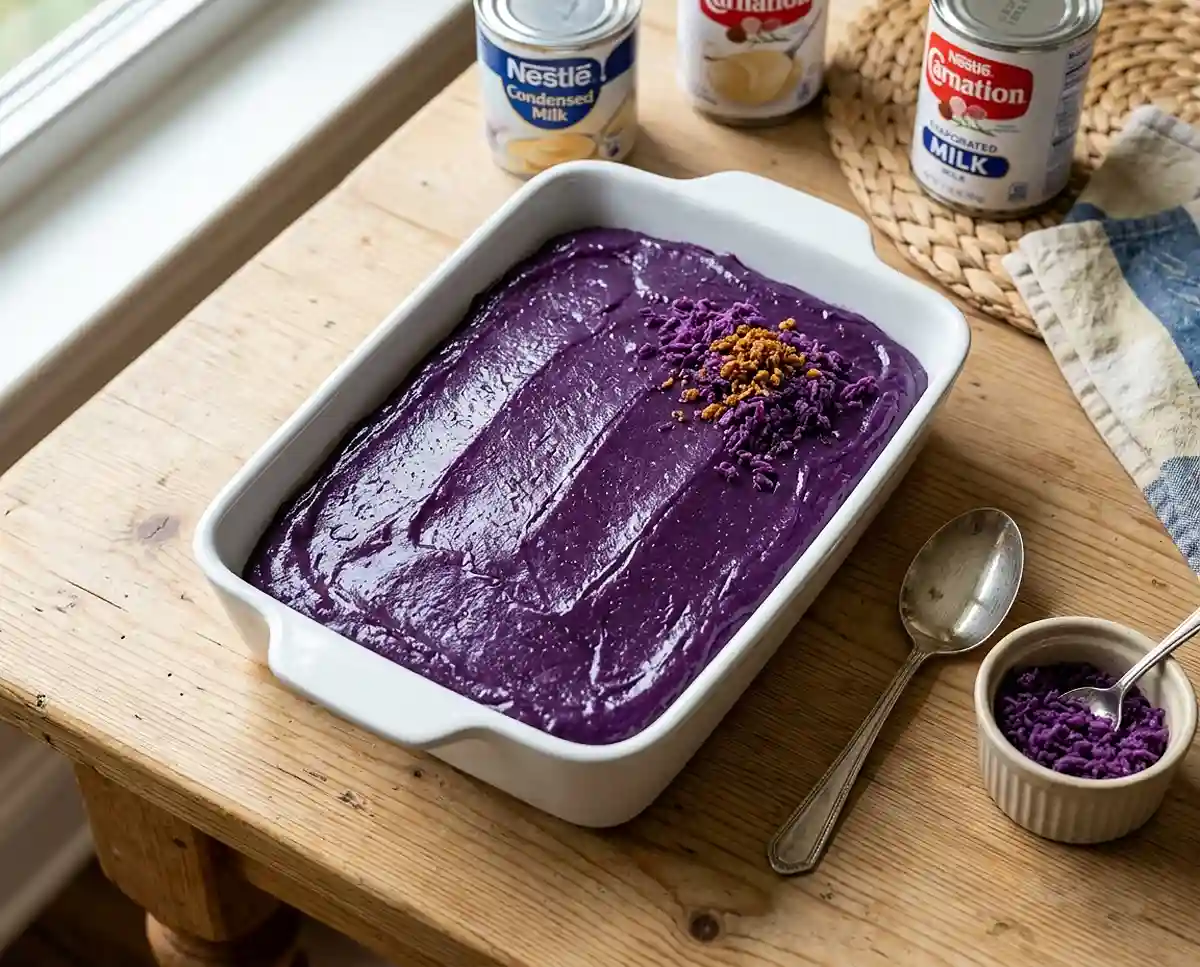
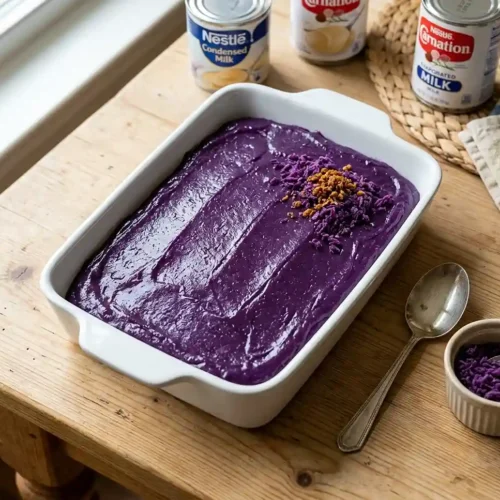
This 1 kilo ube halaya recipe with condensed milk is a classic Filipino dessert that transforms fresh purple yam into a creamy, glossy spread that’s perfect for celebrating special occasions or simply treating yourself.
I’ll be honest—the first time I made ube halaya, my arm felt like it was going to fall off from all that stirring. But when I tasted that first spoonful of velvety, sweet purple yam goodness, I understood why every Filipino grandmother insists on making this labor of love. There’s something deeply satisfying about turning simple ingredients into something so beautifully purple and delicious.
This homemade ube halaya recipe walks you through the traditional method with practical tips to save your arm and your patience. Yes, it takes time, but I promise it’s worth every stir.
Table of Contents
What Is Ube Halaya?
Ube halaya is a traditional Filipino ube dessert made from purple yam (ube), milk, sugar, and butter. The grated yam is cooked down slowly until it transforms into a thick, jammy spread with a glossy finish. Think of it as somewhere between a jam and a custard—dense, sweet, and intensely flavored with that distinctive earthy sweetness that makes ube so special.
In the Philippines, you’ll find ube halaya at every celebration, from birthdays to Christmas. It’s eaten straight from the jar, spread on toast, used as a filling for pastries, or served as a topping for halo-halo. Some families have recipes passed down through generations, each with their own ratio of milk to butter, their own preferred level of sweetness.
The key difference between homemade and store-bought versions? Texture and flavor depth. When you make this ube jam with condensed milk at home, you control the sweetness and end up with a creamier, more authentic taste without any preservatives or artificial coloring.
Why You’ll Love This Ube Halaya Recipe Easy
This recipe strikes a balance between traditional technique and practical home cooking. Here’s why it works so well:
The combination of condensed milk and evaporated milk gives you that signature creamy richness without needing coconut milk (though you can absolutely add it if you prefer). The butter adds a luxurious mouthfeel and helps prevent sticking during that long cooking process.
I love that this recipe uses exactly 1 kilo of ube because it’s the perfect amount for gifting—you can divide the finished halaya into smaller jars and share with friends and family. It also means you’re not making such a huge batch that you’re eating ube for three months straight.
The optional ube extract isn’t just for color, though it does make your halaya an absolutely stunning violet. It amplifies the ube flavor, especially if your yams are a bit less vibrant than usual. Some batches of ube are naturally more flavorful than others, and the extract acts as insurance.
Most importantly, this recipe is actually doable. I’ve streamlined the process so you know exactly what to look for at each stage. No vague “cook until done” instructions here—I’ll tell you what the mixture should look like, smell like, and how it should behave.
1 Kilo Ube Halaya Recipe with Condensed Milk
Ingredients
Ingredients
- 1 kg grated ube purple yam
- 1 can 300ml condensed milk
- 1 can 370ml evaporated milk
- ½ cup butter or margarine
- ½ cup white sugar adjust to taste
- 1 teaspoon ube extract optional, for vibrant color and enhanced flavor
Instructions
- In a large, heavy-bottomed pot or wok, melt the butter or margarine over medium heat.
- Add the grated ube to the pot and stir constantly for about 10-15 minutes to cook it through and remove some of the raw starchiness.
- Pour in the condensed milk and evaporated milk. Mix well to combine with the ube.
- Add the white sugar and ube extract (if using). Continue to stir constantly to prevent sticking and burning. This process is crucial and can take 30-60 minutes, or even longer, until the mixture becomes very thick, glossy, and pulls away from the sides of the pot.
- To test for doneness, scrape the bottom of the pot with your spoon; if the mixture stays separated for a few seconds, it’s ready.
- Carefully transfer the ube halaya to molds or containers greased with a little butter or oil. Press down firmly to remove air bubbles.
- Let it cool completely at room temperature, then chill in the refrigerator for at least 2-4 hours, or preferably overnight, for it to fully set.
- Serve chilled and enjoy!
Notes
Ingredients for 1 Kilo Ube Halaya Recipe with Condensed Milk
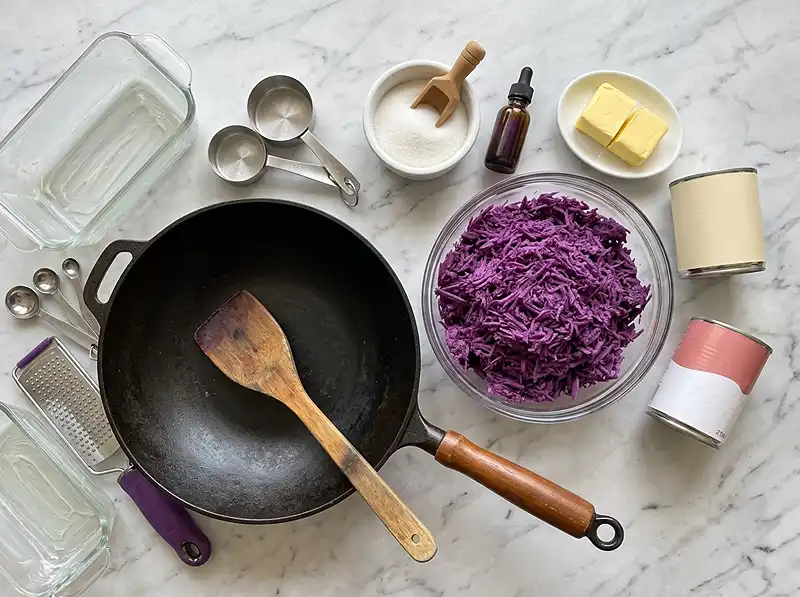
The ingredient list is refreshingly short for such an impressive dessert. Here’s what you’ll need to gather before you start:
| Ingredient | Amount | Notes |
|---|---|---|
| Grated ube (purple yam) | 1 kg | Fresh or frozen; thaw completely if frozen |
| Condensed milk | 1 can (300ml) | Adds sweetness and creaminess |
| Evaporated milk | 1 can (370ml) | Creates smooth, rich texture |
| Butter or margarine | 1/2 cup | Prevents sticking, adds richness |
| White sugar | 1/2 cup | Adjust to your sweetness preference |
| Ube extract | 1 teaspoon | Optional; enhances color and flavor |
A few words about the star ingredient: fresh ube can be found in Asian grocery stores, usually in the produce section near other specialty root vegetables. It has a rough, bark-like skin and when you cut it open, the flesh should be a deep purple color. If you can’t find fresh ube, frozen grated ube works beautifully—just make sure it’s completely thawed and drained of any excess liquid before cooking.
The quality of your condensed milk matters more than you’d think. I’ve noticed that different brands have slightly different sweetness levels, so taste as you go and adjust the additional sugar accordingly. Some people like their halaya intensely sweet, while others prefer it more balanced so the earthy ube flavor shines through.
Step-by-Step Instructions for Homemade Ube Halaya
Making ube halaya is more about patience and attention than complex technique. The key is constant stirring and medium heat—rush it, and you’ll end up with burnt spots or grainy texture.
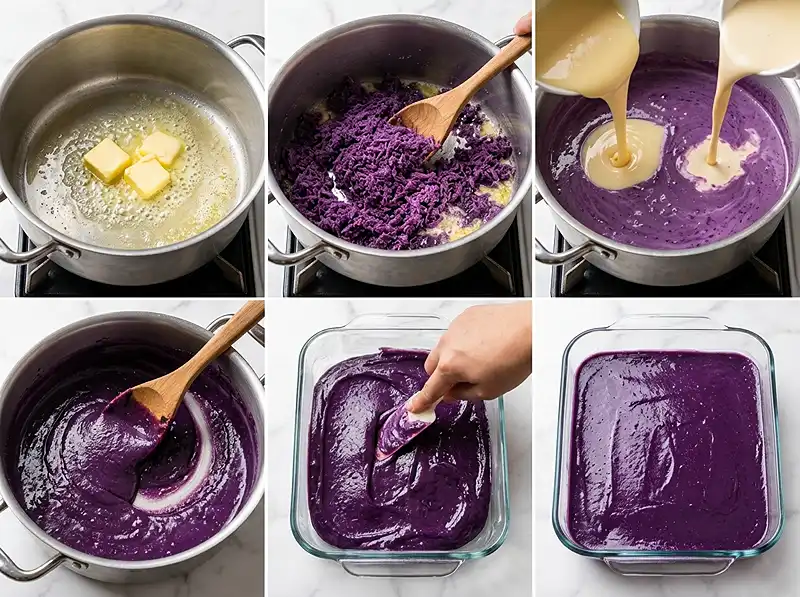
- Melt the butter: In a large, heavy-bottomed pot or wok, melt the butter or margarine over medium heat. I prefer using a wok because the curved sides make stirring easier on your arms, but a good heavy pot works too. Let the butter melt completely and start to bubble gently, but don’t let it brown.
- Cook the ube: Add all the grated ube to the pot and stir constantly for about 10-15 minutes. This initial cooking step is crucial—you’re removing that raw, starchy taste and beginning to break down the yam fibers. The ube will release some moisture at first, and you’ll notice it becoming softer and more pliable. Your kitchen will start to smell sweet and earthy, which is a good sign.
- Add the milks: Pour in the condensed milk and evaporated milk. Mix everything together thoroughly, making sure the ube is evenly coated with the milk mixture. The consistency will become much looser and more liquid at this point—don’t worry, that’s exactly what should happen.
- Add sugar and extract: Stir in the white sugar and ube extract if you’re using it. This is your last chance to adjust sweetness before the long cooking process, so taste a small spoonful (it’s safe at this point since everything is cooked). The mixture should taste slightly sweeter than you want the final product to be, since the sweetness will mellow as it cooks down.
- The long stir: Now comes the meditation portion of this recipe. Continue stirring constantly over medium heat. This process will take 30-60 minutes, sometimes longer depending on your stove and pot. You’re looking for the mixture to transform from liquid and loose to thick, glossy, and pulling away from the sides of the pot. Your arm will get tired—I switch hands every 10 minutes or so. The mixture will gradually change from soupy to thick, and you’ll see it start to clump together as you stir. The color will deepen too, becoming more vibrant as moisture evaporates.
- Test for doneness: Here’s the foolproof test: scrape your spoon or spatula across the bottom of the pot. If the mixture stays separated for a few seconds before slowly flowing back together, you’re done. Another test is to press a spoonful against the side of the pot—it should hold its shape and have a glossy, almost waxy sheen. The halaya should be thick enough that you can see the bottom of the pot clearly when you scrape through it.
- Transfer to molds: Working quickly while the mixture is still hot and pliable, carefully transfer the ube halaya to molds or containers that you’ve greased with a little butter or neutral oil. I like using small glass containers or traditional oval molds. Press down firmly with the back of a spoon or a piece of plastic wrap to remove any air bubbles and create a smooth surface. Air pockets can cause the halaya to spoil faster.
- Cool and chill: Let the halaya cool completely at room temperature. This usually takes about an hour. Don’t cover it while it’s still warm or condensation will form on the surface. Once cool, cover and transfer to the refrigerator. Chill for at least 2-4 hours, though overnight is better. The halaya will firm up considerably as it chills, transforming from soft and spreadable to sliceable and dense.
Expert Tips for Perfect Ube Halaya
After making countless batches of this Filipino ube dessert, I’ve learned a few tricks that make the process easier and the results more consistent.
Use a non-stick wok or pot if you have one. It makes such a difference in preventing sticking and scorching. If you’re using a regular pot, make sure it’s heavy-bottomed—thin pots distribute heat unevenly and you’ll end up with burnt spots no matter how diligently you stir.
Keep the heat at medium or even medium-low. I know it’s tempting to crank up the heat to speed things along, but higher heat means you have to stir even more vigorously to prevent burning, and you risk developing an unpleasant burnt taste that’ll permeate the whole batch.
Invest in a good silicone spatula or wooden spoon with a flat edge. You need to be able to scrape the bottom and sides of the pot effectively. I actually keep two spatulas nearby and alternate between them, giving each one a quick rinse to prevent buildup.
If your arm needs a break, you can briefly remove the pot from the heat, give it a thorough stir, then return it. Don’t leave it sitting on the heat unstirred, even for a minute—that’s asking for burnt spots.
Taste and adjust sweetness early in the cooking process. Once the mixture thickens significantly, it becomes harder to dissolve additional sugar evenly. Some people prefer less sweet halaya to better appreciate the natural ube flavor, while others like it candy-sweet.
For an extra smooth texture, some cooks blend the grated ube with a bit of the milk before cooking. This creates a more uniform consistency, though I personally like having tiny pieces of ube throughout—it reminds you that you’re eating something made from real vegetables, not just purple sugar.
Variations to Try
Once you’ve mastered the basic recipe, there are several delicious directions you can take this ube jam with condensed milk.
For a richer version, substitute half the butter with coconut cream added in the last 15 minutes of cooking. This gives the halaya a subtle tropical flavor and even silkier texture. It’s traditional in some regions of the Philippines.
Add a pinch of salt—maybe 1/4 teaspoon—to enhance all the flavors and cut through the sweetness. It’s a small addition that makes a surprising difference, especially if you’re using particularly sweet condensed milk.
Try an ube-macapuno combo by folding in 1/2 cup of sweetened macapuno (coconut sport) strings during the last 5 minutes of cooking. The chewy coconut pieces add textural interest and another layer of Filipino flavor.
For ube halaya with cheese, top your chilled halaya with grated cheddar or Eden cheese before serving. I know it sounds strange if you’re not familiar with Filipino desserts, but the salty cheese against sweet ube is absolutely addictive. You can also mix grated cheese into the last few minutes of cooking for pockets of melted cheese throughout.
Make individual servings by pouring the hot halaya into muffin tins lined with cupcake papers. Once set, these are perfect for parties or gift-giving, and they look adorable.
Troubleshooting Common Issues
Even experienced cooks run into challenges with this recipe. Here’s how to handle the most common problems.
If your halaya is too runny after the full cooking time, it simply needs more time on the heat. Keep stirring and cooking—it will eventually thicken. Sometimes humidity in the air or particularly watery ube means you need an extra 15-20 minutes of cooking time. Be patient.
If you notice burnt spots or a burnt smell developing, immediately transfer the halaya to a clean pot, leaving behind any scorched bits stuck to the bottom. Unfortunately, burnt flavor spreads quickly, so it’s better to catch it early. This usually happens from not stirring constantly or having the heat too high.
If the texture is grainy rather than smooth, it’s likely from undissolved sugar or from cooking at too high a temperature. Make sure all the sugar is fully dissolved early in the cooking process, and keep that heat moderate. Some graininess from the ube itself is normal and actually desirable—you want to know you’re eating real yam, not pudding.
If your halaya separates or looks oily, it might be from the butter separating out. This can happen if the mixture gets too hot or if you don’t stir constantly during the thickening phase. Try stirring vigorously to re-emulsify it, or add a tablespoon or two of milk and stir well.
If the color is pale or brownish rather than vibrant purple, your ube might not have been very pigmented to begin with. This is where ube extract really helps. You can also add a tiny bit of purple food coloring if appearance matters for your occasion, though I usually embrace whatever color my ube naturally produces.
Storage Tips for Ube Halaya
Proper storage keeps your homemade ube halaya fresh and delicious for surprisingly long. The high sugar content and dairy actually help preserve it.
| Storage Method | Duration | Best Practices |
|---|---|---|
| Refrigerator | 2-3 weeks | Store in airtight container; press plastic wrap directly on surface |
| Freezer | Up to 3 months | Use freezer-safe container; thaw overnight in refrigerator |
| Room temperature | Not recommended | Dairy content makes it perishable |
Always store ube halaya in the refrigerator once it’s completely cooled. I press a piece of plastic wrap directly onto the surface before putting the lid on to prevent a skin from forming and to keep moisture from condensing on top.
For longer storage, this freezes beautifully. Divide it into smaller portions before freezing so you can thaw just what you need. To thaw, move it from freezer to refrigerator the night before you want to serve it. Don’t microwave it to thaw—it can develop an unpleasant texture.
Use clean utensils every time you scoop out halaya. Introducing crumbs or other contaminants shortens its shelf life. If you notice any mold, discoloration, or off smells, it’s time to discard it, though this rarely happens if stored properly.
According to the FDA guidelines on dairy-based food storage, products containing milk should be refrigerated within two hours of cooking and kept at 40°F or below. This is especially important for halaya since it contains both condensed and evaporated milk.
Ways to Serve and Enjoy
The beauty of ube halaya is its versatility. Yes, you can eat it straight from the container with a spoon (no judgment—I’ve done this many times), but there are so many other delicious ways to enjoy it.
Spread it on warm pandesal or toast for breakfast. The contrast between the crispy bread and creamy halaya is wonderful, especially with your morning coffee.
Use it as a filling for pastries like siopao, bread rolls, or turnovers. It holds up well to baking and adds moisture and flavor to any dough-based treat. It’s also fantastic as a layer in cakes or as frosting mixed with buttercream.
Top your ube taho with a dollop of halaya for an extra indulgent dessert. Or swirl it into your ube banana pudding for intensified ube flavor.
Serve it alongside condensed milk biscuits for a simple but elegant dessert spread. The buttery biscuits are the perfect vehicle for creamy halaya.
My favorite way? A small scoop in a bowl with vanilla ice cream melting over it. The cold ice cream against the chilled halaya creates this amazing creamy, dreamy texture that’s better than any fancy restaurant dessert.
1 Kilo Ube Halaya Recipe with Condensed Milk FAQs
How long does it take to cook 1 kilo of ube halaya with condensed milk?
Cooking 1 kilo of ube halaya typically takes 45 minutes to 1 hour of constant stirring over low to medium heat. The mixture needs to be stirred continuously to prevent burning and to achieve the right thick, smooth consistency. The halaya is ready when it pulls away from the sides of the pan and becomes glossy.
What ingredients do I need for 1 kilo ube halaya with condensed milk?
For 1 kilo of ube halaya, you will need 1 kilo of mashed purple yam (ube), 1 can (300-390ml) of condensed milk, 1 can (370ml) of evaporated milk, 1 cup of coconut milk, 1/2 to 3/4 cup of sugar (adjust to taste), and 1/2 cup of butter. Some recipes also include a pinch of salt and vanilla extract for added flavor.
Can I use frozen ube for making ube halaya with condensed milk?
Yes, you can use frozen ube for making ube halaya. Thaw the frozen ube completely and drain any excess water before using. You may need to mash or blend it until smooth before cooking. Frozen ube works just as well as fresh ube, though fresh ube may provide a slightly more vibrant color and flavor.
How should I store ube halaya and how long does it last?
Store ube halaya in an airtight container in the refrigerator. It will last for up to 1 week when properly refrigerated. You can also freeze ube halaya for longer storage, up to 2-3 months. Make sure to cool it completely before storing, and place plastic wrap directly on the surface before sealing to prevent a skin from forming.
Why is my ube halaya not thickening properly?
If your ube halaya is not thickening, it may be due to too much liquid or insufficient cooking time. Continue cooking over low heat while stirring constantly until more moisture evaporates. Make sure you are using the correct proportions of ingredients. Also, ensure your heat is not too high, as this can cause uneven cooking. The mixture should reach a thick, pudding-like consistency that pulls away from the pan.
Final Thoughts on This Homemade Ube Halaya
Making this 1 kilo ube halaya recipe with condensed milk is truly a labor of love, but it’s one of those recipes that connects you to tradition and fills your home with the most wonderful aroma. Yes, your arm might get tired from all that stirring, and yes, it takes time, but the result is so much better than anything you can buy at the store.
The thick, creamy texture, the natural purple color, and that perfect balance of sweet and earthy flavors make every minute of stirring worthwhile. This is the kind of recipe that becomes a family tradition, that you make for special occasions and give as gifts to people you want to impress.
Whether you’re Filipino and craving the flavors of home, or you’re discovering ube for the first time, this recipe will give you an authentic, delicious result. Take your time, don’t rush the process, and trust that all that stirring will pay off.
Have you made ube halaya before? I’d love to hear about your experience! Drop a comment below and let me know how your batch turned out, or if you have any family tricks that make the process easier. Happy cooking!