Fire Cider Recipe
This powerful fire cider recipe transforms humble roots and citrus into a potent wellness tonic that’s been warming kitchens for generations.
I’ll be honest—the first time I heard about fire cider, I thought it sounded absolutely intimidating. Fermenting a jar full of raw horseradish and habaneros? But after my third cold of the season knocked me flat, I decided to give this traditional folk remedy a shot. Now I keep a jar in my pantry year-round, and I genuinely look forward to my daily dose.
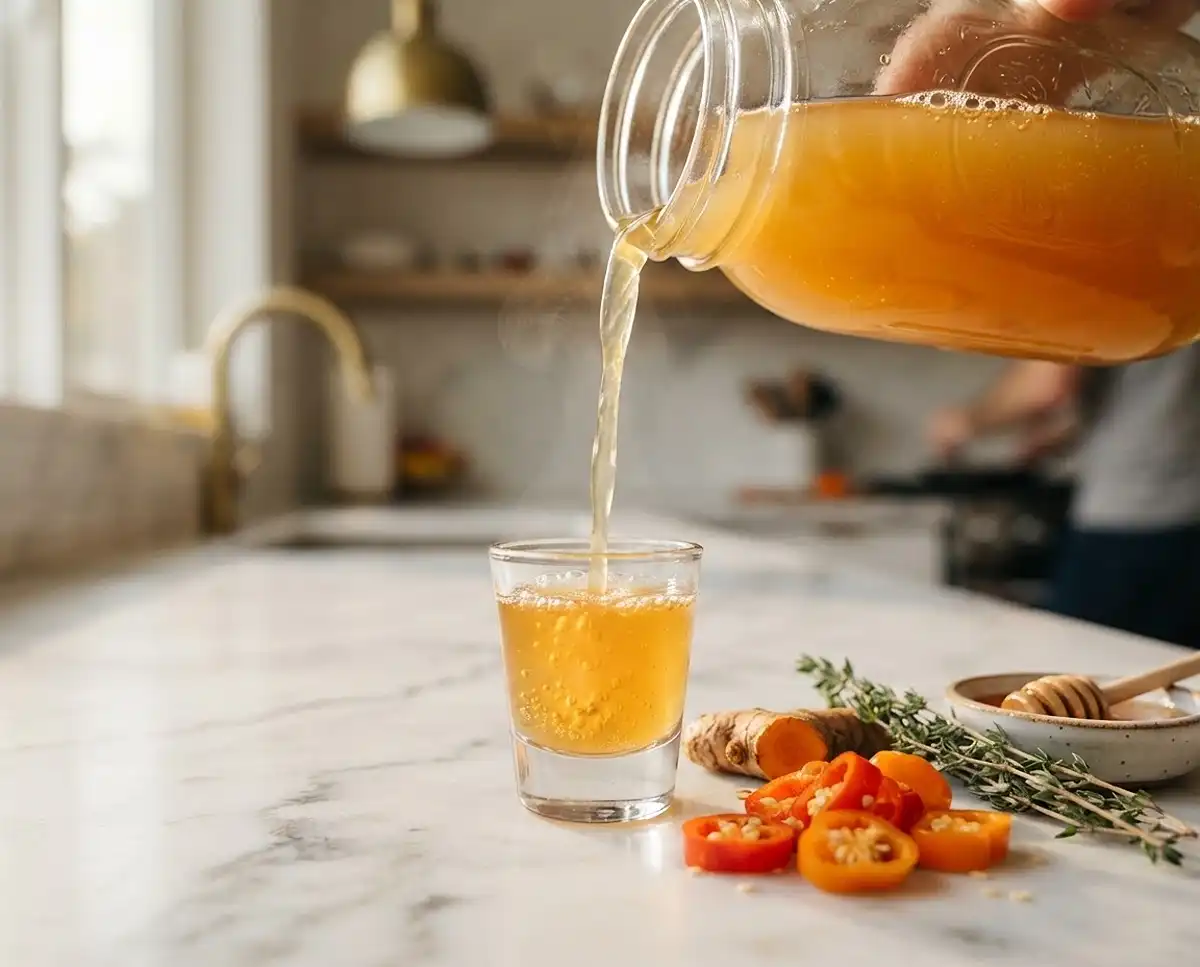
Fire cider is basically a spicy, tangy infusion of fresh roots, aromatics, and citrus steeped in raw apple cider vinegar. The result is a fiery tonic that supports your immune system and adds a serious flavor punch to everything from salad dressings to morning wellness shots.
Table of Contents
Why You’ll Love This Fire Cider Recipe
This best fire cider recipe for immune support has earned its spot on my counter for good reason. Unlike pills or powders, you know exactly what’s going into your body—real food ingredients with actual health benefits.
The combination of antiviral garlic, anti-inflammatory ginger and turmeric, circulation-boosting horseradish, and vitamin C-packed citrus creates something genuinely powerful. And honestly? It tastes way better than it sounds. That initial burn mellows into a complex, almost addictive tang.
Plus, this recipe makes a huge batch that lasts for months. Once you get past the chopping (which I won’t lie, takes a bit of time), the rest is just waiting. The hardest part is remembering not to open the jar every day to peek at it.
If you’re looking for more comforting recipes to keep you feeling good, I’ve got plenty of options that’ll warm you from the inside out.

Fire Cider Recipe
Ingredients
Ingredients
- 4 cups unpasteurized apple cider vinegar
- 2 cups chopped onion
- ½ cup chopped fresh turmeric
- ½ cup chopped fresh ginger
- ½ cup coarsely grated fresh horseradish
- ½ cup chopped garlic
- 1 bunch fresh thyme
- ½ cup halved fresh rosehips
- 1 whole lemon chopped
- 1 whole lime chopped
- 1 whole orange chopped, or 2 mandarins
- 2 whole fresh habanero peppers chopped
Instructions
- Layer prepared ingredients into a clean 1/2 gallon glass jar then cover them with the apple cider vinegar.
- Cover the jar with a lid and let sit at room temperature out of the sun for 2 weeks.
- Strain liquid into a bowl, pressing the ingredients with the back of a spoon to release as much liquid as possible, and discard everything else.
- Pour the strained liquid into a clean quart jar.
- Optionally sweeten the fire cider to taste with raw honey or maple syrup for a vegan-friendly version.
- Cover the jar with a lid and store at room temperature out of the sun for up to 6 months.
Notes
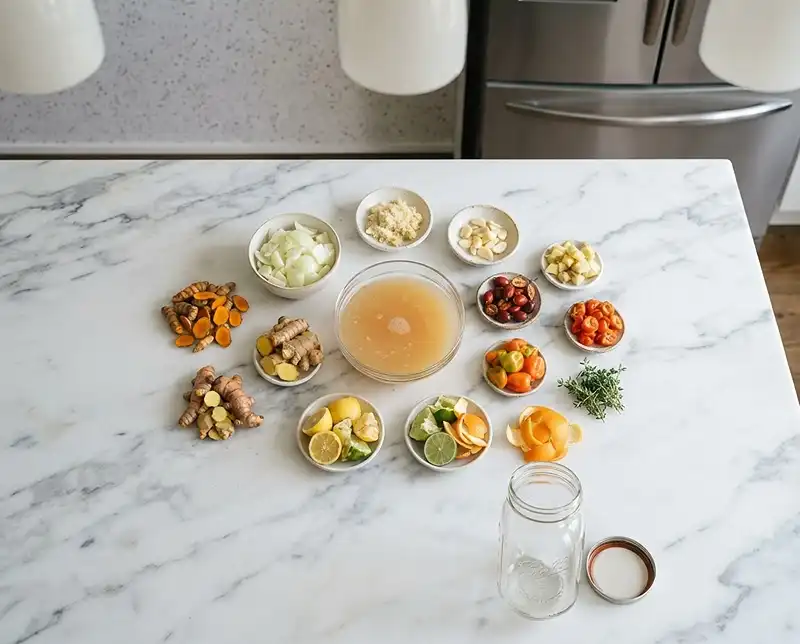
Ingredients for the Best Fire Cider Recipe
The beauty of fire cider is that it’s incredibly forgiving. Traditional recipes vary wildly depending on who’s making it, so don’t stress if you need to adjust quantities or swap something out. That said, here’s what I use for a balanced, potent batch.
| Ingredient | Quantity | Notes |
|---|---|---|
| Unpasteurized apple cider vinegar | 4 cups | Look for the cloudy stuff with “the mother” |
| Onion, chopped | 2 cups | Yellow or red both work great |
| Fresh turmeric, chopped | 1/2 cup | Wear gloves—this stains everything |
| Fresh ginger, chopped | 1/2 cup | No need to peel if it’s organic |
| Fresh horseradish, coarsely grated | 1/2 cup | Fresh is key—the jarred stuff won’t cut it |
| Garlic, chopped | 1/2 cup | About 2 large heads |
| Fresh thyme | 1 bunch | Leaves and stems are both fine |
| Fresh rosehips, halved | 1/2 cup | Optional but adds vitamin C |
| Whole lemon, chopped | 1 | Peel, pith, and all |
| Whole lime, chopped | 1 | Seeds are fine to leave in |
| Whole orange, chopped | 1 large or 2 mandarins | Adds sweetness to balance the heat |
| Fresh habanero peppers, chopped | 2 whole | Adjust heat level to your preference |
| Raw honey or maple syrup | To taste | Optional, for finishing |
A few ingredient notes from my kitchen: The unpasteurized apple cider vinegar is non-negotiable. That cloudy stuff at the bottom (called “the mother”) contains the beneficial bacteria and enzymes that make this tonic so potent. I use Bragg’s, but any brand with the mother works.
For the fresh turmeric and horseradish, definitely hit up a good natural foods store or farmers market. Regular grocery stores sometimes carry them, but not always. And seriously, wear gloves when handling the turmeric. I learned this the hard way and had yellow-stained hands for three days.
The habaneros provide serious heat, but you can dial it down with jalapeños or up with something even spicier. I like the fruity flavor habaneros add, but I also really enjoy feeling my face tingle when I take my morning shot.
Step-by-Step Instructions for Fire Cider
Making fire cider is honestly more about patience than skill. The actual work takes maybe 30 minutes, then you just wait while the magic happens.

- Prep all your ingredients. Chop the onion into rough chunks, chop the turmeric and ginger (no need to peel if they’re organic and well-scrubbed), grate the horseradish using the large holes of a box grater, and roughly chop the garlic. Chop all the citrus fruits into wedges, peels and all, removing any stickers but keeping everything else. Chop the habaneros, including seeds if you want maximum heat. Have a window open during this stage—the horseradish fumes are intense and will clear your sinuses immediately.
- Layer everything into your jar. Use a clean half-gallon glass jar with a wide mouth to make layering easier. I like to start with the heavier ingredients like onion and garlic at the bottom, then add the ginger, turmeric, and horseradish, followed by the citrus and peppers, and finish with the thyme and rosehips on top. There’s no perfect order here, just get it all in there.
- Cover completely with vinegar. Pour the apple cider vinegar over all the ingredients until they’re fully submerged by at least an inch. The ingredients will float a bit, and that’s fine—just make sure there’s plenty of vinegar covering everything. If you need more vinegar, add it. Exposed ingredients can develop mold, and nobody wants that.
- Seal with the right lid. Here’s a tip I wish someone had told me: the vinegar will corrode metal lids over time. Use a plastic lid if you have one, or put a piece of parchment paper between a metal lid and the jar. I learned this when my first batch ended up with rusty bits floating on top. Not appetizing.
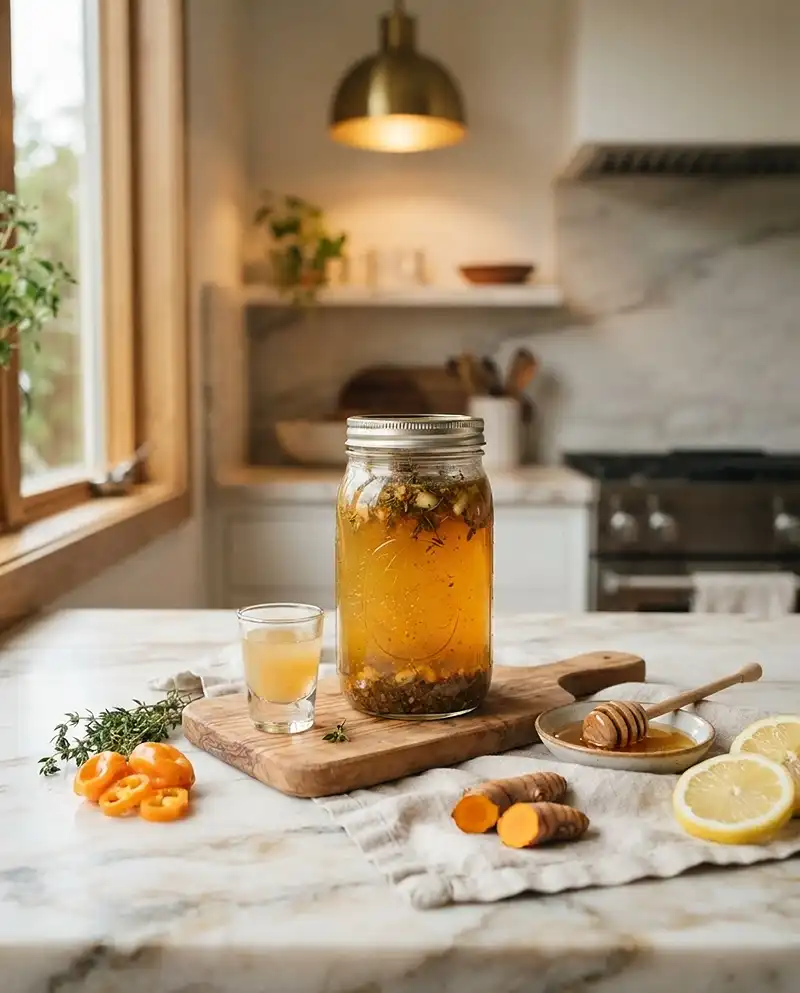
- Let it infuse for two weeks. Store the jar at room temperature in a dark spot away from direct sunlight. I keep mine in a kitchen cabinet. Give it a good shake every day or every few days when you remember. You’ll notice the liquid getting darker and more intense looking as the days pass.
- Strain thoroughly. After two weeks (or up to four if you want it extra strong), place a fine mesh strainer over a large bowl and pour everything through. Use the back of a spoon to press down on all the solids, squeezing out every last drop of that precious liquid. This is where all the flavor and beneficial compounds are concentrated. Compost or discard the spent solids—they’ve given everything they have.
- Sweeten if desired. Taste your fire cider. It’ll be intense, spicy, and very tangy. Some people love it just like this, but I prefer to add a few tablespoons of raw honey to take the edge off. Maple syrup works great if you’re keeping it vegan. Stir it in well until it’s fully dissolved. Start with less than you think you need—you can always add more.
- Bottle and store. Pour your finished fire cider into clean glass bottles or jars. I like using quart mason jars or repurposed glass bottles with good lids. Label them with the date so you know when you made it. Store at room temperature in a dark cabinet, and it’ll keep for up to six months, though mine never lasts that long.
Expert Tips for Perfect Fire Cider
After making dozens of batches, here are the things that actually make a difference.
Use the freshest ingredients possible. This seems obvious, but dried ginger or powdered garlic won’t give you the same potency. The fresh roots contain volatile oils and compounds that are the whole point of this recipe.
Don’t skimp on infusion time. I know two weeks feels like forever when you’re excited to try it, but the longer steep extracts more beneficial compounds. I’ve gone as long as a month when I forgot about a batch, and it was noticeably stronger. According to food safety resources, the high acidity of the vinegar keeps everything safe during this room temperature infusion.
Adjust the heat to your tolerance. If you’re new to fire cider, start with one habanero instead of two, or swap them for milder peppers. You can always make the next batch spicier. The goal is something you’ll actually take consistently, not something that sits unused because it’s too intense.
Save some unsweetened. I like to bottle half my batch before adding honey. The unsweetened version is perfect for salad dressings and marinades, while the sweetened version is better for straight shots or mixing into tea.
Take it consistently. Fire cider works best when you take it daily as a preventive measure, not just when you’re already sick. I do a shot glass full (about 1-2 tablespoons) every morning, sometimes mixed into juice or sparkling water if I’m not feeling brave.
Fire Cider Variations to Try
Once you’ve made the basic recipe, you can absolutely customize it to your taste and needs.
Extra immune-boosting version: Add echinacea root, astragalus root, or elderberries during the infusion. These traditional immune-supporting herbs complement the other ingredients beautifully.
Digestive support version: Include fresh fennel, a few star anise pods, or some dandelion root to support digestion along with immunity.
Milder citrus version: Skip the habaneros entirely and double the citrus for a gentler tonic that still packs the beneficial roots and aromatics.
Garden herb version: Add whatever fresh herbs you have growing—rosemary, sage, oregano, or parsley all bring their own benefits and flavors.
Chai-spiced version: Throw in some cinnamon sticks, whole cloves, cardamom pods, and black peppercorns for a warming, aromatic twist.
Troubleshooting Your Fire Cider Recipe
My fire cider developed white film on top. This is likely kahm yeast, which is harmless but unappetizing. It happens when ingredients aren’t fully submerged. Skim it off, strain your fire cider immediately, and it should be fine to use. In the future, make sure everything stays covered with vinegar.
The flavor is too harsh. Add more honey or maple syrup, or dilute it with water, juice, or sparkling water when you take it. You can also mix it into salad dressing or soup where the flavor mellows out.
It’s not spicy enough. Next time, add more peppers or let it steep longer. For this batch, you could add a pinch of cayenne pepper to your daily dose.
My jar lid corroded. The vinegar ate through the metal. This is why plastic lids or parchment paper barriers are important. The fire cider itself is still fine to use—just strain it and transfer to a clean container with a better lid.
Can I use dried ingredients instead of fresh? In a pinch, yes, but use about half the amount since dried ingredients are more concentrated. The fresh stuff really does make a noticeable difference in potency and flavor, though.
How to Use Fire Cider
Beyond the classic wellness shot, fire cider is surprisingly versatile in the kitchen.
As a daily tonic: Take 1-2 tablespoons straight, mixed with water or juice, or stirred into warm tea. Some people prefer it first thing in the morning, others before meals to support digestion.
In salad dressings: Mix fire cider with olive oil, a touch more honey, and some Dijon mustard for a knock-your-socks-off vinaigrette. It’s especially good on hearty winter salads with roasted vegetables.
In marinades: The acidity and spice make it perfect for marinating chicken, pork, or tofu. It tenderizes and adds incredible depth of flavor.
In soups and stews: Add a splash to finished soups for brightness and heat. It’s particularly good in bean soups or broths when you’re feeling under the weather.
In cocktails: Adventurous bartenders love using fire cider in Bloody Marys or spicy margaritas. Just a little bit goes a long way. If you’re into creative drinks, you might also enjoy my dirty lemonade recipe.
Storage Guidelines for Fire Cider
One of the best things about fire cider is how well it keeps. The high acidity creates an environment where bad bacteria can’t survive, making it shelf-stable for months.
| Storage Location | Duration | Notes |
|---|---|---|
| Room temperature (pantry) | Up to 6 months | Keep away from direct sunlight and heat |
| Refrigerator | Up to 1 year | Best for sweetened versions with honey |
| During infusion | 2-4 weeks | Room temperature, shake occasionally |
I store mine in a dark cabinet at room temperature and it stays perfectly good for the full six months. If you added honey, you might want to refrigerate it since the added sugar can sometimes encourage fermentation, though honestly I’ve kept sweetened batches at room temperature without issues.
Always use a clean spoon when taking your daily dose to avoid introducing bacteria into the jar. And trust your senses—if it smells off or develops fuzzy mold (not just harmless kahm yeast), toss it and make a fresh batch.
You’ll notice some settling at the bottom of the jar over time. This is normal. Just give it a good shake before using. The color may also darken as it ages, which is totally fine and doesn’t affect potency.
Fire Cider Recipe FAQs
What is fire cider and what are its main ingredients?
Fire cider is a traditional folk remedy made by infusing apple cider vinegar with powerful immune-boosting ingredients. The main ingredients typically include horseradish root, ginger root, onions, garlic, hot peppers like cayenne or jalapeño, turmeric, and honey. These ingredients are chopped or grated, combined with raw apple cider vinegar, and allowed to steep for several weeks to create a potent wellness tonic.
How long does fire cider need to steep before it’s ready to use?
Fire cider needs to steep for a minimum of 3 to 4 weeks to properly extract all the beneficial compounds from the ingredients. Many people prefer to let it steep for 4 to 6 weeks for a stronger, more potent result. During this time, the jar should be stored in a cool, dark place and shaken daily or every few days to help with the infusion process.
How do you take fire cider and what is the recommended dosage?
Fire cider is typically taken as a daily wellness shot. The most common dosage is 1 to 2 tablespoons per day, either taken straight or diluted in water, tea, or juice. Some people take it preventatively during cold and flu season, while others use it at the first sign of illness. It can be taken on its own, mixed into salad dressings, or added to soups and other recipes. Start with a smaller amount if you’re new to fire cider to assess your tolerance.
How should fire cider be stored and how long does it last?
After straining, fire cider should be stored in a clean glass jar or bottle with a tight-fitting lid in the refrigerator. When properly stored in the refrigerator, fire cider can last for several months to a year or even longer due to the preservative properties of both the vinegar and honey. Always use clean utensils when serving to prevent contamination. If you notice any mold, off smells, or unusual changes in appearance, it’s best to discard it and make a fresh batch.
Can I customize my fire cider recipe with different ingredients?
Yes, fire cider is highly customizable and many people adapt the recipe to their preferences and needs. Common additions include citrus fruits like oranges and lemons, fresh herbs like rosemary, thyme, or oregano, spices like cinnamon and black pepper, and other roots like burdock. Some people add elderberries for extra immune support or adjust the amount of hot peppers based on their heat tolerance. The key is to maintain the base of apple cider vinegar and include ingredients with antimicrobial and immune-supporting properties.
Your New Wellness Ritual Awaits
This fire cider recipe has genuinely become one of those kitchen projects I look forward to every year. There’s something deeply satisfying about making your own wellness tonic from scratch, knowing exactly what’s in it and watching it transform over those two weeks.
The best fire cider recipe for immune support doesn’t have to be complicated or intimidating. Yes, there’s some chopping involved, and yes, you might cry a little from the horseradish fumes, but the finished product is so worth it. I honestly believe it’s helped me get through the last few winters with fewer colds and more energy.
Once you’ve mastered fire cider, you might enjoy exploring more cozy homemade recipes like my grated chocolate toast for morning comfort, or if you’re in the mood for something more substantial, try my baked spaghetti pie for a satisfying dinner.
So grab a big jar, hit the farmers market for fresh roots, and get chopping. Your future self will thank you when everyone around you is sniffling and you’re still going strong. And if you make this fire cider recipe, I’d genuinely love to hear how it turns out for you—especially if you come up with any creative variations or uses I haven’t tried yet!