Enoki Beef Rolls Recipe
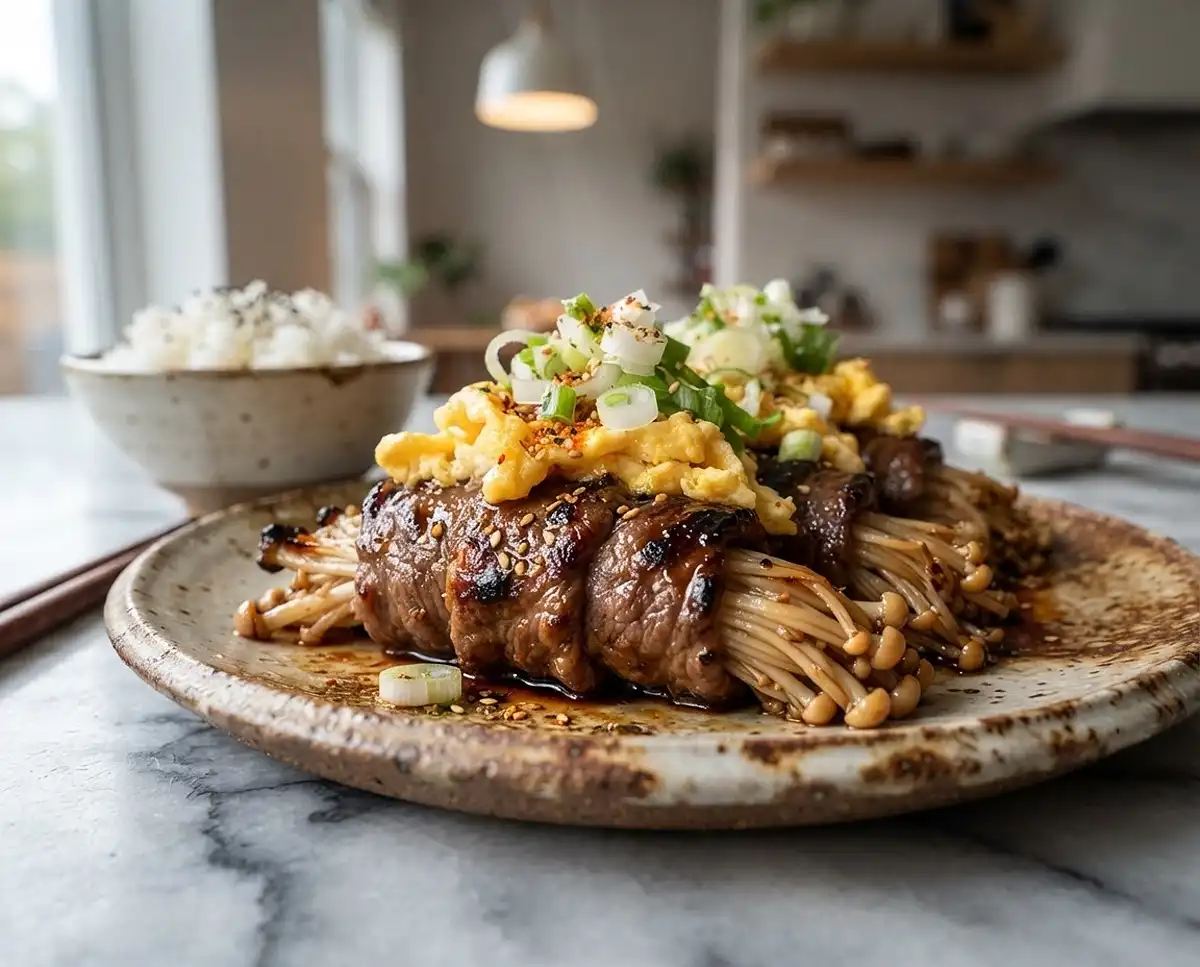
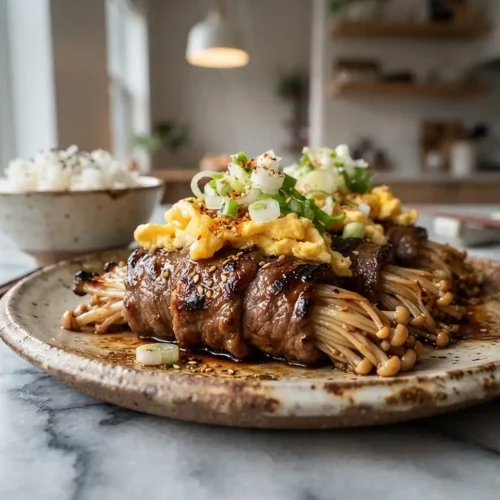
This enoki beef rolls recipe is a stunning Japanese-inspired dish that wraps delicate enoki mushrooms in tender beef, then simmers everything in a savory-sweet sauce with onions and soft scrambled eggs on top.
I stumbled onto this recipe after picking up a pack of enoki mushrooms at the Asian market and wondering what on earth to do with them besides tossing them into hot pot. Turns out, wrapping them in thinly sliced beef and cooking them in a glossy dashi-based sauce is possibly one of the best decisions you can make on a weeknight. It’s fancy enough to impress but simple enough that you won’t be stressed in the kitchen.
The mushrooms stay slightly crunchy, the beef gets beautifully tender, and that sauce? It’s the kind you’ll want to spoon over rice until there’s not a drop left.
Table of Contents
What Are Enoki Beef Rolls?
Enoki beef rolls are a popular Japanese dish where bundles of enoki mushrooms are wrapped in thin slices of beef, then pan-fried or simmered in a flavorful sauce. The dish is sometimes called “enoki maki” and you’ll find variations of it in Japanese home cooking and izakayas. The combination of the earthy mushrooms and rich beef creates a texture contrast that’s really satisfying, and the sauce ties everything together with umami, sweetness, and just a hint of sake.
This version adds sautéed onions and a layer of soft scrambled eggs on top, making it a complete one-pan meal that’s comforting and full of flavor.
Why You’ll Love This Enoki Beef Rolls Recipe
This dish checks so many boxes. It’s quick, taking about 20 minutes from start to finish. It looks impressive, which makes it perfect for date night or when you want to feel like you really cooked something special. The ingredients are simple and most of them are pantry staples if you cook Asian food even semi-regularly.
The enoki mushrooms bring a delicate crunch and mild flavor that soaks up the sauce beautifully. The beef adds richness and protein. The onions give sweetness and depth. And those scrambled eggs on top? They add creaminess and make the dish feel like a warm hug.
Plus, it’s naturally low-carb if you skip the rice, or you can serve it over steamed rice or noodles to make it more filling. It’s adaptable, forgiving, and honestly just really fun to make.
Enoki Beef Rolls
Ingredients
Ingredients
- 15 pieces thinly sliced beef rib eye or striploin are great cuts
- 150 g enoki mushrooms ~1 pack
- 2 tsp oil
- 1 small yellow onion sliced
- 2 large eggs scrambled
- 1 scallion whites and greens chopped
- ¼ cup dashi can be substituted with beef or chicken stock
- 1 tbsp sake
- 1 tbsp mirin
- 1.5 tbsp soy sauce
- ½ tbsp granulated sugar
Instructions
- Prepare the enoki mushrooms by cutting off the bottom root section. Gently rinse with cold water to remove any excess dirt, then section the mushrooms into 15 smaller bunches to be wrapped.
- Wrap each bunch with a thin slice of beef to hold them together. Set aside.
- Combine all the ingredients for the sauce until smooth, and set aside for later cooking.
- In a pan, heat 2 tsp of oil over medium heat. Sauté the onions until softened, about 4-5 minutes.
- Lay the enoki beef rolls over the onions. Pour the prepared sauce over the rolls and simmer with a lid for about 5 minutes until the mushrooms have softened.
- Pour the scrambled egg on top of the rolls, place the lid on again, and cook for an additional 1 minute, or until the eggs are slightly set.
- Let cool. Top with the chopped scallions. Enjoy with a side of rice and/or vegetables.
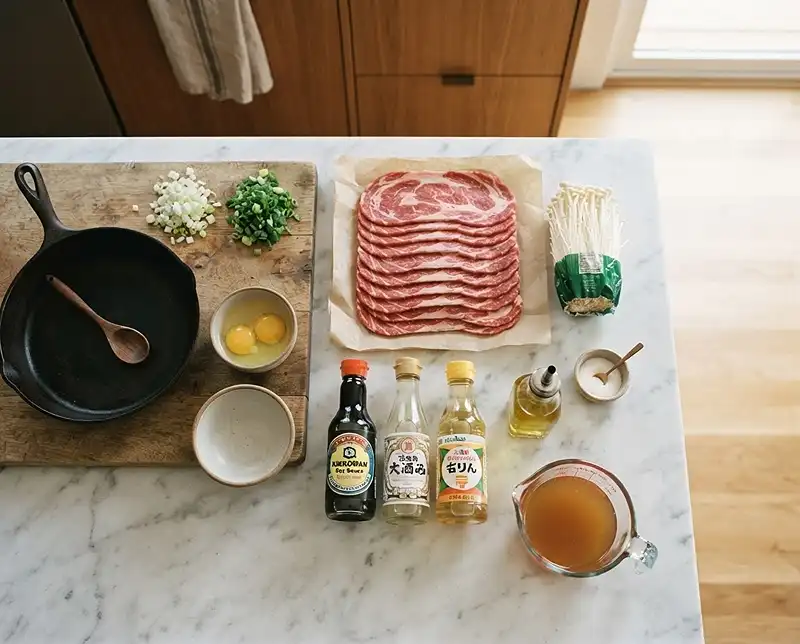
Ingredients for Enoki Beef Rolls
This recipe uses ingredients you can find at most Asian grocery stores, and some are available at regular supermarkets too. Here’s what you’ll need to make these delicious enoki beef rolls.
| Ingredient | Quantity | Notes |
|---|---|---|
| Thinly sliced beef | 15 pieces | Rib eye or striploin work best; look for shabu-shabu or sukiyaki-style slices |
| Enoki mushrooms | 150 g (~1 pack) | Fresh, with firm white stems |
| Oil | 2 tsp | Vegetable or neutral oil |
| Yellow onion | 1 small, sliced | Adds sweetness to the base |
| Eggs | 2 large, scrambled | Lightly beaten |
| Scallion | 1, chopped | Both whites and greens |
| Dashi | 1/4 cup | Can substitute with beef or chicken stock |
| Sake | 1 tbsp | Japanese rice wine |
| Mirin | 1 tbsp | Sweet rice wine |
| Soy sauce | 1.5 tbsp | Regular or low-sodium |
| Granulated sugar | 1/2 tbsp | Balances the savory sauce |
The beef is the star here, so try to get good quality thinly sliced meat. If your grocery store has a hot pot section or Japanese meat selection, that’s perfect. You can also ask the butcher to slice rib eye or striploin paper-thin for you. If you’re in a pinch, partially freezing a steak for about 30 minutes makes it easier to slice thinly at home.
Enoki mushrooms are those delicate white mushrooms with long thin stems and tiny caps. They’re mild in flavor and add a nice textural element. Don’t substitute with other mushrooms for this recipe since the whole point is wrapping them in neat little bundles.
Dashi is a Japanese stock made from kombu (seaweed) and bonito flakes. You can buy instant dashi powder or granules, which you just mix with water. If you don’t have it, beef or chicken stock works fine and still tastes great.
How to Make Enoki Beef Rolls (Step-by-Step Instructions)
Making these enoki beef rolls is easier than it looks. The rolling part takes a few minutes, but once that’s done, the cooking is hands-off and quick. Here’s exactly how to do it.
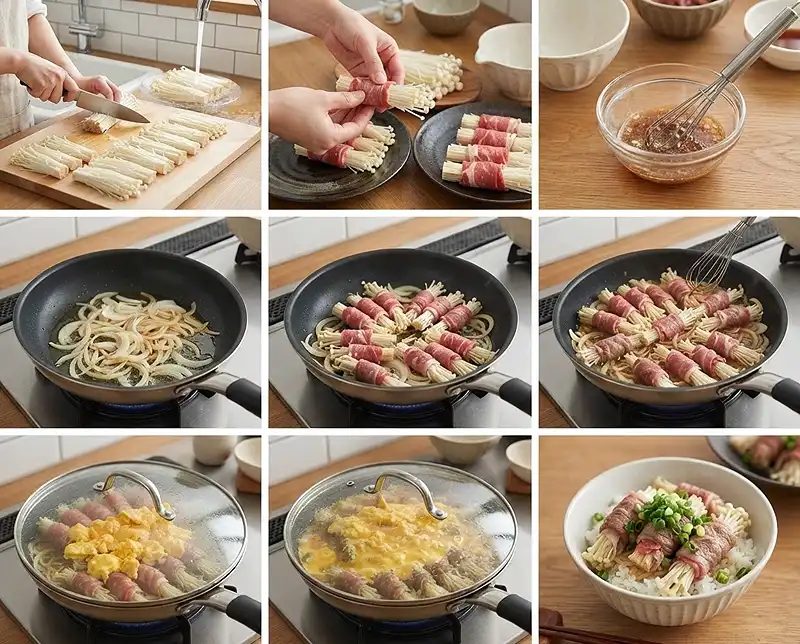
- Prep the mushrooms: Start by cutting off the bottom root section of the enoki mushrooms where they’re all clumped together. You want to remove about an inch or so from the base. Gently rinse the mushrooms under cold water to get rid of any dirt, then shake off the excess water. Carefully separate the mushrooms into 15 smaller bunches, trying to keep them roughly even in size so they roll nicely.
- Wrap the beef: Take one slice of beef and lay it flat on your work surface. Place one bunch of enoki mushrooms at one end of the beef slice. Roll the beef around the mushrooms snugly, like you’re wrapping a little burrito. The beef should wrap around at least once, and it’ll stick to itself as it cooks. Repeat with the remaining beef slices and mushroom bundles. Set all the rolls aside on a plate.
- Make the sauce: In a small bowl, whisk together the dashi (or stock), sake, mirin, soy sauce, and sugar until the sugar dissolves and everything is well combined. This sauce comes together fast, and you want it ready before you start cooking so you’re not scrambling later.
- Sauté the onions: Heat 2 teaspoons of oil in a large pan or skillet over medium heat. Once the oil shimmers, add the sliced onions and sauté them, stirring occasionally, until they soften and start to turn golden at the edges. This should take about 4 to 5 minutes. The onions create a sweet, flavorful bed for the beef rolls.
- Cook the beef rolls: Lay the enoki beef rolls seam-side down over the onions in the pan. They should fit in a single layer. Pour the prepared sauce evenly over all the rolls. Cover the pan with a lid, reduce the heat to medium-low, and let everything simmer for about 5 minutes. The mushrooms will soften, the beef will cook through, and the sauce will start to thicken and coat everything beautifully.
- Add the eggs: Pour the lightly scrambled eggs evenly over the top of the beef rolls. Put the lid back on and cook for another 1 minute, just until the eggs are slightly set but still soft and creamy. You don’t want them fully cooked and rubbery—they should be tender and custardy.
- Finish and serve: Turn off the heat and let the pan sit for a minute to cool slightly. Sprinkle the chopped scallions over the top for a fresh pop of color and flavor. Serve the enoki beef rolls directly from the pan with a big scoop of steamed rice and some vegetables on the side, like sautéed cabbage or steamed broccoli.
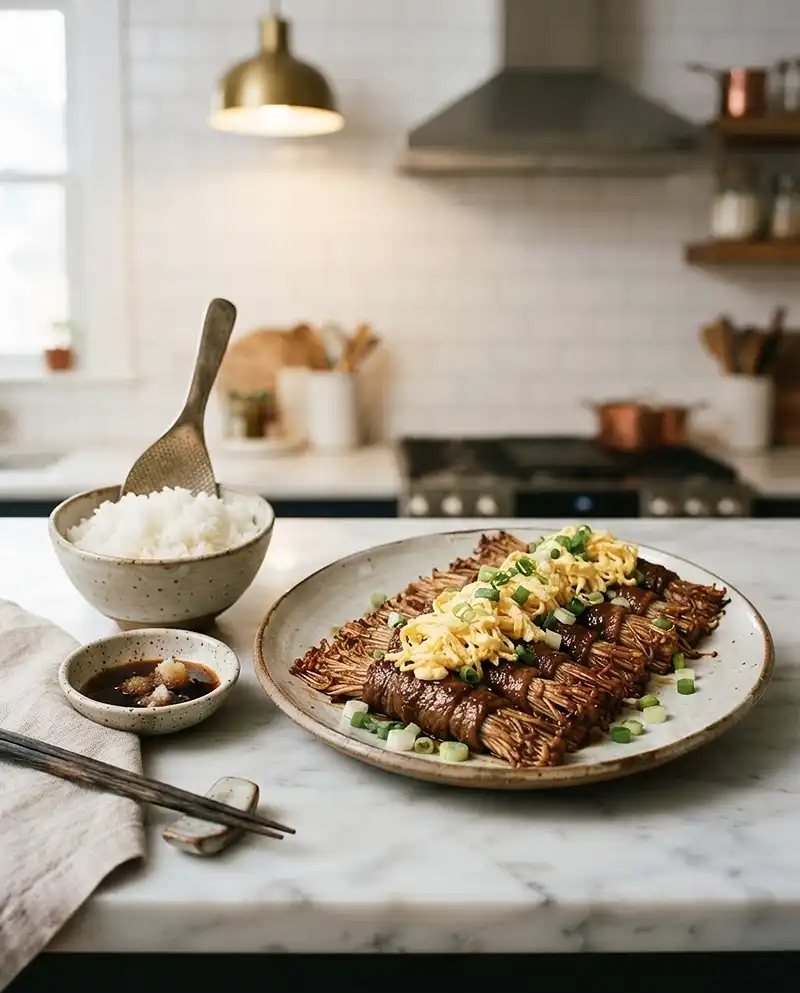
Expert Tips for Perfect Enoki Beef Rolls
Here are a few tricks I’ve learned that make this recipe turn out even better.
Make sure your beef slices are truly thin. If they’re too thick, they won’t cook evenly and the texture won’t be as tender. Shabu-shabu or sukiyaki beef is ideal because it’s already sliced paper-thin for hot pot cooking.
Don’t skip rinsing the enoki mushrooms. They can be a bit gritty or have bits of the growing medium stuck to them. A quick rinse under cold water fixes that.
When you’re rolling the beef, don’t wrap it too loosely or the mushrooms will fall out. But also don’t wrap it so tight that you squeeze the mushrooms. You want a snug roll that holds together but doesn’t crush the delicate mushrooms.
Place the rolls seam-side down in the pan. This helps them stay closed while they cook, and the heat will seal the beef naturally.
Don’t overcook the eggs. They should be soft and silky, not fully scrambled and dry. One minute with the lid on is usually perfect. The residual heat will continue cooking them even after you turn off the stove.
Taste your sauce before pouring it over the rolls. Different brands of soy sauce and mirin vary in saltiness and sweetness, so adjust with a bit more sugar or soy sauce if needed.
Variations and Substitutions
This enoki beef rolls recipe is pretty flexible, so feel free to adapt it based on what you have or what you like.
If you can’t find enoki mushrooms, you could try very thin bundles of shimeji mushrooms, though the presentation won’t be quite the same. Asparagus spears also work beautifully wrapped in beef and cooked this way.
Swap the beef for thinly sliced pork or even chicken if you prefer. Pork belly would be especially rich and delicious.
No dashi? Use chicken stock, beef stock, or even vegetable stock. You’ll lose a bit of the umami depth, but the dish will still be tasty. You can also add a tiny pinch of MSG or a splash of fish sauce to boost the savory flavor.
If you don’t have sake or mirin, you can substitute with a splash of dry white wine and a bit more sugar, though the flavor profile will be slightly different.
Want it spicier? Add a drizzle of sriracha or a sprinkle of shichimi togarashi (Japanese seven-spice) on top before serving.
For a heartier meal, add more vegetables to the pan. Sliced bell peppers, snap peas, or baby bok choy would all be great cooked alongside the rolls.
You can also skip the eggs if you want a cleaner, simpler dish. The rolls are delicious on their own with just the sauce and onions.
Troubleshooting Common Issues
Sometimes things don’t go perfectly in the kitchen, and that’s okay. Here’s how to fix common problems with this recipe.
Beef rolls fall apart: This usually happens if the beef is too thick or if you didn’t wrap them tightly enough. Make sure you’re using thin slices and rolling snugly. Placing them seam-side down in the pan helps them stay together as they cook.
Mushrooms are still crunchy: Enoki mushrooms should soften after simmering for 5 minutes, but if they’re still too firm for your liking, just cook them for another minute or two with the lid on.
Sauce is too salty: If you accidentally used regular soy sauce and it’s too salty, add a splash more dashi or stock and a pinch more sugar to balance it out. You can also serve it with extra rice to mellow the saltiness.
Eggs overcooked: If your eggs turned out rubbery, you probably cooked them a bit too long. Next time, turn off the heat after just one minute and let the residual heat finish the job. You can also lower the heat before adding the eggs.
Everything sticks to the pan: Make sure you’re using enough oil and that your pan is hot before adding the onions. A non-stick pan or well-seasoned cast iron works best for this recipe.
Storage and Reheating
These enoki beef rolls are best enjoyed fresh, but you can definitely store leftovers if you have any. Here’s how to keep them tasting great.
| Storage Method | Duration | Notes |
|---|---|---|
| Refrigerator | 2-3 days | Store in an airtight container |
| Freezer | Not recommended | Eggs and mushrooms don’t freeze well |
| Room temperature | Up to 2 hours | According to USDA food safety guidelines |
Let the beef rolls cool to room temperature before transferring them to an airtight container. Store them in the fridge for up to 2 to 3 days. The eggs might firm up a bit in the fridge, but they’ll still taste good.
To reheat, warm them gently in a covered pan over low heat with a splash of water or stock to keep them from drying out. You can also microwave them in 30-second intervals, covered, until heated through. I don’t recommend freezing this dish since the texture of the eggs and mushrooms changes too much.
If you’re meal prepping, you can prep the rolls ahead of time and store them uncooked in the fridge for up to a day before cooking. Just wrap them, cover with plastic wrap, and cook them fresh when you’re ready to eat.
What to Serve with Enoki Beef Rolls
These rolls are pretty versatile and pair well with lots of sides. Steamed jasmine rice or short-grain Japanese rice is the classic choice and soaks up all that delicious sauce.
For vegetables, try steamed or sautéed bok choy, garlicky green beans, or a simple cucumber salad with rice vinegar. If you want something heartier, this would be great alongside a flavorful rice dish or even some crispy roasted potatoes.
A light miso soup or clear broth would round out the meal nicely. And if you’re feeling ambitious, add some crispy shrimp rolls or fresh summer rolls as an appetizer.
Enoki Beef Rolls Recipe FAQs
What are enoki beef rolls?
Enoki beef rolls are a popular Japanese-inspired appetizer made by wrapping thin slices of beef around bundles of enoki mushrooms. The rolls are typically seasoned with a savory-sweet teriyaki or soy-based sauce and pan-fried or grilled until the beef is cooked through and caramelized. They make an elegant and delicious dish that’s perfect for entertaining or as part of a meal.
What type of beef is best for enoki beef rolls?
The best beef for enoki rolls is thinly sliced beef such as ribeye, sirloin, or beef specifically cut for shabu-shabu or hot pot. The slices should be very thin, about 1-2mm thick, so they cook quickly and wrap easily around the mushrooms. If you can’t find pre-sliced beef, you can partially freeze a piece of beef for about 30 minutes to make it easier to slice thinly at home.
How do you prevent enoki beef rolls from unraveling during cooking?
To prevent the rolls from unraveling, make sure to wrap the beef tightly around the enoki mushrooms and place the seam side down in the pan first. The beef will seal itself as it cooks. You can also secure the rolls with toothpicks if needed, though this is usually not necessary if you start cooking seam-side down. Avoid moving the rolls too much during the initial cooking phase to allow the beef to set properly.
Can enoki beef rolls be made ahead of time?
Yes, enoki beef rolls can be prepared ahead of time. You can assemble the rolls up to 24 hours in advance and store them covered in the refrigerator until ready to cook. For best results, bring them to room temperature for about 10-15 minutes before cooking. You can also cook them ahead and reheat gently, though they taste best when freshly made. The sauce can be prepared several days in advance and stored in the refrigerator.
What can I serve with enoki beef rolls?
Enoki beef rolls pair well with steamed rice, fried rice, or noodles as a main course. They also work great as an appetizer alongside other Japanese dishes like gyoza, edamame, or miso soup. For a complete meal, serve them with a fresh salad, pickled vegetables, or stir-fried vegetables. They’re versatile enough to fit into both casual dinners and more formal entertaining menus.
Final Thoughts
This enoki beef rolls recipe is one of those dishes that feels special but doesn’t require any fancy techniques or hard-to-find ingredients. It’s savory, slightly sweet, and so satisfying, especially when you spoon it over a bowl of steamed rice and let all those flavors mingle together.
Whether you’re cooking for yourself on a weeknight or trying to impress someone with your skills, these rolls deliver. The combination of tender beef, delicate mushrooms, sweet onions, and soft eggs is just really, really good.
Give this recipe a try and let me know how it turns out. I’d love to hear if you tried any variations or served it with something unexpected. And if you loved it, share it with a friend who’s always looking for new things to make for dinner. Happy cooking!