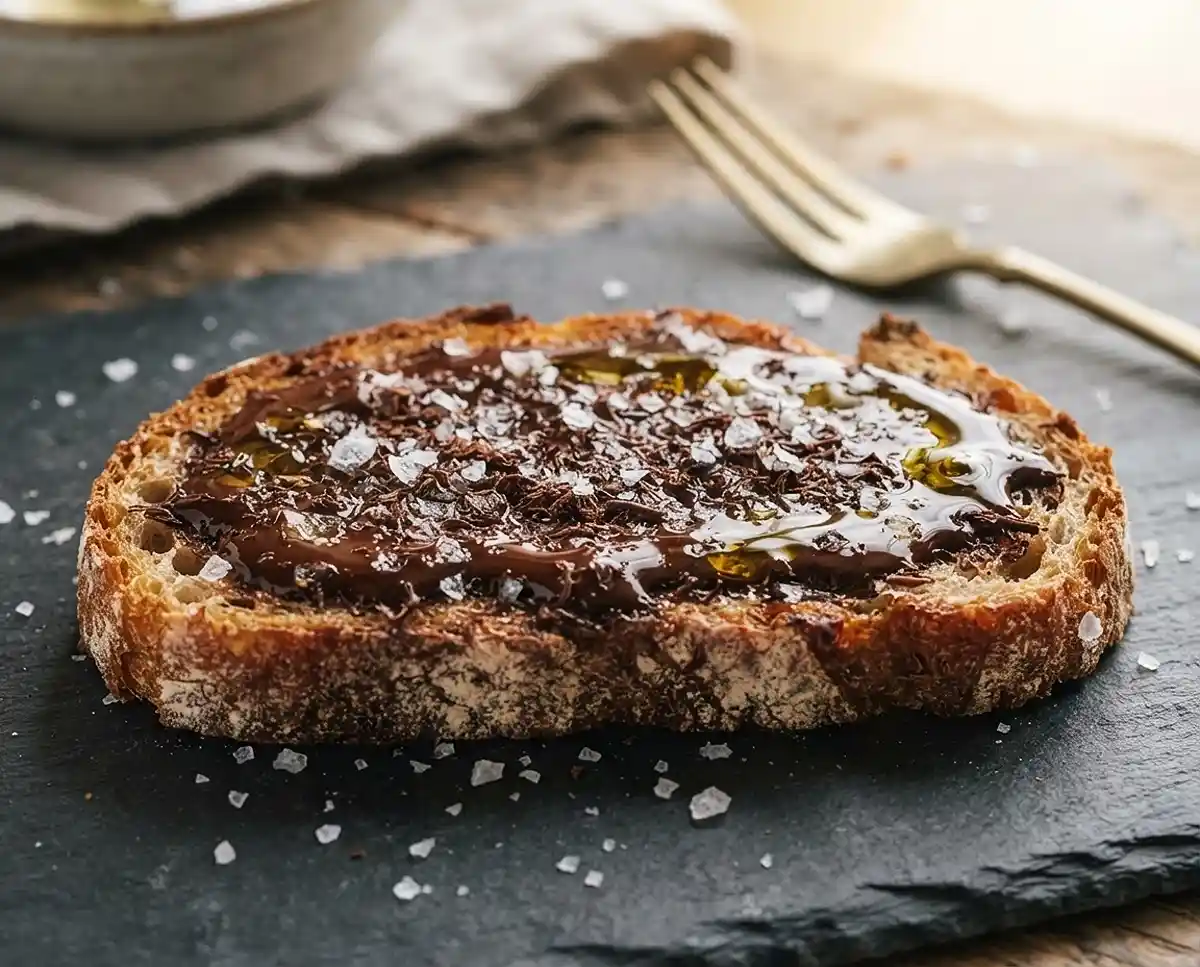
Cozy Grated Chocolate Toast with Sea Salt Recipe
A sophisticated twist on toast that transforms simple ingredients into something truly special. This Mediterranean-inspired treat is elegant, easy, and unexpectedly addictive.
I’ll be honest—when I first heard about grated chocolate toast with sea salt, I thought it sounded a bit odd. Chocolate on toast? With olive oil and salt? But one rainy afternoon when I was craving something sweet but didn’t want to bake, I gave it a try. That first bite completely changed my mind. The warm toast melts the chocolate into a glossy, silky coating, the olive oil adds this luxurious richness, and that pinch of sea salt? Pure magic.
This isn’t your typical chocolate spread situation. It’s more sophisticated, more grown-up, and honestly more interesting. The combination might sound unusual if you’ve never tried it, but trust me—once you do, you’ll understand why this simple snack has been popular in parts of Europe for generations.
Table of Contents
Why You’ll Love This Grated Chocolate Toast with Sea Salt
This chocolate toast with olive oil and sea salt is ridiculously simple but feels absolutely indulgent. You need exactly four ingredients and about five minutes from start to finish. No bowls to wash, no measuring cups—just toast, grate, drizzle, and devour.
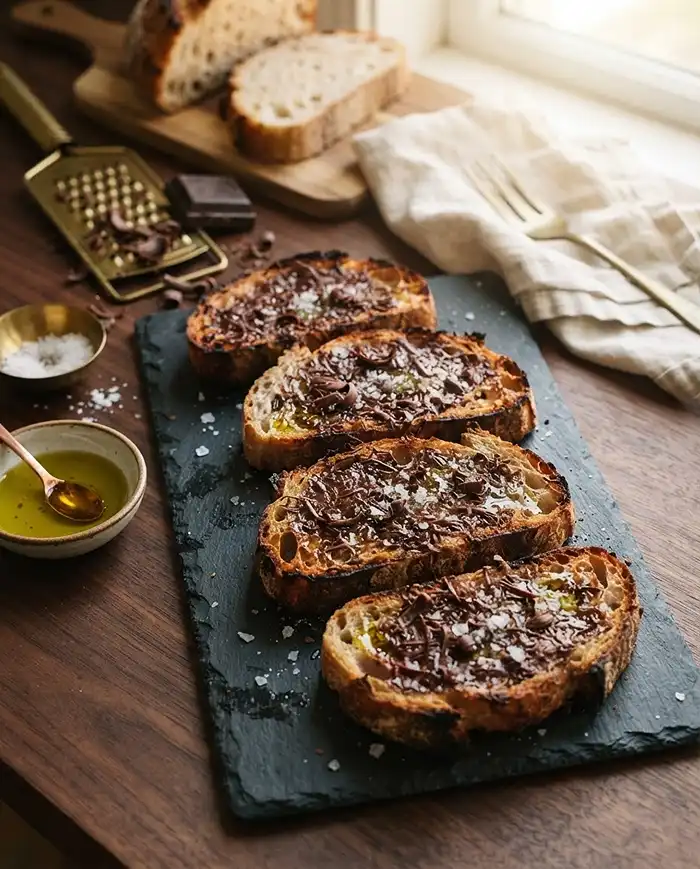
The texture is what gets me every time. The chocolate doesn’t just sit on top like a spread would. Instead, it melts into these gorgeous glossy streaks and pockets, creating little pools of melted chocolate that soak slightly into the warm bread. The olive oil brings a fruity, peppery note that somehow makes the chocolate taste even more chocolate-y, and the sea salt makes every flavor pop.
It’s sophisticated enough to serve to guests as a light dessert or afternoon snack, but easy enough to make when you’re standing in your kitchen at 3 PM wondering what that sweet craving is all about. No judgment here—I’ve made this more times than I’d like to admit on random Tuesday afternoons.
And here’s the thing: it actually feels special. It’s not just throwing something on toast and calling it done. The quality of each ingredient really shines through, so you end up with something that tastes thoughtful and intentional, even though it took almost no effort at all.
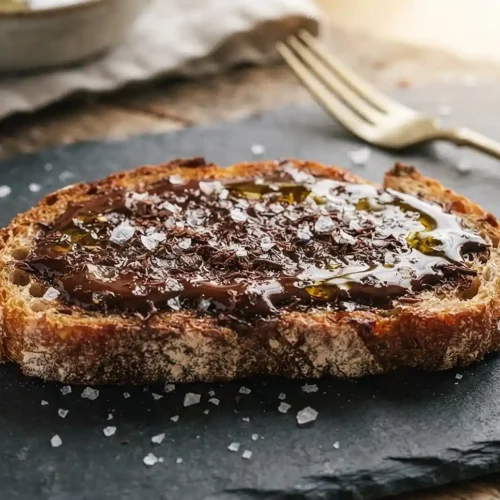
Grated Chocolate Toast with Sea Salt
Ingredients
Ingredients
- 4.0 thick slices sourdough or other good robust bread
- 150.0 g dark bittersweet chocolate grated
- 3.0 tbsp best-quality olive oil plus extra to serve
- 1.0 good pinch sea salt flakes
Instructions
- Toast the bread, then immediately distribute the grated chocolate over the hot toast.
- Drizzle each slice with olive oil and add a good pinch of salt.
- Serve immediately.
Ingredients for Grated Chocolate Toast with Sea Salt
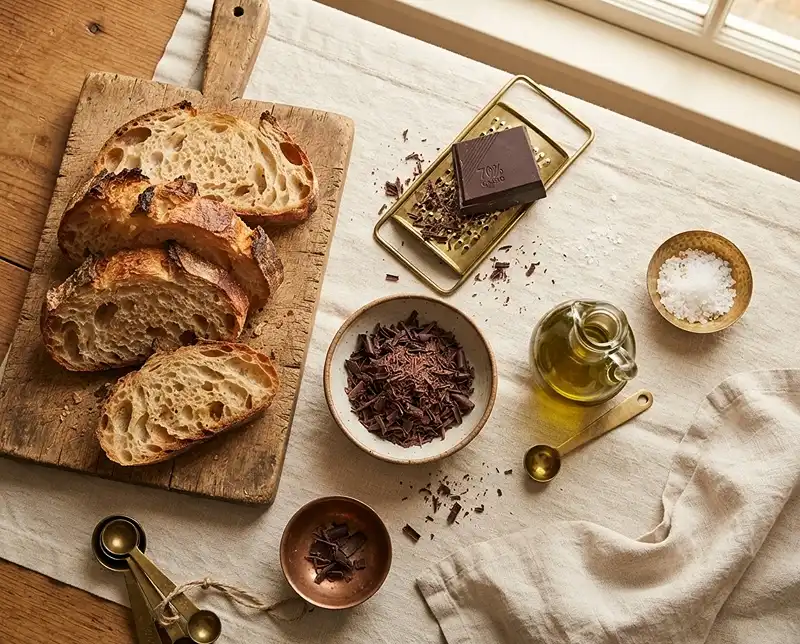
The beauty of this recipe is in its simplicity, which means each ingredient really matters. You’re not hiding anything behind layers of flavor, so choose quality where you can. Don’t worry though—you don’t need fancy specialty items, just the good versions of everyday ingredients.
| Ingredient | Quantity | Notes |
|---|---|---|
| Thick slices sourdough or robust bread | 4 slices | Look for slices about 3/4 inch thick with good structure |
| Dark (bittersweet) chocolate | 150g | 60-70% cacao works beautifully; avoid anything too sweet |
| Best-quality olive oil | 3 tbsp plus extra | Use your good finishing oil, not cooking oil |
| Sea salt flakes | Good pinch per slice | Flaky salt like Maldon is perfect here |
About the Bread: Sourdough is my top choice because its slight tanginess plays beautifully against the chocolate’s richness. A good country loaf, ciabatta, or even a sturdy whole grain bread works well too. You want something with personality and structure—soft sandwich bread will get soggy and won’t provide enough textural contrast. The bread should be thick enough to stay crispy on the outside while getting slightly soft where the chocolate melts into it.
Choosing Your Chocolate: This is where you really get to express yourself. I usually reach for something in the 65-70% cacao range—dark enough to feel sophisticated but not so intense that it’s bitter. Brands like Lindt, Ghirardelli, or Valrhona work wonderfully. The key is that it should be good chocolate you’d enjoy eating on its own. If it tastes flat or waxy straight from the bar, it won’t magically improve on toast. You can learn more about pairing chocolate with olive oil if you’re curious about this classic combination.
The Olive Oil Question: Yes, it matters. This isn’t the time for your everyday cooking olive oil. Pull out that bottle of good extra virgin olive oil you’ve been saving—this is exactly the occasion for it. You want something with actual flavor: fruity, grassy, maybe a little peppery. The oil doesn’t just add richness; it carries and amplifies all the other flavors on the toast.
Salt Matters Too: Please use flaky sea salt, not table salt. Those delicate, crunchy flakes provide little bursts of salinity that make the chocolate taste more complex and interesting. Maldon is the gold standard, but any flaky sea salt will work. The texture is just as important as the flavor here.
Step-by-Step Instructions for Making Grated Chocolate Toast
This might be the easiest recipe I’ll ever share with you, but there are a few little tricks that make the difference between good and absolutely spectacular. The timing is key—you want that toast hot enough to melt the chocolate but you also want to eat it while everything is at its peak.
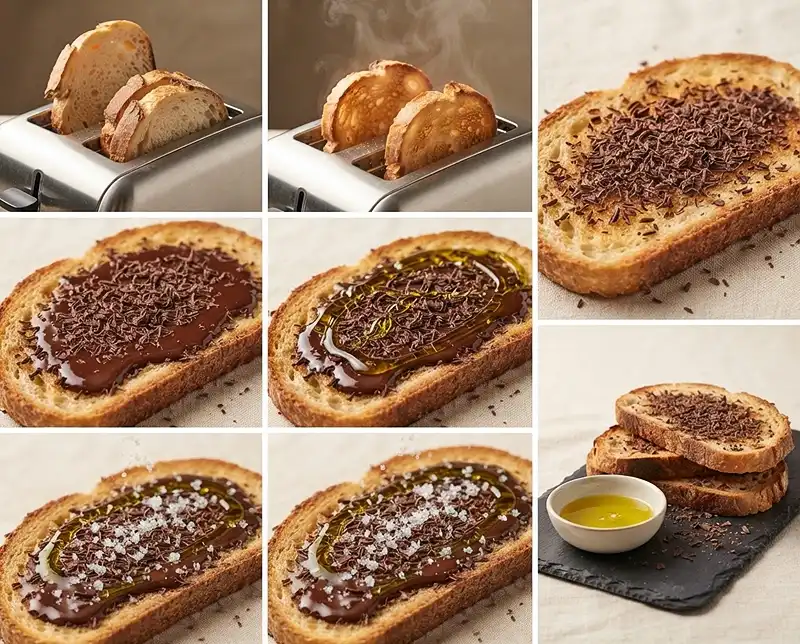
- Toast your bread to golden perfection. Pop those thick slices into your toaster, toaster oven, or under the broiler until they’re deeply golden and crispy. You want them properly toasted, not just warmed—think golden brown with some darker spots. The toast needs to be hot enough to melt the chocolate on contact, so don’t let it cool down while you’re fiddling with other things.
- Grate the chocolate quickly. While the bread is toasting, grate your chocolate using the large holes of a box grater. Work quickly because the warmth from your hands can start melting it. If your kitchen is warm, you can even pop the chocolate in the freezer for 5 minutes beforehand to make it easier to grate. You want these beautiful chocolate shavings that will melt into gorgeous streaks—not chocolate dust. Some people like to grate it directly over the hot toast, which works too, but I prefer having it ready to go so I can work fast.
- Distribute the chocolate immediately. The second your toast pops up, sprinkle the grated chocolate evenly over each hot slice. Don’t wait even 30 seconds—the heat from the toast is what melts the chocolate into that glossy, partially melted state that makes this chocolate toast with olive oil and sea salt so irresistible. You’ll see it start to soften and melt right away, creating those gorgeous glossy patches mixed with some pieces that stay slightly more solid. That contrast is exactly what you want.
- Drizzle generously with olive oil. Take your good olive oil and drizzle about 3/4 tablespoon over each slice in a zigzag pattern. Don’t be shy here—the oil is a key flavor component, not just a finishing touch. It should pool slightly in spots and soak into the bread in others. You’ll see it start to mingle with the melting chocolate, creating these beautiful glossy streaks.
- Add your sea salt pinch. Finish each slice with a good pinch of flaky sea salt, distributing it evenly so every bite gets a little salty crunch. I usually hold my hand about 6 inches above the toast and sprinkle from a height so it distributes more evenly. You want enough that you can see the flakes catching the light, but you’re not making it aggressively salty.
- Serve immediately and enjoy. This isn’t something you make ahead. Grab your toast, maybe pour yourself a cup of coffee or a glass of wine if it’s that kind of afternoon, and eat it while it’s still warm. The contrast between the crispy toast, the melty chocolate, and those crunchy salt flakes is best enjoyed right away.
Expert Tips for Perfect Chocolate Toast
Temperature is everything. The toast needs to be genuinely hot when you add the chocolate. If it’s just warm, the chocolate won’t melt properly and you’ll lose that gorgeous glossy effect. If I’m making multiple slices, I sometimes work in batches so each one gets topped while it’s still steaming hot.
Don’t over-grate your chocolate. You want shavings and curls, not powder. If it’s turning to dust, your chocolate might be too warm or you’re pressing too hard. Lighter pressure and a colder chocolate block will give you better results.
Taste your olive oil first. If you haven’t tried it recently, take a little taste before drizzling it on your toast. Sometimes olive oil can go rancid or lose its flavor, and you’ll definitely notice that on such a simple recipe. It should taste fresh, fruity, and pleasant on its own.
Adjust the salt to your taste. I’m fairly generous with the salt because I love that sweet-salty contrast, but if you’re salt-sensitive, start with less. You can always add more, but you can’t take it away. The first time you make this, maybe keep some extra salt nearby so you can adjust after your first bite.
Consider your chocolate percentage. If you’re using chocolate that’s higher than 70% cacao, you might want to use slightly less olive oil or choose a milder oil, as the flavors can compete. Conversely, if you go with something closer to 60%, you can be more generous with both the oil and the salt.
Make it a complete snack. I often pair this with fresh berries on the side—the fruit’s acidity cuts through the richness beautifully. Sliced strawberries or fresh raspberries are particularly good. It’s also wonderful alongside a proper espresso or a glass of red wine if you’re feeling fancy.
Delicious Variations to Try
Milk Chocolate Version: Use good quality milk chocolate instead of dark for a sweeter, more nostalgic version. I’d recommend reducing the olive oil slightly since milk chocolate is already richer, and you might want to use a bit more salt to balance the sweetness. This version reminds me of the chocolate treats I loved as a kid, but all grown up.
Add Orange Zest: Before adding the chocolate, sprinkle a little fresh orange zest over the hot toast. The citrus oil gets activated by the heat and adds this beautiful brightness that plays wonderfully with both the chocolate and olive oil. It’s subtle but really lovely.
Spiced Chocolate Toast: Mix a tiny pinch of cayenne pepper or cinnamon with your grated chocolate before sprinkling it on. The spice adds complexity and warmth. Go easy though—a little goes a long way, and you want to enhance, not overwhelm.
Honey Drizzle Variation: After everything else is on, add a very light drizzle of honey. This makes it sweeter and adds a floral note. Use a mild honey so it doesn’t compete with the olive oil. I only do this occasionally when I want something more dessert-like.
Nut Butter Base: Spread a very thin layer of almond or hazelnut butter on the toast before adding the chocolate. This isn’t traditional, but it adds protein and makes it more substantial if you’re having it for breakfast. The nut flavor complements the chocolate beautifully.
Mixed Chocolate Approach: Use half dark chocolate and half milk chocolate for something in between. Grate them separately and layer them for visual interest and a more complex flavor profile.
Herb-Infused Version: This sounds wild, but a tiny bit of fresh rosemary or thyme, very finely chopped and sprinkled on with the salt, is surprisingly wonderful. Use less than you think—just a few leaves’ worth. The savory herbs make it feel even more sophisticated and unexpected.
Troubleshooting Common Issues
My chocolate isn’t melting: Your toast wasn’t hot enough. Make sure you’re toasting it until it’s genuinely hot throughout, not just surface-level warm. Also, work immediately—don’t let the toast sit at all before adding the chocolate. If this keeps happening, try toasting your bread a bit longer or using thinner chocolate shavings that will melt more easily.
The chocolate is melting too much and getting greasy: This usually happens when the toast is too hot (like if you toasted it under a broiler and it’s basically burning hot) or if you’re using chocolate with a lower cacao percentage that has more cocoa butter. Let the toast cool for literally just 10-15 seconds before adding the chocolate, or switch to a darker chocolate with less fat content.
It tastes too bitter: Your chocolate might be too dark for your taste, or you’re not using enough salt. The salt really does magic in bringing out chocolate’s sweeter notes and taming any bitterness. Try using a 60-65% cacao chocolate instead of something higher, and be more generous with the salt flakes.
The olive oil tastes too strong or weird: Your oil might be rancid or just too assertive for this application. Olive oil should smell fresh and fruity, not musty or overly sharp. Try a different bottle, preferably something marked as “mild” or “delicate.” Sometimes a very robust, peppery oil can overwhelm the chocolate rather than complement it.
My grated chocolate is clumping or melting while I grate: Your hands are too warm, or your kitchen is too hot. Pop the chocolate in the freezer for 5-10 minutes before grating, and work quickly. You can also hold the chocolate with a paper towel to insulate it from your hand’s warmth. Some people wear a thin glove on their holding hand when grating chocolate in warm weather.
The toast gets soggy: You’re either using bread that’s too soft or too thin, or you’re being too generous with the olive oil. Make sure your bread is substantial and well-toasted to create a moisture barrier. If you’re finding it consistently gets soggy, reduce the oil to about 1/2 tablespoon per slice and see if that helps.
It’s not sweet enough: If you have a serious sweet tooth, this might feel more like a savory-sweet experience than a dessert. Try using a sweeter chocolate (60% instead of 70%), or add that optional honey drizzle I mentioned in the variations. You could also try mixing in some sweeter chocolate elements if you prefer something more dessert-forward.
Storage Tips for Chocolate Toast
Here’s the truth: grated chocolate toast with sea salt is really meant to be eaten immediately. That’s when all the textures and temperatures are at their absolute best. The contrast between the hot, crispy toast, the melting chocolate, and the crunchy salt flakes is the whole point, and that doesn’t really survive storage.
| Storage Method | Duration | Notes |
|---|---|---|
| Room Temperature | Not recommended | Toast will get soggy, chocolate will fully harden |
| Refrigerator | Not recommended | Bread becomes tough and unpleasant |
| Freezer | Not recommended | Completely changes texture and flavor |
| Prep Components | Grated chocolate: 2-3 days refrigerated | Store in airtight container, bring to room temp before using |
If you absolutely must prep ahead, your best bet is to grate the chocolate in advance and store it in an airtight container in the refrigerator for 2-3 days. Let it come back to room temperature before using, or it won’t melt properly on the hot toast. You can also portion out your olive oil into small containers so assembly is faster.
But honestly? This takes five minutes to make. Just make it fresh when you want it. The experience of eating it warm is so much better than any stored version that it’s worth the minimal effort to make it à la minute, as the French would say.
If you’ve somehow made too much and have leftovers (though I can’t imagine how), you could theoretically eat it cold, but it becomes a completely different thing. The chocolate will be hard, the toast will be stale, and you’ll lose all that gorgeous textural contrast. At that point, you might as well tear it up and use it as a topping for ice cream or yogurt—at least then you’re working with the changed texture intentionally rather than being disappointed by it.
Grated Chocolate Toast with Sea Salt FAQs
What type of chocolate works best for grated chocolate toast with sea salt?
Dark chocolate with 60-70% cacao content works best as it provides a rich, slightly bitter flavor that balances well with the sea salt. However, you can also use milk chocolate for a sweeter version or semi-sweet chocolate for a middle ground. Make sure the chocolate is cold or frozen before grating to prevent it from melting in your hands.
Should I toast the bread before or after adding the grated chocolate?
Toast the bread first until it reaches your desired level of crispiness. The warm toast will help the grated chocolate soften slightly and begin to melt when you sprinkle it on top, creating a delicious contrast between the crunchy toast and the melting chocolate.
What kind of sea salt should I use for this recipe?
Flaky sea salt such as Maldon or fleur de sel works exceptionally well because the delicate flakes provide bursts of saltiness without overpowering the chocolate. You only need a light pinch sprinkled over the grated chocolate. Avoid using regular table salt as it can be too fine and make the toast taste overly salty.
Can I add butter to grated chocolate toast with sea salt?
Yes, adding a thin layer of butter to the warm toast before sprinkling the grated chocolate is highly recommended. The butter adds richness and helps the chocolate adhere to the bread better. You can use salted or unsalted butter depending on your preference, though unsalted butter gives you more control over the final saltiness.
How do I store leftover grated chocolate for future toast?
Store grated chocolate in an airtight container in the refrigerator for up to two weeks. You can also freeze it for up to three months. To prevent clumping, you can toss the grated chocolate with a small amount of cocoa powder. When ready to use, sprinkle the cold grated chocolate directly onto hot toast so it melts slightly upon contact.
Enjoying Your Chocolate Toast
There’s something quietly luxurious about this grated chocolate toast with sea salt. It’s not flashy or complicated, but it feels special every single time I make it. Maybe it’s the way the chocolate melts into glossy streaks, or how that flaky salt catches the light, or the way the olive oil makes everything taste more vibrant and alive.
What I love most is how this recipe makes you slow down. You can’t prep it ahead and reheat it. You can’t make a big batch for the week. You have to make it fresh, and you have to eat it right away while everything is at its perfect temperature. In our world of meal prep and making everything ahead, there’s something really lovely about a recipe that demands you be present for it.
The combination might sound unusual if you’ve never tried chocolate toast with olive oil and sea salt before, but I promise you it works. That sweet-salty-rich-fruity combination hits all the right notes, and the textural contrast between crispy toast, melting chocolate, and crunchy salt keeps every bite interesting.
Next time you’re craving something sweet but don’t want to commit to a whole baking project, give this a try. Next time you have good bread, good chocolate, and good olive oil sitting around, this is your excuse to use them all at once. And next time you have guests over and want to offer something simple but impressive with afternoon coffee, this is your secret weapon.
Make it once and you’ll understand why something this simple has stayed popular for so long. Then make it again next week, and probably the week after that too. I certainly do. If you love the chocolate and olive oil combination, you might also enjoy my Italian chocolate olive oil cake or even try incorporating these flavors into my double chocolate banana bread for another delicious twist.
Now go toast some bread, grate some chocolate, and see what all the fuss is about. I’ll be over here making my third slice of the week and absolutely not feeling guilty about it.