Baked Salmon with Potatoes and Asparagus Sheet Pan Dinner
Okay, real talk — this baked salmon with potatoes and asparagus is the kind of dinner that makes you feel like you have your life together. Everything goes on one pan, the oven does the heavy lifting, and you’re sitting down to something that looks genuinely impressive in under 40 minutes. I make this on those nights when I want something healthy but also really, truly delicious — no compromises.
Table of Contents
Why You’ll Love This Recipe
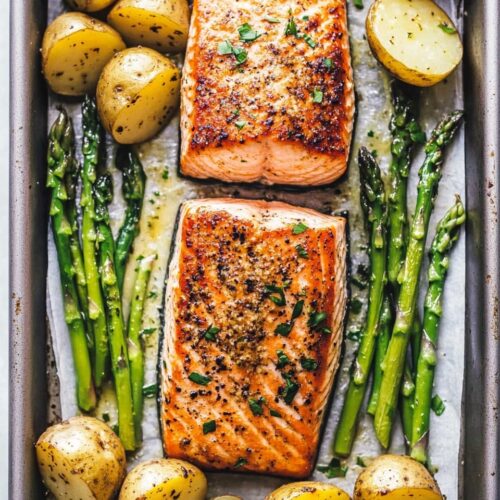
This isn’t just “healthy dinner” food — it’s actual, craveable, look-forward-to-it food. The salmon gets a honey-dijon-butter glaze that caramelizes just enough in the oven, the baby potatoes turn golden and crispy on the edges, and the asparagus spears get slightly charred and savory. All on one pan. All at once. It’s basically a miracle.
The garlic herb salmon preparation here is foolproof. Italian herbs, garlic powder, olive oil — simple, pantry-friendly stuff that punches way above its weight. Whether you’re cooking for two on a Tuesday or feeding the whole family on a Sunday, this recipe scales beautifully and delivers every single time.
Baked Salmon with Potatoes and Asparagus
Equipment
- Large Sheet Pan (Half Sheet 18×13 inch)
- Small mixing bowl
- Whisk
- Pastry brush
- Cutting board
- Chef’s knife
Ingredients
Produce
- 1 pound Asparagus ends trimmed
- 2 pounds Baby red or gold potatoes quartered
- ½ Lemon thinly sliced
Protein
- 4 Salmon fillets
Oils & Fats
- 3 tablespoons Olive oil divided
- 2 tablespoons Butter melted
Glaze
- 2 tablespoons Honey
- 1 teaspoon Dijon mustard
Seasonings
- Salt and pepper to taste
- 2 teaspoons Italian herb blend for potatoes — store-bought mix of basil, oregano, thyme, rosemary, marjoram
- ½ teaspoon Italian herb blend for glaze
- 1 teaspoon Garlic powder
Instructions
- Preheat your oven to 400°F (200°C).
- Toss the quartered baby potatoes with 2 tablespoons of olive oil, salt and pepper to taste, 1 teaspoon garlic powder, and 2 teaspoons Italian herb blend until evenly coated. Spread in a single layer on a large sheet pan.
- Bake the potatoes in the preheated oven for 10 minutes to give them a head start — this ensures they finish cooking at the same time as the salmon.
- While the potatoes bake, whisk together the melted butter, honey, Dijon mustard, and ½ teaspoon Italian herb blend in a small bowl to make the glaze. Set aside.
- Remove the sheet pan from the oven. Arrange the salmon fillets and trimmed asparagus spears alongside the potatoes. Brush the honey-Dijon glaze generously over each salmon fillet.
- Drizzle the asparagus with the remaining 1 tablespoon of olive oil, season with salt and pepper, and tuck the lemon slices in between the asparagus spears.
- Return the pan to the oven and bake for 15 minutes, until the asparagus and potatoes are fork-tender and the salmon flakes easily with a fork. Serve immediately.
Notes
Ingredients
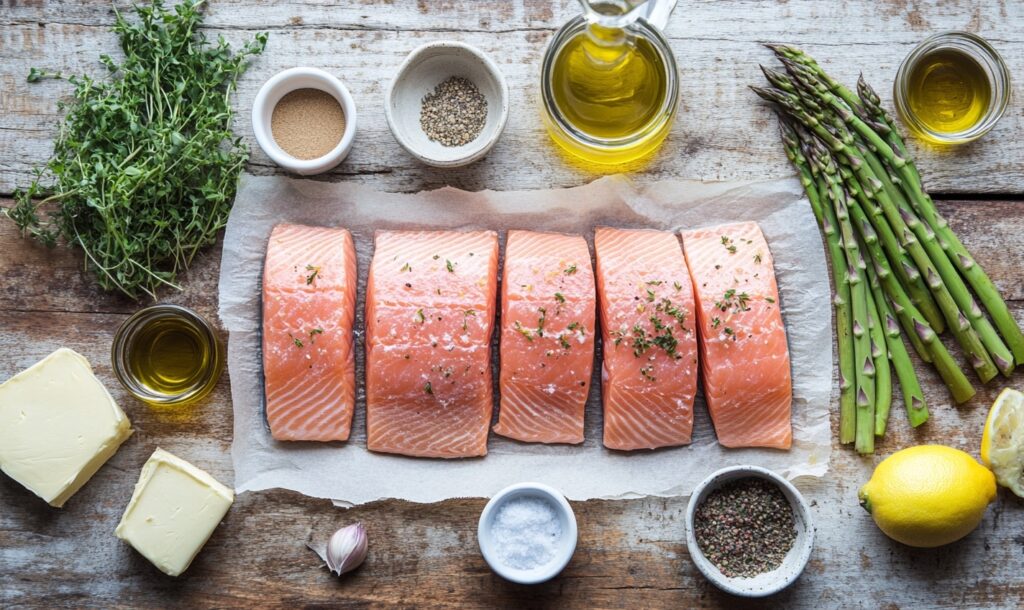
| Category | Ingredient | Amount |
|---|---|---|
| Produce | Asparagus, ends trimmed | 1 pound |
| Baby red or gold potatoes, quartered | 2 pounds | |
| Lemon, thinly sliced | ½ lemon | |
| Protein | Salmon fillets | 4 fillets |
| Pantry / Oils | Olive oil | 3 tablespoons |
| Butter, melted | 2 tablespoons | |
| Honey | 2 tablespoons | |
| Dijon mustard | 1 teaspoon | |
| Seasonings | Salt and pepper | To taste |
| Italian herb blend (see note) | 2½ teaspoons (divided) | |
| Garlic powder | 1 teaspoon |
Note on Italian herb blend: Store-bought works great here! It typically contains a mix of basil, oregano, thyme, rosemary, and marjoram. If you’re out, just grab what you have — even a simple mix of dried oregano and basil does the job.
How to Make Baked Salmon with Potatoes and Asparagus
Step 1: Start With the Potatoes
Preheat your oven to 400°F. While it’s heating up, toss your quartered baby potatoes with 2 tablespoons of olive oil, a generous pinch of salt and pepper, the garlic powder, and 2 teaspoons of the Italian herb blend. You want every potato piece coated — get in there with your hands if you have to.
Spread them out on a large sheet pan in a single layer (crowding = steaming, not crisping — nobody wants sad potatoes). Pop them in the oven for 10 minutes to get a head start. The kitchen will start smelling incredible almost immediately.
Step 2: Make the Honey-Dijon Glaze
While the potatoes are doing their thing, whisk together the melted butter, honey, Dijon mustard, and the remaining ½ teaspoon of Italian herb blend in a small bowl. This glaze is the secret weapon of this whole recipe. It’s sweet, tangy, herby, and it turns into this gorgeous sticky coating on the salmon.
Taste it. Go ahead. Try not to eat it straight from the bowl. I’ll wait.
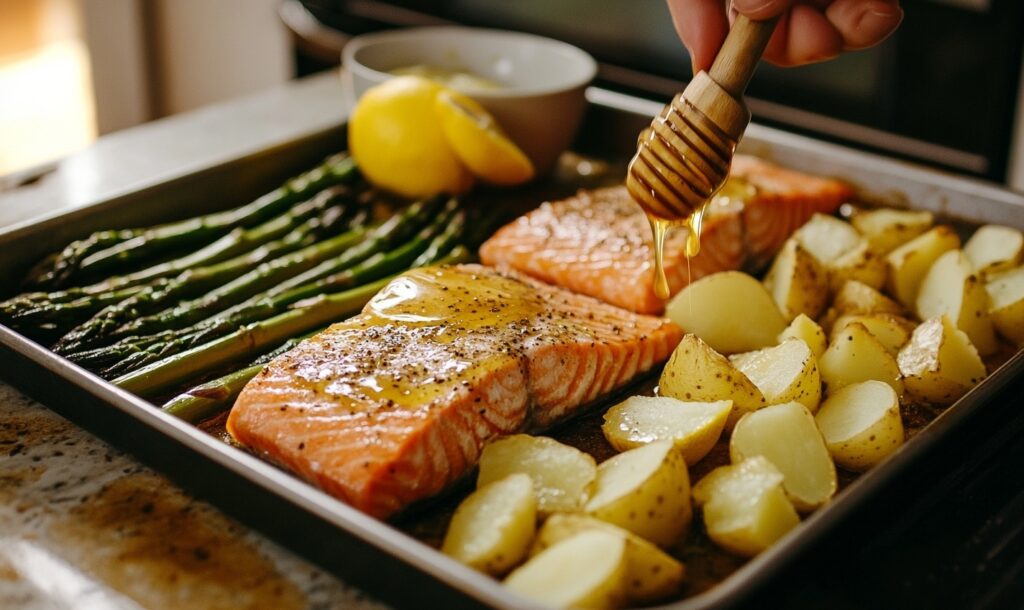
Step 3: Add the Salmon and Asparagus
Pull the sheet pan out of the oven and arrange your salmon fillets and asparagus spears right alongside the potatoes. Brush that honey-dijon glaze generously over each salmon fillet — don’t be shy with it. Then drizzle the asparagus with the remaining tablespoon of olive oil and season with salt and pepper.
Tuck the lemon slices in between the asparagus spears. This isn’t just for looks (though it does look beautiful) — as the lemon heats up, it releases a gentle citrus steam that infuses everything around it. That’s the salmon with asparagus and thyme-inspired magic happening right there.
Step 4: Bake and Serve
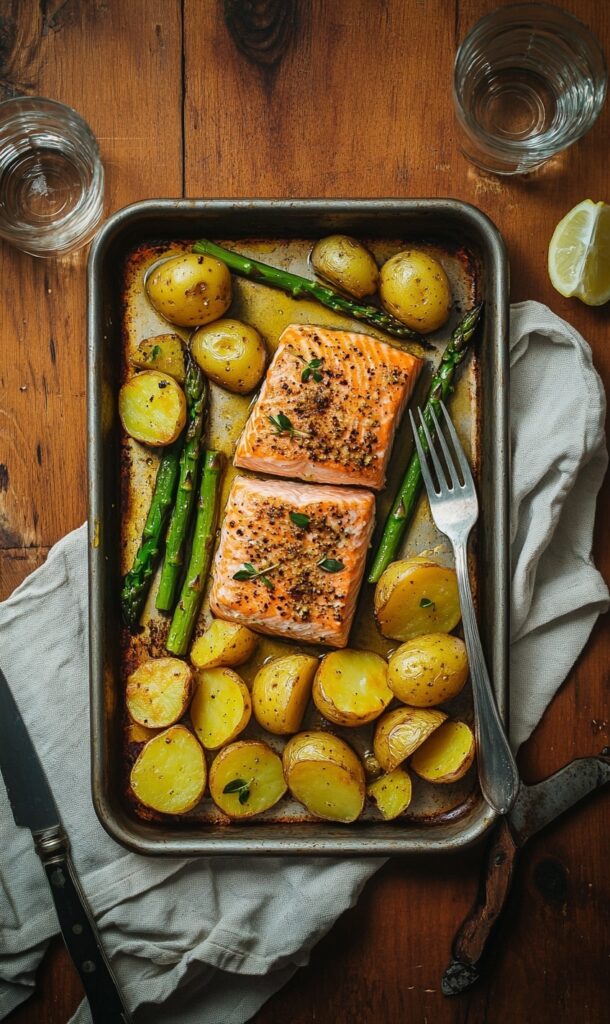
Back into the oven it goes for another 15 minutes. You’re looking for asparagus that’s tender with slightly charred tips, potatoes that are fork-tender and golden, and salmon that flakes easily when pressed gently with a fork. It should look almost too good to eat.
Serve immediately — this is a right-out-of-the-oven situation. Everything is at its absolute peak the moment it comes off that pan.
Expert Tips for the Best Sheet Pan Salmon
Get the Pan Size Right
Use the largest sheet pan you have. Seriously. You need enough room for the potatoes, salmon, and asparagus to all lay flat without overlapping. A half sheet pan (18×13 inches) is ideal. If you only have a smaller one, split things between two pans.
Pat the Salmon Dry
Before glazing, pat your salmon fillets dry with a paper towel. This helps the glaze stick better and gives you a nicer finish on the outside. Wet salmon = glaze sliding right off. Dry salmon = perfect caramelized coating. Easy win.
Don’t Skip the Head Start on Potatoes
That first 10-minute potato bake before adding everything else is non-negotiable. Potatoes take longer than salmon and asparagus to cook through — if you add everything at once, you’ll end up with overcooked fish and underdone potatoes. Trust the process.
Check for Doneness
Salmon is done when it flakes easily with a fork and has turned from translucent to opaque. If you love your salmon a bit less done in the center (that beautiful barely-set middle), check at the 12-minute mark instead of 15. If your fillets are extra thick, add 2-3 minutes.
Variations to Try
Make It Lemon-Herb
Skip the honey-dijon glaze entirely and go full olive oil garlic herb salmon mode instead. Just brush the fillets with a mixture of olive oil, minced garlic, lemon zest, and fresh herbs like thyme or dill. It’s lighter, brighter, and honestly just as good.
Swap the Veggies
Not an asparagus person? No problem. Broccolini, green beans, or sliced zucchini all work beautifully here and cook in about the same amount of time. For something heartier, try adding sliced bell peppers or cherry tomatoes alongside the potatoes.
Try It With Sweet Potatoes
Swap the baby potatoes for cubed sweet potatoes for a slightly sweeter, earthier vibe. It pairs especially well with the honey-dijon glaze and gives the whole dish a more autumnal feel. Just check that they’re fork-tender before adding the salmon — sweet potatoes can sometimes need a couple extra minutes.
Troubleshooting
My Salmon Is Sticking to the Pan
Make sure your sheet pan is well-oiled before you start, or line it with parchment paper or foil for easy cleanup and zero sticking. A thin layer of oil under the salmon fillets before glazing also helps a lot.
The Glaze Is Burning
If your oven runs hot, the honey in the glaze can over-caramelize. Keep an eye on things after the 10-minute mark, and if the salmon tops are browning too fast, tent a piece of foil loosely over just the salmon for the last few minutes.
Asparagus Is Getting Too Soggy
Thin asparagus spears cook faster than thick ones. If yours are on the thin side, add them to the pan with just 10 minutes left (instead of 15) to keep them from turning completely limp. You want tender with a little bite, not mush.
Storage & Reheating
| Method | How Long | Notes |
|---|---|---|
| Refrigerator | Up to 3 days | Store in an airtight container. Keep salmon separate from veggies if possible to prevent sogginess. |
| Freezer | Up to 2 months | Salmon freezes well; potatoes and asparagus may change texture. Best frozen without the glaze. |
| Reheat (Oven) | 10–12 min at 325°F | Best method for keeping salmon moist. Cover with foil to prevent drying out. |
| Reheat (Microwave) | 1–2 min on 50% power | Quick but can make salmon rubbery — use in a pinch only. |
No-Waste Kitchen Ideas
Leftover salmon flakes beautifully into a grain bowl the next day — just pile it over rice or quinoa with some greens and a drizzle of soy sauce or lemon tahini. Leftover potatoes? Crisp them up in a skillet with a little butter for the best breakfast home fries. And those leftover asparagus spears? Chop them and toss into scrambled eggs or a frittata. Nothing goes to waste around here.
If you love easy sheet pan dinners like this, you’ll also love browsing through the snack board ideas on the basketball snack board post — great for feeding a crowd with minimal effort.
Nutritional Information
Per serving (1 salmon fillet with ¼ of potatoes and asparagus). Values are estimates.
| Nutrient | Amount Per Serving |
|---|---|
| Calories | ~520 kcal |
| Protein | ~38g |
| Total Fat | ~22g |
| Saturated Fat | ~6g |
| Carbohydrates | ~42g |
| Fiber | ~5g |
| Sugar | ~10g |
| Sodium | ~380mg |
| Omega-3 Fatty Acids | ~2,200mg |
Baked Salmon with Potatoes and Asparagus FAQs
Can I use frozen salmon fillets?
You can, but make sure they’re fully thawed and patted dry before cooking. Frozen-then-thawed salmon releases more moisture as it cooks, so drying it well beforehand really helps the glaze adhere and prevents a watery pan situation. Thaw overnight in the fridge for best results.
What’s the best type of potato to use?
Baby red or gold potatoes are the move here — they’re naturally creamy, hold their shape well, and cook faster than larger varieties when quartered. If you only have regular Yukon Golds or russets, just cut them into smaller 1-inch chunks and they’ll work just fine.
Can I make this ahead of time?
The short answer is: kind of. You can prep everything in advance — season the potatoes, make the glaze, trim the asparagus — and store them separately in the fridge until you’re ready to cook. But the actual baking is best done fresh. Salmon is really at its best right out of the oven, so I’d recommend prepping, not pre-baking.
What can I substitute for Dijon mustard?
Whole grain mustard works great and adds a nice rustic texture. Yellow mustard is a bit more sharp and vinegary but still tasty. If you’re not a mustard fan at all, try a teaspoon of white miso paste in the glaze instead — it gives a similar savory, umami depth without any mustard flavor.
Is this recipe gluten-free?
Yes! Every ingredient in this recipe is naturally gluten-free as written. Just double-check your Dijon mustard and Italian herb blend labels if you’re cooking for someone with celiac disease — most brands are fine, but it’s always worth a quick check.
Ready to Make It?
This baked salmon with potatoes and asparagus is honestly one of those recipes that earns a permanent spot in your dinner rotation — it’s easy, it’s beautiful, and it tastes like you spent way more effort than you actually did. I love that about it.
If you give this a try, I’d absolutely love to hear how it went! Leave a comment below and let me know what you thought — did you try any fun variations? A different glaze? Swapped the veggies? Tell me everything.
And if you’re the kind of person who loves saving recipes for later (same), pin this on Pinterest so it’s always easy to find!
While you’re here, you might also want to check out some of the sweet recipes on the site — like these cinnamon roll cookies for dessert, or this overnight croissant breakfast casserole for the next morning. Because balance, right?