Creamy Milk Buldak Carbonara Recipe
I’ll never forget the first time I tried Creamy Milk Buldak Carbonara straight out of the packet. My mouth was on fire, my eyes were watering, and I was gulping down water like I’d just run a marathon. But here’s the thing—the flavor was incredible. So I started experimenting with ways to keep that addictive spice without the full-on assault, and that’s when I discovered the magic of adding milk to Buldak Carbonara.
If you’ve been curious about how to cook buldak carbonara with milk, you’re in the right place. This simple hack transforms the notoriously spicy instant noodles into a creamy, dreamy bowl of comfort that you’ll want to make on repeat.
Table of Contents
What Makes This Buldak Carbonara Recipe Special
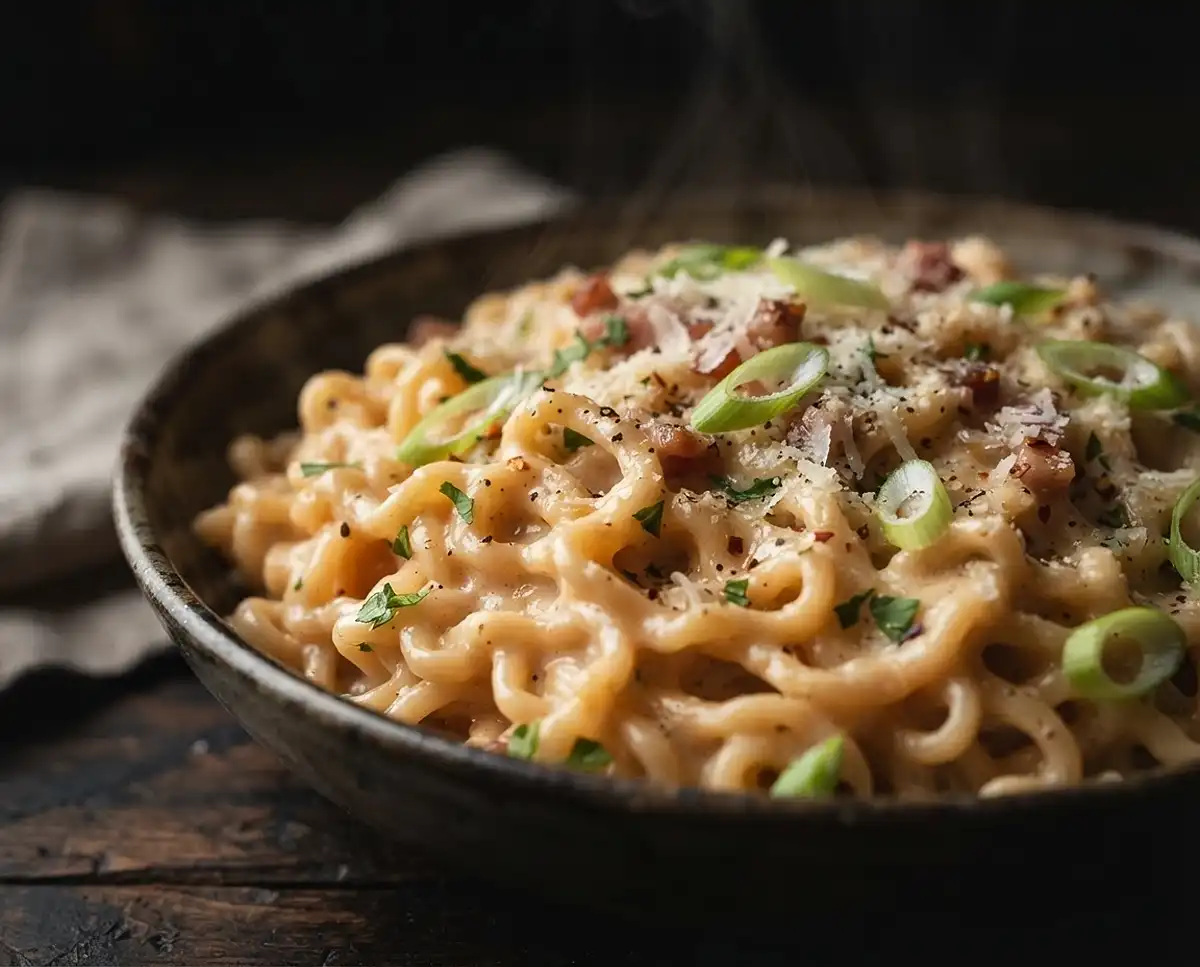
The beauty of this buldak carbonara recipe is that milk acts like a buffer. It mellows the fiery kick from the sauce while creating this luscious, velvety coating that clings to every noodle. You still get that signature gochugaru heat and umami punch, but it’s wrapped in something gentle and comforting.
I use whole milk most of the time because the fat content really rounds out the flavors, but I’ve also tested this with almond milk and oat milk when I’m out of dairy, and it works beautifully. The butter adds another layer of richness, and if you’re feeling fancy, that optional egg yolk takes it straight into restaurant-quality territory.
This is the kind of meal I make when I need something fast, satisfying, and just a little bit indulgent. It comes together in about 8 minutes, uses mostly pantry staples, and tastes like you put way more effort into it than you actually did.
Why You’ll Love These Spicy Carbonara Noodles
Let me count the ways. First, it’s ridiculously quick. We’re talking boil, stir, done. Second, you probably have everything you need already, especially if you’ve stocked up on Buldak packets like I have. Third, the milk hack makes these noodles infinitely more approachable if you’re heat-sensitive but still want that Korean spice experience.
The texture is what really gets me. Those thick, chewy noodles coated in a glossy, creamy sauce with little pockets of spice—it’s the kind of thing you want to eat straight from the pot while standing at the stove. Not that I’ve done that. Multiple times.
Plus, this korean carbonara with milk is endlessly customizable. Throw in some sautéed mushrooms, top it with a fried egg, add crispy bacon bits—it’s your canvas.
How to Cook Buldak Carbonara with Milk
Ingredients
Ingredients
- 1 packet Buldak Carbonara instant noodles
- ½ cup milk dairy or non-dairy, e.g., whole milk, almond milk
- 1 tablespoon unsalted butter
- 1 egg yolk optional, for extra creaminess
- Grated Parmesan cheese optional, for garnish
- Chopped green onions or parsley optional, for garnish
Instructions
- Boil 2 cups of water in a small pot. Add the noodles from the Buldak Carbonara packet and cook for 3 minutes, or until al dente. Drain most of the water, leaving about 2-3 tablespoons in the pot with the noodles.
- Reduce heat to low. Add the Buldak liquid sauce packet, milk, and butter to the pot with the noodles. Stir well to combine, ensuring the sauce is evenly distributed and the butter is melted.
- Continue to cook for another 1-2 minutes, stirring constantly, until the sauce thickens slightly and coats the noodles.
- If using, remove the pot from heat and quickly stir in the egg yolk. Stir vigorously to prevent the egg from scrambling. The residual heat will cook the yolk and create a richer, creamier sauce.
- Transfer the noodles to a bowl. Sprinkle with the Buldak carbonara powder packet, grated Parmesan cheese, and chopped green onions or parsley, if desired.
- Serve immediately and enjoy your creamy, spicy Buldak Carbonara!
Ingredients You’ll Need
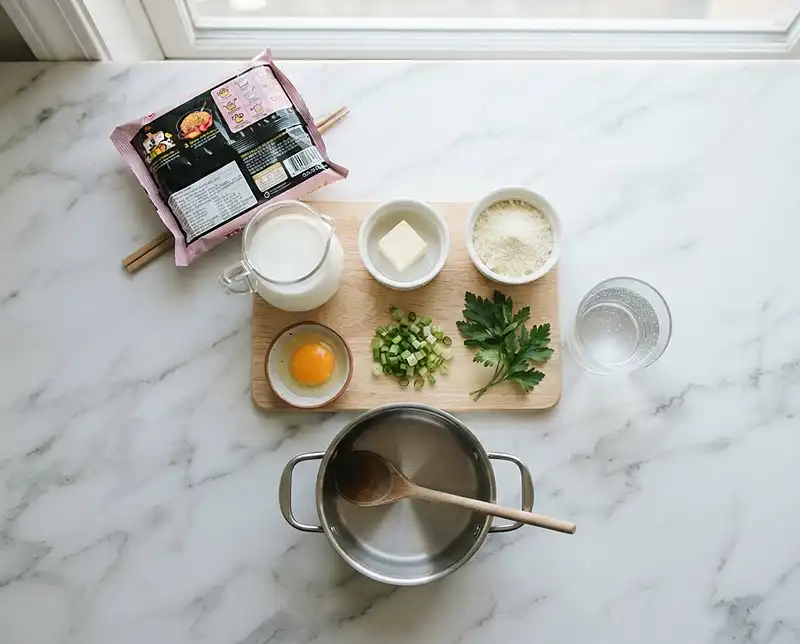
The ingredient list here is refreshingly short. You’re working with the instant noodle packet as your base, then enhancing it with a few simple additions that make all the difference. Quality matters with the milk and butter—they’re doing the heavy lifting to create that creamy sauce, so use what you’d actually enjoy drinking or spreading on toast.
| Ingredient | Quantity | Notes |
|---|---|---|
| Buldak Carbonara instant noodles | 1 packet | The pink carbonara version works best for this recipe |
| Milk | 1/2 cup | Whole milk is creamiest; almond or oat milk work too |
| Unsalted butter | 1 tablespoon | Adds richness and helps emulsify the sauce |
| Egg yolk | 1 (optional) | For extra creaminess and silky texture |
| Grated Parmesan cheese | To taste (optional) | For garnish and extra umami |
| Chopped green onions or parsley | To taste (optional) | Adds freshness and color |
A quick note on the milk: I’ve tested this with everything from skim to whole to cashew milk. Whole milk gives you the richest result, but if you’re watching calories or dairy-free, don’t let that stop you. Just know that lower fat content means a slightly thinner sauce, which you can compensate for by leaving a touch more cooking water in the pot.
Step-by-Step Instructions
This is where the magic happens. The key to perfect spicy carbonara noodles is timing and temperature control. You want that sauce to thicken just enough to coat the noodles without becoming gloopy or breaking. Here’s exactly how to do it.
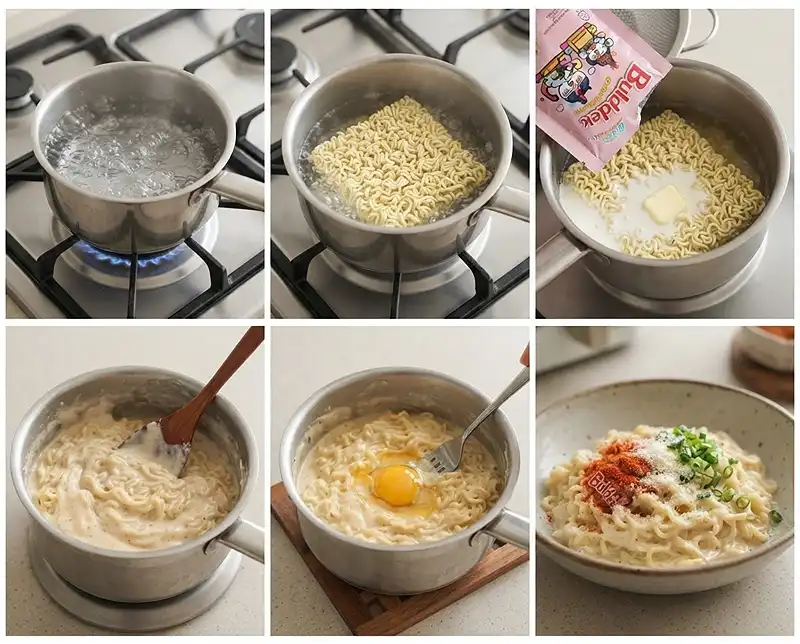
- Boil the noodles: Bring 2 cups of water to a rolling boil in a small pot. Add the noodles from the Buldak Carbonara packet and cook for exactly 3 minutes, or until al dente. They should have a slight chew to them—not mushy. Drain most of the water, leaving about 2-3 tablespoons in the pot with the noodles. That starchy pasta water is gold for helping the sauce come together.
- Add the sauce and milk: Reduce the heat to low. This is important—if the heat is too high, the milk can curdle or the sauce can separate. Add the Buldak liquid sauce packet, the milk, and the butter to the pot with the noodles. Stir everything together well, making sure the sauce is evenly distributed and the butter melts completely into the mixture. You’ll start to see the sauce turn from bright red to this gorgeous peachy-coral color.
- Thicken the sauce: Continue cooking for another 1-2 minutes, stirring constantly. The sauce will start to thicken and reduce slightly, coating the noodles in a glossy, creamy layer. If it looks too thick, add a splash more of the reserved pasta water. If it’s too thin, just keep cooking for another 30 seconds or so.
- Incorporate the egg yolk (optional): If you’re using an egg yolk, this is where it comes in. Remove the pot from the heat completely—this prevents scrambling. Quickly stir in the egg yolk, stirring vigorously in a circular motion. The residual heat will gently cook the yolk, creating a richer, silkier, creamier sauce. You want it to emulsify into the sauce, not turn into scrambled eggs floating around.
- Add the toppings: Transfer the noodles to your serving bowl. Sprinkle the Buldak carbonara powder packet over the top—don’t skip this, it adds a final punch of flavor and a slight crispy texture. Add grated Parmesan cheese if you’re using it, and finish with chopped green onions or parsley for a pop of freshness and color.
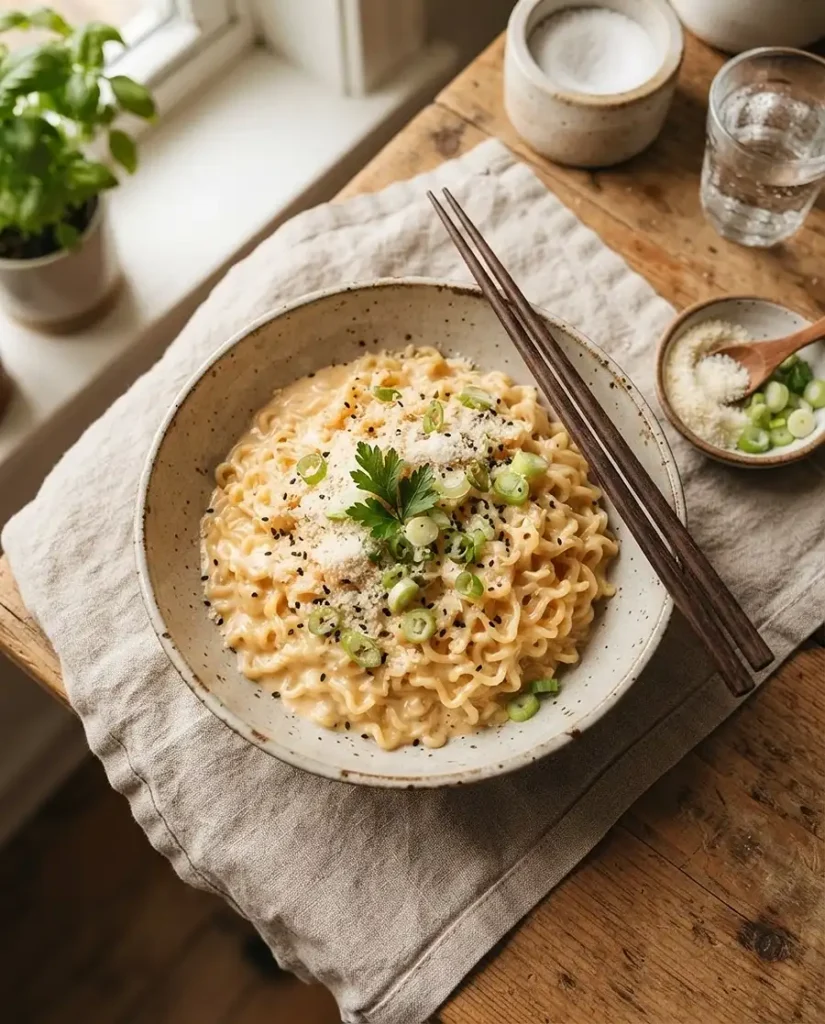
- Serve immediately: These noodles are best enjoyed piping hot, right away. The sauce can thicken as it sits, so dig in while everything is at its peak creamy, spicy perfection.
Expert Tips for Perfect Results
After making this recipe more times than I can count, I’ve picked up a few tricks that make the difference between good and absolutely fantastic buldak noodles.
Don’t skip the starchy pasta water. Leaving a couple tablespoons in the pot helps emulsify the sauce and prevents it from splitting. I learned this the hard way when I drained the noodles completely once and ended up with a greasy, separated mess.
Low heat is your friend. Once you add the milk, keep the temperature gentle. High heat can cause the milk to curdle or the sauce to break, giving you a grainy texture instead of creamy smoothness.
Stir constantly during the thickening stage. This ensures even heat distribution and prevents the bottom from scorching. Plus, it helps the sauce coat every strand of noodle evenly.
Room temperature egg yolk. If you’re using one, let it sit out for about 10 minutes before you start cooking. A cold yolk is more likely to seize up when it hits the hot noodles.
Adjust the milk amount to your preference. Like it extra creamy? Use a bit more milk. Want more heat to shine through? Stick with 1/4 cup instead. I’ve done it both ways depending on my mood.
One more thing—taste as you go. Every batch of Buldak sauce can vary slightly in intensity, so adjust the milk and butter to your personal tolerance level. You’re the boss of your own bowl.
Delicious Variations to Try
Once you’ve mastered the basic technique for how to cook buldak carbonara with milk, the fun really begins. Here are some of my favorite ways to switch things up.
Add protein: I love topping this with a fried egg, runny yolk and all. When you break into it, the yolk mixes with the sauce and creates another layer of richness. Grilled chicken strips, pan-fried tofu, or crispy bacon bits also work beautifully.
Throw in vegetables: Sautéed mushrooms, baby spinach, or thinly sliced bell peppers add nutrition and texture. I usually cook them in the pot first, set them aside, then toss them back in at the end.
Make it cheesier: Stir in a handful of shredded mozzarella or cream cheese along with the milk for an ultra-decadent version. The cheese melts into the sauce and makes it even more luscious.
Experiment with toppings: Sesame seeds, crispy fried onions, nori strips, or even a drizzle of sesame oil can take this dish in different flavor directions. I’ve also done a squeeze of lime juice for brightness, which sounds weird but totally works.
Try different Buldak varieties: This method works with other Buldak flavors too. The cheese version is already mild, but adding milk to the original spicy chicken or the 2x spicy can make them much more manageable while keeping that incredible flavor.
Check out my creamy yogurt noodles recipe if you’re into other easy, creamy pasta ideas.
Troubleshooting Common Issues
Even with a simple recipe like this, things can occasionally go sideways. Here’s how to fix the most common problems.
Sauce is too thin: This usually means you drained too much pasta water or didn’t cook the sauce long enough. Put it back on low heat and simmer for another minute or two, stirring constantly, until it thickens up. You can also add a tiny pinch of cornstarch mixed with water if you’re in a hurry.
Sauce is too thick or gloopy: Add a splash of milk or reserved pasta water and stir it in over low heat. The sauce should be glossy and coat the noodles, not clump up.
Milk curdled: This happens when the heat is too high. Unfortunately, there’s no great fix once it’s curdled, but you can prevent it by keeping the temperature low and stirring constantly. If your milk is on the older side, it’s also more prone to curdling, so use fresh milk when possible.
Egg yolk scrambled: Make sure the pot is completely off the heat before adding the yolk, and stir vigorously as soon as it hits the noodles. If bits of scrambled egg do form, just fish them out—the rest of the dish will still taste great.
Too spicy even with milk: Next time, use more milk (up to 3/4 cup) or add a dollop of sour cream or cream cheese. You can also use only half the sauce packet and save the rest for another meal.
Noodles are mushy: Overcooked noodles are tough to fix, but you can prevent this by setting a timer for exactly 3 minutes and testing them before draining. They should still have a slight firmness in the center.
Storage and Reheating
I’ll be honest—these noodles are best eaten fresh. The sauce can separate and the noodles continue to absorb liquid as they sit, which changes the texture. But if you do have leftovers or want to meal prep, here’s how to handle it.
| Storage Method | Duration | Best Practices |
|---|---|---|
| Refrigerator | Up to 2 days | Store in an airtight container; sauce will thicken considerably |
| Freezer | Not recommended | Cream-based sauces don’t freeze well and can separate |
| Room temperature | Not safe | Dairy and egg should be refrigerated within 2 hours |
To reheat, add the noodles to a small pot with a splash of milk or water. Warm over low heat, stirring gently, until heated through. The sauce won’t be quite as creamy as when it was fresh, but it’ll still taste good. You can also microwave in 30-second intervals, stirring between each, with a splash of liquid added.
According to the FDA guidelines on safe food handling, cooked noodles with dairy should be refrigerated promptly and consumed within a couple days for best safety and quality.
If you’re a fan of creamy pasta dishes that store well, you might also like my garlic parmesan chicken pasta, which reheats beautifully.
How to Cook Buldak Carbonara with Milk FAQs
How do I make buldak carbonara with milk?
Cook the buldak noodles according to package instructions and drain, reserving a small amount of pasta water. In a separate pan, mix the carbonara sauce packet with 2-3 tablespoons of milk and heat gently. Add the cooked noodles to the sauce, tossing to coat evenly. If needed, add a bit of the reserved pasta water to achieve your desired consistency. The milk helps create a creamier, less spicy carbonara sauce.
How much milk should I add to buldak carbonara?
Start with 2-3 tablespoons of milk per serving of buldak carbonara. You can adjust this amount based on your preference for creaminess and spice level. Adding more milk will make the sauce creamier and milder, while less milk will keep it closer to the original spicy flavor. Mix the milk with the carbonara sauce packet before adding it to the noodles for best results.
Does adding milk reduce the spiciness of buldak carbonara?
Yes, adding milk to buldak carbonara will help reduce the spiciness. Dairy products contain casein, a protein that helps break down capsaicin, the compound responsible for the burning sensation from spicy foods. The milk also dilutes the sauce, making it milder overall. If you find buldak carbonara too spicy, adding milk is an effective way to make it more tolerable while maintaining a creamy texture.
Can I use different types of milk for buldak carbonara?
Yes, you can use various types of milk for buldak carbonara. Whole milk provides the creamiest and richest result. Low-fat or skim milk will work but produce a thinner sauce. For dairy-free options, you can use oat milk, soy milk, or coconut milk, though these will slightly alter the flavor. Coconut milk adds a subtle sweetness, while oat milk provides a neutral taste. Choose based on your dietary needs and flavor preferences.
When should I add milk to buldak carbonara during cooking?
Add milk after draining the noodles and before mixing in the carbonara sauce packet. Mix the milk with the carbonara sauce powder in a pan over low heat first, creating a smooth, creamy sauce base. Then add the cooked noodles and toss everything together. Avoid adding milk directly to boiling water as it may curdle. For best results, use low to medium heat when incorporating milk to prevent it from separating or burning.
Ready to Make Your Own?
Now that you know how to cook buldak carbonara with milk, you’re armed with one of the easiest, most satisfying instant noodle hacks out there. Whether you’re craving something comforting after a long day, need a quick lunch that actually tastes good, or just want to impress yourself with how fancy instant noodles can be, this recipe has you covered.
The best part? Once you nail the basic technique, you can riff on it endlessly. Add whatever you have in the fridge, adjust the heat level to your liking, and make it your own. I’d love to hear how yours turns out—and what creative toppings you come up with.
For more quick and delicious recipes, browse through my complete recipe collection. And if you’re in the mood for another viral pasta trend, don’t miss my tomato smash pasta recipe.
Now go boil that water and get ready for the creamiest, dreamiest bowl of buldak noodles you’ve ever had. Your taste buds will thank you.