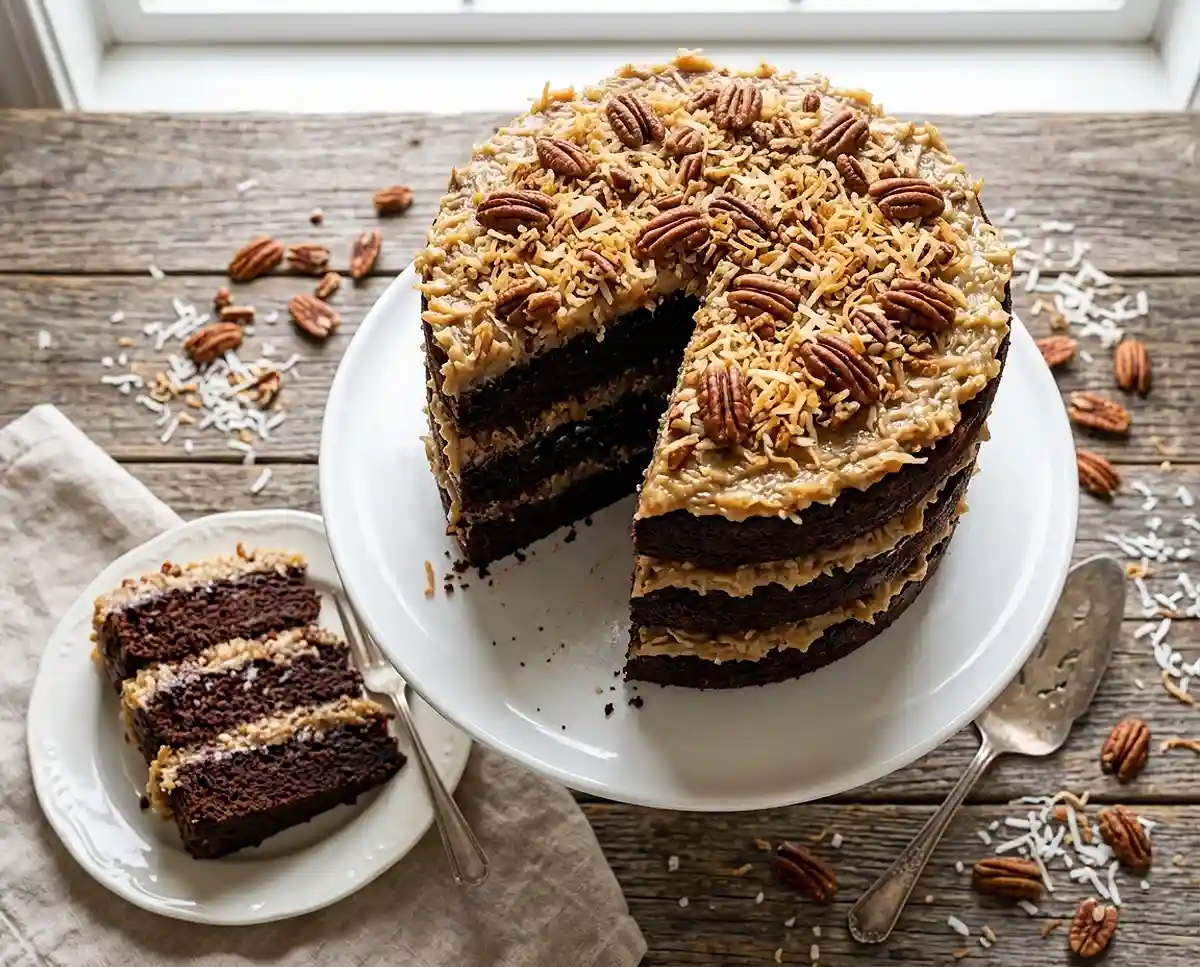
German Chocolate Cake Recipe from Scratch
The most decadent German chocolate cake recipe with rich chocolate layers and that iconic coconut-pecan frosting that makes this classic dessert absolutely unforgettable.
I’ll be honest with you—German chocolate cake wasn’t something I grew up eating, but once I made it from scratch for the first time, I understood why people get misty-eyed talking about it. The combination of tender chocolate cake with that ridiculously good coconut-pecan frosting is truly something special.
This isn’t just another chocolate cake. It’s the kind of dessert that makes people ask for the recipe before they’ve even finished their slice.
Table of Contents
Quick Answer: What Makes German Chocolate Cake Special?
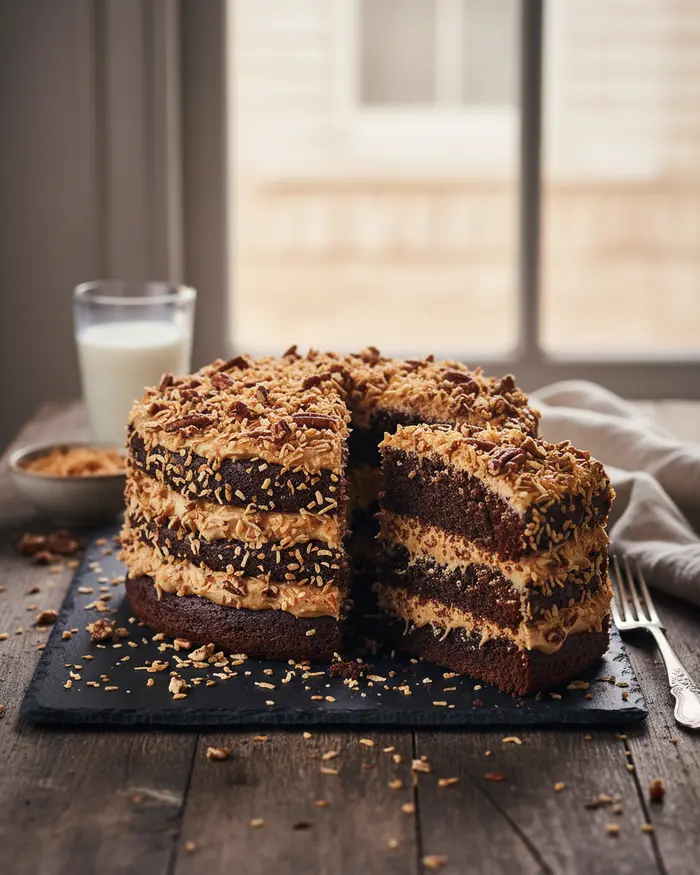
A traditional German chocolate cake features layers of moist chocolate cake filled and topped with a cooked coconut-pecan frosting made with egg yolks, butter, and cream. Unlike most layer cakes, the sides are typically left bare, showing off those gorgeous cake layers. Despite its name, this cake is actually American—named after Samuel German who developed a type of dark baking chocolate in 1852.
Why You’ll Love This German Chocolate Cake Recipe
This cake delivers everything you want in a showstopper dessert without being overly complicated. The chocolate cake itself is deeply flavored but not too sweet, which balances perfectly with the rich, caramel-like frosting.
The frosting is where the magic happens. It’s cooked on the stovetop until it thickens into this luxurious mixture that’s part custard, part caramel, loaded with toasted coconut and pecans. Every bite gives you that perfect contrast of textures—soft cake, chewy coconut, crunchy pecans.
I love that you can make both components ahead of time. The cake layers actually slice better when they’ve had time to cool completely or even chill overnight, and the frosting keeps beautifully in the fridge.
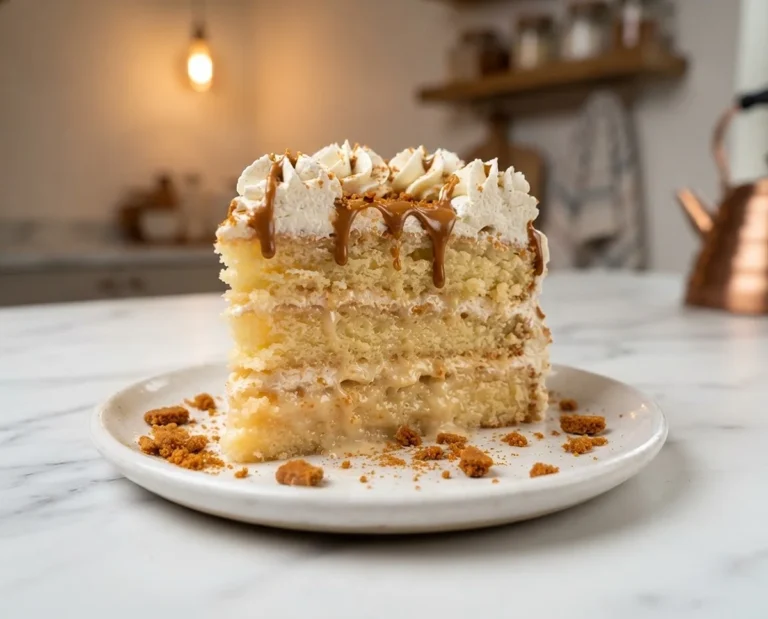
Plus, there’s something genuinely impressive about serving a four-layer cake with that signature look—frosting between the layers and on top, but those beautiful sides showing off your handiwork.
German Chocolate Cake
Ingredients
Chocolate Cake
- 4 oz semi-sweet chocolate finely chopped
- ¼ cup Dutch-process cocoa powder
- ½ cup boiling water
- 2 cups all-purpose flour
- ¾ teaspoon baking soda
- 12 tablespoons unsalted butter softened
- 1 cup granulated sugar
- ¾ cup light brown sugar packed
- ¾ teaspoon salt
- 4 large eggs
- 1 teaspoon vanilla extract
- ¾ cup sour cream
Coconut Pecan Frosting
- 2 cups heavy cream or evaporated milk
- 2 cups granulated sugar
- 6 large egg yolks
- 1 teaspoon salt
- 1 cup unsalted butter
- 2 teaspoons vanilla extract
- 2 cups pecans toasted and finely chopped
- 4 cups sweetened shredded coconut toasted
Instructions
- Adjust the oven rack to the middle position. Preheat oven to 350°F. Grease 2- 9 inch round cake pans, line with parchment paper, and then grease and flour the parchment paper and sides of the pans. Set aside.
- In a small bowl combine the flour, baking soda, and salt. Set aside.
- In a second small bowl combine the cocoa powder and chopped chocolate. Add the boiling water to the bowl, cover the bowl and let sit for 5 minutes. After 5 minutes, whisk the chocolate mixture until smooth. Let the chocolate mixture cool to room temperature.
- Using a stand mixer fitted with a paddle attachment cream the butter, granulated sugar, and brown sugar on medium speed until light and fluffy, about 3 minutes. Add eggs one at a time, beating well after each addition.
- Add the vanilla and beat on medium high speed until light and fluffy, about 1 minute. Scrape down the sides of the bowl.
- Add the chocolate mixture, and beat again (about 30-45 seconds). Scraping down the sides of the bowl so that everything is evenly combined.
- With the mixer on low alternate adding the flour mixture and sour cream, starting and ending with the flour. (Flour, sour cream, flour, sour cream, flour).
- Divide the batter evenly amongst the two pans.
- Bake for 30 minutes or until a toothpick inserted in the center comes out clean or with a few moist crumbs. While the cakes are baking, make the coconut pecan frosting (instructions below).
- Remove cake pans from the oven and place on a wire rack for 10 minutes.
- Remove the cakes from the pans (discard the parchment) and let cool completely on wire rack.
- Once cake is cool, slice the two cakes horizontally to create 4 layers.
- Place a cake layer on a cake stand, add about 1 1/2 cups of the frosting to the top of the cake layer and spread to the edge of the cake. Add another cake layer to the top of the frosting, and continue adding 1 cup of the frosting until you’ve used all of the cake layers and the frosting is gone. Keep the sides of the cake bare. Slice, and enjoy!
- For the coconut pecan frosting: In a medium saucepan whisk the heavy cream, sugar, egg yolks, and salt. Set over medium heat and cook, stirring occasionally.
- Bring to a low simmer and cook until slightly thickened.
- Remove from the heat and add the butter, vanilla, toasted coconut and pecans. Mix to combine. Set aside to cool to room temperature. The frosting will thicken even more as it cools.
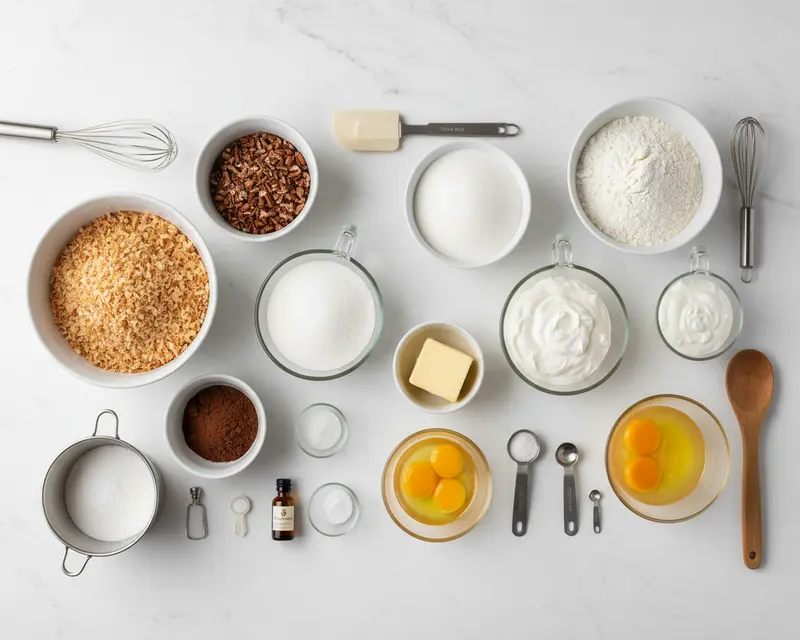
Ingredients for German Chocolate Cake
This recipe has two main components: the chocolate cake layers and the coconut-pecan frosting. The ingredient list looks long, but most of these are pantry staples you probably already have.
| Ingredient | Amount | Notes |
|---|---|---|
| Semi-sweet chocolate | 4 oz (finely chopped) | Use good quality chocolate—it makes a difference |
| Dutch-process cocoa powder | 1/4 cup | Creates deeper chocolate flavor |
| Boiling water | 1/2 cup | Blooms the chocolate for richer taste |
| All-purpose flour | 2 cups | Spoon and level for accuracy |
| Baking soda | 3/4 teaspoon | Helps cake rise and stay tender |
| Unsalted butter (for cake) | 12 tablespoons (softened) | Should be room temperature |
| Granulated sugar | 1 cup | For the cake batter |
| Light brown sugar | 3/4 cup (packed) | Adds moisture and subtle molasses notes |
| Salt | 3/4 teaspoon | Enhances all the flavors |
| Large eggs (for cake) | 4 | Room temperature works best |
| Vanilla extract (for cake) | 1 teaspoon | Pure vanilla is worth it here |
| Sour cream | 3/4 cup | Makes the cake incredibly tender |
| Heavy cream | 2 cups | Or evaporated milk for the frosting |
| Granulated sugar (for frosting) | 2 cups | Sweetens and thickens the frosting |
| Large egg yolks | 6 | Creates that custard-like texture |
| Salt (for frosting) | 1 teaspoon | Balances the sweetness |
| Unsalted butter (for frosting) | 1 cup | Cut into pieces for easier melting |
| Vanilla extract (for frosting) | 2 teaspoons | Enhances all the flavors |
| Pecans | 2 cups (toasted and finely chopped) | Toast first for deeper flavor |
| Sweetened shredded coconut | 4 cups (toasted) | Toasting adds amazing flavor |
A note on the chocolate: Dutch-process cocoa powder has been treated to neutralize its acidity, which gives it a smoother, mellower chocolate flavor compared to natural cocoa. Combined with the chopped semi-sweet chocolate, you get incredible depth without bitterness.
The sour cream in the cake batter is one of those secret weapons. It adds moisture and a slight tang that keeps the cake from being one-dimensionally sweet.
Step-by-Step Instructions for Making German Chocolate Cake
This recipe breaks down into two main tasks: baking the chocolate cake layers and making the coconut-pecan frosting. I like to make the frosting while the cakes are baking—it’s a great use of time and the frosting needs to cool anyway.
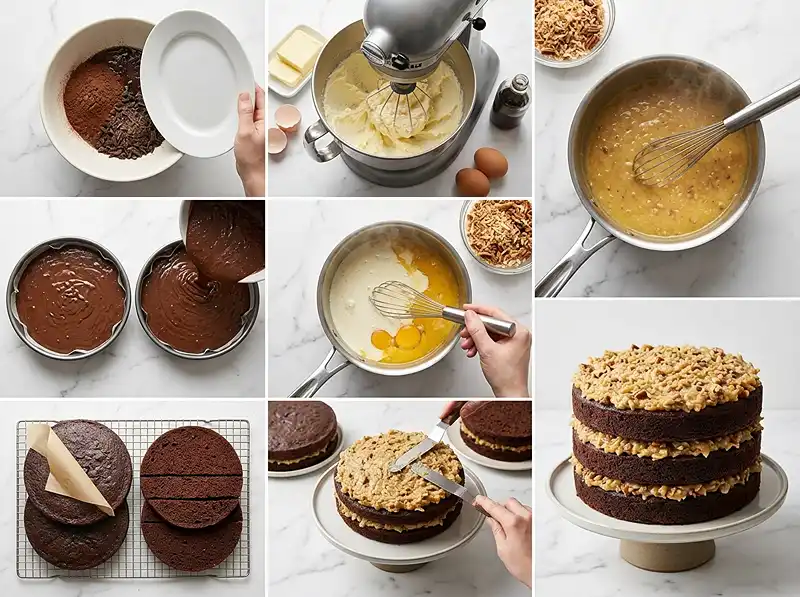
- Prep your pans and oven: Adjust your oven rack to the middle position and preheat to 350°F. Grease two 9-inch round cake pans, line the bottoms with parchment paper, then grease and flour both the parchment and the sides of the pans. This might seem like overkill, but it guarantees your cakes will release perfectly.
- Mix the dry ingredients: In a small bowl, whisk together the flour, baking soda, and salt. Set this aside—you’ll add it later.
- Bloom the chocolate: In another small bowl, combine the cocoa powder and finely chopped chocolate. Pour the boiling water over top, cover the bowl with a plate or plastic wrap, and let it sit for 5 minutes. This “blooming” process intensifies the chocolate flavor. After 5 minutes, whisk until completely smooth, then let it cool to room temperature.
- Cream the butter and sugars: Using a stand mixer fitted with the paddle attachment, beat the softened butter, granulated sugar, and brown sugar on medium speed until light and fluffy—this takes about 3 minutes. The mixture should look pale and almost doubled in volume.
- Add the eggs: Add the eggs one at a time, beating well after each addition. Don’t rush this step—incorporating each egg fully before adding the next creates better structure.
- Add vanilla and mix: Pour in the vanilla extract and beat on medium-high speed until the mixture is light and fluffy, about 1 minute. Scrape down the sides of the bowl with a spatula to make sure everything is evenly combined.
- Incorporate the chocolate: Add your cooled chocolate mixture and beat for 30 to 45 seconds. Scrape down the sides of the bowl again. The batter will look darker and incredibly silky at this point.
- Alternate adding dry and wet: With the mixer on low speed, add the flour mixture and sour cream alternately, starting and ending with the flour. The pattern is: flour, sour cream, flour, sour cream, flour. Mix just until combined after each addition—overmixing develops too much gluten and makes the cake tough.
- Divide and bake: Divide the batter evenly between your two prepared pans. I like to use a kitchen scale for this, but eyeballing works too. Bake for 30 minutes or until a toothpick inserted in the center comes out clean or with just a few moist crumbs clinging to it.
- Make the frosting while cakes bake: While your cakes are in the oven, start on the coconut-pecan frosting. In a medium saucepan, whisk together the heavy cream, sugar, egg yolks, and salt. Set it over medium heat and cook, stirring occasionally with a wooden spoon or heatproof spatula.
- Simmer and thicken: Bring the mixture to a low simmer and continue cooking until it thickens slightly. This usually takes 10 to 15 minutes. The mixture should coat the back of your spoon—if you run your finger through it, the line should hold. Don’t rush this step or crank up the heat, or you risk scrambling the egg yolks.
- Finish the frosting: Remove the pan from heat and stir in the butter until melted, then add the vanilla, toasted coconut, and toasted pecans. Mix everything together thoroughly. Set it aside to cool to room temperature—it will thicken considerably as it cools, becoming spreadable rather than pourable.
- Cool the cakes: When your cakes are done, remove the pans from the oven and place them on a wire rack for 10 minutes. After 10 minutes, turn the cakes out of the pans, peel off the parchment paper, and let them cool completely on the wire rack. This is important—if the cakes are even slightly warm, they’ll tear when you try to slice them.
- Slice the layers: Once completely cool, use a long serrated knife to carefully slice each cake horizontally, creating four layers total. I find it helpful to mark the midpoint around the circumference with toothpicks first, then use those as a guide while cutting.
- Assemble the cake: Place one cake layer on your serving plate or cake stand. Spread about 1 1/2 cups of the coconut-pecan frosting evenly to the edges. Add the next cake layer and spread with about 1 cup of frosting. Repeat with the remaining layers, using all the frosting between the layers and on top. Leave the sides bare—that’s the traditional look and it’s beautiful. Slice and enjoy!
Expert Tips for Perfect German Chocolate Cake
Toast your coconut and pecans: This step is non-negotiable in my kitchen. Spread the coconut and pecans on separate baking sheets and toast them at 350°F, stirring occasionally. The pecans take about 8 minutes, the coconut about 5 to 7 minutes. Watch them closely—coconut especially goes from golden to burnt in seconds. The flavor difference is remarkable.
Room temperature ingredients matter: When butter, eggs, and sour cream are at room temperature, they combine more easily and create a smoother batter with better structure. Cold eggs can cause the butter to seize up into little clumps.
Don’t skip the blooming step: Pouring boiling water over the chocolate and cocoa and letting it sit covered creates a deeper, more intense chocolate flavor. It’s chemistry that makes a real difference.
Watch the frosting temperature: The frosting needs to be at room temperature—neither hot nor cold—when you spread it. If it’s too warm, it’ll slide right off. Too cold, and it won’t spread smoothly. If you need to speed up cooling, you can spread it in a shallow dish and refrigerate it briefly, stirring every few minutes.
Use a cake strip trick: If your cakes tend to dome in the middle, try wrapping wet cake strips around the pans or wrapping the outsides with wet, folded dish towels secured with safety pins. This helps the cakes bake more evenly.
Make ahead for easier assembly: This german chocolate cake recipe actually benefits from a little planning. Bake the cake layers a day ahead, wrap them tightly in plastic wrap, and refrigerate. They’ll be firmer and much easier to slice into layers. The frosting can also be made a day ahead and stored in the fridge—just bring it to room temperature before using.
Variations on Traditional German Chocolate Cake
Sheet cake version: Don’t want to deal with layers? Bake the cake batter in a 9×13-inch pan for about 35 to 40 minutes, then spread all the frosting on top. It’s more casual but just as delicious.
Cupcake format: This batter makes fantastic cupcakes. Fill standard muffin tins about two-thirds full and bake for 18 to 22 minutes. Top each with a generous spoonful of the coconut-pecan frosting.
Add chocolate frosting: Some people like to frost the sides with chocolate buttercream while keeping the coconut-pecan frosting between the layers. It’s not traditional, but it looks gorgeous and adds extra chocolate flavor.
Swap the nuts: Not a pecan fan? Walnuts or even toasted almonds work beautifully. I’ve also made this with a combination of pecans and macadamia nuts, which was incredible.
Dark chocolate version: Use all bittersweet chocolate instead of semi-sweet for a more sophisticated, less sweet flavor profile. Perfect if you prefer darker chocolate.
Add bourbon: A tablespoon or two of bourbon in the frosting adds a lovely depth. It’s subtle but makes people wonder what that extra something is.
Troubleshooting Common German Chocolate Cake Issues
Frosting is too thin: The most common issue with the coconut-pecan frosting is that it hasn’t thickened enough. Make sure you cook it to a low simmer and let it bubble gently until it coats the back of a spoon. Remember, it thickens considerably as it cools. If it’s still too thin after cooling completely, you can return it to the stove and cook it a bit longer, or stir in a couple tablespoons of cornstarch slurry (equal parts cornstarch and cold water mixed together).
Frosting is grainy or curdled: This usually means the heat was too high and the eggs cooked too quickly. Use medium heat and be patient. If it happens, you can sometimes save it by removing it from heat immediately and whisking vigorously, or blending it smooth with an immersion blender.
Cake layers are domed: If your cakes bake up with a significant dome in the middle, your oven might run a bit hot, or the pans heated too quickly. Try using cake strips next time, or simply trim the tops level with a serrated knife before slicing into layers.
Cake is dry: Overbaking is usually the culprit. Check your cakes at 28 minutes—every oven is different. The toothpick should have a few moist crumbs, not be completely clean. Also make sure you’re measuring flour correctly by spooning it into the measuring cup and leveling it off, not scooping directly from the bag.
Layers are sliding around: If your frosting is too warm when you assemble the cake, or the cake layers themselves aren’t completely cool, you’ll end up with a leaning tower situation. Make sure everything is at the right temperature. You can also insert a few long wooden skewers down through all the layers to help stabilize them, then remove before serving.
Can’t slice the cake layers evenly: This takes practice, but here’s a trick: use a ruler to measure and mark the midpoint with toothpicks all around the cake. Then use those as a guide. Some people also use unflavored dental floss instead of a knife—wrap it around, cross the ends, and pull through.
Storage and Make-Ahead Instructions
One of the great things about this german chocolate cake recipe is that it actually keeps and even improves with a little time. The flavors meld together and the cake stays wonderfully moist.
| Storage Method | Duration | Notes |
|---|---|---|
| Room temperature (assembled cake) | 2-3 days | Cover loosely with foil or a cake dome |
| Refrigerator (assembled cake) | Up to 5 days | Best storage method; bring to room temp before serving |
| Freezer (unfrosted layers) | Up to 3 months | Wrap tightly in plastic wrap, then foil |
| Refrigerator (frosting only) | Up to 1 week | Store in airtight container; bring to room temp before using |
| Freezer (assembled cake) | Up to 1 month | Freeze uncovered first, then wrap once solid |
I actually prefer to refrigerate this cake because the coconut-pecan frosting contains egg yolks and cream. According to the USDA food safety guidelines, foods containing eggs should be refrigerated within two hours. Just bring the cake to room temperature before serving—it takes about 30 minutes and the texture is so much better when it’s not cold.
To store the assembled cake, I cover it loosely with aluminum foil or place it under a large cake dome. Don’t wrap it tightly in plastic wrap or the frosting will stick and pull off when you remove it.
If you’re making this ahead for an event, bake the layers up to three days in advance. Let them cool completely, wrap each layer individually in plastic wrap, and refrigerate. The frosting can be made up to a week ahead and refrigerated in an airtight container. When you’re ready to assemble, bring the frosting to room temperature and give it a good stir—it might need a few minutes at room temp to become spreadable again.
For longer storage, freeze the unfrosted cake layers. Wrap each layer tightly in plastic wrap, then wrap again in aluminum foil. Label with the date and freeze for up to three months. Thaw in the refrigerator overnight, then bring to room temperature before assembling.
Leftover slices keep beautifully in the fridge for up to five days. I store them in an airtight container or wrap each slice individually in plastic wrap.
German Chocolate Cake Recipe FAQs
What makes German chocolate cake different from regular chocolate cake?
German chocolate cake uses a specific type of sweet baking chocolate called German’s Sweet Chocolate, which is milder and sweeter than regular cocoa. The most distinctive feature is the coconut-pecan frosting made with evaporated milk, sugar, egg yolks, butter, vanilla, shredded coconut, and chopped pecans. This sets it apart from traditional chocolate cakes with buttercream or ganache frosting.
Do I need to use German’s Sweet Chocolate brand for authentic German chocolate cake?
While German’s Sweet Chocolate is the traditional choice and gives the most authentic flavor, you can substitute it with semi-sweet chocolate plus a tablespoon of sugar per ounce of chocolate. You can also use a combination of unsweetened chocolate with additional sugar. However, using the original German’s Sweet Chocolate will give you the best results with the characteristic mild, sweet chocolate flavor.
How do I prevent the coconut-pecan frosting from being too runny?
The key to perfect frosting consistency is cooking it long enough until it thickens properly, usually 10-12 minutes over medium heat, stirring constantly. The mixture should coat the back of a spoon and reach 170 degrees Fahrenheit. After removing from heat, let it cool completely before frosting the cake, as it will continue to thicken as it cools. If it’s still too thin, you can refrigerate it for 30 minutes to firm up.
Can German chocolate cake be made ahead of time?
Yes, German chocolate cake can be made 1-2 days in advance. Store the unfrosted cake layers wrapped tightly in plastic wrap at room temperature. The coconut-pecan frosting can be made a day ahead and refrigerated in an airtight container. Once frosted, the cake should be covered and can be stored at room temperature for up to 2 days or refrigerated for up to 5 days. Bring refrigerated cake to room temperature before serving for best flavor.
Why is it called German chocolate cake if it’s not from Germany?
German chocolate cake is actually American and has no connection to Germany. It’s named after Sam German, an American baker who developed a type of dark baking chocolate for the Baker’s Chocolate Company in 1852. In 1957, a recipe using German’s Sweet Chocolate was published in a Dallas newspaper, and the cake became popular. The name refers to the chocolate brand, not the country.
Serving Suggestions and Pairings
This cake is rich enough to stand on its own, but a small scoop of vanilla ice cream alongside it never hurt anyone. The cold creaminess is a perfect contrast to the sweet, nutty frosting.
Coffee is the classic beverage pairing—the slight bitterness balances all that sweetness beautifully. I also love serving this with cold milk, especially for kids and the young at heart.
For a dinner party, consider serving smaller slices. This is an indulgent cake and a little goes a long way. I usually cut 12 to 16 slices from a four-layer cake.
If you’re serving this for a special occasion, you can dress up individual plates with a drizzle of chocolate sauce or a few fresh raspberries for a pop of color and tartness.
Looking for more chocolate desserts? You might enjoy this double chocolate strawberry banana bread recipe or these chocolate strawberry yogurt clusters for something lighter. And if you want another showstopper dessert, these caramel apple cheesecake bars are always a hit. Or try these chocolate crinkle cookies for a smaller chocolate treat.
Final Thoughts on This German Chocolate Cake Recipe
There’s something so satisfying about making a traditional German chocolate cake from scratch. Yes, it takes a bit of time and dirties a few bowls, but the result is absolutely worth it. The combination of that tender chocolate cake with the rich, caramel-y coconut-pecan frosting is just unbeatable.
What I love most about this recipe is that it looks incredibly impressive but doesn’t require any fancy decorating skills. The rustic, homemade appearance is part of its charm. Those exposed cake layers with the thick frosting between them tell everyone this is a special, made-with-love dessert.
Whether you’re making this for a birthday, holiday gathering, or just because you’re craving something truly indulgent, I promise it’ll be the star of the show. People might not even wait until dessert time—I’ve had guests hovering around the cake stand all afternoon.
Give this german chocolate cake recipe a try and let me know how it turns out! I’d love to hear about your experience, any variations you tried, or how your family and friends reacted to it. Happy baking!