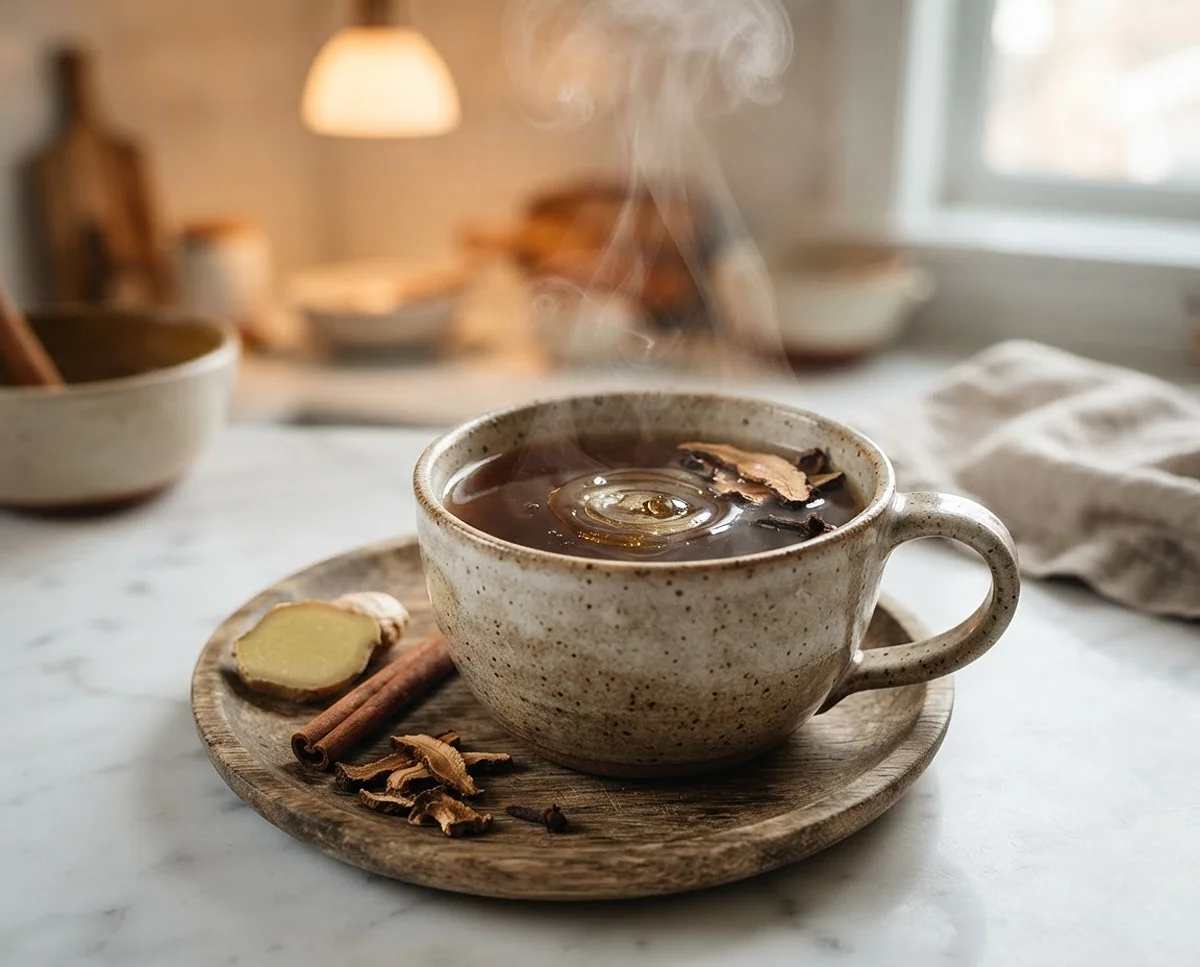
How to Make Mushroom Tea
A simple guide to brewing nourishing, earthy medicinal mushroom tea at home with just dried mushrooms and water.
I started experimenting with mushroom tea a few years ago when a friend mentioned how it helped her focus during long work days. I’ll be honest—the idea of sipping mushroom water sounded pretty weird at first. But after my first cup of warm, earthy reishi tea on a cold morning, I was hooked. It’s become one of those comforting rituals I actually look forward to.
If you’ve been curious about how to make mushroom tea but weren’t sure where to start, you’re in the right place. This isn’t complicated or fussy—just you, some dried mushrooms, water, and a little patience.
Table of Contents
Quick Overview: What Is Mushroom Tea?
Mushroom tea is a warm beverage made by simmering dried medicinal mushrooms—like reishi, chaga, or lion’s mane—in water to extract their beneficial compounds. Unlike the mushrooms you sauté for dinner, these are functional mushrooms prized for their wellness properties rather than their culinary flavor. The result is a mildly earthy, sometimes slightly bitter drink that you can sweeten and spice however you like.
The process is incredibly simple: simmer dried mushrooms in water for anywhere from 30 minutes to 2 hours, strain, and drink. You’re essentially making a very gentle mushroom broth that captures all those bioactive compounds people talk about—polysaccharides, beta-glucans, and antioxidants.
Why You’ll Love This Mushroom Tea Recipe
This recipe is as straightforward as it gets. You don’t need special equipment, fancy ingredients, or a degree in herbalism. Just a pot, some dried mushrooms, and water.
What I love most is how customizable it is. You can make it strong or mild depending on how long you simmer it. You can drink it plain if you’re into that earthy, woodsy flavor, or dress it up with honey and cinnamon until it tastes more like a cozy chai.
The mushroom tea benefits are another big draw. While I’m not making any medical claims here, many people turn to medicinal mushroom tea for immune support, mental clarity, and overall wellness. Reishi is known for its calming properties, lion’s mane for cognitive support, and chaga for antioxidants. It feels good to sip something that’s not just warm and comforting, but also potentially supportive of your health.
Plus, you can reuse the mushroom pieces for a second batch, which makes this surprisingly economical. Nothing goes to waste, and you get two pots of tea from one batch of mushrooms.
How to Make Mushroom Tea
Ingredients
Ingredients
- 1 ounce dried mushrooms such as Reishi, Chaga, or Lion’s Mane
- 4 cups filtered water
- Optional: honey maple syrup, or other sweetener to taste
- Optional: ginger cinnamon, or other spices for flavor
Instructions
- Gently clean any debris from the dried mushrooms. If using larger pieces, you may want to break them into smaller chunks to increase surface area.
- In a non-reactive saucepan, combine the dried mushrooms and filtered water.
- Bring the water to a gentle simmer over medium heat. Do not boil vigorously, as this can degrade some beneficial compounds.
- Reduce heat to low, cover, and let simmer for at least 30 minutes to 2 hours. A longer simmer will result in a stronger tea.
- Strain the mushroom pieces from the liquid using a fine-mesh sieve or cheesecloth. You can press the solids to extract as much liquid as possible.
- Serve the mushroom tea warm. Add your preferred sweetener and spices, if desired.
- The brewed mushroom pieces can often be re-simmered for a second, weaker batch of tea.
Notes
Ingredients for Mushroom Tea
The beauty of this recipe is in its simplicity. You really only need two ingredients, and the rest is just about personalizing the flavor to your taste.
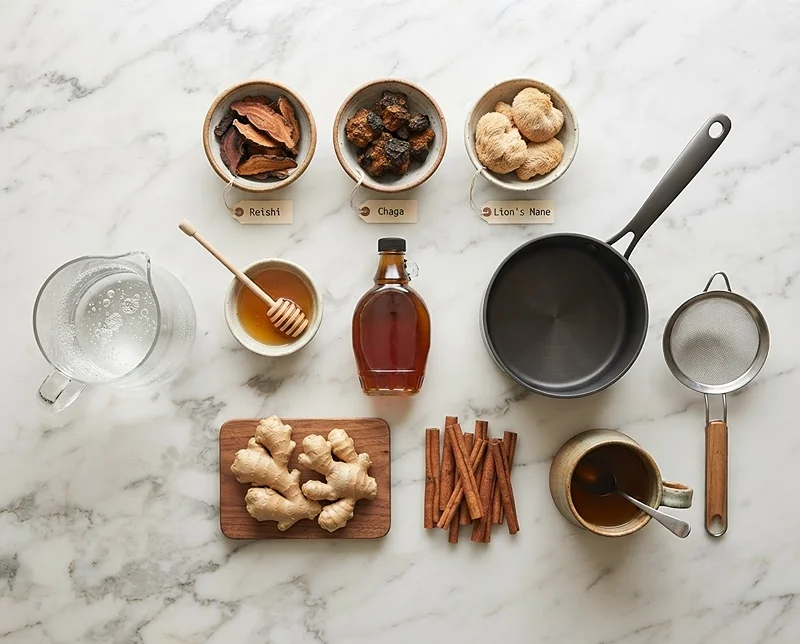
| Ingredient | Amount | Notes |
|---|---|---|
| Dried mushrooms (Reishi, Chaga, or Lion’s Mane) | 1 ounce | Look for high-quality, organic mushrooms from a reputable supplier |
| Filtered water | 4 cups | Use clean, filtered water for the best taste |
| Honey, maple syrup, or sweetener (optional) | To taste | Helps balance the earthy, slightly bitter flavor |
| Ginger, cinnamon, or spices (optional) | To taste | Fresh ginger or a cinnamon stick works beautifully |
About the Mushrooms
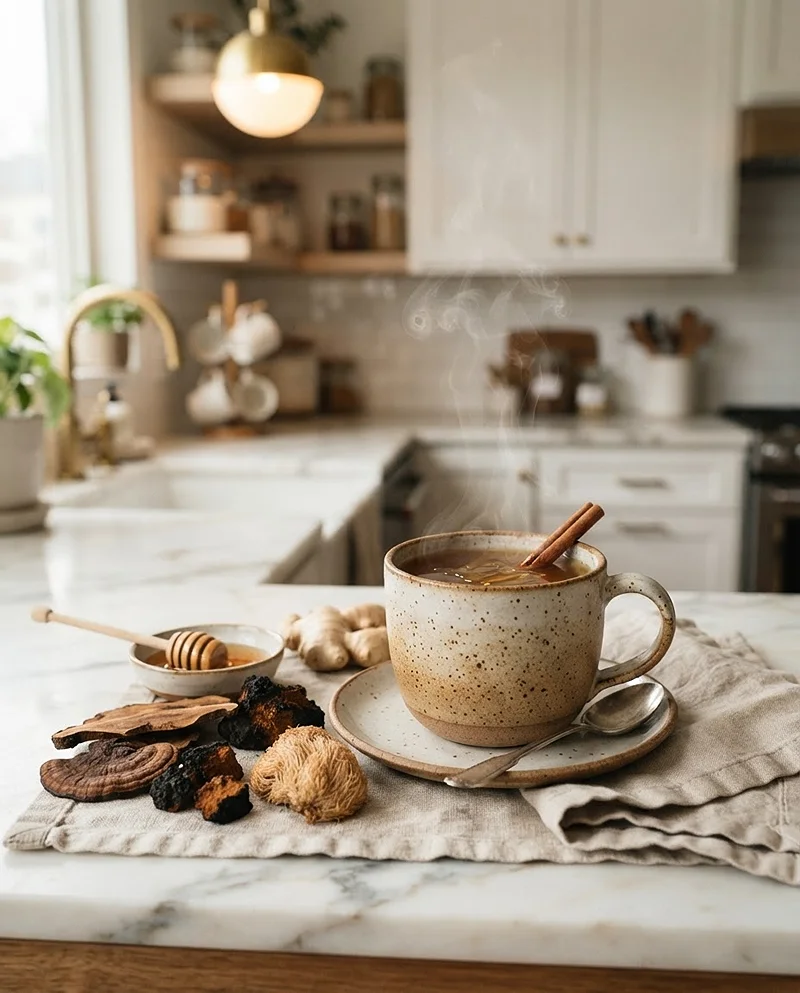
Not all mushrooms are created equal when it comes to tea. You want dried medicinal or functional mushrooms, not the fresh button mushrooms from the grocery store. Here’s a quick rundown of the most popular options:
Reishi: This one has a woody, bitter flavor and is often called the “mushroom of immortality.” It’s commonly used for relaxation and immune support. Reishi mushroom tea preparation usually involves a longer simmer to extract all those beneficial compounds.
Chaga: Chaga looks like a burnt chunk of wood and has a milder, slightly vanilla-like flavor compared to reishi. It’s packed with antioxidants and makes a really pleasant chaga mushroom tea recipe that’s easier to drink plain.
Lion’s Mane: This fluffy white mushroom is popular for cognitive support and has a lighter, less bitter taste. It’s my go-to when I want something I can sip throughout the day without adding sweetener.
You can find these dried mushrooms at health food stores, online retailers, or specialty herb shops. Just make sure they’re food-grade and from a trusted source, since quality really matters with medicinal mushrooms.
Step-by-Step Instructions: How to Make Mushroom Tea
Making mushroom tea is more about patience than technique. You’re coaxing out the beneficial compounds slowly and gently, not rushing through a quick brew.
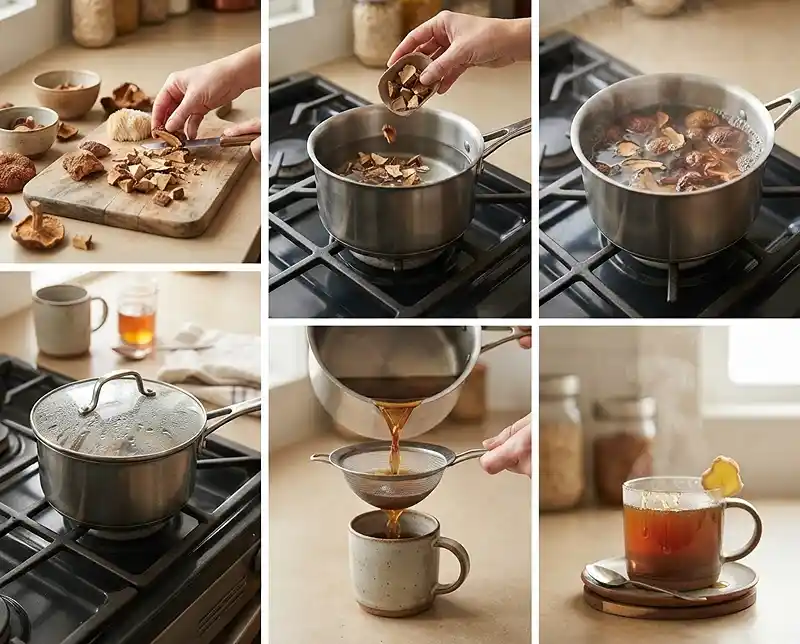
- Clean the mushrooms: Gently inspect your dried mushrooms and brush off any visible debris or dust with a clean, dry cloth or soft brush. You don’t need to wash them with water—just a quick once-over to remove anything that shouldn’t be there.
- Break into smaller pieces: If you’re working with larger chunks of chaga or reishi, break them into smaller pieces using your hands or a kitchen mallet. Smaller pieces mean more surface area, which helps extract more flavor and beneficial compounds during the simmer.
- Combine mushrooms and water: Place the dried mushrooms in a non-reactive saucepan—stainless steel or ceramic works great, just avoid aluminum or copper. Add your 4 cups of filtered water.
- Bring to a gentle simmer: Set the pot over medium heat and bring the water to a gentle simmer. You’ll see small bubbles forming around the edges, but you don’t want a rolling boil. High heat can degrade some of the delicate compounds you’re trying to extract.
- Reduce heat and cover: Once it’s simmering, turn the heat down to low and cover the pot with a lid. This keeps the water from evaporating too quickly and helps maintain a steady, gentle extraction.
- Simmer for 30 minutes to 2 hours: Here’s where your patience pays off. A 30-minute simmer will give you a lighter, milder tea that’s perfect if you’re new to medicinal mushroom tea. If you want something richer and more potent, let it go for 1 to 2 hours. I usually aim for about an hour—it’s a nice middle ground. The liquid will darken and take on that characteristic earthy aroma.
- Strain the tea: After simmering, remove the pot from heat and strain the liquid through a fine-mesh sieve or cheesecloth into a large measuring cup or pitcher. Press down gently on the mushroom pieces with the back of a spoon to squeeze out every last drop of that precious liquid.
- Sweeten and spice: Pour your strained tea into a mug and taste it. If it’s too bitter or earthy for your liking, stir in a spoonful of honey or maple syrup. A slice of fresh ginger or a cinnamon stick added during the simmer can also round out the flavor beautifully.
- Save the mushrooms for round two: Don’t toss those mushroom pieces yet. You can refrigerate them and reuse them for a second, slightly weaker batch of tea. Just repeat the simmering process with fresh water. Some people even get three brews out of hardy mushrooms like chaga.
Expert Tips for the Best Mushroom Tea
After making countless batches of mushroom tea, I’ve picked up a few tricks that really make a difference.
Use a slow cooker for hands-off brewing: If you want to simmer your tea for a couple of hours without babysitting the stove, try using a slow cooker on low. Just add your mushrooms and water, set it, and forget it. This is especially great for chaga mushroom tea recipe preparations, since chaga benefits from longer extraction times.
Add aromatics during the simmer: Instead of just stirring in spices at the end, try adding a cinnamon stick, a few slices of fresh ginger, or even a star anise pod right into the pot while it simmers. The flavors meld beautifully and help mask any bitterness.
Don’t let it boil hard: I can’t stress this enough—keep it at a gentle simmer. A vigorous boil can break down some of the beneficial polysaccharides and beta-glucans you’re trying to extract. Low and slow is the name of the game.
Store extra tea in the fridge: This tea keeps well for about 3 to 5 days in the refrigerator. You can reheat it gently on the stove or enjoy it cold over ice with a squeeze of lemon—it’s surprisingly refreshing that way.
Start with less mushroom if you’re sensitive: If you’re new to medicinal mushrooms, start with a smaller amount—maybe half an ounce—and work your way up. Some people find the earthy flavor intense at first, and it’s easier to adjust to it gradually.
Quality matters: I’ve tried both cheap and premium dried mushrooms, and there’s definitely a difference. Higher-quality mushrooms from reputable suppliers tend to have better flavor and potency. Look for organic, sustainably harvested options when possible.
Variations to Try
Once you’ve mastered the basic method for how to make mushroom tea, it’s fun to experiment with different flavor profiles and mushroom combinations.
Mushroom Chai: Add warming spices like cinnamon, cardamom, cloves, and black pepper to your simmer. Finish with a splash of milk (dairy or plant-based) and sweetener for a cozy, chai-inspired version.
Citrus Mushroom Tea: After straining, stir in fresh lemon or orange juice and a bit of honey. The brightness of the citrus really balances the earthy mushroom flavor and makes it more refreshing.
Mushroom Coffee: If you’re a coffee drinker, try adding a shot of espresso or strong brewed coffee to your mushroom tea. It’s trendy for a reason—the coffee masks some of the earthiness while you still get the mushroom tea benefits.
Blended Mushroom Tea: Mix different types of mushrooms in one batch. I love combining reishi and chaga—you get the calming properties of reishi with the antioxidant boost from chaga. Just use half an ounce of each.
Iced Mushroom Tea: Brew a strong batch, let it cool completely, and pour over ice. Add a squeeze of lime, fresh mint, and a touch of agave for a summery wellness drink that’s actually enjoyable on hot days.
If you’re into other herbal teas, you might also enjoy my clove tea recipe or this white clover tea for different flavors and benefits.
Troubleshooting Common Issues
Even though this is a simple recipe, a few things can go sideways. Here’s how to fix the most common problems.
My tea is too bitter: This usually happens with reishi, which is naturally quite bitter. Try shortening your simmer time, using less mushroom, or adding more sweetener and spices. Honey and cinnamon work wonders for masking bitterness.
The tea is too weak: If your tea tastes like slightly dirty water (been there), you probably didn’t simmer it long enough or used too much water for the amount of mushrooms. Try extending the simmer time to at least an hour, or use a bit more mushroom next time.
There’s sediment at the bottom of my cup: Some fine particles can get through even a fine-mesh strainer. If this bothers you, strain the tea through a coffee filter or a double layer of cheesecloth for a clearer brew.
My mushrooms didn’t soften much: That’s normal, especially with chaga. These are woody, tough mushrooms that won’t break down like vegetables. As long as your water darkened and took on flavor, you’re extracting what you need.
The tea has a weird smell: If your tea smells off or funky (not just earthy), your mushrooms might have been old or improperly stored. Fresh dried mushrooms should smell woodsy and pleasant, not moldy or sour. When in doubt, toss them and start with a fresh batch.
Storage and Shelf Life
Proper storage keeps your mushroom tea fresh and your dried mushrooms potent for future batches.
| Storage Method | Duration | Notes |
|---|---|---|
| Brewed tea in refrigerator | 3-5 days | Store in an airtight container, reheat gently before serving |
| Used mushroom pieces in refrigerator | 2-3 days | Keep in a sealed container for one more brew |
| Dried mushrooms in pantry | 1-2 years | Store in an airtight container away from light, heat, and moisture |
| Frozen brewed tea | 2-3 months | Freeze in ice cube trays for easy portioning |
I like to brew a big batch on Sunday and keep it in a glass jar in the fridge. That way I can just pour a cup and reheat it whenever I want some throughout the week. It saves time and makes it more likely I’ll actually drink it consistently.
For the dried mushrooms themselves, keep them in an airtight container in a cool, dark cupboard. Moisture is the enemy here—it can cause mold and degrade the beneficial compounds. If you buy in bulk, consider vacuum-sealing portions to extend their shelf life even further.
One trick I love: freeze leftover tea in ice cube trays, then pop the cubes into smoothies or use them as a base for soups. You’re still getting those mushroom tea benefits without having to drink a full cup, and it’s a great way to avoid waste.
How to Make Mushroom Tea FAQs
What is the basic method for making mushroom tea?
To make mushroom tea, start by chopping or grinding your mushrooms into small pieces. Boil water and let it cool slightly to around 190-200°F. Add the mushrooms to the hot water and let them steep for 10-15 minutes. Strain the liquid through a fine mesh strainer or cheesecloth to remove the mushroom pieces. You can add honey, lemon, or ginger to enhance the flavor. The tea is now ready to drink.
How much mushroom should I use per cup of tea?
For medicinal mushrooms like reishi, chaga, or lion’s mane, use approximately 1-2 grams of dried mushroom per cup of water, which is roughly half to one teaspoon. For fresh mushrooms, you would need about 10 times that amount since fresh mushrooms contain more water. Start with smaller amounts if you are new to mushroom tea and adjust based on your taste preferences and desired effects.
What temperature should the water be for mushroom tea?
The ideal water temperature for mushroom tea is between 190-200°F, which is just below boiling. Avoid using rapidly boiling water as extremely high temperatures can degrade some of the beneficial compounds found in medicinal mushrooms. If you’ve boiled water, let it sit for about a minute before adding your mushrooms. Some people prefer simmering mushrooms on low heat for 20-30 minutes to extract more compounds.
Can I reuse mushrooms for a second batch of tea?
Yes, you can often reuse mushrooms for a second or even third brewing, especially with dense mushrooms like reishi or chaga. The subsequent brews may be slightly weaker but will still contain beneficial compounds. For the second brewing, you may want to steep the mushrooms longer, around 15-20 minutes, or simmer them gently. Store used mushrooms in the refrigerator if you plan to reuse them within 24 hours.
How can I improve the taste of mushroom tea?
Mushroom tea can have an earthy or bitter taste that some find unpleasant. To improve the flavor, add natural sweeteners like honey or maple syrup. Lemon juice not only enhances taste but may also help extract beneficial compounds. Ginger, cinnamon, or chai spices can add warmth and mask earthiness. You can also blend mushroom tea with regular tea like green tea or herbal teas such as peppermint or chamomile for a more familiar flavor profile.
Final Thoughts on Making Mushroom Tea
Learning how to make mushroom tea has been one of those small kitchen experiments that turned into a genuine daily ritual for me. It’s not fancy or complicated, but there’s something grounding about simmering a pot of earthy mushrooms and sipping the result while the house smells like a forest.
Whether you’re drawn to the potential wellness benefits, curious about trying something new, or just looking for a comforting warm drink that isn’t coffee or regular tea, I think you’ll find this surprisingly satisfying. The key is to be patient with the simmer, start with good-quality mushrooms, and adjust the flavor to your liking.
Give it a try this week. Start simple with one type of mushroom, follow the basic method, and see what you think. You might just find yourself looking forward to that quiet moment with a warm mug of mushroom tea in your hands.
For more nourishing drink recipes, check out my full collection at all recipes, or try this coconut cloud matcha latte for another wellness-focused beverage option.
Happy brewing, and let me know how your first batch turns out!