White Clover Tea Recipe
A simple, refreshing white clover tea recipe that turns common backyard blooms into a delicate, naturally sweet herbal beverage you can enjoy hot or iced.
I’ve been making white clover tea for years now, and honestly, it’s one of those little kitchen projects that feels almost magical. You’re taking something most people overlook in their yard and turning it into a lovely, delicate tea that tastes like summer in a cup. It’s become one of my favorite ways to connect with seasonal foraging without having to venture far from home.
White clover tea is an infusion made from the small white flowers of the Trifolium repens plant, the same clover you’ve probably walked past a hundred times in parks and lawns. The blossoms brew into a subtly sweet, honey-like tea that’s both soothing and refreshing, perfect on its own or lightly sweetened.
Table of Contents
Why You’ll Love This White Clover Tea Recipe
This tea is ridiculously easy to make, which is always a win in my book. You’re basically just steeping flowers in hot water and calling it a day. But the simplicity doesn’t mean it’s boring.
The flavor is gentle and naturally sweet with floral notes that remind me of honey and fresh-cut grass in the best possible way. It’s caffeine-free, so you can sip it any time of day without worrying about staying up all night. Plus, white clover has been used traditionally as a mild health tonic, rich in antioxidants and vitamins.
If you’re into foraging or just want to try something new with ingredients you can pick for free, this recipe is a perfect starting point. It’s also a lovely conversation starter when you tell guests they’re drinking clover tea from your backyard.
And if you enjoy exploring unique tea recipes, you might also love this Indian cardamom tea recipe for a spiced warming option.

White Clover Tea Recipe
Ingredients
Ingredients
- 1 cup fresh white clover blossoms or 1/2 cup dried blossoms
- 4 cups water
- honey or maple syrup optional to taste
- lemon wedge optional
Instructions
- Put the clover blossoms into a quart jar. Boil the water then pour over the blossoms.
- Let steep for at least 30 minutes or up to 4 hours, then strain out the clover blossoms with a fine mesh sieve and refrigerate.
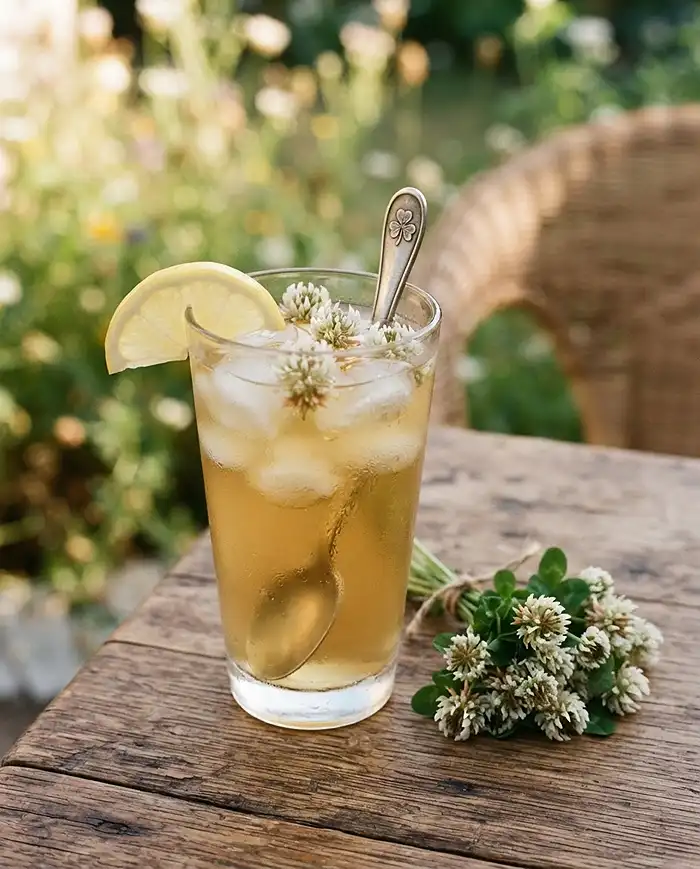
- Serve cold over ice with honey or maple syrup and lemon if desired.
Ingredients for White Clover Tea
The ingredient list for this white clover tea recipe couldn’t be simpler. You really only need the blossoms and water, though I like to keep a few optional add-ins on hand to customize each batch.

| Ingredient | Quantity | Notes |
|---|---|---|
| Fresh white clover blossoms | 1 cup | Or 1/2 cup dried; pick from pesticide-free areas |
| Water | 4 cups | Filtered or spring water works best |
| Honey or maple syrup | To taste | Optional; adds sweetness |
| Lemon wedge | Optional | Brightens the flavor beautifully |
When you’re gathering white clover blossoms, make absolutely sure you’re picking from an area that hasn’t been treated with pesticides, herbicides, or fertilizers. Your own untreated yard is ideal, or a wild meadow you know is chemical-free. According to the National Capital Poison Center, foraging safety starts with knowing your source.
Fresh blossoms give you the brightest, most delicate flavor, but dried ones work beautifully too and are actually more concentrated, which is why you use less. If you’re drying your own, spread the blossoms on a screen or paper in a single layer away from direct sunlight until they’re completely dry and crispy.
Step-by-Step Instructions for Making White Clover Tea
Making this tea is one of those processes that’s so easy you’ll wonder why you haven’t been doing it all along. The key is giving the blossoms enough time to release their flavor and subtle sweetness into the water.

- Prepare your blossoms: Rinse the fresh white clover blossoms gently under cool water to remove any dirt, bugs, or debris. Give them a little shake to remove excess water, then place them in a clean quart-sized mason jar or heat-safe pitcher.
- Boil the water: Bring 4 cups of water to a rolling boil in a kettle or pot. I like using filtered water because it lets the delicate clover flavor shine without any chlorine or mineral taste competing.
- Pour and steep: Carefully pour the boiling water over the clover blossoms in your jar. You’ll notice the blossoms float at first, then gradually start to release their color and aroma. Cover the jar with a lid or small plate to keep the heat in and let it steep for at least 30 minutes. For a stronger, more honeyed flavor, I usually let mine steep for 2 to 4 hours at room temperature.
- Strain the tea: Once your tea has steeped to your liking, pour it through a fine mesh sieve or cheesecloth into a clean pitcher or jar. Press gently on the blossoms with the back of a spoon to extract every last drop of that golden goodness. Discard or compost the spent blossoms.
- Chill and serve: Transfer your strained tea to the refrigerator and let it chill completely, which usually takes about an hour. Serve cold over ice, adding honey or maple syrup to taste if you want a little extra sweetness, and a squeeze of fresh lemon for brightness. The lemon really brings out the floral notes in a lovely way.
The steeped tea should be a pale golden or amber color, almost like a very light chamomile tea. If it looks too pale, your blossoms may have been a bit sparse or you didn’t steep long enough. If it’s darker, that’s totally fine—just means you’ve got a more robust brew.
Expert Tips for the Best White Clover Tea
After making countless batches of this tea, I’ve picked up a few tricks that really make a difference in the final flavor and quality.
Pick blossoms at their peak: The best time to harvest white clover blossoms is mid-morning after the dew has dried but before the afternoon heat. Look for blooms that are fully open and bright white or slightly pink-tinged. Avoid any that are brown, wilted, or going to seed.
Don’t skip the rinse: Even if your clover looks clean, a gentle rinse removes dust, pollen, and any tiny insects that might be hiding in the blooms. I learned this the hard way when I found a little green aphid floating in my first batch.
Experiment with steeping time: The longer you steep, the deeper the flavor. A quick 30-minute steep gives you a very light, barely-there floral tea that’s perfect if you’re new to herbal infusions. Steeping for 3 to 4 hours creates a richer, slightly sweet tea with more body and complexity.
Try a hot version: While this recipe focuses on iced tea, you can absolutely enjoy white clover tea hot. Just steep the same way and drink it warm, sweetened with honey. It’s incredibly soothing before bed.
Combine with other herbs: White clover plays well with others. Try adding a few sprigs of fresh mint, a cinnamon stick, or a slice of fresh ginger to the jar before you pour the hot water. Each addition brings its own character to the tea.
Variations on White Clover Tea
Once you’ve mastered the basic white clover tea recipe, it’s fun to branch out and create your own signature blends. Here are some of my favorite variations.
White Clover Iced Tea with Berries: Add a handful of fresh or frozen berries—strawberries, raspberries, or blueberries—to your pitcher after straining. Let them infuse in the chilled tea for an hour or two. The berries add a fruity sweetness and a gorgeous pink hue.
Citrus White Clover Tea: Steep the clover with thin slices of orange, lemon, or lime. The citrus oils and bright acidity complement the sweet floral notes beautifully. This version is especially refreshing on hot summer days.
Spiced Clover Tea: Add whole spices like star anise, cardamom pods, or cloves to the steeping jar. This creates a chai-like warmth that’s perfect for cooler weather or when you want something more complex.
Clover-Mint Sun Tea: Combine white clover blossoms with fresh mint leaves in a large glass jar, cover with cold water, and set it in direct sunlight for 4 to 6 hours. The gentle solar heating extracts the flavors slowly, creating an ultra-smooth tea.
Sweetened Clover Lemonade: Mix your chilled white clover tea half-and-half with fresh lemonade. The combination of tart lemon and sweet floral clover is absolutely addictive.
Troubleshooting Your White Clover Tea
Even though this recipe is pretty forgiving, a few things can occasionally go sideways. Here’s how to fix the most common issues.
Tea tastes bitter or grassy: This usually happens if you’ve included too many stems or leaves, or if you over-steeped the blossoms for way longer than 4 hours. Stick to just the white flower heads themselves, and keep your steeping time in the 30-minute to 4-hour range.
Tea has no flavor: You likely didn’t use enough blossoms or didn’t steep long enough. Make sure you’re using a full cup of fresh blossoms (or half cup dried) for every 4 cups of water, and let it sit for at least an hour if you want noticeable flavor.
Tea looks cloudy: A bit of cloudiness is normal and just means you have tiny particles of pollen or bloom residue. If it bothers you, strain through a coffee filter or several layers of cheesecloth for crystal-clear tea.
Tea tastes like chemicals: This is a serious concern and means your clover may have been treated with pesticides or herbicides. Never use clover from lawns, parks, or roadsides unless you’re absolutely certain they’re chemical-free. When in doubt, throw it out and find a safer source.
Blossoms won’t sink: This is totally fine and doesn’t affect the quality. Some blossoms are just more buoyant than others. As long as they’re submerged in the hot water, they’re steeping properly.
Storage and Shelf Life
Proper storage keeps your white clover tea fresh and flavorful for days, making it easy to brew a big batch and enjoy it all week long.
| Storage Method | Duration | Notes |
|---|---|---|
| Refrigerator (brewed tea) | 3-5 days | Store in an airtight container or covered pitcher |
| Freezer (ice cubes) | 2-3 months | Freeze in ice cube trays, then transfer to freezer bags |
| Dried blossoms (unbrewed) | 6-12 months | Store in an airtight jar in a cool, dark place |
| Room temperature | Not recommended | Can develop off flavors or spoil |
Always store your brewed white clover tea in the refrigerator in a glass jar or pitcher with a tight lid. The tea will gradually lose its delicate flavor after about 5 days, though it’s still safe to drink if it smells and looks fine.
I love freezing leftover tea in ice cube trays. You can pop a few cubes into a glass and add fresh water for a quick glass of iced tea, or use them to chill other beverages without diluting them. According to the FDA’s food safety guidelines, proper refrigeration is key for any homemade beverage.
If you’re storing dried blossoms, make sure they’re completely dry before sealing them in a jar. Any residual moisture can lead to mold. I like to label my jars with the date so I know how old they are.
White Clover Tea Recipe FAQs
What parts of the white clover plant can I use to make tea?
You can use both the flowers and leaves of white clover to make tea. The flowers are most commonly used and have a sweet, mild flavor. Fresh or dried flowers work well, though dried flowers provide a more concentrated taste. The leaves are also edible and can be added for a slightly more herbaceous flavor.
How do I make a basic white clover tea?
To make white clover tea, use about 2-3 tablespoons of fresh white clover flowers or 1-2 teaspoons of dried flowers per cup of water. Bring water to a boil, pour it over the clover flowers, and let steep for 5-10 minutes. Strain the flowers and enjoy. You can add honey or lemon to taste if desired.
Where should I harvest white clover for tea?
Harvest white clover from areas that are free from pesticides, herbicides, and other chemicals. Avoid collecting near roadsides, treated lawns, or industrial areas. The best places are organic gardens, untreated meadows, or wild areas away from pollution. Always ensure positive identification before harvesting any wild plant.
What does white clover tea taste like?
White clover tea has a mild, slightly sweet, and delicate flavor with subtle floral notes. It is not overpowering and has a pleasant, gentle taste. The sweetness is natural and light, making it enjoyable without added sweeteners, though honey complements it nicely. The overall taste is soothing and refreshing.
How do I dry and store white clover flowers for tea?
To dry white clover flowers, spread them in a single layer on a clean screen or paper in a well-ventilated, dark area away from direct sunlight. Allow them to air dry for several days until completely dry and crispy. Store dried flowers in an airtight container in a cool, dark place. Properly stored, they will maintain their quality for up to one year.
Give This White Clover Tea Recipe a Try
Making your own white clover tea is one of those simple pleasures that connects you to the seasons and the plants growing right under your feet. The process is gentle and forgiving, the flavor is lovely and unique, and there’s something deeply satisfying about sipping a beverage you made entirely from scratch using ingredients you foraged yourself.
Whether you enjoy it as a refreshing white clover iced tea on a hot afternoon or sip it warm before bed, this humble herbal infusion has a way of making everyday moments feel a little more special. I’d love to hear how your batch turns out, so drop a comment below and let me know if you added any fun variations or flavor twists.
For more unique recipes and kitchen adventures, check out our full collection of recipes here, including this beautiful snow white roll sushi and our creamy Mexican white cheese dip.
Happy brewing, and here’s to discovering new flavors hiding in plain sight!