Japanese Potato Macaroni Salad Recipe
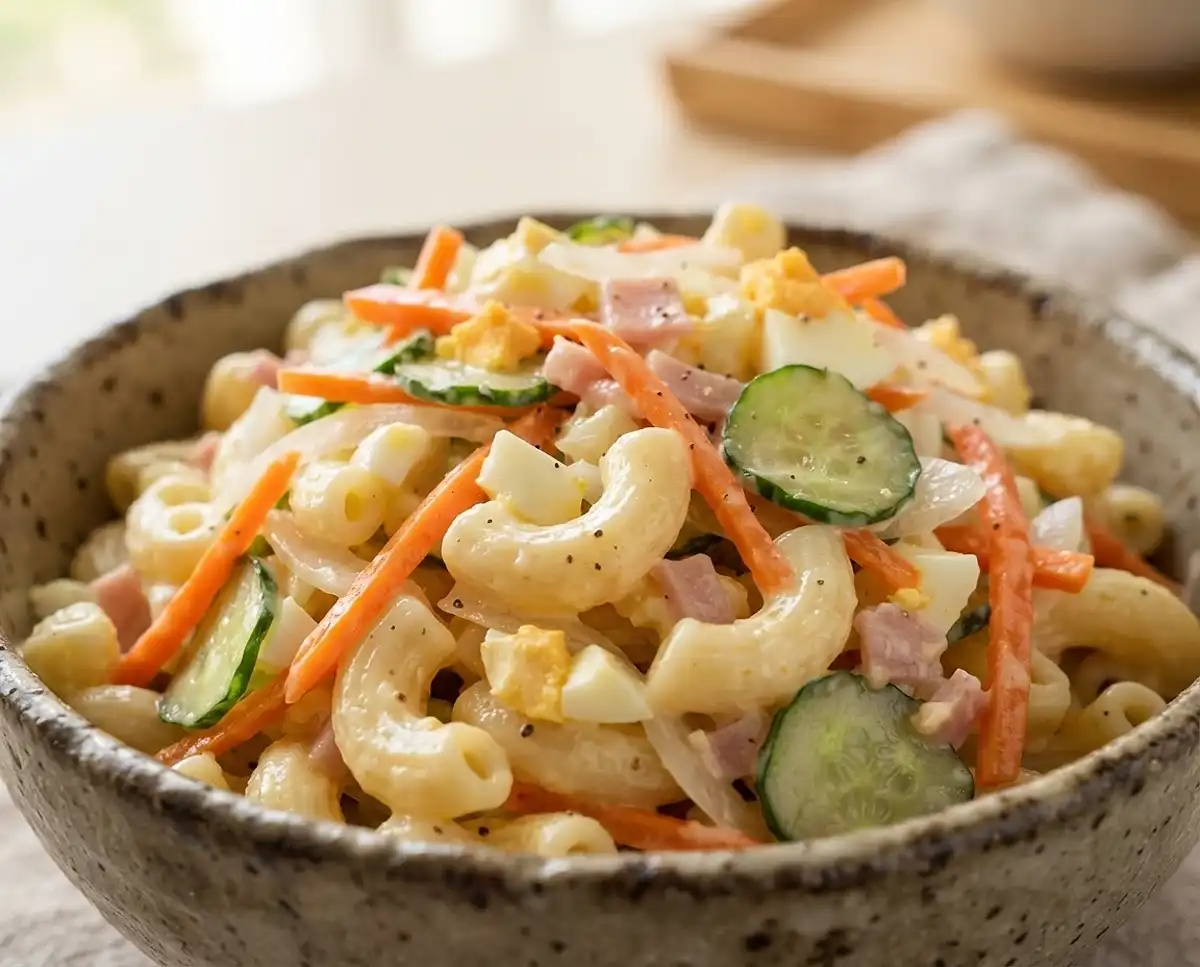
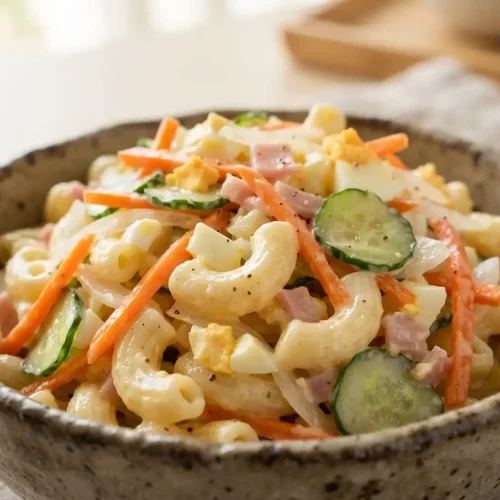
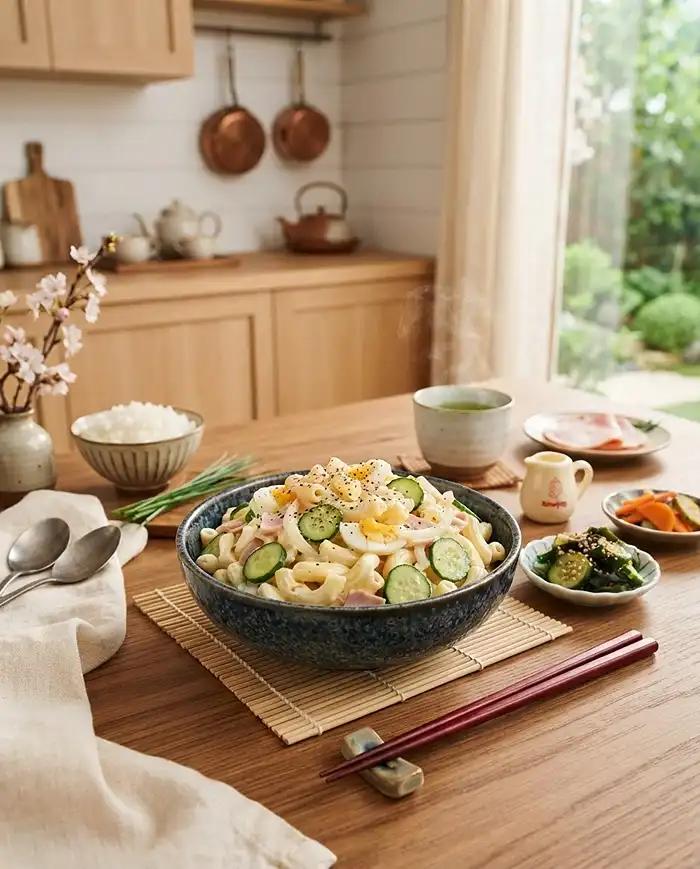
A creamy Japanese-inspired macaroni salad that perfectly balances sweet, tangy, and savory flavors with tender pasta, crisp cucumbers, and that unmistakable Kewpie mayo richness.
There’s something quietly magical about this Japanese potato macaroni salad that I just can’t get enough of. I first tried it at a little deli counter in Tokyo years ago, and I’ve been making my own version ever since. It’s lighter and tangier than American pasta salad, with a delicate sweetness that sneaks up on you.
This isn’t just another mayo-heavy side dish. The secret is in the little details—salting the vegetables, dressing the hot pasta with vinegar, and using just enough Kewpie mayo to coat everything in that signature Japanese creaminess without drowning it.
Table of Contents
What Makes This Japanese Macaroni Salad Special
This is the kind of recipe that makes you want to cook everything in sight. Lucky for you, the Potato & Macaroni Salads collection is full of exactly that. Go explore and find your new go-to dish.
This salad hits all the right notes: creamy but not heavy, tangy but gently sweet, with pops of texture from cucumber and onion that stay crisp even after chilling. You’ll taste the rice vinegar tang right away, balanced by a whisper of sugar and the umami-rich depth of Kewpie mayonnaise.
The macaroni itself gets a head start on flavor by soaking up olive oil, vinegar, and sugar while it’s still warm. That means every bite of pasta tastes seasoned from the inside out, not just coated on the surface. The vegetables get salted and squeezed to remove bitterness and excess water, so they stay crunchy and never make the salad watery.
Why You’ll Love This Recipe
This Japanese Macaroni Salad is the kind of dish that disappears fast at potlucks and picnics. It’s easy to make ahead, travels well, and tastes even better after it’s had time to chill and let the flavors meld together.
Here’s why it works so well:
- The texture contrast is incredible—soft pasta, crisp cucumbers, tender egg, and juicy ham all in one bite
- It’s not overly rich or cloying like some creamy salads can be
- You can make it with American mayo if you can’t find Kewpie, and it’ll still taste delicious
- It comes together in about 30 minutes of active time, then just needs an hour to chill
- Kids and adults both love it, which makes it a real crowd-pleaser
- It pairs beautifully with grilled meats, fried chicken, or as part of a bento box spread
I’ve brought this to family barbecues, packed it for lunch, and served it alongside German potato salad for a fun international salad bar. It always gets recipe requests.
Japanese Potato Macaroni Salad
Ingredients
Ingredients
- 4 oz uncooked elbow macaroni (or use penne, farfalle, fusilli, or spaghetti)
- 1 Tbsp Diamond Crystal kosher salt (for boiling the macaroni)
- 2 tsp extra virgin olive oil
- 1 Tbsp rice vinegar unseasoned
- 1 tsp sugar
- 1 large egg 50 g each w/o shell ((you can use 2 eggs for a more prominent egg taste))
- ½ onion (3.5 oz, 100 g)
- 2 Persian cucumbers (or 1 Japanese cucumber)
- 1 tsp Diamond Crystal kosher salt (for the onion and cucumber)
- 4 slices ham
- 4 Tbsp Japanese Kewpie mayonnaise
- ¼ tsp freshly ground black pepper
Instructions
- Before You Start…Please note that this recipe requires 1 hour of chilling time. Gather all the ingredients.
- To Make the Japanese Mayonnaise: You can make my Homemade Japanese Mayonnaise or modify American mayonnaise with Mizkan Natural Rice Vinegar and sugar. For 4 Tbsp of American mayonnaise (I use Best Foods/Hellmann’s Mayonnaise), add ½ Tbsp rice vinegar and ¾ tsp sugar. Whisk until the sugar dissolves.
- To Boil the Macaroni: Start boiling 3 quarts (12 cups, 2.8 L) water in a large pot (I used a 3.5 QT pot). Once boiling, add 1 Tbsp Diamond Crystal kosher salt and 4 oz uncooked elbow macaroni. Cook 1 minute longer than the package instructions.
- Drain the macaroni and transfer to a large bowl. While it’s hot, add 2 tsp extra virgin olive oil.
- Add 1 Tbsp rice vinegar (unseasoned) and 1 tsp sugar and mix well together. Set aside to let cool completely.
- To Prepare the Egg: In a medium saucepan, add enough water to completely cover 1 large egg (50 g each w/o shell) and bring it to a boil over medium heat. Tip: If you want your egg yolk to be in the center, gently rotate the egg with chopsticks once in a while for the first 3 minutes.
- Once boiling, turn the heat down to medium-low and set a timer for 12 minutes (or 9 minutes for a soft-boiled egg). Once it’s done cooking, bring the pot under running water to cool or immediately transfer the egg to an ice bath.
- Peel the egg and chop it into small pieces.
- To Prepare the Vegetables and Ham: Cut off the ends and peel ½ onion. Cut into thin slices along the grain.
- Peel the skin of 2 Persian cucumbers alternately, leaving some part unpeeled (so it looks striped). Cut off the ends.
- Thinly slice the cucumber with a knife or mandoline. Put the sliced cucumber and onion in a medium bowl.
- Sprinkle 1 tsp Diamond Crystal kosher salt on the onion and cucumber and lightly massage by hand to evenly distribute the salt. Set aside for 5 minutes.
- When you see liquid in the bowl, give the sliced vegetables a quick rinse to remove the salt.
- Squeeze the liquid out and set aside.
- Cut 4 slices ham into small pieces 2 inches long and roughly ⅛ inch thick. Set aside.
- To Assemble the Macaroni Salad: When the macaroni is cool, add the ham, cucumber, and onion.
- Mix well together. Add the chopped boiled egg.
- Add 4 Tbsp Japanese Kewpie mayonnaise and ¼ tsp freshly ground black pepper. Mix it all together.
- Taste the salad and see if you want to add more salt, pepper, or mayonnaise. Once seasoned, chill the salad for 1 hour in the refrigerator before serving.
- To Store: You can keep the Japanese Macaroni Salad for up to 2–3 days in the refrigerator.
Notes
Ingredients You’ll Need for Japanese Potato Macaroni Salad
This recipe uses simple, accessible ingredients you can find at most grocery stores. The only specialty item is Kewpie mayonnaise, but I’ll show you how to make a substitute if you can’t find it.
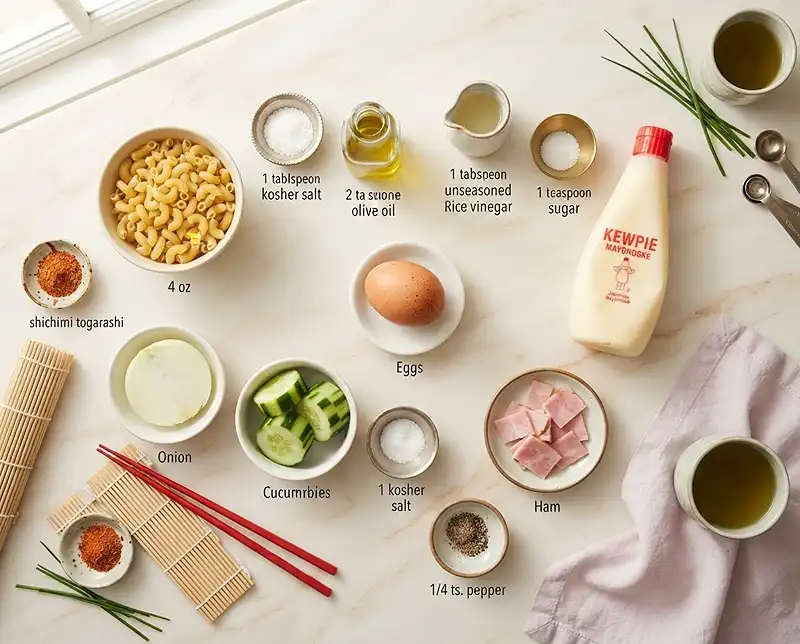
| Ingredient | Amount | Notes |
|---|---|---|
| Uncooked elbow macaroni | 4 oz | Penne, farfalle, fusilli, or spaghetti work too |
| Diamond Crystal kosher salt | 1 Tbsp | For boiling the macaroni |
| Extra virgin olive oil | 2 tsp | Coats the hot pasta and prevents sticking |
| Rice vinegar (unseasoned) | 1 Tbsp | Adds tang to the pasta base |
| Sugar | 1 tsp | Balances the vinegar’s acidity |
| Large egg | 1 (50g) | Use 2 eggs for a more prominent egg flavor |
| Onion | ½ (3.5 oz) | Yellow or white onion works best |
| Persian cucumbers | 2 | Or 1 Japanese cucumber |
| Diamond Crystal kosher salt | 1 tsp | For salting the vegetables |
| Ham slices | 4 slices | Deli ham or leftover baked ham both work |
| Japanese Kewpie mayonnaise | 4 Tbsp | Or modified American mayo (see instructions) |
| Freshly ground black pepper | ¼ tsp | Adjust to taste |
About the Key Ingredients
Kewpie Mayonnaise: This Japanese mayo is made with egg yolks only (not whole eggs), rice vinegar, and a touch of MSG, which gives it a richer, tangier, more umami-forward flavor than American mayo. The texture is smoother and silkier too. You can find it at Asian grocery stores or online, and it’s worth seeking out if you make Japanese recipes often.
Rice Vinegar: Make sure you’re using unseasoned rice vinegar, not the kind labeled “seasoned” or “for sushi.” Seasoned rice vinegar already has sugar and salt added, which will throw off the balance of the recipe.
Persian or Japanese Cucumbers: These smaller cucumbers have thinner skins, fewer seeds, and a sweeter, less watery flavor than regular American cucumbers. If you can only find regular cucumbers, scoop out the seeds before slicing to avoid excess water in your salad.
Step-by-Step Instructions for Japanese Potato Macaroni Salad
This recipe comes together in stages, but nothing is complicated. You’ll cook the pasta and egg, prep the vegetables, then mix everything together and let it chill. The key is letting the pasta cool completely before adding the mayo so it doesn’t melt and turn soupy.
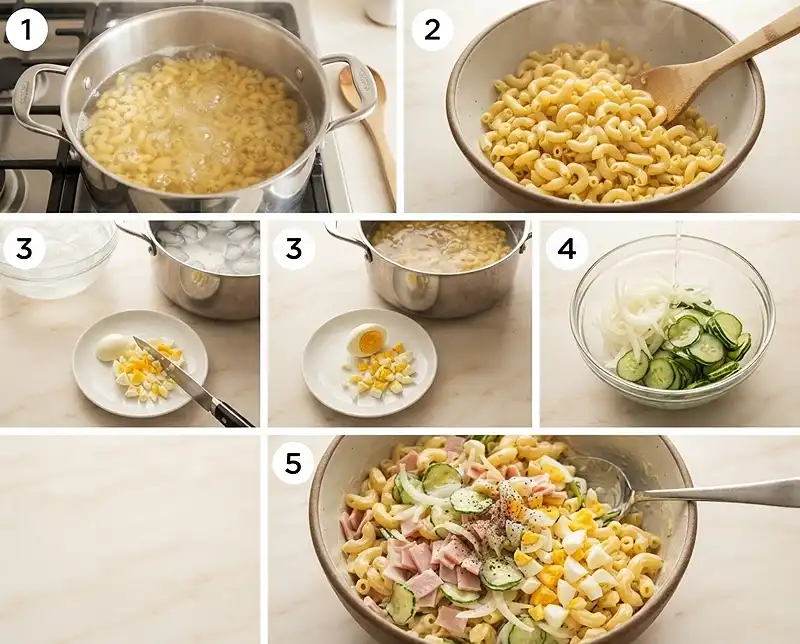
- Prepare to make the salad. Note that this recipe requires 1 hour of chilling time after assembly. Gather all your ingredients before you start so everything flows smoothly.
- Make or modify the mayonnaise. If you can’t find Kewpie, you can make a quick substitute using American mayonnaise. For 4 tablespoons of regular mayo (Best Foods or Hellmann’s works great), whisk in ½ tablespoon rice vinegar and ¾ teaspoon sugar until the sugar dissolves completely. This gives you that signature Japanese mayo sweetness and tang.
- Boil the macaroni. Bring 3 quarts (12 cups) of water to a rolling boil in a large pot. Add 1 tablespoon Diamond Crystal kosher salt and 4 ounces elbow macaroni. Cook the pasta 1 minute longer than the package instructions recommend—you want it quite soft, not al dente like Italian pasta. This softer texture is traditional for Japanese Macaroni Salad and helps the pasta soak up the dressing.
- Dress the hot pasta. Drain the macaroni well and transfer it to a large bowl. While it’s still steaming hot, immediately add 2 teaspoons extra virgin olive oil and toss to coat. This prevents sticking and adds a subtle richness. Then add 1 tablespoon rice vinegar and 1 teaspoon sugar, mixing everything together thoroughly. The hot pasta will absorb these flavors beautifully. Set aside to cool completely—this is important, so don’t rush it.
- Boil the egg. Place 1 large egg in a medium saucepan and add enough cold water to cover it by about an inch. Bring to a boil over medium heat. If you want the yolk centered (nice for presentation), gently rotate the egg with chopsticks or a spoon during the first 3 minutes as it heats up.
- Cook the egg through. Once the water reaches a full boil, reduce the heat to medium-low and set a timer for 12 minutes for a fully hard-boiled egg with a just-set yolk. If you prefer a slightly softer, jammy yolk, cook for 9 minutes instead. When the timer goes off, immediately transfer the egg to an ice bath or run cold water over it in the pot to stop the cooking.
- Peel and chop the egg. Once cool enough to handle, peel the egg—it should come off easily if you start from the wider end where the air pocket is. Chop it into small pieces, about ¼ to ½ inch. Set aside.
- Slice the onion. Cut the ends off half an onion, peel it, and slice it thinly along the grain (from root to stem end). Slicing with the grain keeps the onion pieces from falling apart and gives them a bit more structure and bite.
- Prep the cucumbers. Peel the cucumbers in alternating strips so they have a striped appearance—this is partly aesthetic and partly practical, as it removes some of the tougher skin while keeping some for color and texture. Cut off the ends, then slice the cucumbers thinly using a sharp knife or a mandoline.
- Salt the vegetables. Put the sliced cucumber and onion in a medium bowl and sprinkle with 1 teaspoon Diamond Crystal kosher salt. Massage the salt into the vegetables gently with your hands to distribute it evenly. Let them sit for 5 minutes. You’ll see liquid pooling in the bowl as the salt draws out moisture and bitterness.
- Rinse and squeeze the vegetables. After 5 minutes, give the vegetables a quick rinse under cold water to remove excess salt. Then squeeze them firmly with your hands to press out as much liquid as possible. This step is crucial—it prevents the salad from becoming watery and keeps the vegetables crisp. Set the squeezed vegetables aside.
- Cut the ham. Slice the ham into small pieces, roughly 2 inches long and about ⅛ inch thick. You want pieces that are easy to eat in a forkful with the pasta. Set aside.
- Combine the salad base. Check that your macaroni is completely cool—if it’s even slightly warm, the mayo will thin out and get runny. Once cool, add the ham, cucumber, and onion to the pasta and mix everything together well.
- Add the egg. Gently fold in the chopped hard-boiled egg, distributing it throughout the salad.
- Add the mayo and pepper. Add 4 tablespoons Japanese Kewpie mayonnaise and ¼ teaspoon freshly ground black pepper. Mix everything together until all the ingredients are evenly coated. The salad should look creamy but not swimming in mayo.
- Adjust seasoning and chill. Taste the salad and adjust as needed—you might want more salt, pepper, or mayonnaise depending on your preference. Once you’re happy with the flavor, cover the bowl and refrigerate for at least 1 hour before serving. This chilling time lets all the flavors meld together and the salad tastes so much better cold.
Expert Tips for the Best Results
Don’t skip the salt-and-squeeze step for the vegetables. I know it seems fussy, but this technique removes the sharp bite from raw onion and prevents the cucumbers from releasing water into the salad later. It’s a game-changer for texture.
Overcook the pasta slightly. I know this goes against everything you’ve learned about cooking pasta, but trust me on this. Japanese potato macaroni salad is meant to have softer pasta that soaks up the dressing. Cooking it one minute longer than the package says gives you the perfect texture.
Let the pasta cool completely before adding mayo. If you add mayonnaise to hot or even warm pasta, it will thin out and turn the salad greasy and soupy. Be patient and let it come to room temperature, or spread it on a baking sheet to cool faster.
Add extra mayo if needed. After the salad chills, the pasta may absorb more of the mayo and it might look a little dry. Just stir in another tablespoon or two of mayo before serving if needed.
Use fresh black pepper. Pre-ground pepper loses its aroma quickly. Freshly cracking it over the salad adds a subtle spicy warmth that really brightens everything up.
Variations to Try
Extra vegetables: Add blanched green peas, corn kernels, or diced carrots for more color and nutrition. Just make sure any additions are well-drained so they don’t water down the salad.
Different proteins: Swap the ham for diced cooked chicken, flaked canned tuna, or small cooked shrimp. You could also leave out the meat entirely for a vegetarian version—it’s still delicious.
Spicy version: Stir in a small spoonful of sriracha or mix a little Japanese karashi mustard into the mayo for a subtle heat that doesn’t overwhelm the other flavors.
Herb addition: Fresh dill or chopped parsley adds a nice pop of freshness. Stir in a tablespoon or two right before serving.
Potato macaroni salad: For a heartier version closer to traditional Japanese deli-style macaroni salad, add one small boiled and diced potato along with the pasta. It makes the salad more filling and adds a creamy starchiness.
If you’re looking for more creative salads to serve alongside this one, try my feta cheese watermelon salad for something refreshing, or the chopped cheeseburger salad for a fun, hearty option.
Troubleshooting Common Issues
The salad is too dry: The pasta absorbed all the mayo, which happens sometimes depending on the brand and how long it sits. Just stir in more mayonnaise, a tablespoon at a time, until it reaches the creaminess you want.
The salad is watery: You probably didn’t squeeze the vegetables thoroughly enough, or you added them while they were still wet. Next time, really wring them out firmly. If it’s already too watery, you can drain off excess liquid and stir in a bit more mayo to thicken it up.
The onion is too sharp: Raw onion can be strong. Make sure you’re slicing it thinly and letting it sit with the salt for the full 5 minutes. If it’s still too much, you can soak the sliced onion in cold water for 10 minutes before salting, which mellows it further.
The salad tastes bland: Check your seasoning. You might need more salt, pepper, or even a tiny splash of rice vinegar to brighten things up. Kewpie mayo has more flavor than regular mayo, so if you’re using the substitute, you might need to adjust the seasoning a bit more.
The pasta is clumpy: This happens if you didn’t toss the hot pasta with oil right away. Try breaking up the clumps gently with your hands or a fork, and mix in a little extra mayo to help separate the pieces.
Storage and Make-Ahead Tips
This Japanese potato macaroni salad is actually one of those dishes that tastes better the next day after all the flavors have had time to get cozy together in the fridge. Store it in an airtight container and it’ll stay fresh and delicious for up to 2-3 days.
| Storage Method | Duration | Notes |
|---|---|---|
| Refrigerator (assembled) | 2-3 days | Store in an airtight container; may need extra mayo before serving |
| Refrigerator (components separate) | Up to 4 days | Store dressed pasta, vegetables, and egg separately; mix before serving |
| Freezer | Not recommended | Mayonnaise separates and vegetables become mushy when frozen |
Make-ahead strategy: You can prep all the components up to a day in advance. Cook and dress the pasta, boil and chop the egg, and prep the vegetables (after salting and squeezing). Store everything separately in the fridge, then assemble the salad a few hours before you plan to serve it.
Before serving leftovers: Give the salad a good stir and taste it. The pasta may have absorbed more mayo overnight, so you might want to freshen it up with another spoonful or two of mayonnaise. A small splash of rice vinegar can also brighten up day-old salad.
Food safety note: Because this salad contains mayonnaise and hard-boiled eggs, don’t leave it out at room temperature for more than 2 hours (or 1 hour if it’s a hot day). According to the USDA food safety guidelines, perishable foods in the “danger zone” between 40°F and 140°F can develop harmful bacteria quickly.
This salad is perfect for picnics and potlucks—just pack it in a cooler with ice packs and keep it chilled until serving time. For more great salad ideas that travel well, check out my herb roasted potato salad.
Japanese Potato Macaroni Salad FAQs
What is Japanese potato macaroni salad?
Japanese potato macaroni salad is a creamy side dish that combines mashed potatoes and elbow macaroni with vegetables like cucumbers, carrots, and onions, all dressed in Japanese mayonnaise. It’s a popular dish in Japanese homes and restaurants, often served as a side dish or appetizer. The salad has a smooth, creamy texture from the mashed potatoes mixed with the firmer macaroni, creating a unique combination that differs from traditional Western potato or macaroni salads.
What makes Japanese potato macaroni salad different from regular potato salad?
Japanese potato macaroni salad differs from regular potato salad in several ways. It includes elbow macaroni mixed with the potatoes, uses Japanese mayonnaise which is sweeter and richer than Western mayo, and the potatoes are typically mashed more smoothly rather than kept chunky. The vegetables are often cut into thin, delicate strips or small pieces, and ingredients like ham or cucumber are commonly added. The overall texture is creamier and the flavor profile is slightly sweeter and more umami-rich compared to traditional Western potato salads.
How do you make Japanese potato macaroni salad?
To make Japanese potato macaroni salad, start by boiling potatoes until tender and cooking elbow macaroni according to package directions. Mash the potatoes while still warm and let both ingredients cool. Prepare vegetables like thinly sliced cucumbers, julienned carrots, and finely chopped onions. Mix the cooled potatoes and macaroni together, add the vegetables and any optional ingredients like ham or corn. Dress everything with Japanese mayonnaise, season with salt and pepper, and mix until creamy and well combined. Chill before serving for the best flavor.
Can I substitute regular mayonnaise for Japanese mayonnaise in this salad?
Yes, you can substitute regular mayonnaise for Japanese mayonnaise, but the flavor will be slightly different. Japanese mayonnaise has a richer, creamier texture and a slightly sweeter, tangier taste due to the use of rice vinegar and egg yolks only. To mimic Japanese mayo using regular mayonnaise, you can add a small amount of rice vinegar, a pinch of sugar, and a tiny bit of MSG or dashi powder for umami flavor. However, the results won’t be exactly the same, so using authentic Japanese mayonnaise is recommended for the most authentic taste.
How long does Japanese potato macaroni salad last in the refrigerator?
Japanese potato macaroni salad will last for 3 to 4 days when stored properly in an airtight container in the refrigerator. Because it contains mayonnaise and cooked vegetables, it’s important to keep it refrigerated at all times and not leave it at room temperature for more than 2 hours. The salad may release some liquid as it sits, which is normal. You can stir it before serving or drain off excess liquid. If you notice any off odors, discoloration, or signs of mold, discard the salad immediately.
Final Thoughts
This Japanese potato macaroni salad has become one of my most-requested side dishes, and I think once you make it, you’ll understand why. It’s creamy and comforting but still feels light and refreshing, with just enough tang to keep things interesting.
The beauty of this recipe is that it looks impressive but comes together without any fancy techniques or hard-to-find ingredients. You’re basically just cooking pasta and an egg, prepping some vegetables, and mixing everything together. The magic happens when all those simple elements come together and chill.
Whether you’re packing it for lunch, bringing it to a barbecue, or serving it alongside grilled chicken for dinner, this Japanese Macaroni Salad just works. Give it that full hour to chill if you can—I know it’s tempting to dig in right away, but the wait is absolutely worth it.
Have you tried making Japanese-style macaroni salad before? I’d love to hear how yours turns out! Drop a comment below and let me know if you tried any of the variations or have your own favorite way to make it.