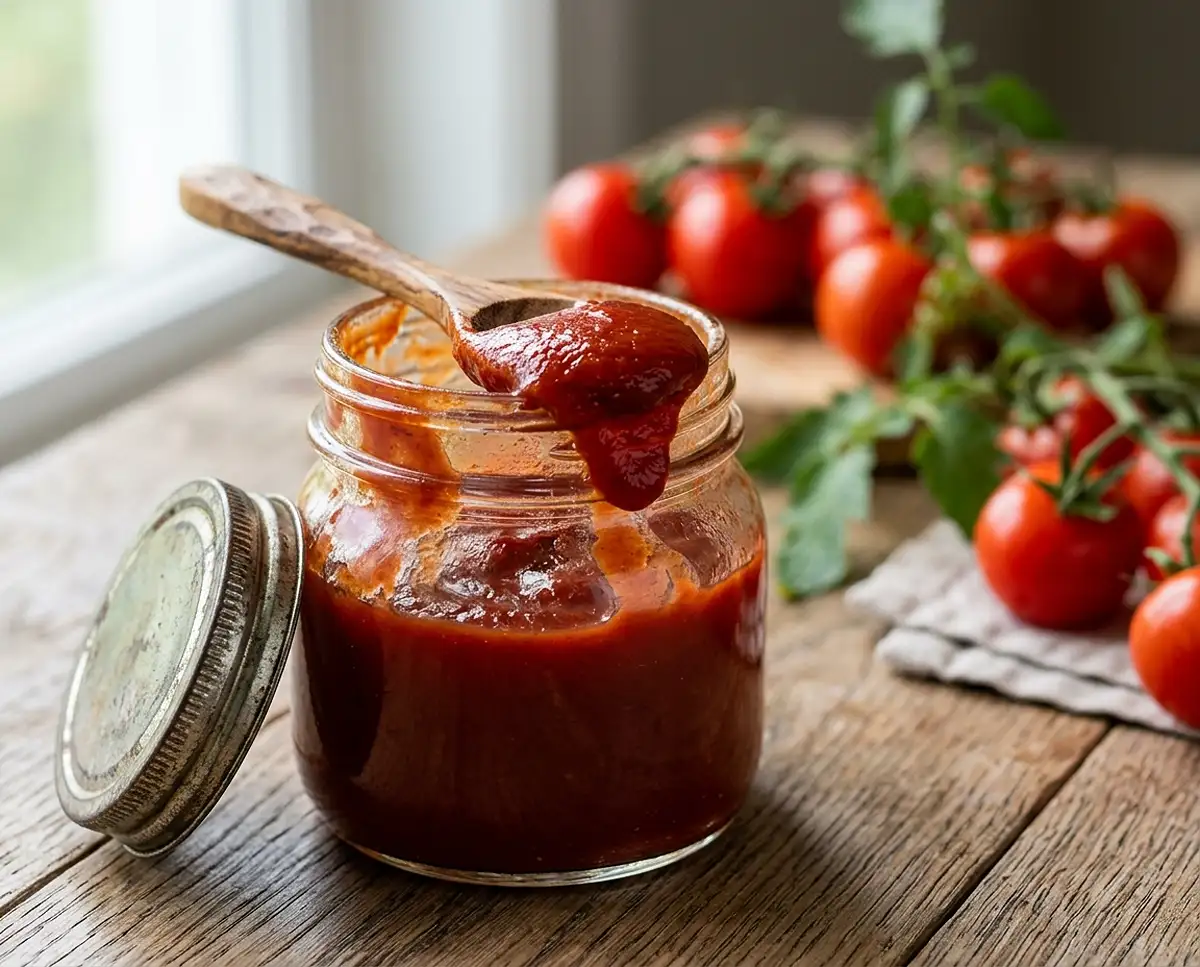
How to Make Homemade Ketchup
Fresh, tangy, and so much better than store-bought—this homemade ketchup takes just an hour and uses real tomatoes with no mystery ingredients.
I’ll be honest: I never thought I’d be the person making ketchup from scratch. But after reading the ingredient list on a bottle from the store, I figured I’d give it a shot with fresh tomatoes from the farmers market. Turns out, it’s ridiculously easy and tastes miles better than anything you’ll find in a squeeze bottle.
If you’ve ever wanted to control exactly what goes into your condiments, this is where you start. No high fructose corn syrup, no weird preservatives—just real food doing real work. Plus, your kitchen will smell absolutely amazing while it simmers.
Table of Contents
Quick Recipe Snapshot
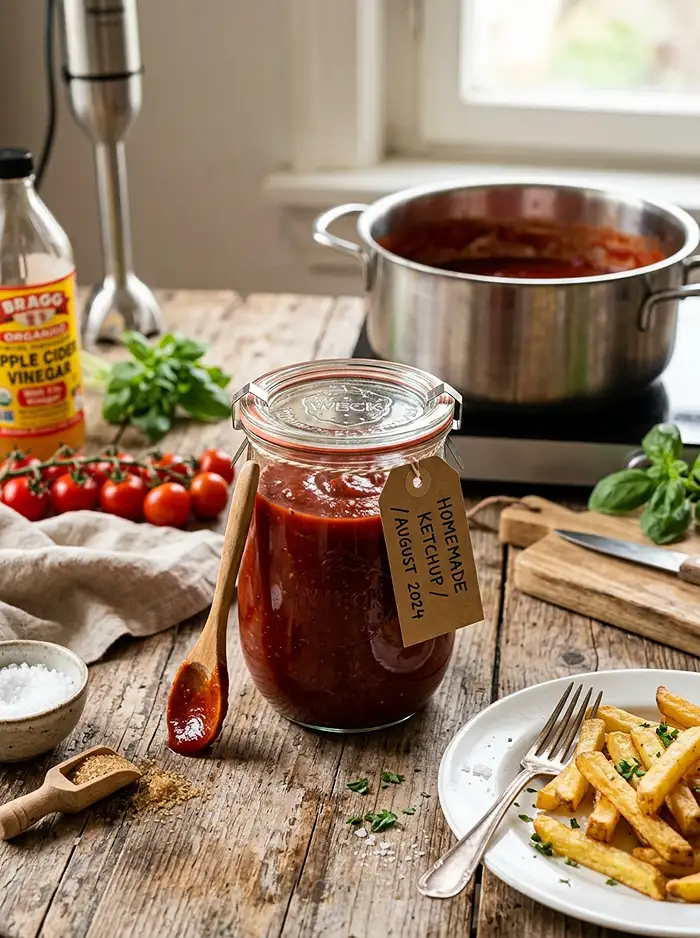
This simple homemade ketchup comes together in about an hour of mostly hands-off simmering time. You’ll blend fresh tomatoes, reduce them down to concentrate the flavor, then stir in apple cider vinegar, brown sugar, and a handful of warm spices that create that classic ketchup taste. The result is a thick, glossy condiment that’s perfectly balanced between sweet, tangy, and just a little spicy. It keeps in the fridge for up to a month, though in my house it’s usually gone within two weeks.
Why You’ll Love This Homemade Ketchup
First off, you know exactly what’s in it. No squinting at tiny labels or wondering what “natural flavors” actually means. Just tomatoes, vinegar, sugar, and spices you can pronounce.
The flavor is brighter and more complex than store-bought versions. You get real tomato taste that isn’t buried under a mountain of corn syrup. The apple cider vinegar adds a gentle tang that complements instead of overpowers, and the spices—cinnamon, clove, a hint of chili—create that signature ketchup flavor we all love but with actual depth.
It’s also incredibly flexible. You can tweak the sweetness, add more heat, or adjust the consistency to exactly how you like it. Want it thicker? Cook it longer. Prefer it sweeter? Add another tablespoon of brown sugar. This recipe is forgiving and adaptable.
And honestly? There’s something deeply satisfying about pulling a jar of homemade ketchup out of your fridge when friends come over. It’s the kind of thing that makes people pause and go, “Wait, you made this?” Yes. Yes, I did.
Homemade Ketchup
Ingredients
Ingredients
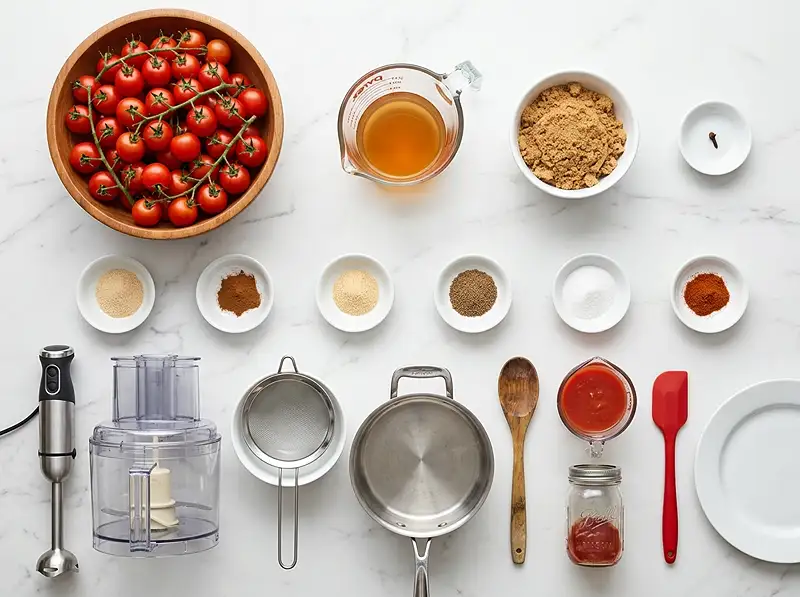
- 6 cups tomatoes I used organic cherry vine tomatoes
- ½ cup apple cider vinegar
- ¼ cup brown sugar
- 1 whole clove bud
- 1 tsp onion powder
- ⅛ tsp ground cinnamon powder
- 1 tsp garlic powder
- ⅛ tsp celery seeds
- 1 tsp salt
- ⅛ tsp chilli powder or cayenne powder
Instructions
- Wash the tomatoes and remove their stems.
- Add the tomatoes to a large bowl and blend them with a handheld immersion blender. You could also do this in a food processor.
- Pass them through a sieve to remove the seeds and chunks of the skin. This yielded 3.5 cups of tomato juice for me.
- Add the tomatoes into a large saucepan over medium heat and bring to a slow boil to reduce them for about 45 minutes. Stir occasionally.
- Add all the other ingredients and stir well. The spices and flavours combine to give you that signature tomato ketchup flavour.
- Keep over medium heat for another 8-10 minutes and cook, stirring occasionally. When you achieve a consistency you like, remove from the heat.
- Leave it to cool down then transfer to an airtight container or bottle and keep refrigerated for up to a month.
Ingredients
This recipe uses straightforward ingredients you probably already have in your pantry, with the exception of fresh tomatoes. I used organic cherry vine tomatoes because they were what looked best at the market, but any ripe tomatoes will work beautifully here. The key is making sure they’re flavorful and at peak ripeness.
| Ingredient | Quantity | Notes |
|---|---|---|
| Tomatoes | 6 cups | Cherry vine, Roma, or any ripe variety |
| Apple cider vinegar | 1/2 cup | Provides tangy balance |
| Brown sugar | 1/4 cup | Adds depth and sweetness |
| Whole clove bud | 1 | Classic ketchup spice note |
| Onion powder | 1 tsp | Savory background flavor |
| Ground cinnamon | 1/8 tsp | Subtle warmth |
| Garlic powder | 1 tsp | Aromatic depth |
| Celery seeds | 1/8 tsp | Traditional ketchup ingredient |
| Salt | 1 tsp | Enhances all flavors |
| Chili powder or cayenne | 1/8 tsp | Optional heat |
About those tomatoes: cherry tomatoes have a lovely concentrated sweetness that works great for ketchup, but Roma or plum tomatoes are the traditional choice because they’re meatier with less water content. Honestly, I’ve made this recipe with whatever looked good that week, and it always turns out delicious. Just avoid underripe tomatoes—they’ll give you a thin, acidic ketchup that tastes flat.
The spice combination might look unusual if you’ve never thought about what goes into ketchup before. That tiny pinch of cinnamon and the single clove bud aren’t meant to make it taste like dessert—they add warmth and complexity that your brain recognizes as “ketchup flavor” without being able to pinpoint exactly why. It’s the same principle behind classic tomato sauce recipes that use a pinch of sugar or a cinnamon stick.
Apple cider vinegar is key here. It has a mellower, slightly fruity acidity compared to white vinegar, which can taste harsh. If you only have white vinegar, you can use it, but I’d reduce it to 1/3 cup and taste as you go.
Instructions
Making homemade ketchup is a straightforward process with three main phases: blending the tomatoes, reducing them to concentrate the flavor, and then adding the seasonings. The most important thing is patience during the reduction phase—that’s where all the magic happens and your watery tomato puree transforms into thick, glossy ketchup.
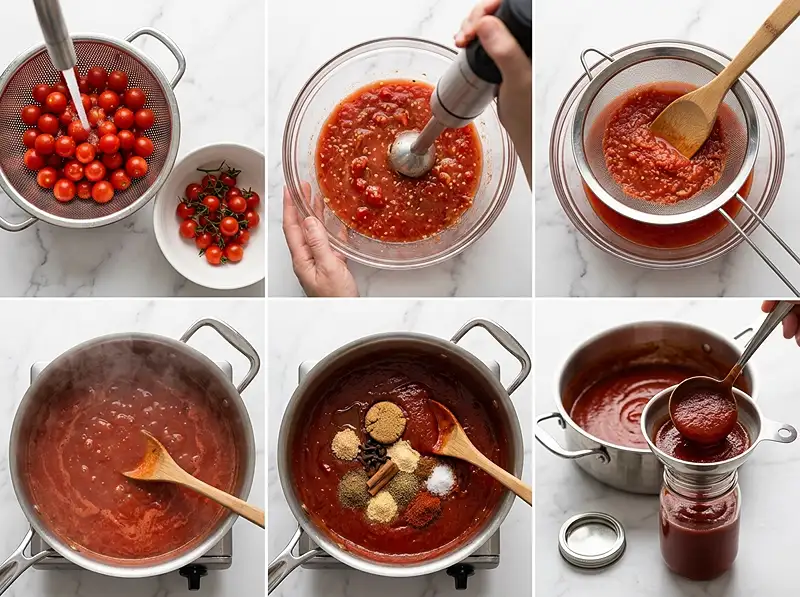
- Prep the tomatoes: Wash your tomatoes thoroughly under cool running water and remove any stems. If you’re using larger tomatoes, you might want to roughly chop them into quarters to make blending easier, but cherry tomatoes can go in whole.
- Blend until smooth: Add all the tomatoes to a large bowl and blend them with a handheld immersion blender until completely smooth. You could also do this in a food processor or regular blender in batches. Don’t worry about getting every last bit of skin pureed—you’ll strain it in the next step. Blend for about 30-45 seconds until you have a thick, pourable liquid.
- Strain out seeds and skins: Set a fine-mesh sieve over another large bowl or directly over your saucepan if it’s big enough. Pour the blended tomatoes through the sieve, using a spatula or the back of a spoon to press and push the liquid through while leaving the seeds and skin chunks behind. This takes a few minutes of patient stirring and pressing. You should end up with about 3 to 3.5 cups of smooth tomato juice. Discard the solids left in the sieve.
- Begin the reduction: Pour the strained tomato juice into a large saucepan and place it over medium heat. Bring it to a gentle, slow boil—you want to see steady bubbling but not a rolling, violent boil. This initial reduction will take about 45 minutes. Stir occasionally, maybe every 10 minutes or so, to prevent sticking and to check on the consistency. You’ll notice the color deepening from bright red to a richer, darker red as the water evaporates and the tomato flavor concentrates.
- Add the seasonings: Once the tomato mixture has reduced by roughly half and looks thicker, add the apple cider vinegar, brown sugar, clove bud, onion powder, cinnamon, garlic powder, celery seeds, salt, and chili powder. Stir everything together well, making sure the sugar dissolves completely. This is when it starts smelling like actual ketchup—that combination of spices and vinegar with concentrated tomato creates that unmistakable aroma.
- Final cooking phase: Keep the mixture over medium heat for another 8 to 10 minutes, stirring occasionally. The ketchup will continue to thicken as the sugar dissolves and melds with everything else. Taste it at this point and adjust—add a pinch more salt if it needs it, another sprinkle of sugar if it’s too tangy, or a bit more chili powder if you want more heat. When you drag a spoon through it, the ketchup should coat the back of the spoon and slowly slide off. If you like it thicker, cook for a few more minutes; if you prefer it thinner, remove it from heat now.
- Cool and store: Remove the saucepan from the heat and let the ketchup cool to room temperature. It will thicken slightly more as it cools. Once cool, fish out the whole clove bud if you can find it, then transfer the ketchup to an airtight container or a clean glass bottle. Refrigerate immediately. It’ll keep beautifully in the fridge for up to a month.
The whole process is pretty forgiving. The only part where you need to pay real attention is during the reduction to make sure it doesn’t scorch on the bottom of the pan. If you notice any sticking, reduce the heat slightly and stir more frequently.
Expert Tips for Perfect Ketchup
Use a heavy-bottomed saucepan: This distributes heat more evenly and prevents hot spots that can burn your ketchup. I learned this the hard way with a thin pot that scorched the bottom while the top was still watery.
Don’t rush the reduction: I know 45 minutes feels like forever when you’re standing in the kitchen, but this is what concentrates all that tomato flavor. If you try to speed it up with higher heat, you’ll end up with a thinner ketchup that tastes watery, or worse, one that’s burned on the bottom.
Taste and adjust at the end: Everyone’s tomatoes are different—some are sweeter, some more acidic. After adding your spices, give it a taste and adjust accordingly. I usually find I want just a touch more salt than the recipe calls for, but your preferences might be different.
Watch the consistency: Remember that ketchup thickens as it cools, so don’t cook it until it’s as thick as you ultimately want it. Aim for slightly thinner than perfect while it’s hot, and it’ll be just right once refrigerated.
Use ripe tomatoes: Underripe tomatoes make thin, acidic ketchup. Overripe is better than underripe. If your tomatoes are perfectly ripe and flavorful, your ketchup will be too.
Sterilize your storage container: If you want your ketchup to last the full month, make sure your bottle or jar is properly clean. I run mine through the dishwasher or boil it for a few minutes before filling.
Variations to Try
Spicy ketchup: Double or triple the chili powder, or add a teaspoon of hot sauce along with the other seasonings. Some people love adding a pinch of smoked paprika for a smoky-spicy kick.
Smoky ketchup: Add 1/4 teaspoon of smoked paprika or a tiny drop of liquid smoke (seriously, just a drop) when you add the other spices. This is incredible with burgers and fries.
Honey ketchup: Swap half the brown sugar for honey. It gives a more floral sweetness that’s really lovely. Just add the honey at the very end of cooking so it doesn’t break down too much from the heat.
Balsamic ketchup: Replace half the apple cider vinegar with balsamic vinegar for a richer, more complex tang. This version is fancy enough for a cheese board, honestly.
Less sweet version: Cut the brown sugar down to 2 tablespoons instead of 1/4 cup. This lets the tomato flavor really shine and tastes more like European-style ketchup.
Curry ketchup: Add 1 teaspoon of curry powder along with the other spices. This is super popular in Germany and tastes amazing on sausages and schnitzel.
Troubleshooting Common Issues
My ketchup is too thin: Just keep cooking it! Put it back on medium-low heat and simmer for another 10-15 minutes, stirring frequently. It should thicken right up. Also remember it thickens as it cools, so let it come to room temperature before deciding it’s too thin.
It’s too thick: Stir in a tablespoon or two of water or tomato juice until you reach your desired consistency. Easy fix.
Too tangy or acidic: Add another tablespoon of brown sugar and stir well. Let it simmer for another 2-3 minutes to incorporate. Sugar balances acidity beautifully.
Not tangy enough: Add another tablespoon of apple cider vinegar and taste again. Some tomato varieties are naturally sweeter and need more acid to balance.
It tastes flat: This usually means it needs more salt. Add 1/4 teaspoon at a time until the flavors pop. Salt is what makes everything else taste like itself.
It burned on the bottom: Unfortunately, burned ketchup tastes bitter and there’s no real way to fix it. You’ll taste that burned flavor throughout. If you catch it early, you might be able to carefully transfer the unburned portion to a new pot, but honestly, it’s better to start over with lower heat and more frequent stirring.
It separated in the fridge: Totally normal! Just give it a good stir before using. The natural pectin in tomatoes doesn’t create as stable an emulsion as the modified food starch in commercial ketchup, so some separation is expected.
Storage
Proper storage keeps your homemade ketchup fresh and delicious for up to a month. Since this recipe doesn’t contain the preservatives that store-bought versions have, refrigeration is essential. Always use clean utensils when scooping out ketchup to avoid introducing bacteria that could spoil it faster.
| Storage Method | Duration | Notes |
|---|---|---|
| Refrigerator | Up to 1 month | Store in airtight glass container or bottle |
| Freezer | Up to 6 months | Freeze in small portions for easy thawing |
| Room temperature | Not recommended | Will spoil quickly without preservatives |
I like using glass bottles or mason jars for storage because they don’t absorb odors and you can see exactly how much you have left. Squeeze bottles are convenient but harder to clean thoroughly. Whatever container you choose, make sure it’s completely clean and dry before filling.
If you want to freeze some for later, pour the cooled ketchup into ice cube trays or small containers. Once frozen solid, pop the cubes into a freezer bag. This way you can thaw just what you need. Frozen ketchup might separate slightly when thawed, but a good stir brings it right back together.
Watch for signs of spoilage like mold, off smells, or a fizzy, fermented taste. If anything seems off, trust your instincts and toss it. That said, I’ve never had a batch go bad before we finished it—it’s just too good.
How to Make Homemade Ketchup FAQs
What are the basic ingredients needed to make homemade ketchup?
The basic ingredients for homemade ketchup include tomato paste or fresh tomatoes, vinegar (white or apple cider), sugar or honey, salt, and spices such as onion powder, garlic powder, and ground cloves. Some recipes also include cinnamon, allspice, and cayenne pepper for added flavor depth.
How long does it take to make homemade ketchup?
Making homemade ketchup typically takes about 30 to 45 minutes of active cooking time. This includes combining ingredients, bringing the mixture to a boil, and then simmering until it thickens to the desired consistency. After cooking, it should cool for at least 30 minutes before storing in the refrigerator.
How long can homemade ketchup be stored?
Homemade ketchup can be stored in an airtight container or jar in the refrigerator for up to one month. The vinegar and sugar act as natural preservatives. Always use clean utensils when serving to prevent contamination, and discard the ketchup if you notice any signs of mold, off odors, or changes in color.
Can I make homemade ketchup without sugar?
Yes, you can make homemade ketchup without refined sugar by using natural sweeteners like honey, maple syrup, or agave nectar. You can also use sugar substitutes like stevia or monk fruit sweetener. For a completely unsweetened version, rely on the natural sweetness of tomatoes, though the flavor will be more tangy and less like traditional ketchup.
Why is my homemade ketchup too thin or too thick?
If your ketchup is too thin, continue simmering it uncovered to allow more liquid to evaporate until it reaches the desired consistency. If it becomes too thick, simply stir in small amounts of water or vinegar until you achieve the right texture. Remember that ketchup will thicken slightly as it cools, so remove it from heat when it is slightly thinner than your target consistency.
Final Thoughts
Learning how to make homemade ketchup was one of those kitchen projects I kept putting off because it seemed unnecessary—until I actually tried it. Now I can’t imagine going back to the store-bought stuff for anything other than emergency situations. The flavor is just that much better, and knowing exactly what’s in my condiments gives me peace of mind.
This simple homemade ketchup isn’t complicated or fussy. It doesn’t require special equipment beyond a blender and a pot. What it does require is patience while those tomatoes reduce and transform, but it’s mostly hands-off time when you can be doing other things in the kitchen or just enjoying the amazing smell.
If you’re already cooking from scratch and making things like homemade meals or experimenting with recipes like this quinoa pistachio cranberry salad, adding homemade ketchup to your repertoire is a natural next step. It pairs beautifully with everything from breakfast hash to dinner meatloaf, and it even makes a great base for homemade barbecue sauce.
So grab some tomatoes at your next grocery run and give this a try. Make it your own by adjusting the spices to your taste. Maybe you’ll discover you prefer it smokier, or spicier, or less sweet. That’s the beauty of making it yourself—you’re in complete control.
And hey, if you make a batch, I’d love to hear how it turns out. Did you tweak the spices? Use a different type of tomato? Try one of the variations? Let me know in the comments, and if you loved it, share this recipe with someone who’d appreciate knowing how to make homemade ketchup that actually tastes like real food. Happy cooking!