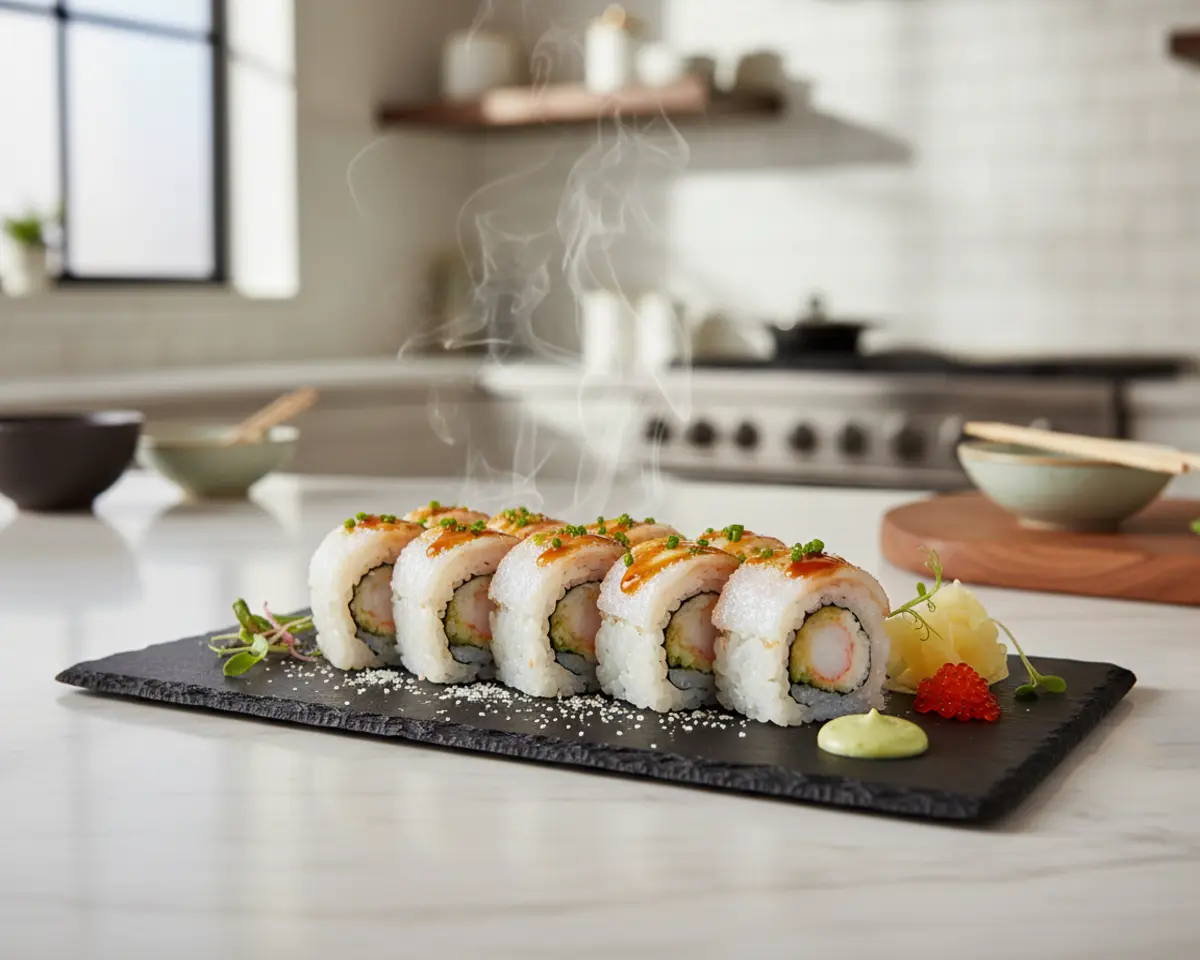
Snow White Roll Sushi Recipe
Creating gorgeous snow white roll sushi at home is easier than you might think, and I’m excited to walk you through it step by step.
I’ll never forget the first time I made sushi at home—I was convinced I’d end up with a rice disaster and wonky rolls. But once I got the hang of it, I realized that homemade sushi is not only doable, it’s actually pretty fun. The snow white roll is one of my favorites because it looks stunning and tastes fresh and creamy without being too complicated.
Table of Contents
Quick Recipe Snapshot
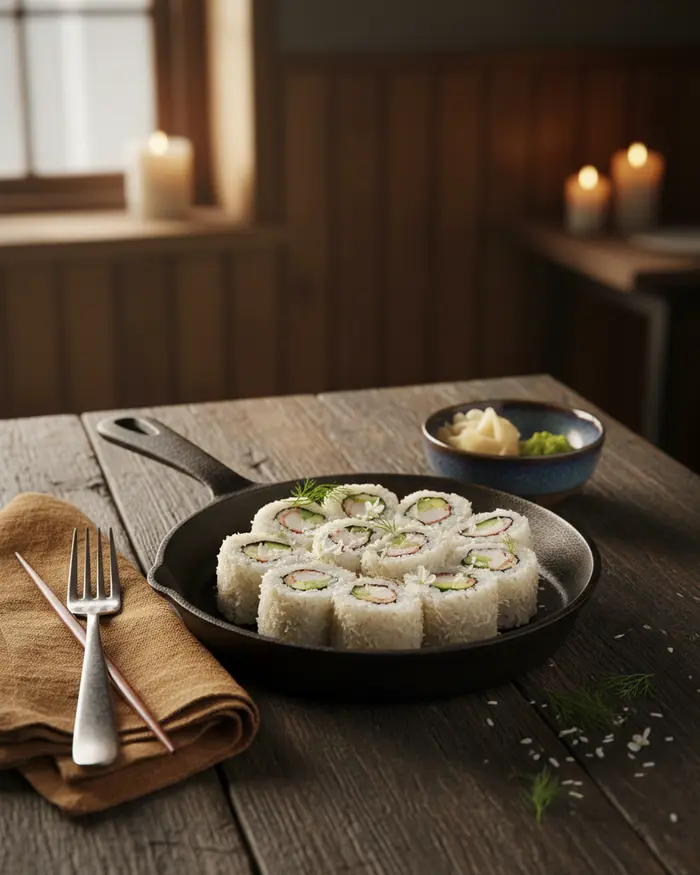
The snow white roll sushi features tender imitation crab, crisp cucumber, and buttery avocado wrapped in perfectly seasoned sushi rice and nori, then topped with creamy mayo and colorful fish roe for a restaurant-quality finish. It takes about 45 minutes from start to finish, with most of that time spent letting the rice cook and cool.
This recipe makes 4 rolls, which translates to about 24-32 pieces depending on how you slice them—perfect for a dinner party, date night, or a fun weekend cooking project.
Why You’ll Love This Snow White Sushi Roll
This white dragon roll variation is absolutely beautiful to serve. The contrast between the pristine white crab topping and the vibrant colors inside makes every slice look like something from a sushi restaurant.
It’s beginner-friendly, too. Unlike some sushi recipes that require special fish handling or advanced rolling techniques, this one uses accessible ingredients you can find at any grocery store. Imitation crab is budget-friendly, already cooked, and doesn’t require any knife skills beyond shredding.
The flavor balance is spot-on—creamy avocado, sweet crab, crunchy cucumber, and that little kiss of mayo on top create layers of texture and taste in every bite. Plus, making sushi at home means you control exactly what goes in, so you can adjust the mayo, skip the roe, or add extra veggies based on your preferences.
And honestly? There’s something deeply satisfying about slicing into a roll you made yourself and seeing those perfect cross-sections. It feels like a little culinary victory every single time.
Snow White Roll Sushi
Ingredients
Ingredients
- 1 cup sushi rice
- 1 ¼ cups water
- 2 tbsp sushi vinegar
- 4 sheets nori seaweed
- ½ lb imitation crab sticks shredded
- ½ cucumber julienned
- 1 avocado sliced
- Mayonnaise to taste (optional)
- Tobiko or fish roe optional, for garnish
Instructions
- **Prepare Sushi Rice:** Rinse the sushi rice under cold water until the water runs clear. Combine the rice and water in a saucepan and bring to a boil. Reduce heat to low, cover, and simmer for 15 minutes, or until all the water is absorbed. Remove from heat and let it sit, covered, for another 10 minutes.
- **Season Sushi Rice:** Transfer the cooked rice to a large bowl. Gently fold in the sushi vinegar until well combined. Allow the rice to cool to room temperature.
- **Prepare Fillings:** Shred the imitation crab sticks. Julienne the cucumber and slice the avocado. If desired, lightly mix the shredded crab with a small amount of mayonnaise.
- **Assemble the Rolls:** Place a bamboo sushi mat on a clean surface. Lay a sheet of nori seaweed on the mat, shiny side down. Evenly spread a thin layer of cooled sushi rice over about two-thirds of the nori, leaving a 1/2-inch border at the top.
- **Add Fillings:** Arrange a line of imitation crab, cucumber, and avocado horizontally across the center of the rice.
- **Roll the Sushi:** Carefully lift the edge of the bamboo mat closest to you and begin to roll it tightly over the fillings. As you roll, gently press down on the roll to keep it compact. Continue rolling until the entire nori sheet is enclosed.
- **Garnish (Optional):** If desired, spread a thin layer of mayonnaise on top of the roll and sprinkle with tobiko or other fish roe.
- **Slice and Serve:** Wet a sharp knife to prevent sticking. Slice the roll into 6-8 equal pieces. Serve immediately with soy sauce, wasabi, and pickled ginger.
Ingredients for Snow White Roll Sushi
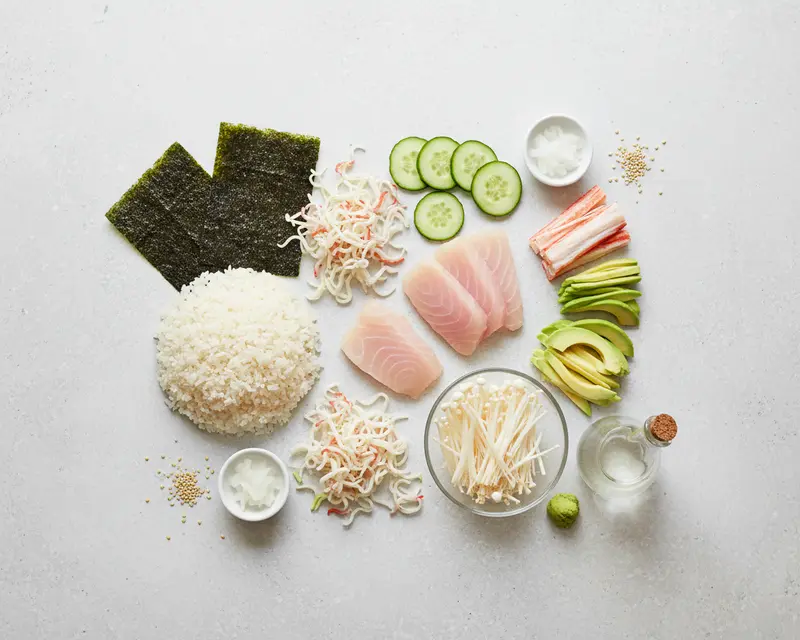
Let me walk you through what you’ll need for these beautiful rolls. The ingredient list is short and sweet, but each component plays an important role in the final result.
| Ingredient | Quantity | Notes |
|---|---|---|
| Sushi rice | 1 cup | Short-grain Japanese rice; don’t substitute with long-grain |
| Water | 1 1/4 cups | For cooking the rice |
| Sushi vinegar | 2 tbsp | Seasoned rice vinegar works perfectly |
| Nori seaweed sheets | 4 sheets | Look for toasted nori in the Asian foods aisle |
| Imitation crab sticks | 1/2 lb | Also called surimi; shred into thin strips |
| Cucumber | 1/2 whole | English or Persian cucumbers work best |
| Avocado | 1 whole | Choose one that’s ripe but still firm |
| Mayonnaise | To taste | Optional; Japanese Kewpie mayo is ideal |
| Tobiko or fish roe | Optional | For garnish; adds color and a pop of brine |
Sushi rice is the foundation here, and it’s worth getting the right kind. Short-grain Japanese rice becomes sticky when cooked, which is exactly what you need to hold your rolls together. Long-grain rice will fall apart and ruin your day.
Imitation crab is the star of this easy sushi recipe. It’s mild, slightly sweet, and has that satisfying stringy texture. Some people look down on imitation crab, but honestly, it’s a traditional sushi ingredient and tastes delicious in this application.
The cucumber adds a refreshing crunch that cuts through the richness of the avocado and mayo. Make sure to julienne it into thin matchsticks so it rolls neatly and doesn’t poke through your nori.
And that avocado? It brings a buttery, almost luxurious quality to the roll. Just make sure it’s ripe enough to slice easily but not so soft that it turns to mush when you’re rolling.
Step-by-Step Instructions
Now let’s get rolling—literally. I’ll walk you through each step so your sushi with imitation crab turns out beautifully.
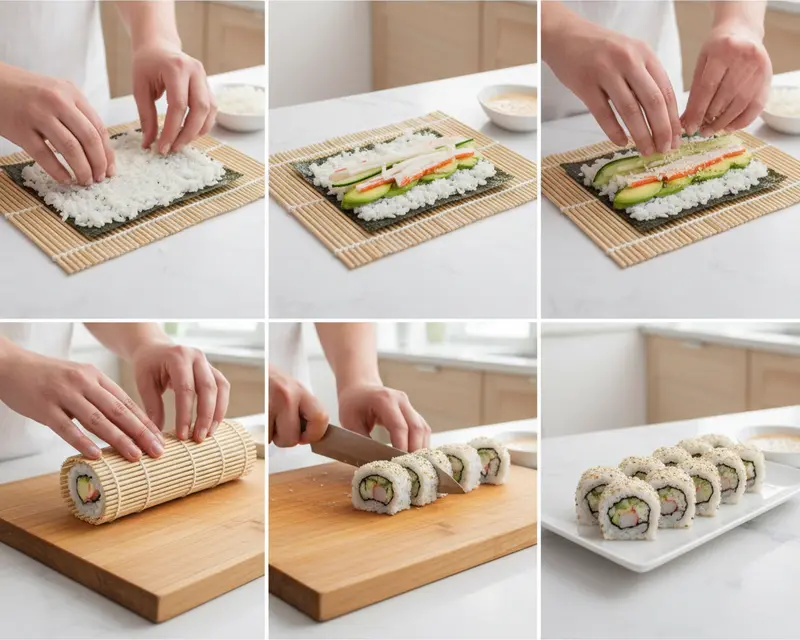
- Prepare Sushi Rice: Rinse the sushi rice under cold water until the water runs clear—this removes excess starch and prevents gummy rice. Combine the rice and water in a saucepan and bring to a boil. Reduce heat to low, cover, and simmer for 15 minutes, or until all the water is absorbed. Remove from heat and let it sit, covered, for another 10 minutes. This resting period lets the rice finish steaming and develop the perfect texture.
- Season Sushi Rice: Transfer the cooked rice to a large bowl, preferably wooden or non-metallic if you have one. Gently fold in the sushi vinegar using a cutting motion with a rice paddle or wooden spoon—don’t stir vigorously or you’ll smash the grains. The rice should smell slightly tangy and look glossy. Allow the rice to cool to room temperature before using it. I usually fan it while folding to speed up cooling, which also gives it a nice sheen.
- Prepare Fillings: Shred the imitation crab sticks by pulling them apart lengthwise into thin strips. Julienne the cucumber into matchstick-sized pieces, removing the seeds if they’re particularly watery. Slice the avocado into thin strips. If desired, lightly mix the shredded crab with a small amount of mayonnaise in a separate bowl—this adds extra creaminess and helps the crab stick together.
- Assemble the Rolls: Place a bamboo sushi mat on a clean surface and cover it with plastic wrap if you want easier cleanup. Lay a sheet of nori seaweed on the mat, shiny side down. Wet your hands lightly with water to prevent sticking, then grab about a handful of cooled sushi rice. Evenly spread a thin layer of rice over about two-thirds of the nori, leaving a 1/2-inch border at the top. The rice layer should be thin enough that you can still see the nori texture through it—think one grain thick, not a mound.
- Add Fillings: Arrange a line of imitation crab, cucumber, and avocado horizontally across the center of the rice, about an inch from the bottom edge. Don’t overfill or your roll will be impossible to close. Less is definitely more here—you can always make another roll.
- Roll the Sushi: Carefully lift the edge of the bamboo mat closest to you and begin to roll it tightly over the fillings, tucking the edge of the nori over and around the ingredients. As you roll, use the mat to apply gentle, even pressure to keep everything compact. Continue rolling away from you until you reach that bare strip of nori at the top. Dab a little water on that strip to help seal the roll closed. Give the finished roll one final gentle squeeze in the mat to make sure it’s tight and uniform.
- Garnish (Optional): If desired, spread a thin layer of mayonnaise on top of the roll using a spoon or squeeze bottle—this is what gives the snow white roll its signature look. Sprinkle with tobiko or other fish roe for color and a slightly briny pop of flavor. You can also arrange thin slices of avocado on top for a white dragon roll variation.
- Slice and Serve: Wet a sharp knife to prevent sticking—I keep a damp towel nearby and wipe the blade between each cut. Slice the roll in half first, then cut each half into 3-4 equal pieces. Arrange the pieces cut-side up on a platter. Serve immediately with soy sauce, wasabi, and pickled ginger on the side.
The key to beautiful slices is a sharp, wet knife and confidence. Don’t saw back and forth—use one smooth, decisive cut for each piece.
Expert Tips for Perfect Snow White Roll Sushi
After making these rolls more times than I can count, I’ve picked up a few tricks that make the whole process smoother and the results even better.
Always let your rice cool completely before rolling. Warm rice will make your nori soggy and your rolls will fall apart. If you’re in a hurry, spread the rice on a baking sheet to cool faster.
Keep a bowl of water nearby while working with the rice. Wet hands are your best friend—they prevent sticking and make spreading the rice so much easier. Just don’t use too much water or you’ll make the rice mushy.
Don’t overfill your rolls. I know it’s tempting to pack in all the good stuff, but a roll that’s too full won’t close properly and will be difficult to eat. You want a neat balance where every bite has a bit of everything.
Invest in a bamboo rolling mat if you plan to make sushi more than once. They’re inexpensive and make rolling so much easier than trying to do it by hand. Covering the mat with plastic wrap makes cleanup a breeze.
For the cleanest cuts, use a very sharp knife and clean it between every single slice. This seems tedious, but it makes such a difference in how professional your pieces look.
If your nori isn’t sticking at the end of the roll, don’t panic. Just dab a few grains of crushed rice mixed with water along the edge—it acts like natural glue.
Delicious Variations to Try
Once you’ve mastered the basic snow white sushi roll, there are so many fun ways to mix things up.
Try a spicy version by mixing sriracha or chili oil into your mayonnaise before topping the roll. The little kick of heat plays beautifully with the sweet crab.
Add cream cheese for a Philadelphia-style twist. A thin strip of cream cheese alongside your other fillings adds richness and a slightly tangy flavor that’s addictive.
Make it crunchy by adding tempura flakes (called tenkasu) either inside the roll or sprinkled on top with the mayo. The texture contrast is fantastic.
Go veggie by swapping the imitation crab for marinated tofu, or try julienned carrots, bell peppers, and sprouts for a completely plant-based version. Check out these vegetable spring rolls with peanut sauce for more veggie inspiration.
Create a rainbow effect by topping your roll with thin slices of different colored fish or vegetables arranged in overlapping rows. It takes a bit more time but looks absolutely stunning.
For more Asian-inspired recipes that are fun to make at home, you might also enjoy these fresh Vietnamese spring rolls with sauce.
Troubleshooting Common Sushi Rolling Problems
Let’s talk about what to do when things don’t go quite as planned—because trust me, we’ve all been there.
If your rice is too sticky and clumpy, you probably didn’t rinse it enough before cooking. The excess starch makes everything gluey. Next time, rinse until the water runs completely clear. If it’s already cooked, there’s not much to do except add a tiny splash of water and gently break up the clumps.
If your rolls are falling apart, the most common culprit is either too much filling or rice that’s too warm. Make sure you’re using just a thin layer of rice and letting it cool properly. Also check that you’re rolling tightly enough with even pressure.
If the nori is chewy and tough instead of crisp, it may have absorbed too much moisture from the rice. Work quickly once you spread the rice, and store unused nori sheets in an airtight container with a silica packet.
If your knife is tearing the roll instead of cutting cleanly, it’s either not sharp enough or not wet enough. A dull knife will smoosh and drag. Keep that blade wet and sharp.
If the rice won’t stick to the nori, make sure your rice is properly seasoned with vinegar—the vinegar helps with adhesion. Also make sure you’re spreading it all the way to the edges where it needs to stick.
Storage and Make-Ahead Tips
Sushi is definitely best enjoyed fresh, but I understand that sometimes you need to prep ahead or save leftovers.
| Storage Method | Duration | Best Practices |
|---|---|---|
| Room temperature | 2-3 hours | Cover with damp towel; best for serving the same day |
| Refrigerator | Up to 24 hours | Wrap tightly in plastic wrap; nori will soften |
| Prepared rice | 1 day | Cover with damp cloth at room temp; don’t refrigerate |
| Uncut rolls | 4-6 hours | Wrap in plastic wrap; slice just before serving |
If you need to refrigerate leftover sushi, wrap the pieces tightly in plastic wrap to prevent them from drying out. The rice will harden in the fridge, but you can let it sit at room temperature for about 20 minutes before eating to soften slightly. Just know that the nori will be chewy rather than crisp after refrigeration—there’s no way around that.
According to the FDA’s guidelines on seafood safety, any sushi containing raw fish should be consumed within two hours at room temperature or refrigerated immediately. Since this recipe uses fully cooked imitation crab, you have a bit more flexibility, but fresher is always better.
You can prep your ingredients ahead of time. Cook and season the rice up to a day in advance and keep it covered with a damp cloth at room temperature. Slice your vegetables the morning you plan to roll. Just don’t cut the avocado until you’re ready to use it, or it will turn brown—if you must cut it early, toss it with a little lemon juice.
I don’t recommend freezing prepared sushi rolls. The rice texture becomes unpleasantly hard and grainy, and the vegetables get mushy when thawed.
For other make-ahead meal ideas, browse through all recipes on the site, or try this 30-minute beef stir fry with vegetables for quick weeknight cooking.
Snow White Roll Sushi FAQs
What is snow white roll sushi?
Snow white roll sushi is a delicate sushi roll featuring white fish, typically whitefish or escolar, wrapped in rice and nori with creamy ingredients like avocado or cream cheese. The roll gets its name from its pristine white appearance and mild, buttery flavor.
What ingredients are in a snow white roll?
A typical snow white roll includes white fish (escolar or albacore tuna), sushi rice, nori seaweed, avocado, and sometimes cream cheese or spicy mayo for added richness. The roll is often topped with a white sauce or garnished with sesame seeds.
How do you make snow white roll sushi at home?
To make snow white roll at home, prepare sushi rice, slice your white fish thinly, and lay nori on a bamboo mat. Spread rice, add fish and fillings, then roll tightly and slice into pieces with a sharp, wet knife.
If you’re looking for other fresh roll recipes, explore our Vietnamese spring rolls with sauce for inspiration.
Is snow white roll sushi healthy?
Snow white roll can be a healthy choice as it contains lean white fish rich in protein and omega-3 fatty acids, along with nutrient-dense ingredients like avocado. However, watch portion sizes and creamy additions like mayo or cream cheese that can add extra calories.
What can I serve with snow white roll sushi?
Snow white roll pairs beautifully with traditional sushi accompaniments like pickled ginger, wasabi, soy sauce, and a light miso soup or seaweed salad. You can also serve it alongside other Asian appetizers for a complete meal.
Ready to Roll Your Own Sushi?
Making snow white roll sushi at home is such a rewarding experience. Yes, there’s a bit of a learning curve with the rolling technique, but even your first attempt will probably taste amazing—and by your third or fourth roll, you’ll feel like a pro.
The beauty of this recipe is how forgiving it is. The ingredients are accessible and affordable, the flavors are crowd-pleasing, and the finished rolls look absolutely gorgeous on a plate. Whether you’re making them for a special dinner, a party appetizer, or just because you’re craving sushi on a Tuesday night, these rolls deliver.
I’d love to hear how your sushi-making adventure goes! Snap a photo of your beautiful rolls and share your experience. And if you have any questions while you’re rolling, drop them in the comments—I’m always happy to help troubleshoot.
Now grab that bamboo mat and get rolling. Your homemade sushi bar awaits!