Vietnamese Lemongrass Beef Stir-Fry Recipe
This Vietnamese lemongrass beef recipe delivers bold, aromatic flavor in under 30 minutes, perfect for busy weeknights when you’re craving something special.
I’ll never forget the first time I tried authentic Vietnamese lemongrass beef at a tiny restaurant tucked away in a strip mall. The aroma alone stopped me mid-conversation, and that first bite? Pure magic. Since then, I’ve been perfecting this recipe at home, and I’m excited to share exactly how you can make it too.
The beauty of this Vietnamese beef stir-fry is how the bright, citrusy lemongrass cuts through the richness of the beef while garlic and fish sauce add that unmistakable umami depth. It’s restaurant-quality food that comes together faster than delivery would arrive.
Table of Contents
Why You’ll Love This Vietnamese Lemongrass Beef Recipe
This recipe hits all the right notes. The lemongrass beef marinade infuses every slice with fragrant, slightly sweet flavor that caramelizes beautifully when it hits the hot pan. You get tender beef with crispy edges, vegetables that still have snap, and layers of flavor that build with every bite.
Unlike some complicated Asian recipes that require trips to specialty stores, this one uses mostly ingredients you can find at any regular grocery store. The technique is straightforward too—no fancy knife skills or special equipment needed.
It’s also incredibly versatile. Serve it over jasmine rice for a classic meal, toss it with lemongrass beef noodles for something lighter, or pile it into lettuce wraps for a fun, hands-on dinner. The leftovers (if you have any) taste even better the next day when those flavors have had time to mingle.
What Makes This Different from Bo Luc Lac
You might be wondering how this compares to Bo Luc Lac, the famous Vietnamese shaking beef. While both feature tender beef cubes and aromatic seasonings, Bo Luc Lac traditionally uses a tomato-based sauce and is served with watercress and a lime-pepper dipping sauce. This lemongrass version focuses on the bright, herbaceous notes of lemongrass as the star, with a simpler preparation that’s perfect for everyday cooking.
Think of this as the weeknight-friendly cousin—same family of flavors, but streamlined and centered around that incredible lemongrass aroma that makes Vietnamese cuisine so distinctive.

Vietnamese Lemongrass Beef
Ingredients
Ingredients
- 1.5 lbs flank steak thinly sliced against the grain
- 3 stalks lemongrass tender white parts only, finely minced
- 4 cloves garlic minced
- 1 shallot minced
- 2 tablespoons fish sauce
- 1 tablespoon soy sauce
- 1 tablespoon sugar
- 1 teaspoon black pepper
- 2 tablespoons vegetable oil
- 1 red bell pepper thinly sliced
- 1 onion thinly sliced
- Fresh chili sliced (optional, for garnish)
- Fresh cilantro chopped (for garnish)
- Cooked jasmine rice or vermicelli noodles for serving
Instructions
- In a medium bowl, combine the thinly sliced flank steak with minced lemongrass, minced garlic, minced shallot, fish sauce, soy sauce, sugar, and black pepper. Mix well to ensure the beef is evenly coated. Marinate for at least 30 minutes, or up to 2 hours in the refrigerator.
- Heat vegetable oil in a large skillet or wok over high heat until shimmering.
- Add the marinated beef in a single layer, ensuring not to overcrowd the pan. You may need to cook the beef in batches. Sear for 1-2 minutes per side until browned. Remove the cooked beef from the skillet and set aside.
- In the same skillet, add a little more oil if needed. Add the sliced red bell pepper and onion. Stir-fry for 3-4 minutes until the vegetables are tender-crisp.
- Return the cooked beef to the skillet with the vegetables. Toss everything together for another 1-2 minutes to heat through and combine the flavors.
- Garnish with fresh sliced chili (if using) and chopped cilantro.
- Serve immediately with hot jasmine rice or vermicelli noodles.
Ingredients for Vietnamese Lemongrass Beef
Here’s everything you’ll need to create this aromatic Vietnamese beef stir-fry. The ingredient list might look long, but most of these are pantry staples you probably already have.
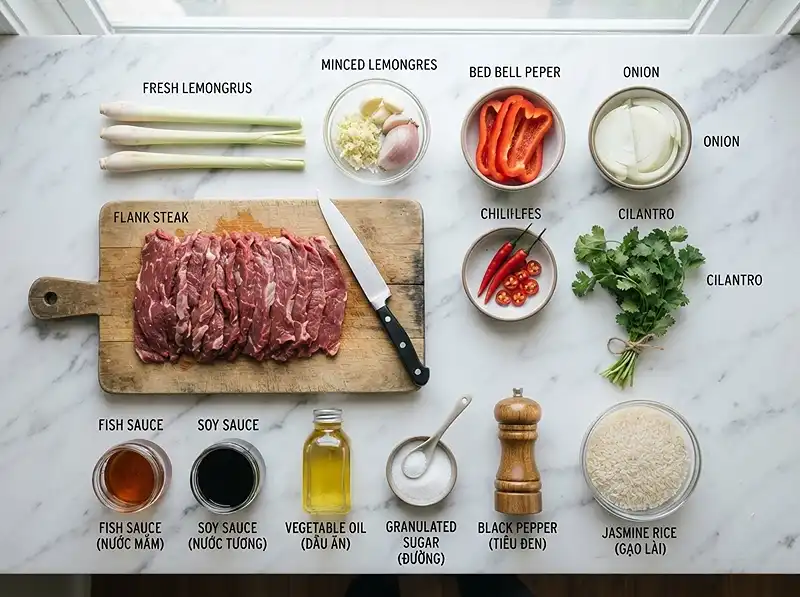
| Ingredient | Amount | Notes |
|---|---|---|
| Flank steak | 1.5 lbs | Thinly sliced against the grain |
| Lemongrass | 3 stalks | Tender white parts only, finely minced |
| Garlic | 4 cloves | Minced |
| Shallot | 1 medium | Minced |
| Fish sauce | 2 tablespoons | Adds essential umami depth |
| Soy sauce | 1 tablespoon | Regular or low-sodium works |
| Sugar | 1 tablespoon | Balances the savory flavors |
| Black pepper | 1 teaspoon | Freshly ground if possible |
| Vegetable oil | 2 tablespoons | For high-heat cooking |
| Red bell pepper | 1 large | Thinly sliced |
| Onion | 1 medium | Thinly sliced |
| Fresh chili | 1-2 | Optional, sliced for garnish |
| Fresh cilantro | Handful | Chopped for garnish |
| Jasmine rice or vermicelli noodles | For serving | Cooked according to package directions |
Ingredient Notes and Substitutions
Let’s talk about a few key players that make this dish special.
Lemongrass: This is the star, so don’t skip it. Fresh lemongrass has a bright, citrusy flavor that dried versions just can’t match. Look for firm, pale yellow stalks at Asian markets or well-stocked grocery stores. You’ll only use the tender bottom third—the rest is too tough. Peel away the outer layers until you reach the softer core, then mince it as finely as possible. The finer you chop it, the more flavor you’ll extract and the better the texture.
Flank steak: This cut is ideal because it’s flavorful and relatively affordable. The key is slicing it thin against the grain—this shortens the muscle fibers and makes the meat tender. If you can’t find flank steak, sirloin or skirt steak work beautifully too.
Fish sauce: Don’t let the smell scare you off. Yes, it’s pungent straight from the bottle, but when cooked, it transforms into a deep, savory backbone that’s irreplaceable in Vietnamese cooking. Three Crabs or Red Boat are excellent brands.
How to Prepare Lemongrass (The Right Way)
Since lemongrass can be tricky if you haven’t worked with it before, here’s my foolproof method. Trim off the root end and the tough green top, leaving just the bottom 4-5 inches of the stalk. Peel away the dry outer layers until you reach the tender, slightly moist core that’s pale yellow or white.
Now slice it as thinly as possible, then chop it into tiny pieces. Some people use a food processor, but I find that can make it stringy. A sharp knife and a little patience give you better control. You want pieces so small they almost disappear into the marinade—this prevents anyone from biting into a tough, fibrous piece later.
Step-by-Step Instructions
This Vietnamese lemongrass beef recipe comes together quickly once you start cooking, so have all your ingredients prepped and ready before you turn on the heat.

- Marinate the beef: In a medium bowl, combine the thinly sliced flank steak with minced lemongrass, minced garlic, minced shallot, fish sauce, soy sauce, sugar, and black pepper. Mix everything thoroughly with your hands—don’t be shy about getting in there and really working the marinade into the meat. You want every piece coated and infused with flavor. Cover and marinate for at least 30 minutes at room temperature, or up to 2 hours in the refrigerator. The longer it sits, the more the flavors penetrate the beef.
- Heat your pan properly: This step is crucial for getting that beautiful caramelized sear. Heat your vegetable oil in a large skillet or wok over high heat until it’s shimmering and almost smoking. You want the pan seriously hot—this is what creates those crispy, flavorful edges on the beef. If your pan isn’t hot enough, the meat will steam instead of sear, and you’ll miss out on all that delicious browning.
- Sear the beef in batches: Add the marinated beef in a single layer, making sure not to overcrowd the pan. This is where patience pays off. If you pile too much beef in at once, the temperature drops and the meat steams instead of searing. Cook in two or even three batches if needed. Let each piece sear undisturbed for 1-2 minutes until you see a golden-brown crust forming, then flip and cook for another 1-2 minutes on the other side. The beef should still be slightly pink in the center since it’ll cook a bit more later. Remove the cooked beef from the skillet and set it aside on a plate.
- Stir-fry the vegetables: In the same skillet, add a little more oil if the pan looks dry. Toss in the sliced red bell pepper and onion. Stir-fry for 3-4 minutes, keeping everything moving, until the vegetables are tender-crisp. You want them softened but still with a bit of crunch and vibrant color. The fond left in the pan from the beef will add even more flavor to the vegetables.
- Bring it all together: Return the cooked beef to the skillet with the vegetables. Toss everything together for another 1-2 minutes to heat the beef through and let all those flavors mingle. The beef will finish cooking to perfection during this step, and everything will be coated in those delicious pan juices.
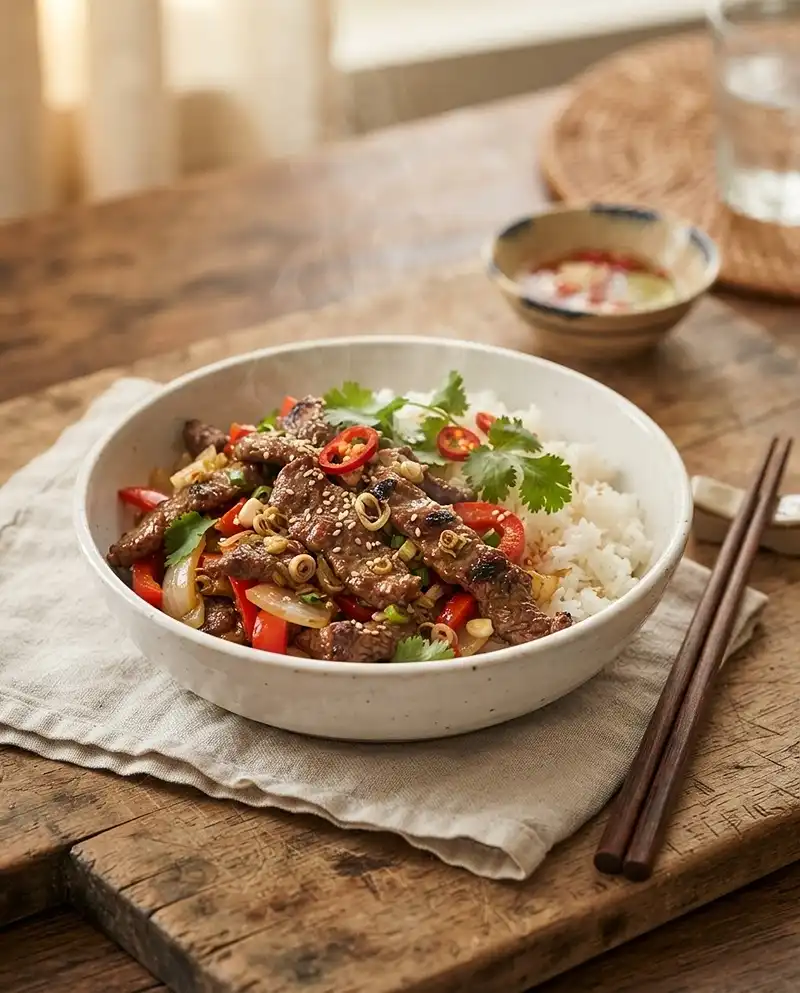
- Garnish and serve: Transfer everything to a serving platter and garnish with fresh sliced chili (if you like heat) and a generous handful of chopped cilantro. The fresh herbs add brightness that cuts through the richness perfectly. Serve immediately with hot jasmine rice or vermicelli noodles while everything is still sizzling.
Expert Tips for Perfect Vietnamese Beef Stir-Fry
Freeze the beef slightly before slicing. Pop your flank steak in the freezer for 15-20 minutes before you slice it. This firms it up just enough to make cutting paper-thin slices much easier. You want slices about 1/4 inch thick or even thinner if you can manage it.
Always slice against the grain. Look at your steak and you’ll see lines running through it—that’s the grain. Cut perpendicular to those lines, not parallel. This shortens the muscle fibers and makes each bite tender instead of chewy. It’s the single most important technique for tender stir-fried beef.
Don’t skip the sugar. I know it seems odd to add sugar to a savory dish, but it’s essential for balancing the salty fish sauce and creating that subtle caramelization when the beef hits the hot pan. Vietnamese cooking is all about balance—sweet, salty, sour, and savory all working together.
Use a wok if you have one. The high, sloped sides make tossing easier and help maintain that crucial high heat. But a large cast-iron skillet or stainless steel pan works great too—just make sure it’s big enough to avoid overcrowding.
Have everything ready before you start cooking. Once that pan is hot, things move fast. This is classic mise en place—have your marinated beef, sliced vegetables, and garnishes all prepped and within reach. The actual cooking takes less than 10 minutes, so there’s no time to stop and chop more garlic.
Similar to the technique used in enoki beef rolls, the key is keeping your heat high and your cooking time short to preserve texture and flavor.
Recipe Variations to Try
Lemongrass beef noodles: Instead of serving over rice, toss the finished stir-fry with cooked rice noodles or vermicelli. Add a squeeze of lime juice and extra cilantro for a lighter, more refreshing meal that’s perfect for warm weather.
Extra vegetables: Add snap peas, bok choy, or broccoli florets along with the bell peppers and onions. Just adjust your cooking time so everything finishes at the same level of doneness. The tender-crisp texture is key.
Spice it up: Add sliced Thai chilies directly into the marinade for heat throughout, or serve with sriracha or sambal oelek on the side. You can also add a pinch of red pepper flakes to the beef as it cooks.
Lettuce wraps: Serve the beef stir-fry in crisp butter lettuce or romaine leaves with fresh herbs, pickled carrots and daikon, and cucumber slices. It turns the dish into an interactive, lighter meal that’s fun for gatherings.
Add pineapple: Toss in some fresh pineapple chunks during the last minute of cooking. The sweetness pairs beautifully with the savory lemongrass and adds a tropical twist that’s surprisingly authentic to some regional Vietnamese preparations.
If you love Vietnamese-inspired beef dishes, you might also enjoy this Chinese beef and broccoli for another quick weeknight option.
Troubleshooting Common Issues
My beef turned out tough: This usually comes down to one of two things—you sliced with the grain instead of against it, or you overcooked the meat. Beef should be seared quickly over high heat, not cooked slowly. If you’re noticing toughness, try slicing even thinner next time and pull the beef from the heat when it’s still slightly pink.
The lemongrass is too fibrous: You either used too much of the tough outer layers or didn’t mince it finely enough. Remember, only the tender white and pale yellow parts should be used, and they need to be chopped almost to a paste. When in doubt, chop it finer than you think you need to.
Everything steamed instead of seared: Your pan wasn’t hot enough, or you overcrowded it. Both mistakes lower the temperature and cause the beef to release moisture and steam. Make sure your oil is shimmering before adding beef, and cook in smaller batches even if it takes longer.
The flavors taste flat: You might need more fish sauce or you didn’t marinate long enough. Fish sauce is the backbone of the umami in this dish. Also, make sure you’re using fresh lemongrass—dried or old stalks lose much of their aromatic punch. According to the USDA guidelines on food safety, proper marination not only enhances flavor but can also affect the texture and safety of your finished dish.
It’s too salty: Cut back on the soy sauce next time, or use low-sodium versions of both soy sauce and fish sauce. You can also add a bit more sugar or a squeeze of lime juice to balance the saltiness after cooking.
Storage and Reheating
This Vietnamese lemongrass beef recipe keeps well and actually develops even deeper flavors overnight as the marinade continues to work its magic. Just be mindful of food safety practices when storing and reheating.
| Storage Method | Duration | Best Practices |
|---|---|---|
| Refrigerator | 3-4 days | Store in an airtight container. Let cool to room temperature first, but don’t leave out for more than 2 hours. |
| Freezer | 2-3 months | Freeze in portions for easy reheating. Use freezer-safe containers or heavy-duty freezer bags. Remove as much air as possible. |
| Marinated raw beef | Up to 24 hours | Keep refrigerated. For best texture, don’t marinate longer than 24 hours as the acid can break down the meat too much. |
To reheat, your best bet is a hot skillet or wok with a tiny splash of oil. Heat over medium-high heat for just 2-3 minutes, tossing frequently, until heated through. The microwave works in a pinch, but you’ll lose some of that wonderful crispy texture. Heat in 30-second intervals, stirring between each, until hot.
The rice or noodles should be stored separately if possible. They’ll stay fresher and won’t get soggy from absorbing the sauce. Reheat them separately as well, adding a sprinkle of water to keep them from drying out.
For a fresh twist on leftovers, try chopping the beef and vegetables and using them as a filling for banh mi sandwiches or spring rolls. Add some pickled vegetables and fresh herbs, and you’ve got a completely different meal. Much like these high-protein garlic butter beef bites, the beef stays flavorful and versatile for multiple uses.
Vietnamese Lemongrass Beef Recipe FAQs
What cut of beef is best for Vietnamese lemongrass beef?
The best cuts for Vietnamese lemongrass beef are flank steak, sirloin, or ribeye. These cuts are tender enough to cook quickly while remaining juicy. Flank steak is most traditional and affordable. For best results, slice the beef thinly against the grain, which helps ensure tenderness. You can also use beef tenderloin for a more premium version of the dish.
How do you prepare fresh lemongrass for the marinade?
To prepare fresh lemongrass, remove the tough outer layers and use only the bottom white and pale green portion of the stalk, about 4-6 inches. Trim off the root end and the tough top part. Finely mince the lemongrass or pound it in a mortar and pestle to release the aromatic oils. You can also use a food processor to make a paste. For the best flavor, use 2-3 stalks of lemongrass per pound of beef.
How long should I marinate the beef for Vietnamese lemongrass beef?
For optimal flavor, marinate the beef for at least 2 hours, but preferably 4-6 hours or overnight in the refrigerator. The marinade typically contains lemongrass, fish sauce, garlic, sugar, and oil, which need time to penetrate the meat. If you are short on time, a minimum of 30 minutes will still impart some flavor, but longer marinating produces more authentic and robust taste.
Can I substitute dried lemongrass if I don’t have fresh lemongrass?
Yes, you can substitute dried lemongrass, but fresh is always preferred for the best flavor and aroma. If using dried lemongrass, use about 1 tablespoon of dried for every 2 stalks of fresh lemongrass called for in the recipe. Soak the dried lemongrass in warm water for 30 minutes before adding it to the marinade to help rehydrate it and release its flavor. The taste will be slightly less vibrant than fresh.
What is the best cooking method for Vietnamese lemongrass beef?
The best cooking method is high-heat grilling or stir-frying in a wok or cast iron skillet. For grilling, cook the marinated beef over high heat for 2-3 minutes per side until slightly charred and caramelized. For stir-frying, heat oil in a wok until smoking hot, then cook the beef in small batches to ensure proper searing rather than steaming. The beef should be cooked quickly to medium or medium-rare to maintain tenderness and juiciness.
Make This Vietnamese Lemongrass Beef Recipe Tonight
There’s something deeply satisfying about pulling together a restaurant-quality Vietnamese lemongrass beef recipe in your own kitchen. The way your house fills with that incredible lemongrass aroma, the sizzle of beef hitting a hot pan, the vibrant colors of fresh vegetables—it’s cooking at its best.
This Vietnamese beef stir-fry has become one of those recipes I return to again and again, especially when I want something quick but special. It’s impressive enough for guests but easy enough for a Tuesday night when I just need dinner on the table fast.
The beauty of this lemongrass beef marinade is how it transforms simple ingredients into something extraordinary. Once you’ve made it a few times, you’ll find yourself adjusting it to your taste—maybe a bit more garlic here, an extra chili there. That’s exactly how the best home cooking should work.
So grab some fresh lemongrass, slice that beef nice and thin, and get your pan smoking hot. You’re about 30 minutes away from one of the best weeknight dinners you’ll make all month. And if you make it, I’d love to hear how it turns out—what you served it with, any tweaks you made, or whether your family asked for seconds before you even sat down. Happy cooking!