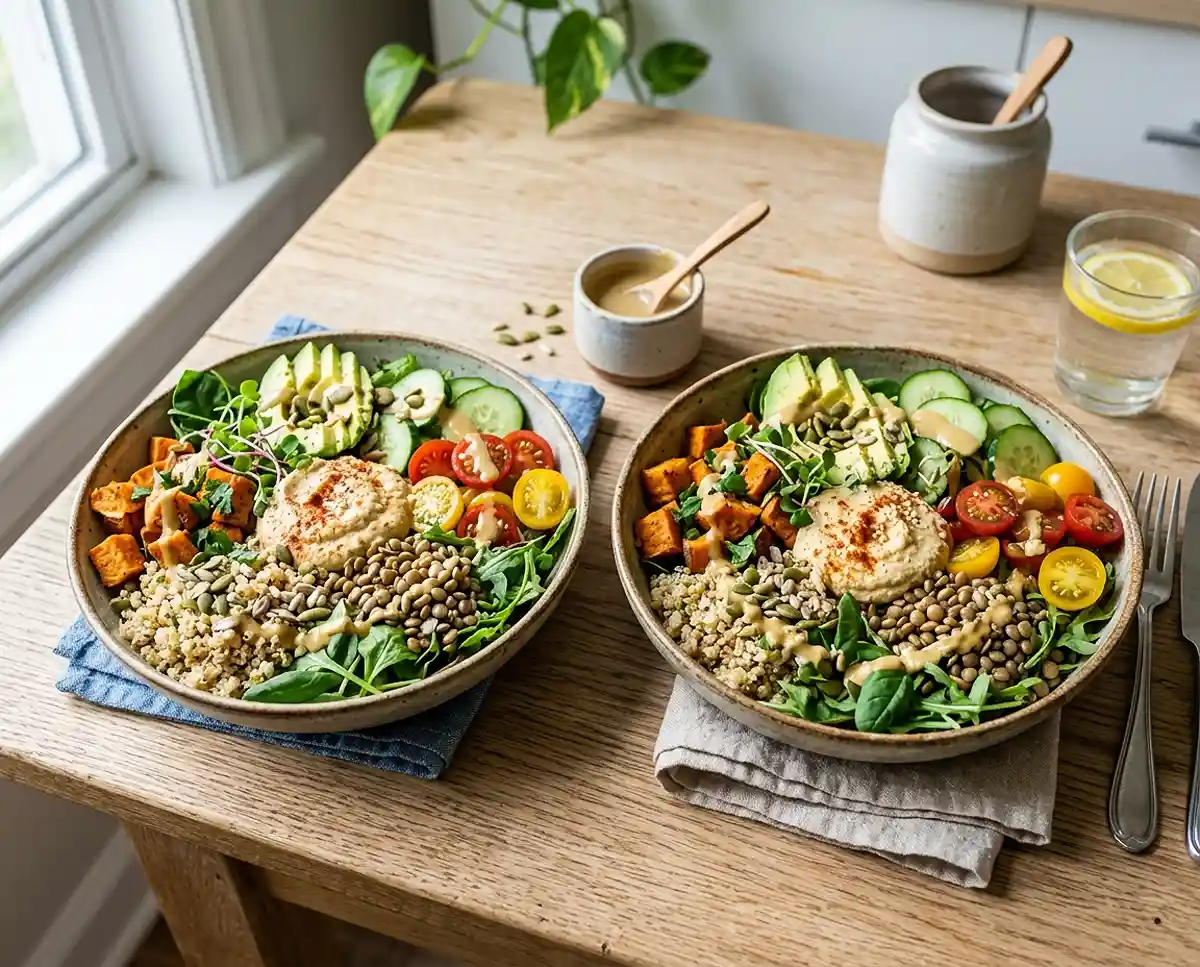
Sprouted Power Bowls with Quinoa and Fresh Veggies
Power up your week with these vibrant, nutrient-packed sprouted power bowls that come together in under 30 minutes. They’re my go-to when I need a meal that’s both deeply nourishing and satisfying enough to keep me going for hours.
I started making these healthy grain bowls after discovering how much easier sprouted grains are to digest—and honestly, they’ve become my favorite meal prep solution. There’s something about the combination of earthy sprouted quinoa, tender lentils, and creamy tahini that just works every single time.
Sprouted power bowls are complete, balanced meals built on sprouted grains and legumes, loaded with fresh vegetables, healthy fats, and flavorful dressings. They’re naturally vegan, incredibly nutrient-dense, and customizable to whatever you have in your fridge, making them perfect for both meal prep bowls and quick weeknight dinners.
Table of Contents
Why You’ll Love These Sprouted Power Bowls
This is just one of the many gems in our Grain & Protein Bowls series. Every recipe there has been tested and loved in real kitchens, and I promise there’s something for every craving. Go see for yourself.
These vegan power bowls check every box for a truly satisfying meal. The sprouted quinoa and lentils bring a nutty, slightly sweet flavor that’s way more interesting than regular grains, plus they’re easier on your digestive system since the sprouting process breaks down some of those compounds that can cause bloating.
What I really appreciate is how flexible these bowls are. You can prep all the components ahead of time and assemble them throughout the week, or throw everything together fresh when you’re hungry. Either way, you’re getting serious nutrition—protein, fiber, vitamins, and minerals—without any of that heavy, sluggish feeling some grain bowls can leave you with.
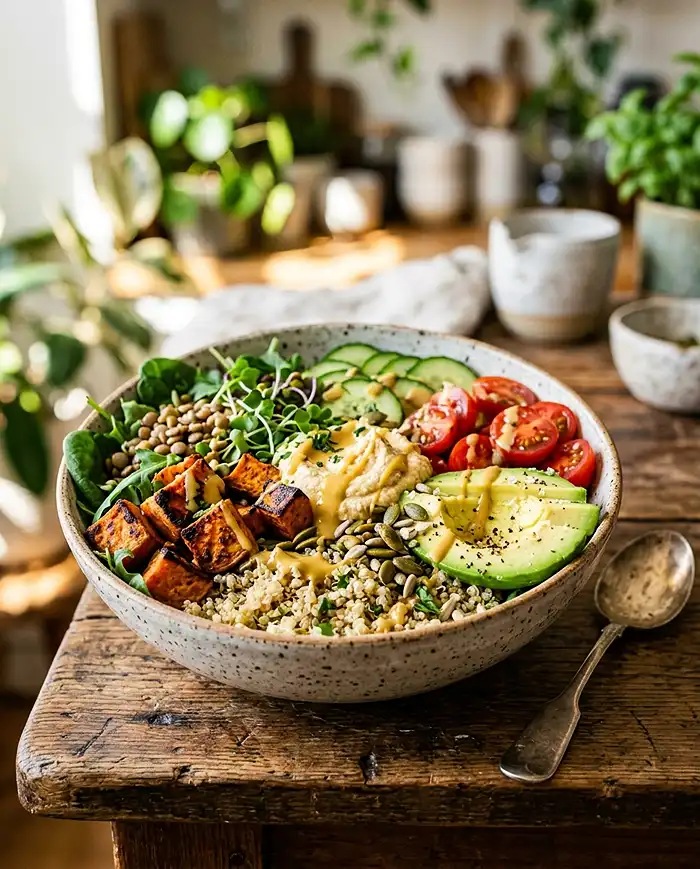
They’re also ridiculously pretty, which might sound shallow, but it actually makes me excited to eat them. All those colors and textures piled in one bowl? It’s like edible art that happens to fuel your body beautifully.
Sprouted Power Bowls
Ingredients
Ingredients
- 1 cup cooked sprouted quinoa
- ½ cup cooked sprouted lentils
- 1 cup mixed greens spinach, kale, or arugula
- ½ cup roasted sweet potato diced
- ¼ cup chopped cucumber
- ¼ cup cherry tomatoes halved
- 2 tablespoons hummus
- 1 tablespoon tahini dressing
- Optional toppings: avocado slices sunflower seeds, pumpkin seeds, fresh herbs
Instructions
- Prepare sprouted quinoa and lentils according to package instructions. You can cook them separately or together if their cooking times are similar.
- While the grains are cooking, roast diced sweet potato in the oven at 400°F (200°C) for 20-25 minutes, or until tender.
- In a large bowl, combine the cooked sprouted quinoa, sprouted lentils, and mixed greens.
- Arrange the roasted sweet potato, chopped cucumber, and halved cherry tomatoes on top of the greens.
- Dollop hummus in the center or on the side of the bowl.
- Drizzle with tahini dressing.
- Add any optional toppings like avocado slices, sunflower seeds, pumpkin seeds, or fresh herbs.
- Serve immediately and enjoy!
Ingredients for Sprouted Power Bowls
The beauty of these nutrient-rich bowls is that each ingredient plays a specific role in creating a complete, balanced meal. Sprouted grains and legumes are the stars here—they’re higher in bioavailable nutrients and protein compared to their unsprouted counterparts, which means your body can actually absorb and use those nutrients more effectively.
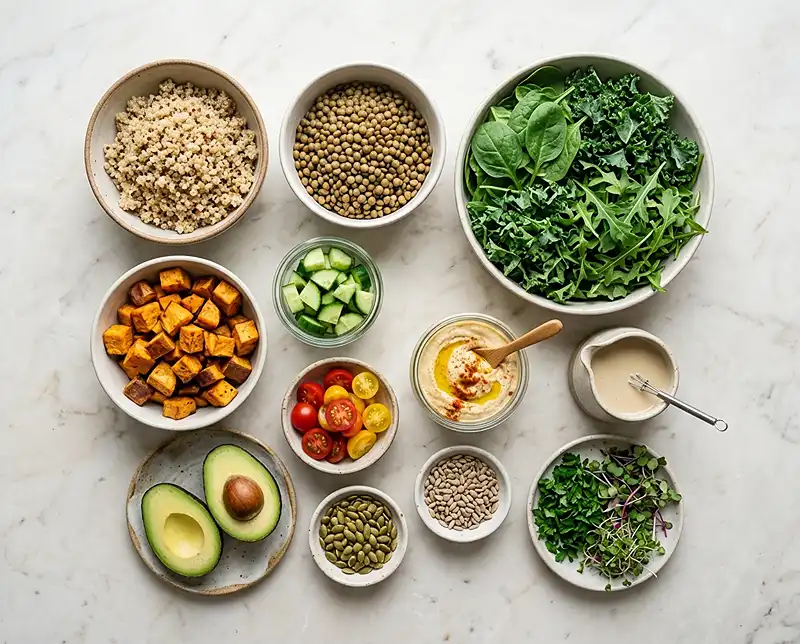
| Ingredient | Quantity | Notes |
|---|---|---|
| Cooked sprouted quinoa | 1 cup | Look for pre-sprouted quinoa or sprout your own |
| Cooked sprouted lentils | 1/2 cup | Green or brown lentils work best |
| Mixed greens | 1 cup | Spinach, kale, or arugula—or a blend |
| Roasted sweet potato | 1/2 cup, diced | Adds natural sweetness and creaminess |
| Cucumber | 1/4 cup, chopped | For crunch and freshness |
| Cherry tomatoes | 1/4 cup, halved | Juicy bursts of acidity |
| Hummus | 2 tablespoons | Your favorite flavor works |
| Tahini dressing | 1 tablespoon | Store-bought or homemade |
| Optional toppings | As desired | Avocado, sunflower seeds, pumpkin seeds, herbs |
The vegetables add both nutrition and textural variety—you want that contrast between the tender grains, crispy cucumber, soft sweet potato, and juicy tomatoes. The hummus and tahini dressing provide healthy fats and that creamy, satisfying element that makes these bowls feel indulgent rather than virtuous.
If you can’t find sprouted grains, regular quinoa and lentils still make excellent healthy grain bowls. Just know that sprouting increases nutrient availability and makes them gentler on your stomach, especially if you’re sensitive to grains and legumes.
Step-by-Step Instructions for Making Sprouted Power Bowls
Building these bowls is straightforward and pretty forgiving. The key is getting your grains and sweet potatoes cooked properly, then assembling everything while it’s still warm enough to be inviting but not so hot that it wilts your greens into oblivion.
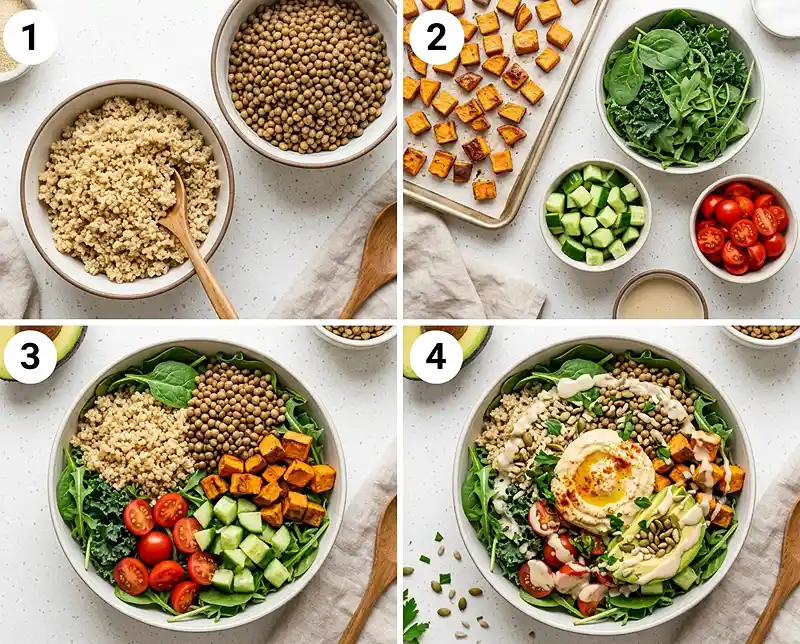
- Cook the sprouted grains: Prepare your sprouted quinoa and lentils according to the package instructions. I usually cook them in separate pots since quinoa takes about 15 minutes and lentils can take 20-25 minutes, but if your cooking times line up, feel free to cook them together. Use a 2:1 ratio of water to grains, bring to a boil, then reduce to a simmer until the water is absorbed and the grains are tender.
- Roast the sweet potato: While your grains are cooking, dice your sweet potato into half-inch cubes for even cooking. Toss them with a drizzle of olive oil and a pinch of salt, spread them on a baking sheet in a single layer, and roast at 400°F (200°C) for 20-25 minutes. They’re done when they’re golden on the edges and tender enough to pierce easily with a fork. Give them a flip halfway through for the best caramelization.
- Prep your vegetables: While everything’s cooking, chop your cucumber into bite-sized pieces and halve your cherry tomatoes. Wash and dry your greens if they need it. This is also a great time to slice your avocado or measure out your seeds if you’re using those toppings.
- Build the base: In a large serving bowl (I like wide, shallow bowls for this), combine your cooked sprouted quinoa, sprouted lentils, and mixed greens. The warmth from the grains will slightly wilt the greens, which is exactly what you want—they’ll become more tender without losing their structure entirely.
- Arrange the toppings: This is where you can get a little fancy if you’re in the mood. Arrange your roasted sweet potato, chopped cucumber, and halved cherry tomatoes on top of the grain mixture. I like to create sections for each ingredient so you get different flavor combinations with each bite, but honestly, just piling everything on works perfectly fine too.
- Add the creamy elements: Dollop your hummus either in the center of the bowl or off to one side. It’ll melt slightly into the warm grains, creating these pockets of creamy goodness as you eat.
- Drizzle with dressing: Drizzle the tahini dressing over the entire bowl. If your tahini dressing is thick, you might want to thin it with a teaspoon of water or lemon juice first so it drizzles more easily. You want it to reach all those nooks and crannies.
- Finish with optional toppings: Add any additional toppings you’re using—avocado slices for extra creaminess, sunflower or pumpkin seeds for crunch, and fresh herbs like cilantro, parsley, or basil for brightness. Then dig in immediately while everything’s at that perfect temperature.
Expert Tips for Perfect Sprouted Power Bowls
After making these meal prep bowls countless times, I’ve learned a few tricks that make them even better. First, don’t overcook your sprouted grains. They cook faster than regular grains because the sprouting process has already started breaking them down, so keep a close eye and taste them a minute or two before the package directions say they should be done.
Season your components individually as you go. I add a pinch of salt to my quinoa cooking water, season the sweet potatoes before roasting, and sometimes add a tiny splash of lemon juice to the greens. These small touches add up to a much more flavorful final bowl.
If you’re meal prepping, store your components separately and assemble just before eating. Cooked grains and roasted sweet potatoes keep well in airtight containers for up to 5 days, but the greens and fresh vegetables should stay separate until you’re ready to eat or they’ll get soggy.
Temperature matters more than you might think. I like my sprouted power bowls slightly warm—room temperature at the coolest. If you’re assembling from cold meal-prepped ingredients, give the grains and sweet potatoes a quick 30-second zap in the microwave before building your bowl. It makes a huge difference in how satisfying the meal feels.
For the creamiest texture, massage your kale if you’re using it. Just add your washed, chopped kale to a bowl with a tiny pinch of salt and literally massage it with your hands for about 30 seconds. It breaks down the tough fibers and makes it so much more tender and pleasant to eat.
Delicious Variations to Try
Once you’ve mastered the basic formula, these vegan power bowls become an incredible canvas for creativity. I’ve tried dozens of variations, and they all work beautifully as long as you maintain that balance of grains, protein, vegetables, and healthy fats.
For a Mediterranean twist, swap the sweet potato for roasted red peppers and add kalamata olives, cucumber, cherry tomatoes, and crumbled vegan feta. Use a lemon-herb dressing instead of tahini.
Try a Mexican-inspired version with black beans instead of lentils, roasted corn, diced bell peppers, and avocado. Top with salsa, a squeeze of lime, and pepitas. Sometimes I’ll add a dollop of cashew sour cream too.
For an Asian-style bowl, use edamame instead of lentils, add shredded purple cabbage, shredded carrots, and cucumber. Swap the tahini for a ginger-miso dressing and top with sesame seeds and sliced green onions.
A fall harvest bowl is incredible with roasted butternut squash instead of sweet potato, dried cranberries, toasted pecans, and massaged kale. Use a maple-tahini dressing and add some roasted Brussels sprouts if you’re feeling ambitious.
If you love working with quinoa in different preparations or enjoy creative chickpea combinations, those recipes offer great inspiration for other bowl variations.
Troubleshooting Common Issues
Even with a simple recipe like this, sometimes things don’t turn out quite right. Here’s how to fix the most common problems I’ve encountered.
Mushy grains: This usually means you’ve used too much water or cooked them too long. Sprouted grains need less cooking time than regular grains, so start checking them a few minutes early. If they’re already overcooked, try spreading them on a baking sheet and letting them air-dry for 10 minutes—it helps firm them up a bit.
Bland flavor: Season as you go, not just at the end. Salt your cooking water, season each component, and don’t be shy with your dressing. These nutrient-rich bowls have subtle flavors that need a little help to shine. A squeeze of lemon or splash of apple cider vinegar right before serving can brighten everything up too.
Dry texture: You need more dressing or hummus. I’ve learned that what looks like enough dressing when I’m drizzling is rarely actually enough. Double what you think you need. The grains will absorb a lot of that moisture, so be generous.
Bowl feels heavy or sits badly: This might mean you’re using too many grains and not enough vegetables. Try flipping the ratio—use more greens as your base and less quinoa and lentils. The vegetables add volume and fiber without making you feel weighed down.
Sweet potatoes aren’t caramelizing: Make sure they’re in a single layer with space between each piece, and your oven is actually at 400°F. Crowded sweet potatoes steam instead of roast. Also, don’t skip the oil—that’s what helps them get those crispy, golden edges.
Storage and Meal Prep for Sprouted Power Bowls
These bowls are absolutely perfect for meal prep, which is honestly one of my favorite things about them. With a few hours on Sunday, you can set yourself up with healthy, satisfying lunches or quick dinners for most of the week.
| Component | Storage Method | Shelf Life |
|---|---|---|
| Cooked sprouted quinoa and lentils | Airtight container, refrigerated | 5 days |
| Roasted sweet potato | Airtight container, refrigerated | 5 days |
| Washed greens | Container with paper towel, refrigerated | 3-4 days |
| Chopped cucumber and tomatoes | Separate airtight containers, refrigerated | 3 days |
| Assembled bowl | Not recommended for storage | Eat immediately |
| Tahini dressing | Small jar or container, refrigerated | 1 week |
The key to successful meal prep with these healthy grain bowls is storing components separately. I use five containers: one for the cooked grains mixed together, one for roasted sweet potatoes, one for washed and dried greens, one for the fresh vegetables, and a small jar for extra dressing.
When you’re ready to eat, just grab what you need, warm the grains and sweet potato if you prefer (I usually do 30-45 seconds in the microwave), and assemble fresh. It takes maybe two minutes and tastes like you just made it from scratch.
According to the USDA food safety guidelines, cooked grains and legumes should be refrigerated within two hours of cooking and kept at 40°F or below. I always let mine cool to room temperature before refrigerating, which usually takes about 30 minutes.
You can also freeze the cooked quinoa and lentils for up to 3 months. Freeze them in single-serving portions so you can thaw just what you need. The sweet potatoes freeze reasonably well too, though they might be slightly softer when reheated. I don’t recommend freezing the fresh vegetables or greens—those really need to stay fresh.
For those busy mornings, you might also enjoy quick options like this mango spinach smoothie or a simple fruit smoothie bowl alongside your power bowl prep routine.
Sprouted Power Bowls FAQs
What are Sprouted Power Bowls?
Sprouted Power Bowls are nutritious meal bowls that feature sprouted grains, seeds, and legumes as their base ingredients. These bowls combine sprouted ingredients with fresh vegetables, proteins, healthy fats, and flavorful dressings to create a complete, balanced meal packed with enhanced nutrients and digestibility.
What are the health benefits of eating Sprouted Power Bowls?
Sprouted Power Bowls offer numerous health benefits including improved nutrient absorption, increased vitamin and mineral content, better digestibility, and higher enzyme activity. The sprouting process reduces anti-nutrients, making proteins and minerals more bioavailable. These bowls also provide sustained energy, support gut health, and deliver a complete range of macronutrients and micronutrients in one meal.
How long do Sprouted Power Bowls stay fresh?
Sprouted Power Bowls are best enjoyed fresh but can be stored in the refrigerator for 2-3 days when properly sealed in an airtight container. To maintain optimal freshness and texture, it’s recommended to store dressings separately and add them just before eating. Sprouted ingredients should be kept cold and consumed within their freshness window to ensure food safety.
Can I make Sprouted Power Bowls at home?
Yes, you can easily make Sprouted Power Bowls at home. Start by sprouting your own grains, legumes, or seeds, which typically takes 2-5 days depending on the ingredient. Alternatively, purchase pre-sprouted ingredients from health food stores. Simply combine your sprouted base with fresh vegetables, a protein source like grilled chicken or tofu, healthy fats such as avocado, and top with your favorite dressing or sauce.
Are Sprouted Power Bowls suitable for special diets?
Sprouted Power Bowls are highly adaptable and can accommodate various dietary needs including vegan, vegetarian, gluten-free, and paleo diets. By choosing appropriate sprouted ingredients and toppings, you can customize bowls to meet specific dietary restrictions. They’re naturally nutrient-dense and can be tailored for low-carb, high-protein, or anti-inflammatory eating patterns, making them suitable for most dietary preferences.
Ready to Power Up Your Meals?
Sprouted power bowls have honestly transformed the way I think about meal prep and healthy eating. They’re proof that nutritious food doesn’t have to be boring, complicated, or time-consuming. With just a little bit of planning, you can have these gorgeous, nourishing bowls ready whenever you need them.
The best part is how these healthy grain bowls fit into real life. They work for busy weekday lunches, post-workout meals when you need something substantial, or even light dinners when you want something satisfying but not heavy. The customization options are endless, so you can literally make them dozens of times without getting bored.
Give these sprouted power bowls a try this week and let me know how you customize yours! I’d love to hear what variations you come up with and which toppings become your favorites. Drop a comment below with your experience—and if you meal prep them, tell me how long they actually last in your house. (Mine rarely make it past day three because they’re just that good!)