Air Fryer Japanese Cheesecake
A foolproof guide to making cloud-like air fryer Japanese cheesecake with simple ingredients and an incredible jiggly texture that melts in your mouth.
I’ll never forget the first time I tried to make Japanese cheesecake in my oven—it cracked down the middle like a Grand Canyon miniature, and I may or may not have shed a tear. But then I discovered the air fryer method, and everything changed. The gentle, even heat creates that signature wobble without the drama, and you don’t have to wrestle with water baths or worry about oven temperature spikes.
This air fryer Japanese cheesecake is genuinely one of those recipes that looks way more impressive than the effort required. It’s light, airy, and has that distinct cotton-soft texture that makes Japanese cheesecake so famous.
Table of Contents
What Is Air Fryer Japanese Cheesecake?
Air fryer Japanese cheesecake is a lighter, fluffier version of traditional cheesecake that gets its signature soufflé-like texture from whipped egg whites folded into a cream cheese base. Unlike dense New York-style cheesecake, this Japanese version—also called cotton cheesecake or soufflé cheesecake—practically floats off your fork.
The air fryer makes this notoriously fussy dessert surprisingly approachable. The consistent, controlled heat mimics the low-and-slow oven environment that Japanese cheesecake needs, but in a smaller space that’s easier to monitor. You get that characteristic jiggle in the center without the guesswork.
The texture is somewhere between a traditional cheesecake and a chiffon cake—it’s creamy but not heavy, sweet but not cloying, with a subtle tang from the cream cheese and lemon juice that keeps it interesting.
Why You’ll Love This Fluffy Air Fryer Cheesecake
This recipe eliminates most of the stress that comes with making Japanese cheesecake the traditional way. No water bath to leak, no giant oven to preheat, and the smaller batch size means you’re not committed to feeding a crowd if you just want to try it out.
The ingredient list is refreshingly short—just eight items, most of which you probably already have. There’s no graham cracker crust to fuss with, which means fewer steps and fewer dishes to wash afterward.
It cooks in about 25 minutes, which is notably faster than the hour-plus that oven versions require. And because it’s made in the air fryer, you’re not heating up your whole kitchen, which is especially nice during warmer months.
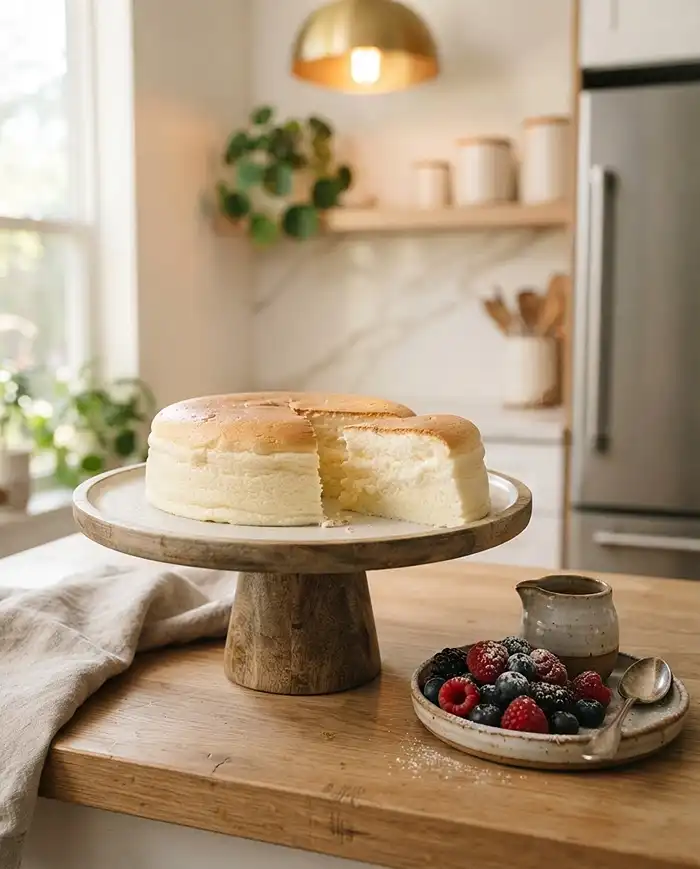
The texture is what really sells it, though. It’s so soft and delicate that it almost dissolves on your tongue, with just enough structure to hold its shape when you slice it. Every bite feels a little luxurious, even though the recipe itself is pretty straightforward.

Air Fryer Japanese Cheesecake
Ingredients
Ingredients
- 4 oz 113g cream cheese, softened
- ¼ cup 50g granulated sugar, divided
- 2 large egg yolks
- ¼ cup 60ml milk
- 1 tbsp lemon juice
- ¼ cup 30g all-purpose flour
- 1 tbsp cornstarch
- 2 large egg whites
- ¼ tsp cream of tartar optional, for stabilizing egg whites
Instructions
- Prepare your air fryer basket with parchment paper. If using a springform pan that fits, line the bottom and sides.
- In a medium bowl, whisk together the softened cream cheese and 2 tablespoons of granulated sugar until smooth and creamy.
- Beat in the egg yolks one at a time until well combined.
- Stir in the milk and lemon juice until fully incorporated.
- Sift in the all-purpose flour and cornstarch into the cream cheese mixture. Mix until just combined and no lumps remain. Do not overmix.
- In a separate clean bowl, beat the egg whites with an electric mixer until foamy. If using, add the cream of tartar and continue to beat until soft peaks form.
- Gradually add the remaining 2 tablespoons of granulated sugar to the egg whites while continuing to beat until stiff, glossy peaks form.
- Gently fold one-third of the egg white mixture into the cream cheese batter to lighten it.
- Carefully fold in the remaining egg whites in two additions until no streaks of white remain, being careful not to deflate the mixture.
- Pour the batter into your prepared air fryer-safe pan or directly onto the parchment in the air fryer basket.
- Bake in the air fryer at 280°F (138°C) for 20-25 minutes, or until the cheesecake is set around the edges and slightly jiggly in the center. Cooking times can vary depending on your air fryer model.
- Turn off the air fryer and leave the cheesecake inside with the basket slightly ajar for 10-15 minutes to cool down slowly and prevent cracking.
- Remove from the air fryer and let it cool completely on a wire rack. Chill in the refrigerator for at least 2 hours before serving for best results.
Ingredients You’ll Need for Japanese Cheesecake Air Fryer Recipe
The beauty of this air fryer souffle cheesecake is how few ingredients you actually need, and most of them are pantry staples. The cream cheese should be at room temperature—this isn’t negotiable if you want a smooth batter without lumps. The eggs do double duty here: yolks add richness to the base, while whites get whipped into a glossy meringue that gives the cake its signature lift.

| Ingredient | Amount | Notes |
|---|---|---|
| Cream cheese | 4 oz (113g), softened | Must be room temperature for smooth mixing |
| Granulated sugar | 1/4 cup (50g), divided | Split between the base and meringue |
| Large egg yolks | 2 | Save the whites for the meringue |
| Milk | 1/4 cup (60ml) | Whole milk works best for richness |
| Lemon juice | 1 tbsp | Adds brightness and balances sweetness |
| All-purpose flour | 1/4 cup (30g) | Sift to avoid lumps |
| Cornstarch | 1 tbsp | Helps stabilize the structure |
| Large egg whites | 2 | Must be free of any yolk traces |
| Cream of tartar | 1/4 tsp (optional) | Stabilizes egg whites, but not essential |
The lemon juice isn’t just there for flavor—it also helps tenderize the cream cheese mixture and adds a subtle tang that keeps the sweetness in check. Cornstarch works alongside the flour to create structure without making the cake dense, which is exactly what you want in a fluffy air fryer cheesecake.
If you’ve ever made meringue cookies, you’ll recognize the egg white technique here. It’s the same principle: carefully whipped whites trap air that expands during cooking, creating that airy, soufflé-like texture.
Step-by-Step Instructions for Air Fryer Cotton Cheesecake
The key to success with this recipe is treating those egg whites gently once they’re whipped. You’ve worked hard to incorporate all that air—don’t knock it back out by stirring too vigorously. The folding technique might feel unfamiliar at first, but once you get the hang of it, it becomes second nature.
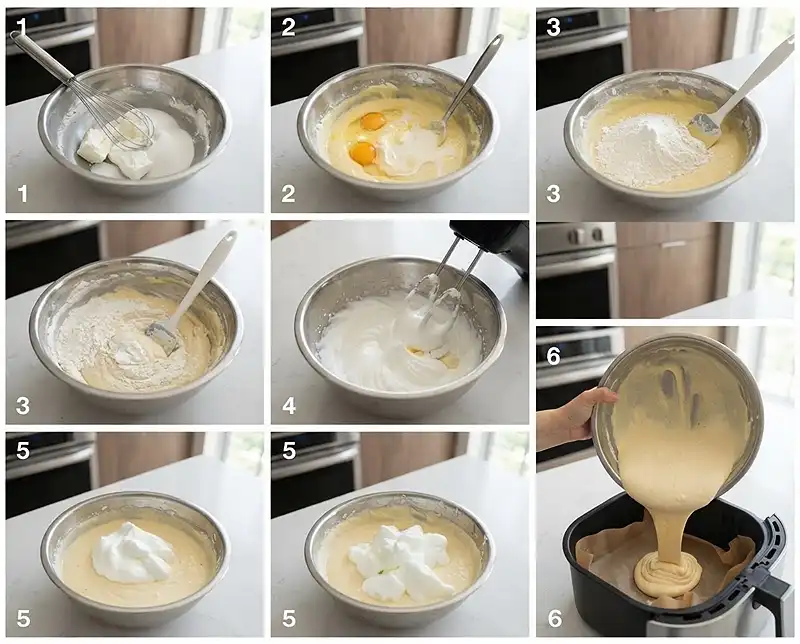
- Prep your air fryer: Line your air fryer basket with parchment paper, making sure it fits snugly without overlapping too much. If you have a small springform pan that fits in your air fryer (usually 6-inch), line the bottom and sides for easier removal later. The parchment prevents sticking and makes cleanup way easier.
- Cream the cheese and sugar: In a medium bowl, whisk together the softened cream cheese and 2 tablespoons of granulated sugar until it’s completely smooth and creamy with no lumps. This should take about a minute of vigorous whisking. If you see any lumps, keep going—they won’t disappear later.
- Add the egg yolks: Beat in the egg yolks one at a time, making sure each one is fully incorporated before adding the next. The mixture should look glossy and slightly pale yellow.
- Incorporate the liquids: Stir in the milk and lemon juice until everything is fully blended and the mixture is smooth. You’ll notice it loosens up quite a bit, which is exactly what should happen.
- Add the dry ingredients: Sift the all-purpose flour and cornstarch directly into the cream cheese mixture. This sifting step isn’t optional—it prevents lumps and keeps your batter silky. Mix gently until just combined and no streaks of flour remain, but don’t overmix or you’ll develop the gluten and end up with a tougher texture.
- Whip the egg whites: In a separate, completely clean bowl (any trace of fat will prevent proper whipping), beat the egg whites with an electric mixer on medium speed until they’re foamy and white. If you’re using cream of tartar, add it now and continue beating until soft peaks form—they should curl over gently when you lift the beaters.
- Add sugar to the meringue: Gradually sprinkle in the remaining 2 tablespoons of granulated sugar while continuing to beat on medium-high speed. Keep going until you have stiff, glossy peaks that stand straight up when you lift the beaters. This usually takes about 3-4 minutes total. According to the FDA’s egg safety guidelines, using fresh eggs and proper handling techniques ensures both safety and better meringue stability.
- Lighten the batter: Scoop about one-third of the whipped egg whites into the cream cheese mixture. Fold it in with a rubber spatula using broad, sweeping motions from the bottom up and over. This first addition sacrifices some air to lighten the thick base, making it easier to fold in the rest without deflating everything.
- Fold in remaining whites: Add half of the remaining egg whites and fold gently until mostly incorporated, then add the final portion. Use the same gentle folding motion, rotating the bowl as you go. Stop as soon as you don’t see any white streaks—you want to preserve as much air as possible. The batter should look fluffy and cloud-like.
- Transfer to the pan: Pour the batter into your prepared air fryer-safe pan or directly onto the parchment paper in the basket. If there are any large air bubbles on the surface, gently tap the pan on the counter once or twice to release them.
- Bake at low temperature: Set your air fryer to 280°F (138°C) and cook for 20-25 minutes. The cheesecake is done when the edges are set and slightly puffed, but the center still has a gentle jiggle when you shake the basket—think Jell-O that’s almost set. Don’t overbake or it’ll dry out and lose that silky texture.
- Cool gradually: This step prevents cracking and deflating. Turn off the air fryer and crack the basket open slightly, leaving the cheesecake inside for 10-15 minutes. This gradual temperature drop is gentler on the delicate structure.
- Complete cooling and chill: Remove the cheesecake from the air fryer and let it cool completely on a wire rack at room temperature. Once cool, transfer it to the refrigerator and chill for at least 2 hours before slicing. The texture actually improves after chilling, becoming even more tender and creamy.
If you’ve made my 2-ingredient Japanese yogurt cheesecake, you’ll notice this version has a bit more structure from the flour and cornstarch, which helps it hold up better when sliced.
Expert Tips for Perfect Results
Room temperature ingredients matter: Cold cream cheese will never whip smooth, no matter how long you beat it. Let it sit out for at least 30 minutes before starting, or microwave it in 5-second bursts if you’re impatient like me.
Use a clean bowl for egg whites: Even the tiniest bit of grease or yolk will prevent egg whites from whipping properly. I wipe my bowl with a bit of lemon juice or vinegar on a paper towel before starting—it removes any residual fat.
Don’t skip the sifting: Sifting the flour and cornstarch might feel like an extra step you can skip, but those little lumps will show up in your finished cake and ruin the smooth texture.
Watch your air fryer temperature: Air fryers can run hot and vary between models. If yours tends to cook things quickly, start checking at 18 minutes. You want gentle, even heat—not a blast that’ll puff the outside while leaving the inside raw.
The jiggle test is reliable: When you gently shake the basket, the center should wobble like set custard. If the whole thing is liquid-sloshing around, it needs more time. If nothing moves, you’ve likely overbaked it.
Folding technique preserves volume: Cut down through the center of the mixture with your spatula, sweep along the bottom, and bring it up and over the top. Rotate the bowl a quarter turn and repeat. This motion incorporates the whites without crushing all those air bubbles you worked so hard to create.
Patience with cooling pays off: I know it’s tempting to slice into it right away, but warm Japanese cheesecake is fragile and will fall apart. The chilling time lets the structure set properly and the flavors meld together.
Variations to Try
Matcha version: Sift 1-2 teaspoons of culinary-grade matcha powder in with the flour for a beautiful green color and earthy flavor that pairs wonderfully with the cream cheese.
Chocolate swirl: Melt 2 tablespoons of chocolate chips and swirl them through the batter before cooking. Don’t overmix—you want distinct ribbons of chocolate throughout.
Citrus variations: Swap the lemon juice for lime or orange juice, and add a bit of zest to the cream cheese mixture for extra brightness. Yuzu juice would be absolutely incredible if you can find it.
Coffee flavored: Dissolve 1 teaspoon of instant espresso powder in the milk before adding it to the cream cheese mixture. It adds a sophisticated depth without making it taste overly coffee-forward.
Berry compote topping: Simmer fresh or frozen berries with a tablespoon of sugar until they break down into a sauce. Spoon it over slices just before serving for a tart contrast to the sweet, creamy cake.
Individual portions: Divide the batter among silicone muffin cups instead of one large pan. Reduce the cooking time to 12-15 minutes. These are perfect for portion control and look adorable when served.
Check out my full recipe collection for more air fryer desserts that use similar techniques.
Troubleshooting Common Issues
The cake cracked on top: This usually happens when the temperature is too high or the cooling is too abrupt. Make sure your air fryer is actually at 280°F (use an oven thermometer if you’re not sure), and don’t skip the gradual cooling step with the basket cracked open.
It deflated completely: This typically means the egg whites were either overbeaten or deflated during folding. Overbeaten whites look dry and clumpy rather than glossy and smooth. When folding, work quickly but gently—you should be done in under a minute.
Dense texture instead of fluffy: The most common culprit is overmixing after adding the flour, which develops gluten and creates a tougher structure. Mix just until the flour disappears and stop immediately.
Raw in the middle: If the edges are done but the center is still liquid, your air fryer is running too hot. Lower the temperature by 10-15 degrees and extend the cooking time. Every air fryer is different, so you might need to experiment.
Too eggy tasting: This can happen if the eggs aren’t fresh or if there’s too much egg flavor for your preference. Try adding an extra tablespoon of lemon juice or a splash of vanilla extract to balance it out next time.
Stuck to the pan: Always use parchment paper, and make sure it comes up the sides if you’re using a springform pan. Let the cake cool completely before trying to remove it—it’s fragile when warm.
Uneven rising: This usually means the batter wasn’t level in the pan before cooking, or there are hot spots in your air fryer. Rotate the pan halfway through cooking if your air fryer allows it.
Storage Instructions
Japanese cheesecake is best enjoyed within a day or two of making it, but it will keep for several days if stored properly. The texture changes slightly as it sits—it becomes a bit denser and less cloud-like, but still delicious. I actually like it both ways, fresh and jiggly or slightly more set after a day in the fridge.
| Storage Method | Duration | Instructions |
|---|---|---|
| Refrigerator | 3-4 days | Cover tightly with plastic wrap or store in an airtight container. Let come to room temperature for 15 minutes before serving for best texture. |
| Freezer | Up to 1 month | Wrap individual slices in plastic wrap, then aluminum foil. Thaw overnight in the refrigerator before serving. Texture will be slightly denser after freezing. |
| Room Temperature | Not recommended | Contains dairy and eggs; should be refrigerated according to USDA food safety guidelines. |
If you’re planning to serve this for a special occasion, you can make it a day ahead. In fact, some people prefer the texture after it’s had a full day to set in the fridge. Just keep it covered so it doesn’t absorb any refrigerator odors.
When freezing, I find it’s best to slice the cake first, then wrap individual portions. That way you can thaw just what you need without having to defrost the entire cake. The texture won’t be quite as airy after freezing, but it’s still lovely and much better than letting leftovers go to waste.
Air Fryer Japanese Cheesecake FAQs
Can you make Japanese cheesecake in an air fryer?
Yes, you can make Japanese cheesecake in an air fryer. The air fryer provides even heat distribution that works well for this delicate dessert. You’ll need to use a cake pan that fits in your air fryer basket, line it with parchment paper, and use a water bath method by placing a pan of water underneath the cake pan to prevent cracking and ensure the cheesecake stays moist and fluffy.
What temperature should I set my air fryer for Japanese cheesecake?
The ideal temperature for baking Japanese cheesecake in an air fryer is between 280-300°F (140-150°C). Start at 300°F for the first 15 minutes, then reduce to 280°F for the remaining cooking time of about 30-40 minutes. The lower temperature helps the cheesecake cook evenly without burning the top while maintaining its signature jiggly, fluffy texture.
How long does it take to cook Japanese cheesecake in an air fryer?
Japanese cheesecake typically takes 45-55 minutes total in an air fryer. This includes an initial 15 minutes at a higher temperature followed by 30-40 minutes at a lower temperature. The cheesecake is done when it’s golden brown on top and springs back slightly when gently touched. Let it cool in the air fryer with the door slightly open to prevent sudden temperature changes that could cause it to collapse.
Why did my air fryer Japanese cheesecake crack or deflate?
Japanese cheesecake can crack or deflate due to several reasons: sudden temperature changes, overbaking, skipping the water bath, or opening the air fryer too early. To prevent this, always use a water bath to maintain moisture, avoid opening the air fryer during cooking, let the cake cool gradually inside the air fryer after cooking, and don’t overbake. The cake should still have a slight jiggle in the center when done.
Do I need special equipment to make Japanese cheesecake in an air fryer?
You’ll need a round cake pan that fits inside your air fryer basket (usually 6 or 7 inches), parchment paper to line the pan, aluminum foil to wrap the outside of the pan, and a smaller heat-safe container for the water bath. A hand mixer or stand mixer is essential for whipping the egg whites to stiff peaks and achieving the light, airy texture that Japanese cheesecake is known for. Regular baking ingredients like cream cheese, eggs, sugar, and cake flour are also required.
Final Thoughts
This air fryer Japanese cheesecake has become one of my favorite things to make when I want something impressive but don’t want to spend hours in the kitchen. There’s something incredibly satisfying about pulling that wobbly, golden cake out of the air fryer and watching people’s faces when they taste how light and delicate it is.
The technique might seem fussy at first, especially if you’re not used to working with meringue, but it quickly becomes intuitive. After making it a few times, you’ll develop a feel for how the batter should look and move, and you’ll instinctively know when the egg whites are perfectly whipped.
It’s the kind of dessert that makes people ask for the recipe, and I love that you can honestly tell them it’s easier than it looks. The air fryer does so much of the heavy lifting, maintaining that gentle, even heat that Japanese cheesecake needs to develop its signature texture.
Give this fluffy air fryer cheesecake a try this weekend—your kitchen will smell amazing, and you’ll have a dessert that looks like it came from a fancy bakery. If you make it, I’d love to hear how it turns out! And if you’re looking for more simple but impressive desserts, try my 4-ingredient yogurt cake next. Happy baking!