Vanilla Meringue Cake Recipe
My grandmother kept a wooden recipe box where the most precious cards were the ones with butter stains and crinkled edges. This vanilla meringue cake recipe was tucked in the back, scrawled in her looping handwriting with “for special Sundays” written at the top. It’s the kind of cake that makes people lean back in their chairs and go quiet for a second before they ask for another slice.
This is a tall, layered beauty with soft sponge, silky vanilla cream, and a cloud of torched meringue that crisps at the edges and stays marshmallow-soft underneath. It tastes like a fancy Italian bakery but comes together with everyday ingredients and a little patience. The Cipriani Cake (Vanilla Meringue Cake) is all about contrast—airy cake, rich cream, sweet meringue with just enough lemon to keep it interesting.
Table of Contents

Vanilla Meringue Cake
Ingredients
Ingredients
- 8- inch/20 cm sponge cake
- ½ cup + 1 teaspoon 125 g whole milk
- 1 vanilla bean
- 1 large egg yolk
- 1 ½ tablespoon 20 g granulated sugar
- 2 teaspoons 6 g cornstarch
- 2 teaspoons 5 g all-purpose flour
- 2 teaspoons 10 g cold unsalted butter
- 1 ½ cups 345 g heavy cream, 30% fat
- 4 large egg whites room temperature
- 1 cup 225 g granulated sugar
- 1 teaspoon lemon juice
Instructions
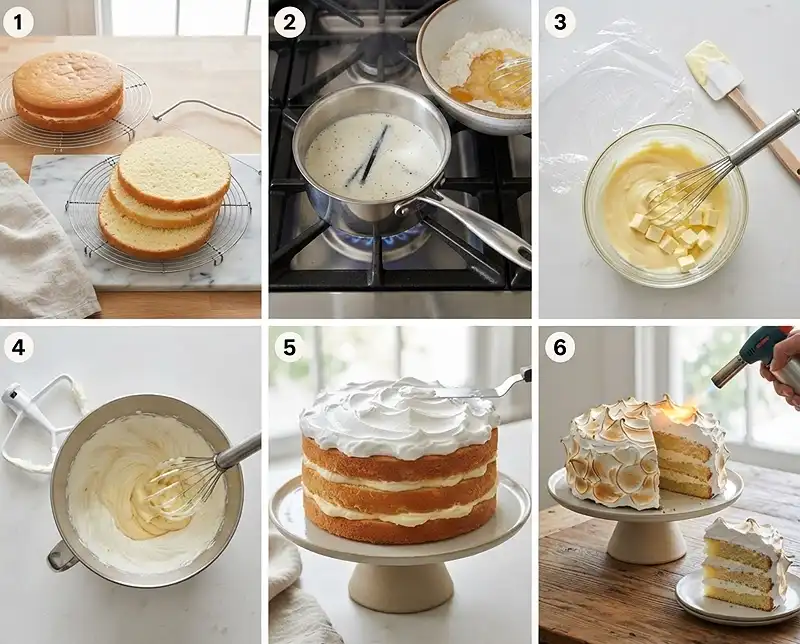
- Follow the sponge cake recipe to make an 8-inch (20 cm) sponge cake. Remove it from the baking pan and let it cool completely on a wire rack. Then using a cake leveler, cut the cake into three layers crossways.
- First prepare the pastry cream (crème pâtissière in French). Use a small, sharp knife to split the vanilla bean in half lengthwise. Then, with the tip of the blade, scrape out the seeds. Bring milk and vanilla seeds to a boil in a small saucepan.
- In a separate bowl, whisk egg yolks, sugar, all-purpose flour, and cornstarch with a hand whisk. Pour the hot milk into the egg mixture while whisking. Bring the mixture back to the saucepan and cook over medium-low heat for a few minutes (constantly whisking) until the cream thickens.
- Add cold butter, cut into cubes, and mix. Transfer the pastry cream to a shallow dish, cover it with plastic film in contact, and let it cool at room temperature (no need to chill it!).
- Pour heavy cream into the chilled bowl of a stand mixer and whip cream until soft peaks. Slowly add the pastry cream to the whipped cream, 1 tablespoon at a time, and beat until firm.
- Place the first sponge layer on a serving plate and top with half of the vanilla cream. Then add the second cake layer, spread the remaining cream, and gently press down. Finally, finish the cake with the third sponge layer.
- Place egg whites (at room temperature), granulated sugar, and lemon juice in a clean mixer bowl of a stand mixer fitted with a whisk attachment. Or place ingredients in a large bowl and use an electric mixer. Whisk the meringue at medium-high speed (mixer speed) until sugar dissolves and stiff peaks form. Next, cover the entire cake (top and sides) with meringue using a dough scraper, an offset spatula, or the back of a spoon. Pick up the meringue on top of the cake to create little peaks.
- Torch the top and edges of the cake with a blow torch. Serve right away. If making it ahead of time, chill the cake. Cover it with the meringue and torch it just before serving.
Notes
Ingredients
The ingredient list might look long, but it’s really just three simple components: sponge, pastry cream, and meringue. Each one does its own job, and together they make something pretty unforgettable.

| Ingredient | Notes |
|---|---|
| 8-inch/20 cm sponge cake | Homemade is best; use a light, airy sponge that won’t weigh down the layers. |
| 1/2 cup + 1 teaspoon (125 g) whole milk | Whole milk gives the pastry cream body; don’t swap for skim. |
| 1 vanilla bean | Split and scraped; the specks are worth it, but vanilla extract in a pinch works too (1 teaspoon). |
| 1 large egg yolk | For the pastry cream; save those whites for the meringue. |
| 1 1/2 tablespoon (20 g) granulated sugar | Sweetens the pastry cream without making it cloying. |
| 2 teaspoons (6 g) cornstarch | Helps thicken the cream; cornflour works the same way. |
| 2 teaspoons (5 g) all-purpose flour | Works with the cornstarch for a smooth, stable cream. |
| 2 teaspoons (10 g) cold unsalted butter | Stirred in at the end for richness and shine. |
| 1 1/2 cups (345 g) heavy cream, 30% fat | Whips into soft peaks and lightens the pastry cream beautifully. |
| 4 large egg whites, room temperature | Room temp is key—they whip higher and more stable. |
| 1 cup (225 g) granulated sugar | For the meringue; dissolves completely when you whisk it over heat or with the mixer. |
| 1 teaspoon lemon juice | Stabilizes the meringue and adds a tiny brightness you can’t quite name. |
Instructions
This vanilla meringue cake recipe unfolds in stages, and each one’s pretty forgiving if you take your time. Start with the sponge, move to the pastry cream, fold in the whipped cream, then stack and blanket the whole thing in meringue.
Bake and Slice the Sponge
- Make your sponge cake. Follow your favorite easy eggless vanilla cake recipe or any light 8-inch sponge you trust. Let it cool completely on a wire rack—warm cake will tear when you slice it. Once it’s cool, use a cake leveler or a long serrated knife to cut the cake into three even layers. “Level beats eyeballing every time,” my grandmother used to say, and she was right.
Cook the Pastry Cream
- Prep the vanilla bean. Split it lengthwise with a small, sharp knife, then scrape out all those tiny black seeds with the tip of the blade. Toss the seeds and the pod into a small saucepan with the milk and bring it to a gentle boil. The kitchen will smell like a bakery within seconds.
- Whisk the egg base. In a separate bowl, whisk together the egg yolk, sugar, flour, and cornstarch until it’s smooth and pale. Pour the hot milk into the egg mixture in a slow, steady stream while whisking constantly—this tempers the eggs so they don’t scramble. Then pour the whole thing back into the saucepan.
- Cook until thick. Set the pan over medium-low heat and whisk without stopping. After a few minutes, the cream will start to thicken and coat the back of a spoon. As soon as it does, pull it off the heat and stir in the cold butter, one cube at a time, until it melts into the cream. Transfer the pastry cream to a shallow dish, press plastic wrap directly onto the surface so it doesn’t form a skin, and let it cool at room temperature. No need to chill it—you want it soft enough to fold into whipped cream later.
Whip and Fold the Cream
- Whip the heavy cream. Pour the heavy cream into the chilled bowl of a stand mixer and whip until soft peaks form—still a little droopy when you lift the whisk. Then add the cooled pastry cream, one tablespoon at a time, beating gently until the mixture is smooth and holds firm peaks. This vanilla cream is the heart of the cake, so taste it and smile a little. You’ve earned it.
Assemble the Layers
- Stack and spread. Place the first sponge layer on your serving plate. Spread half the vanilla cream over the top, reaching almost to the edges. Set the second layer on top, spread the rest of the cream, and press down gently so it settles. Finish with the third layer. The whole thing should look tidy but not precious—this is a homemade cake, not a magazine cover.
Make the Meringue and Torch It
- Whisk the meringue. In a clean, grease-free bowl of your stand mixer (or a large bowl with a hand mixer), combine the room-temperature egg whites, sugar, and lemon juice. Whisk on medium-high speed until the sugar dissolves completely and stiff, glossy peaks form. You should be able to turn the bowl upside down without anything moving. “If it sticks, you’re good to go,” my cousin always said, and she wasn’t wrong.
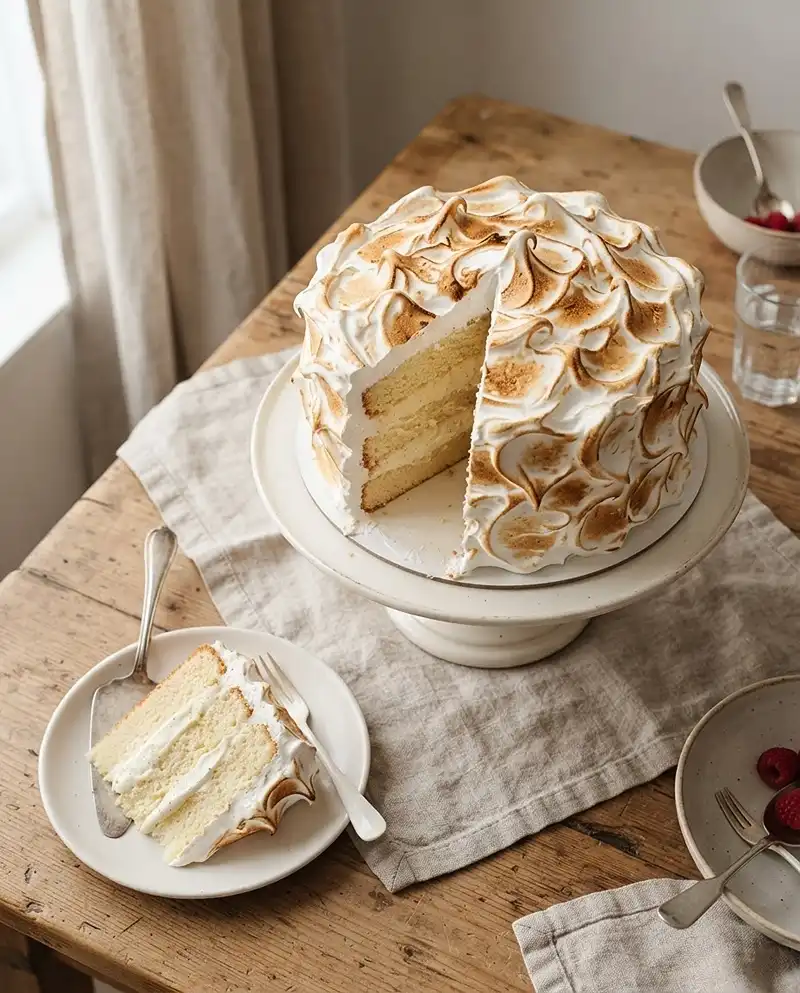
- Cover and torch. Use an offset spatula, a dough scraper, or the back of a spoon to spread the meringue all over the top and sides of the cake. Swirl it, swoosh it, pull up little peaks with the spatula for drama. Then use a kitchen blow torch to lightly brown the meringue all over—work in quick passes so it toasts but doesn’t burn. Serve right away if you can. If you’re making this ahead, chill the assembled cake and add the meringue and torching step just before serving so it stays crisp and beautiful.
Pro Tips for a Perfect Vanilla Meringue Cake
Use a cake leveler or a long serrated knife and a lazy Susan to get even layers. Wobbly layers mean wobbly cream distribution, and nobody wants a lopsided slice. Chill your mixing bowl and whisk in the freezer for ten minutes before whipping the heavy cream—it’ll come together faster and hold its shape better.
When you’re folding the pastry cream into the whipped cream, go slow and gentle. You want to keep all that air you just whipped in. If the pastry cream is too stiff to fold, give it a quick stir with a spatula to loosen it up first.
Room-temperature egg whites are essential for stable meringue. If yours are straight from the fridge, set them in a bowl of warm water for a few minutes. And make sure your bowl and whisk are completely clean—any trace of fat will keep the whites from whipping up properly
Flavor Variations
Swap the vanilla bean for a tablespoon of espresso powder in the pastry cream for a subtle coffee kick. It won’t taste like coffee cake—just deeper, a little more grown-up. Or fold a handful of crushed freeze-dried raspberries into the whipped cream for a fruity twist that looks gorgeous and tastes like summer.
If you want to go full chocolate, try layering this with a chocolate Nutella cake recipe instead of plain sponge. The torched meringue plays beautifully with chocolate, and people will think you went to pastry school.
For a citrus version, add the zest of one lemon to the pastry cream along with the vanilla. It brightens the whole thing without making it taste like lemon meringue pie—just a little lift that keeps each bite interesting.
Troubleshooting
If your pastry cream turns lumpy, don’t panic. Pull it off the heat and whisk hard, or buzz it with an immersion blender for a few seconds. It’ll smooth right out. If it’s too thick, whisk in a tablespoon of cold milk until it loosens up.
Meringue weeping or deflating? That usually means the sugar didn’t dissolve all the way, or there was grease in the bowl. Rub a cut lemon over the inside of your bowl and whisk before you start, and make sure you beat the meringue long enough—it should feel smooth, not gritty, when you rub a bit between your fingers.
If you don’t have a blow torch, you can brown the meringue under a hot broiler for a minute or two. Just watch it like a hawk—it goes from golden to burned in seconds. Some bakers skip the torching entirely and leave the meringue snowy white, which is pretty in its own way.
Storage
This cake is best the day it’s made, but you can stretch it a little if you need to. Once assembled and torched, it’ll hold in the fridge for up to two days, though the meringue will start to soften and weep a bit.
| Storage Method | Duration |
|---|---|
| Refrigerator (assembled, torched) | 1–2 days, covered loosely |
| Refrigerator (assembled, no meringue) | Up to 3 days, covered tightly |
| Freezer (sponge layers only) | Up to 2 months, wrapped well |
If you’re reheating a slice, don’t. This cake is meant to be served cold or at cool room temperature—the cream and meringue don’t take kindly to heat. Let slices sit out for about ten minutes before serving if they’ve been in the fridge, just so the flavors wake up a little.
Leftover cake makes an incredible trifle base. Cube it up, layer it in a glass bowl with fresh berries and more whipped cream, and suddenly you’ve got dessert for tomorrow night with zero extra work. You can also crumble it over ice cream or fold it into a no-churn vanilla ice cream base for something that tastes like frozen cake and dreams.
Vanilla Meringue Cake Recipe FAQs
What are the main ingredients needed for a vanilla meringue cake?
The main ingredients for a vanilla meringue cake include egg whites, granulated sugar, cream of tartar or lemon juice, vanilla extract for flavoring, and a pinch of salt. For the cake layers, you’ll need flour, butter, eggs, sugar, baking powder, milk, and vanilla extract. The meringue topping requires about 3-4 egg whites and approximately 3/4 cup of sugar.
How do I prevent my meringue from weeping or becoming watery?
To prevent weeping, make sure to add the meringue to the cake while the cake is still hot, which helps cook the bottom of the meringue. Always use room temperature egg whites and ensure your mixing bowl is completely clean and grease-free. Add sugar gradually while beating, and beat until stiff, glossy peaks form. Bake the meringue at the right temperature, usually around 350 degrees Fahrenheit, until golden brown. Avoid making meringue on humid days as moisture in the air can cause weeping.
Can I make vanilla meringue cake ahead of time?
While the cake layers can be baked a day in advance and stored wrapped at room temperature, meringue is best made and added on the day of serving. Meringue doesn’t store well as it can become soggy, weep, or lose its texture when refrigerated. If you must prepare ahead, store the assembled cake in an airtight container at room temperature for no more than 6-8 hours. The cake is best enjoyed within 24 hours of assembly for optimal texture and taste.
Why did my meringue collapse or not form stiff peaks?
Meringue can collapse for several reasons. The most common causes include: any trace of egg yolk or fat in the egg whites, which prevents proper whipping; adding sugar too quickly before the egg whites have begun to foam; overbeating the meringue past stiff peaks; or using old eggs. Make sure to use clean, dry equipment, separate eggs carefully, add sugar gradually once soft peaks begin to form, and stop beating once stiff, glossy peaks form. Room temperature egg whites also whip up better than cold ones.
What temperature should I bake the meringue topping and for how long?
Meringue topping should typically be baked at 350 degrees Fahrenheit for about 10 to 15 minutes, or until the peaks turn golden brown. The key is to watch it carefully as meringue can brown quickly. Some recipes call for a higher temperature of 375 degrees Fahrenheit for a shorter time of 8-10 minutes. The meringue is done when it has a light golden color on the tips and feels firm to the touch. Avoid overbaking as this can cause the meringue to become tough or crack.