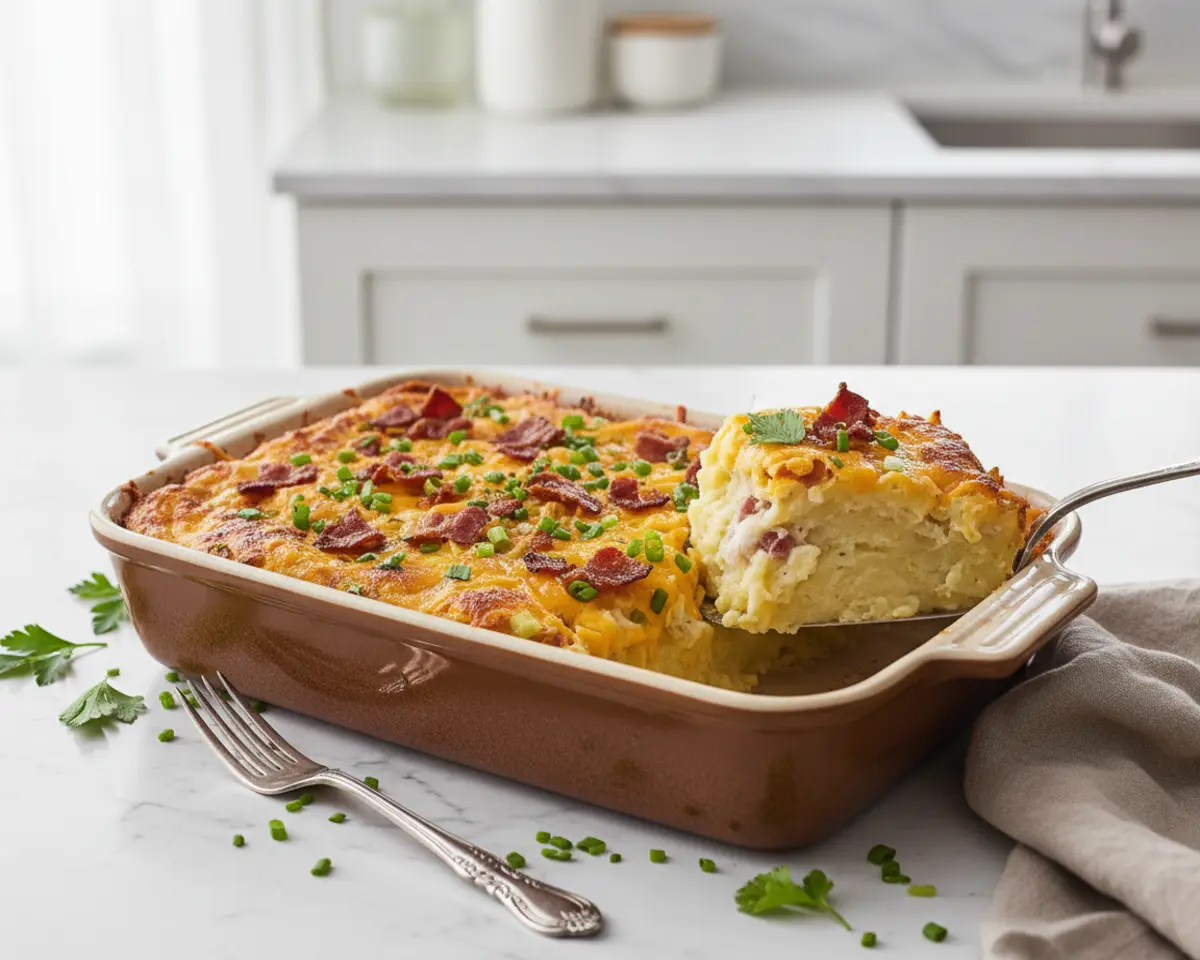
Twice Baked Potato Casserole Recipe
This twice baked potato casserole recipe transforms the classic steakhouse favorite into an easy, crowd-pleasing dish that feeds a group without all the individual stuffing and fussing.
I used to make individual twice baked potatoes for family dinners until I realized I was spending half my evening scooping, filling, and balancing wobbly potato skins. This casserole version gives you all those rich, creamy, bacon-loaded flavors in one big pan that you can make ahead and just pop in the oven when you’re ready.
It’s become my go-to for potlucks, holiday sides, and those nights when I want something that feels indulgent but doesn’t require me to stand at the counter assembling tiny potato boats.
Table of Contents
Why You’ll Love This Twice Baked Potato Casserole Recipe
This twice-baked potato casserole delivers all the crispy bacon, tangy sour cream, melty cheddar, and fluffy potato goodness you crave, but in a format that’s actually manageable for busy cooks. You get the same satisfying flavors without the tedious individual assembly.
The best part? You can prep it ahead, refrigerate it, and bake it right before serving. No last-minute scrambling. The texture comes out perfectly creamy on the inside with that gorgeous golden cheese crust on top that everyone fights over.
It feeds a crowd generously, reheats beautifully, and honestly tastes even better the next day when all those flavors have had time to get cozy together. Plus, it’s endlessly customizable based on what you’ve got in your fridge.
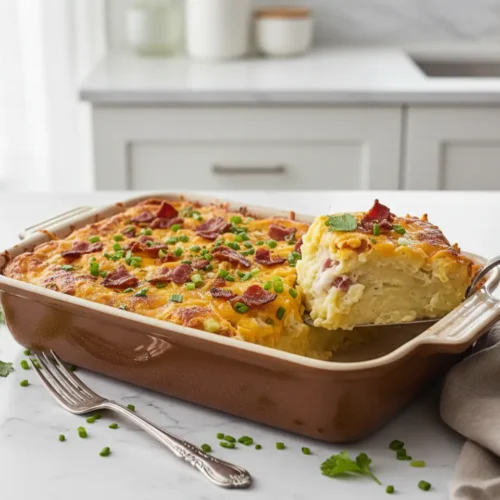
Twice Baked Potato Casserole
Ingredients
Ingredients
- 5 lb baking potatoes such as russet
- 8 tbsp 1 stick unsalted butter
- 1 cup sour cream
- 1 ¾ cup buttermilk
- 6 oz cheddar cheese shredded
- 12 oz bacon
- 1 bunch scallion chopped, separating white and green parts
- 3 cloves garlic minced
- 2 ½ tsp kosher salt
- 1 ½ tsp freshly ground black pepper
- 2 tbsp minced fresh parsley
- 1 tbsp minced fresh chives
Instructions
- Preheat the oven to 375°F. Grease a 9 x 13-inch baking dish and set aside.
- Prick the washed and dried potatoes a few times with a fork and set them on a baking sheet. Bake the potatoes in the preheated oven until they are tender, or when a knife inserted into the middle of the largest potatoes meets no resistance, 55-75 minutes. Once the potatoes are baked, remove them from the oven.
- While the potatoes are baking, cook the bacon in a large skillet until browned and crisp. Allow the bacon to cool and drain on a paper towel-lined plate. Once all of the bacon has cooked, remove all but 1 tbsp of the grease.
- Heat the bacon grease in the skillet over low heat and add the white parts of the chopped scallion. Sauté until the scallion is softened and beginning to brown, 4-6 minutes. Add the minced garlic and cook for 30 seconds. Once the garlic is cooked, remove the skillet from the heat and set it aside. When the bacon is cool enough to handle, chop it into small pieces and set it aside.
- When the potatoes are cool enough to handle, slice each one in half, scoop out the flesh with a spoon, and place them in a large bowl, leaving as little skin as possible. Add the butter to the warm potatoes and mash until mostly smooth. Pour in the buttermilk, sour cream, salt, pepper, and mash until the buttermilk is combined with the potatoes. Stir in the prepared bacon, sautéed scallions and fresh greens from the scallions, and half of the shredded cheese. Pour into the prepared baking dish and sprinkle with the remaining cheese.
- Bake in the 375°F oven until the potatoes are warmed through, and the cheese is beginning to brown, 25-30 minutes. Garnish with parsley and chives.
Ingredients for Twice Baked Potato Casserole
This recipe uses straightforward ingredients you probably already have on hand. The potatoes are the star, with bacon, cheese, and aromatics bringing all that signature twice-baked flavor.
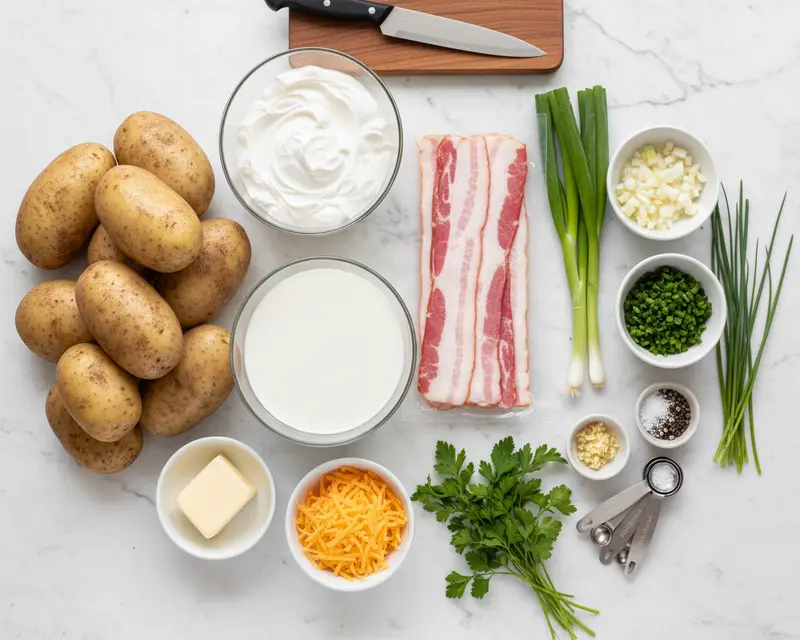
| Ingredient | Amount | Notes |
|---|---|---|
| Baking potatoes (russet) | 5 lb | High starch content makes them fluffy |
| Unsalted butter | 8 tbsp (1 stick) | Adds richness and helps mash smoothly |
| Sour cream | 1 cup | Provides tang and creaminess |
| Buttermilk | 1 ¾ cup | Keeps the casserole moist and fluffy |
| Cheddar cheese (shredded) | 6 oz | Sharp or medium cheddar works best |
| Bacon | 12 oz | About 12 slices; thick cut adds texture |
| Scallions (chopped) | 1 bunch | Separate white and green parts |
| Garlic (minced) | 3 cloves | Fresh garlic is key here |
| Kosher salt | 2 ½ tsp | Adjust to taste |
| Black pepper (freshly ground) | 1 ½ tsp | Fresh pepper makes a difference |
| Fresh parsley (minced) | 2 tbsp | For garnish and color |
| Fresh chives (minced) | 1 tbsp | Adds a mild onion flavor |
Russet potatoes are essential here because their high starch content gives you that fluffy, light texture. Waxy potatoes like red or Yukon gold will make the casserole gummy and dense, which nobody wants.
The buttermilk might seem unusual if you’re used to milk in mashed potatoes, but it adds a subtle tang that balances the richness of the butter and cheese. You can substitute regular milk mixed with a tablespoon of lemon juice if you don’t have buttermilk on hand.
I always use block cheese and shred it myself rather than buying pre-shredded. The pre-shredded stuff has anti-caking agents that can make it melt weird and create a grainy texture in your casserole.
Step-by-Step Instructions for Making Twice Baked Potato Casserole
This recipe comes together in stages, but none of the steps are complicated. You’ll bake the potatoes, cook the bacon and aromatics, mash everything together, and bake it all again with a cheesy topping.
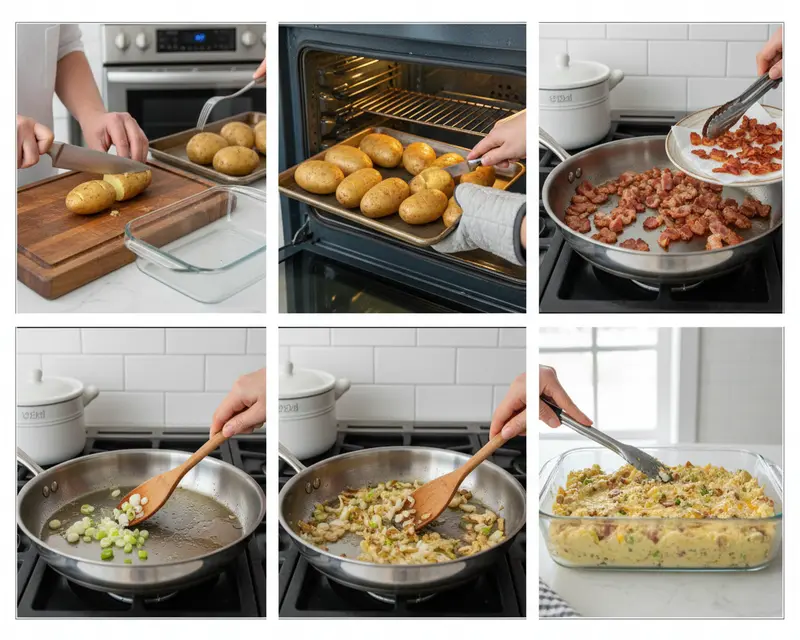
- Preheat and prep: Preheat your oven to 375°F and grease a 9 x 13-inch baking dish with butter or cooking spray. Set it aside while you work on the potatoes.
- Bake the potatoes: Wash and dry your potatoes thoroughly, then prick each one several times with a fork to allow steam to escape. Place them on a baking sheet and bake for 55-75 minutes, depending on their size. They’re done when a knife slides into the center of the largest potato with no resistance at all. The timing varies a lot based on potato size, so start checking around 55 minutes.
- Cook the bacon: While the potatoes bake, cook your bacon in a large skillet over medium heat until it’s browned and crispy. This usually takes about 6-8 minutes per batch. Transfer the cooked bacon to a paper towel-lined plate to drain and cool. Once all the bacon is cooked, pour off all but 1 tablespoon of the grease from the skillet.
- Sauté the aromatics: Return the skillet with the reserved bacon grease to the stove over low heat. Add the white parts of the chopped scallions and sauté for 4-6 minutes until they’re softened and just beginning to brown. The low heat keeps them from burning. Add the minced garlic and cook for just 30 seconds until fragrant, then remove the skillet from the heat. When the bacon is cool enough to handle, chop it into small pieces.
- Mash the potatoes: Once the potatoes are cool enough to handle without burning yourself, slice each one in half lengthwise. Use a spoon to scoop out all the flesh into a large bowl, leaving behind as little of the skin as possible. While the potato flesh is still warm, add the butter and mash until mostly smooth. Some small lumps are fine and actually add nice texture.
- Combine everything: Pour the buttermilk and sour cream into the mashed potatoes, add the salt and pepper, and mash until everything is well combined and creamy. Stir in the chopped bacon, the sautéed scallion mixture, the green parts of the scallions, and half of the shredded cheese. Mix until everything is evenly distributed throughout the potatoes.
- Assemble and bake: Pour the potato mixture into your prepared baking dish and spread it out evenly. Sprinkle the remaining cheese over the top in an even layer. Bake at 375°F for 25-30 minutes until the casserole is heated through and the cheese on top is melted and beginning to turn golden brown in spots.
- Garnish and serve: Remove the casserole from the oven and let it sit for about 5 minutes before serving. Sprinkle the minced parsley and chives over the top for a pop of color and fresh flavor.
The key to really fluffy potatoes is mashing them while they’re still hot and adding the butter first before any liquid. The butter coats the starch molecules and prevents them from getting gummy when you add the buttermilk.
Don’t overmix once you add the liquids. Overworking potatoes releases too much starch and turns them gluey. Mix just until combined, and you’ll get that perfect creamy texture.
Expert Tips for Perfect Twice Baked Potato Casserole
Don’t skip pricking the potatoes. I learned this the hard way when a potato exploded in my oven and I spent an hour cleaning up the mess. Those fork pricks let steam escape as the potatoes bake.
Save some bacon grease for flavor. That single tablespoon adds so much savory depth to the sautéed scallions. It’s a small detail that makes a noticeable difference in the final dish.
Make it ahead for easier entertaining. You can assemble this entire casserole up to 24 hours in advance. Just cover it tightly with plastic wrap or foil and refrigerate. Add an extra 10-15 minutes to the baking time if you’re putting it in the oven straight from the fridge.
Use a potato masher, not a mixer. Stand mixers and hand mixers will overwork the potatoes and make them gummy. A hand masher or even a fork gives you much better texture control.
Let the potatoes cool slightly before handling. I know you’re eager to get them mashed, but give them about 10 minutes to cool after they come out of the oven. They’ll still be plenty warm for mashing, and you won’t burn your hands scooping out the flesh.
Taste and adjust seasoning. Potatoes need more salt than you’d think. Before you pour the mixture into the baking dish, taste it and add more salt or pepper if needed. It’s much easier to adjust at this stage than after it’s baked.
Variations on This Twice-Baked Potato Casserole
This recipe is incredibly flexible, and I’ve tried just about every variation you can imagine. Here are the ones that actually worked well and didn’t mess up the texture.
Loaded baked potato version: Add an extra 4 ounces of cheese, double the bacon, and top with a dollop of sour cream and extra chives after baking. It’s indulgent but completely worth it for special occasions.
Lighter take: Swap half the sour cream for Greek yogurt, use turkey bacon instead of regular bacon, and reduce the cheese to 4 ounces total. You’ll still get good flavor with fewer calories. The USDA provides helpful guidance on dairy substitutions if you’re looking to reduce fat content.
Cheesy variation: Use a mix of cheddar, Monterey Jack, and a bit of cream cheese stirred into the mash. The cream cheese makes everything extra silky and rich.
Herb-forward version: Add fresh thyme, rosemary, or dill along with the parsley and chives. Fresh herbs brighten up the richness and add complexity.
Spicy kick: Stir in diced jalapeños, a pinch of cayenne pepper, or use pepper jack cheese instead of cheddar. If you like heat, this adds a nice contrast to the creamy potatoes.
Vegetarian option: Skip the bacon and add sautéed mushrooms for that savory umami flavor. Use butter or olive oil instead of bacon grease for cooking the scallions.
For more easy casserole ideas, check out my frozen chicken tender casserole recipe or browse through all my recipes for inspiration.
Troubleshooting Common Issues
Casserole turned out watery: This usually happens if the potatoes weren’t baked long enough or if you added too much buttermilk. Next time, make sure the potatoes are completely tender before scooping them out, and add the buttermilk gradually until you reach the consistency you want.
Potatoes are gummy or gluey: Overworking the potatoes releases too much starch. Use a gentler hand when mashing, and avoid electric mixers entirely. Also make sure you’re using russet potatoes, not waxy varieties.
Top isn’t browning: If your cheese isn’t getting that golden color, turn on the broiler for the last 2-3 minutes of cooking. Watch it closely though, because it can go from perfect to burned in seconds.
Casserole is too thick or dry: You may have used too much potato or not enough buttermilk. The mixture should be creamy and somewhat loose before baking, similar to thick mashed potatoes. It will firm up as it bakes.
Bacon is chewy instead of crispy: Make sure you cook the bacon until it’s truly crispy before chopping it. Undercooked bacon will stay chewy even after the casserole bakes.
Flavors taste flat: You probably need more salt. Potatoes are starchy and need generous seasoning to taste good. Don’t be shy with the salt and pepper.
Storage and Reheating Tips
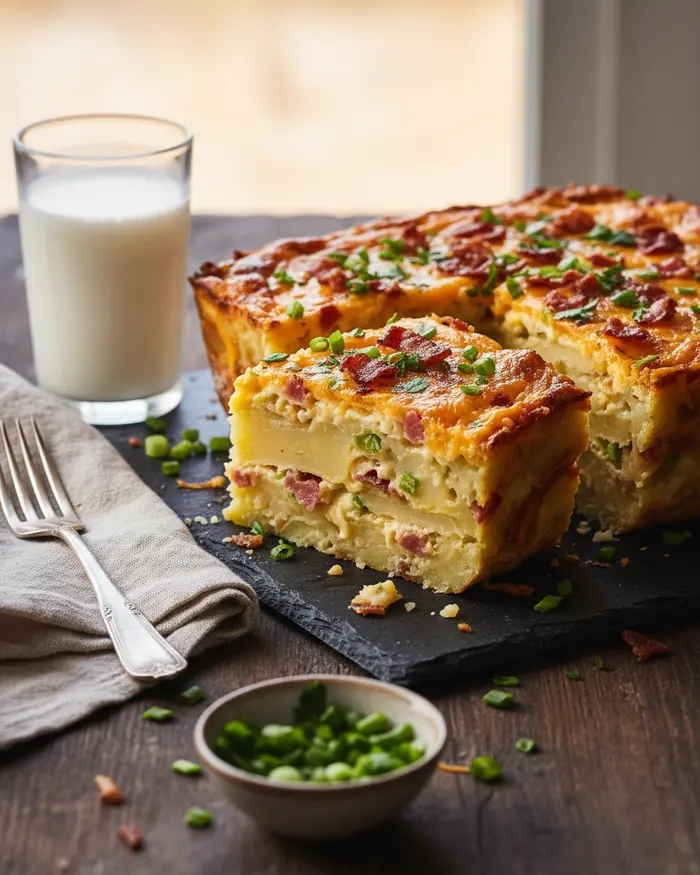
This twice baked potato casserole recipe actually keeps really well, which makes it perfect for meal prep or making ahead for gatherings. The flavors develop even more as it sits.
| Storage Method | Duration | Best Practices |
|---|---|---|
| Room Temperature | 2 hours max | Don’t leave out longer due to dairy content |
| Refrigerator | 3-4 days | Cover tightly with foil or plastic wrap |
| Freezer | Up to 3 months | Wrap well in plastic, then foil; label with date |
To reheat refrigerated casserole, cover it with foil and bake at 350°F for about 20-25 minutes until warmed through. Remove the foil for the last 5 minutes to re-crisp the cheese on top.
For frozen casserole, thaw it in the refrigerator overnight first. Then reheat the same way as refrigerated leftovers. You can also reheat individual portions in the microwave for 2-3 minutes, though the texture won’t be quite as nice as oven reheating.
The USDA’s food safety guidelines recommend refrigerating leftovers within two hours of cooking to prevent bacterial growth, especially important with dairy-rich dishes like this one.
I actually prefer the texture on day two. Something about letting everything meld together in the fridge overnight makes the flavors pop even more when you reheat it.
Twice Baked Potato Casserole Recipe FAQs
Can I make twice baked potato casserole ahead of time?
Yes, twice baked potato casserole is perfect for making ahead. You can prepare the entire casserole up to 24 hours in advance, cover it tightly with plastic wrap or aluminum foil, and refrigerate. When ready to serve, let it sit at room temperature for 30 minutes, then bake as directed, adding an extra 10-15 minutes to the baking time if needed.
What type of potatoes work best for twice baked potato casserole?
Russet potatoes are the best choice for twice baked potato casserole because they have a high starch content and fluffy texture that creates a creamy, smooth consistency. Yukon Gold potatoes can also work well as they provide a buttery flavor and creamy texture. Avoid waxy potatoes like red potatoes as they don’t mash as smoothly.
How do I store leftover twice baked potato casserole?
Store leftover twice baked potato casserole in an airtight container in the refrigerator for up to 4 days. To reheat, cover with foil and warm in a 350-degree oven for about 20 minutes, or microwave individual portions for 2-3 minutes. You can also freeze the casserole for up to 3 months; thaw overnight in the refrigerator before reheating.
What toppings should I include in twice baked potato casserole?
Classic toppings for twice baked potato casserole include shredded cheddar cheese, crispy bacon bits, sour cream, chopped green onions or chives, and butter. You can customize with additional toppings like ranch seasoning, extra cheese varieties such as Monterey Jack or mozzarella, or even add broccoli for a loaded baked potato variation.
Do I need to peel the potatoes for twice baked potato casserole?
It depends on personal preference. For a smoother, more traditional texture, peel the potatoes before or after boiling. However, leaving the skins on adds extra fiber, nutrients, and a rustic texture that many people enjoy. If keeping skins on, make sure to scrub the potatoes thoroughly before cooking and cut them into smaller chunks for easier mashing.
Serving Suggestions
This casserole is rich and hearty enough to be a main dish, but it also works wonderfully as a side for just about any protein. I’ve served it alongside everything from simple roasted chicken to fancy holiday roasts.
It pairs especially well with grilled or roasted meats. Try it with my baked balsamic chicken recipe for an easy weeknight dinner that feels special.
For a lighter balance, serve it with a crisp green salad or steamed vegetables. The creamy richness of the potatoes needs something fresh and bright on the plate.
It’s perfect for holiday dinners, potlucks, or Sunday family meals. I’ve brought this to more gatherings than I can count, and the pan always comes home empty.
If you’re looking for other crowd-pleasing breakfast or brunch options, my baked feta eggs recipe would be a great companion dish.
Why This Recipe Works
The magic of this twice baked potato casserole recipe is that it captures all the appeal of individual twice baked potatoes without the fussy work. You get the same crispy bacon bits, tangy sour cream, sharp cheddar, and fluffy potato base, but in a format that serves a crowd easily.
Baking the potatoes first, rather than boiling them, concentrates their flavor and prevents them from absorbing excess water. This gives you a fluffier, more flavorful base for the casserole.
The combination of buttermilk and sour cream creates the perfect creamy texture while adding subtle tang that keeps the dish from feeling too heavy. The buttermilk also helps keep the casserole moist during the second baking without making it watery.
Sautéing the scallion whites in bacon grease builds layers of flavor that you just don’t get from raw onions or scallions stirred in at the end. That little step makes a surprisingly big difference.
Reserving some cheese for the top creates that irresistible golden crust that everyone fights over. It adds textural contrast to the creamy interior.
Let’s Get Cooking
This twice baked potato casserole has become one of those recipes I make over and over because it’s reliable, delicious, and always gets compliments. It feels special enough for company but easy enough for a regular weeknight.
The best part is how forgiving it is. You can adjust the ingredients based on what you have, make it ahead when you have time, and customize it for different tastes and dietary needs.
Give this recipe a try the next time you’re craving comfort food or need a crowd-pleasing side dish. I think you’ll find yourself making it again and again, just like I do. And if you make any fun variations or have questions, I’d love to hear about your experience in the comments below!