Napa Soup Dumpling Lasagna Recipe
This napa soup dumpling lasagna transforms the delicate flavors of soup dumplings into a comforting, layered casserole that’s easier to make than you’d think.
I first thought of this recipe on a rainy Tuesday when I had leftover wonton wrappers and a craving for something warm and satisfying. The idea of combining the savory broth and tender filling of soup dumplings with the layered comfort of lasagna felt like the kind of kitchen experiment that could either be brilliant or bizarre. Turns out, it was the former, and now it’s a regular in my dinner rotation.
Napa soup dumpling lasagna is essentially a deconstructed soup dumpling turned into a multi-layered baked dish. Instead of folding individual dumplings, you layer seasoned ground beef, tender napa cabbage leaves, delicate wonton wrappers, and a savory broth mixture, then bake everything until the top gets golden and slightly crisp. The result is a dish that captures all the best parts of soup dumplings without the fiddly pleating.
Table of Contents
Why You’ll Love This Napa Soup Dumpling Lasagna
This recipe bridges two comfort food worlds in the best possible way. If you love the juicy, flavorful filling of soup dumplings but find the folding process intimidating, this is your shortcut.
The layers create pockets of tender beef, silky cabbage, and soft wonton wrappers all soaked in a ginger-scallion broth that tastes like the inside of your favorite dumpling. It’s comforting, flavorful, and surprisingly elegant when you slice into it and see all those beautiful layers.
Plus, it’s a great make-ahead dish. You can assemble the whole thing in advance and pop it in the oven when you’re ready to eat. The flavors actually get better as they sit together, making leftovers something to look forward to rather than just reheat.
It’s also a conversation starter. Every time I’ve served this, people lean in closer and ask what it is. The combination sounds unusual until you take that first bite and realize how perfectly the flavors work together.

Napa Soup Dumpling Lasagna
Ingredients
Ingredients
- 1 pound Ground beef
- 8 leaves Napa cabbage leaves Ribs removed
- ½ cup Chopped scallion Divided
- 1 tablespoon Finely grated ginger
- 2 teaspoons Garlic Finely chopped
- ¼ scant teaspoon Salt
- ¼ teaspoon Black pepper
- 1 14.5- ounce can Chicken broth Divided
- 1 ½ teaspoons Soy sauce Divided
- 1 teaspoon Dark soy sauce
- 4 teaspoons Toasted sesame oil Divided
- 2 teaspoons Rice wine vinegar
- 20 Wonton wrappers
Instructions
- In a large bowl, mix the ground beef with half of the scallions, ginger, garlic, salt, black pepper, 1/2 teaspoon soy sauce, and 2 teaspoons toasted sesame oil.
- Mix gently with your hands or a fork just until combined, being careful not to overmix.
- Bring a pot of water to a boil and blanch the napa cabbage leaves for about 30 seconds, until bright and pliable.
- Drain the cabbage leaves and pat them very dry with a clean towel.
- In a small saucepan, combine the remaining chicken broth, remaining soy sauce, dark soy sauce, remaining sesame oil, and rice wine vinegar.
- Warm the broth mixture and let it simmer for a couple of minutes so the flavors meld. Taste and adjust salt if needed.
- Preheat the oven to 375°F.
- Spread a thin layer of warm broth on the bottom of a baking dish.
- Add a layer of wonton wrappers, slightly overlapping them.
- Add a layer of napa cabbage leaves over the wonton wrappers.
- Spread a thin layer of beef filling over the cabbage, then drizzle with a bit of broth.
- Repeat the layers until the filling is used up, finishing with a top layer of wonton wrappers.
- Pour a generous amount of broth over the top so the layers stay moist while baking.
- Cover the dish loosely with foil and bake for 25 minutes.
- Uncover and bake for another 10 to 15 minutes, until the top wrappers are golden and slightly crisp at the edges.
- Let the lasagna rest for 5 to 10 minutes before slicing and serving.
Ingredients for Napa Soup Dumpling Lasagna
The ingredient list looks longer than it is. Most of what you need are pantry staples, and the fresh items are easy to find at any grocery store with a decent produce section.
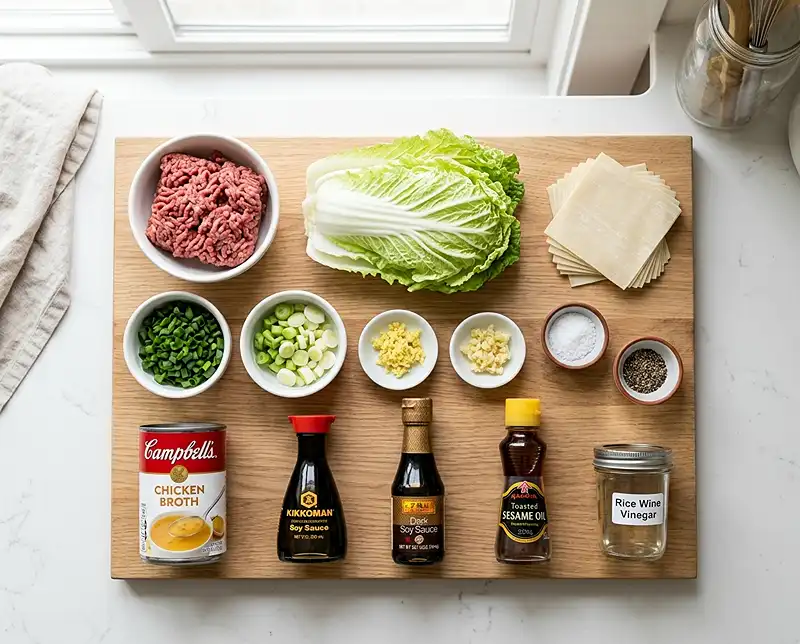
| Ingredient | Quantity | Notes |
|---|---|---|
| Ground beef | 1 pound | Ground pork or a mix works beautifully too |
| Napa cabbage leaves | 8 leaves | Remove the thick center ribs before blanching |
| Scallions | 1/2 cup, chopped | Divided between the filling and garnish |
| Ginger | 1 tablespoon, finely grated | Fresh ginger is essential for authentic flavor |
| Garlic | 2 teaspoons, finely chopped | About 2 cloves |
| Salt | Scant 1/4 teaspoon | Start light, the soy sauce adds saltiness |
| Black pepper | 1/4 teaspoon | Freshly ground is best |
| Chicken broth | 1 (14.5-ounce) can | Divided between the filling and broth mixture |
| Soy sauce | 1 1/2 teaspoons | Divided between layers |
| Dark soy sauce | 1 teaspoon | Adds color and depth |
| Toasted sesame oil | 4 teaspoons | Divided, use the toasted kind for flavor |
| Rice wine vinegar | 2 teaspoons | Brightens the broth |
| Wonton wrappers | 20 | Fresh or refrigerated, not fried |
A quick note on the napa cabbage: you want the tender inner leaves if possible. The outer ones work fine but may be a bit tougher even after blanching. And if your cabbage leaves are huge, feel free to trim them to fit your baking dish better.
Dark soy sauce is thicker and less salty than regular soy sauce, with a slightly sweet, molasses-like quality. You can find it at most Asian grocery stores, but if you can’t, just use regular soy sauce and maybe add a tiny pinch of brown sugar to the broth.
Step-by-Step Instructions for Making Napa Soup Dumpling Lasagna
This recipe comes together in stages, but none of them are difficult. Take your time with the layering and you’ll end up with something that looks as good as it tastes.
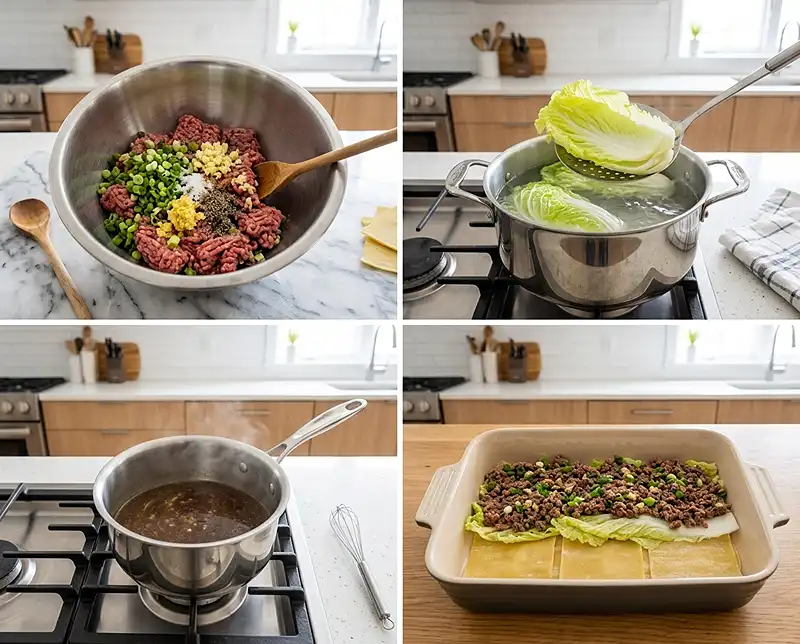
- Mix the beef filling: In a large bowl, mix the ground beef with half of the scallions, ginger, garlic, salt, black pepper, 1/2 teaspoon soy sauce, and 2 teaspoons toasted sesame oil. Use your hands or a fork and mix gently just until everything is combined. Overmixing makes the meat dense and tough, so stop as soon as you don’t see any dry patches.
- Combine gently: Mix gently with your hands or a fork just until combined, being careful not to overmix. The mixture should look cohesive but not pasty.
- Blanch the cabbage: Bring a pot of water to a boil and blanch the napa cabbage leaves for about 30 seconds, until bright and pliable. They’ll turn a vibrant green and become soft enough to layer without tearing.
- Dry the cabbage: Drain the cabbage leaves and pat them very dry with a clean towel. This step is important because excess water will dilute your broth and make the lasagna soggy.
- Make the broth mixture: In a small saucepan, combine the remaining chicken broth, remaining soy sauce, dark soy sauce, remaining sesame oil, and rice wine vinegar. This is your flavor base for the whole dish.
- Simmer the broth: Warm the broth mixture and let it simmer for a couple of minutes so the flavors meld. Taste and adjust salt if needed. It should taste savory, slightly sweet, and balanced.
- Preheat the oven: Preheat the oven to 375°F. This moderate temperature lets the layers cook through without drying out the top too quickly.
- Start layering: Spread a thin layer of warm broth on the bottom of a baking dish. This prevents sticking and starts the moisture from the bottom up.
- Add wonton wrappers: Add a layer of wonton wrappers, slightly overlapping them. Don’t worry about perfection here; they’ll soften and meld as they bake.
- Layer the cabbage: Add a layer of napa cabbage leaves over the wonton wrappers. Try to cover the surface evenly so every bite gets some cabbage.
- Add the beef filling: Spread a thin layer of beef filling over the cabbage, then drizzle with a bit of broth. Use your fingers or a spoon to break up the beef into an even layer.
- Repeat the layers: Repeat the layers until the filling is used up, finishing with a top layer of wonton wrappers. You should get about three full cycles depending on your dish size.
- Add broth generously: Pour a generous amount of broth over the top so the layers stay moist while baking. Don’t be shy here; the wrappers will absorb a lot of liquid.
- Cover and bake: Cover the dish loosely with foil and bake for 25 minutes. The foil traps steam and keeps everything tender.
- Finish uncovered: Uncover and bake for another 10 to 15 minutes, until the top wrappers are golden and slightly crisp at the edges. This gives you that textural contrast that makes each bite interesting.
- Rest before serving: Let the lasagna rest for 5 to 10 minutes before slicing and serving. This helps the layers set so you get clean slices instead of a soupy mess.
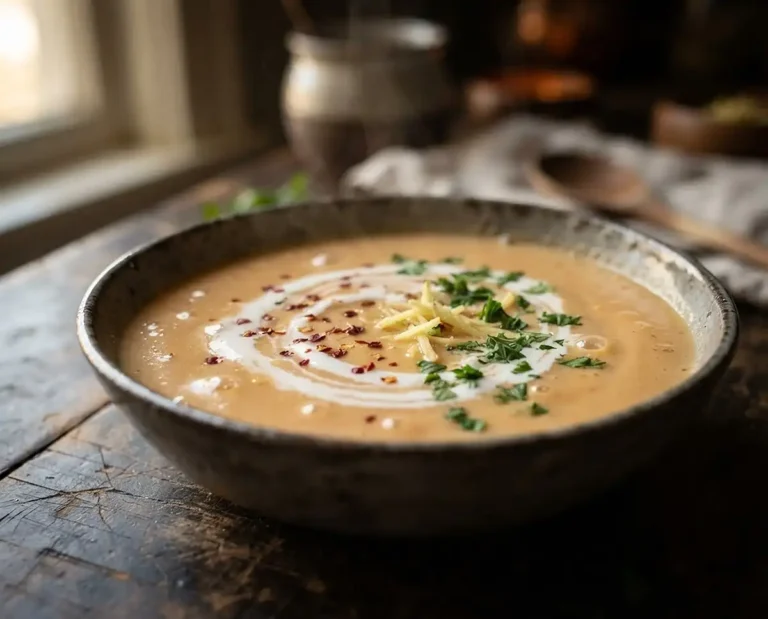
When you pull this out of the oven, the top should be lightly golden with some darker edges where the wrappers crisped up. The broth will be bubbling around the sides, and the whole thing should smell like a dumpling shop in the best way possible.

Expert Tips for the Best Napa Soup Dumpling Lasagna Recipe
Use a 9×9 or similar sized baking dish for the best layering ratio. If your dish is too wide, you’ll end up with thin, sparse layers. Too narrow and the layers will be so thick they won’t cook evenly.
Don’t skip drying the cabbage leaves. I learned this the hard way when my first attempt came out watery. Those leaves hold more water than you’d think, and patting them dry makes a huge difference in the final texture.
Taste your broth before you layer. It should be well-seasoned and flavorful because it’s doing a lot of the heavy lifting in this recipe. If it tastes bland in the pot, it’ll taste bland in the lasagna.
Let the ground beef stay slightly loose when mixing. The texture should be tender and almost fluffy, not dense and compact. This makes the filling melt into the layers rather than forming rubbery clumps.
If your wonton wrappers are drying out while you work, cover them with a damp towel. Dried-out wrappers crack and tear, making them harder to layer neatly.
Pour the final layer of broth slowly and evenly. You want it to seep down through the layers, not pool on top. I usually pour it in a few spots and let it find its way down naturally.
Check the lasagna at the 10-minute mark after uncovering. Ovens vary, and you don’t want the top to go from golden to burnt. You’re looking for color and texture, not char.
Variations on Napa Soup Dumpling Lasagna
Swap the ground beef for ground pork to get closer to traditional soup dumpling flavors. Pork has a slightly sweeter, richer taste that pairs beautifully with the ginger and sesame oil.
Add a handful of soaked shiitake mushrooms to the beef mixture for an earthy, umami boost. Chop them finely so they distribute evenly through the filling.
Try bok choy instead of napa cabbage if you want a slightly more robust green. Blanch it the same way, but you might need to cook it a few seconds longer since the stems are thicker.
Make it spicier by adding chili oil to the broth mixture or stirring some sambal oelek into the beef filling. A little heat plays nicely with the richness of the dish.
For a vegetarian version, replace the beef with finely crumbled firm tofu mixed with chopped mushrooms, and use vegetable broth instead of chicken broth. Season it a bit more aggressively since tofu is mild on its own.
Add a layer of thinly sliced water chestnuts for crunch. They add a fun textural surprise that mimics the occasional crispy bit you get in a well-made dumpling.
Troubleshooting Your Napa Soup Dumpling Lasagna
If your lasagna comes out too dry, you didn’t use enough broth. The wonton wrappers are incredibly absorbent, especially if they’re on the thinner side. Next time, pour more broth over the top before baking and consider adding a splash halfway through if it looks like it’s drying out.
If it’s too watery, the cabbage wasn’t dried well enough or you used too much broth without adjusting baking time. Let it rest longer after baking so the liquid gets reabsorbed, or next time reduce the broth slightly and make sure those cabbage leaves are truly dry.
If the top burns before the inside cooks through, your oven runs hot or you placed the dish too close to the heating element. Lower the temperature to 350°F and add a few extra minutes to the covered baking time. You can also tent the foil loosely for the entire bake and only remove it for the last 5 minutes.
If the layers slide apart when you cut into it, you didn’t let it rest long enough. Give it a full 10 minutes, and use a sharp knife to cut clean slices. A serrated knife works surprisingly well for this.
If the beef filling tastes bland, you under-seasoned it. The napa soup dumpling lasagna recipe relies on the filling being flavorful since the wrappers and cabbage are mild. Taste a tiny bit of the raw mixture (yes, really) and adjust the salt, ginger, or sesame oil before layering.
Storage Instructions for Napa Soup Dumpling Lasagna
This dish keeps beautifully, which makes it perfect for meal prep or enjoying leftovers throughout the week.
| Storage Method | Duration | Notes |
|---|---|---|
| Refrigerator | 3 to 4 days | Store covered tightly with foil or in an airtight container |
| Freezer | Up to 2 months | Wrap individual portions in plastic wrap, then foil |
| Room temperature | Not recommended | Contains meat and should be refrigerated within 2 hours |
To reheat, cover with foil and warm in a 350°F oven for about 15 to 20 minutes if refrigerated, or 25 to 30 minutes if frozen. You can also microwave individual portions, though the wonton wrappers won’t crisp back up. Add a splash of chicken broth before reheating if it looks dry.
The texture changes slightly after freezing since the wonton wrappers soften more, but the flavor holds up well. I actually think the flavors deepen after a day in the fridge, similar to how homemade pasta sauce tastes better the next day.
If you’re planning to freeze it, consider freezing it before baking. Assemble the whole dish, cover it tightly, and freeze. Then you can bake it straight from frozen, adding about 15 extra minutes to the covered baking time. According to the USDA Food Safety and Inspection Service, cooked ground beef should be used within 3 to 4 days when refrigerated or frozen within that timeframe for longer storage.
Napa Soup Dumpling Lasagna FAQs
What is napa soup dumpling lasagna?
Napa soup dumpling lasagna is a creative fusion dish that combines elements of Chinese soup dumplings (xiao long bao) with Italian lasagna. It typically features layers of pasta or wonton wrappers, napa cabbage, savory broth-infused filling, and cheese or traditional dumpling ingredients, creating a unique East-meets-West comfort food experience.
How do you keep the soup from leaking out of napa soup dumpling lasagna?
To prevent soup from leaking, use a gelatin-based broth that solidifies when cold, similar to traditional soup dumplings. Layer it carefully between pasta sheets or wrappers, and ensure edges are well-sealed. The gelatin will melt during baking, creating the signature soupy texture inside while the pasta layers contain the liquid. Let it rest for a few minutes after baking to allow the structure to set.
What ingredients are needed for napa soup dumpling lasagna?
Key ingredients include napa cabbage, ground pork or chicken, ginger, garlic, soy sauce, sesame oil, gelatin-rich broth or stock, lasagna noodles or wonton wrappers, and optionally ricotta or tofu for creaminess. You may also include shiitake mushrooms, scallions, and seasonings like white pepper. Some recipes incorporate mozzarella or other melting cheeses for a more fusion approach.
Can napa soup dumpling lasagna be made vegetarian?
Yes, napa soup dumpling lasagna can easily be adapted for vegetarians. Replace meat with finely chopped mushrooms, tofu, or textured vegetable protein. Use vegetable broth instead of chicken or pork broth, and add extra napa cabbage, carrots, and other vegetables for substance. Maintain the gelatin element with agar-agar as a plant-based alternative to create that signature soupy center.
How do you serve and eat napa soup dumpling lasagna?
Serve napa soup dumpling lasagna hot, cut into squares like traditional lasagna. Allow it to cool for 5-10 minutes after baking so the layers set slightly. When eating, be careful of the hot broth inside, similar to eating soup dumplings. You can nibble a corner first to release steam, or eat it with a spoon to catch any escaping broth. Pair it with a light Asian-inspired salad or pickled vegetables to balance the richness.
Ready to Try This Napa Soup Dumpling Lasagna Recipe?
This napa soup dumpling lasagna is one of those recipes that feels like a small adventure in your own kitchen. It’s comforting and familiar, but with enough of a twist to keep things interesting.
The layering might seem fussy at first, but once you get into a rhythm, it’s actually kind of meditative. And when you pull that golden, bubbling dish out of the oven and slice into those tender, flavorful layers, you’ll be glad you tried something new.
If you make this, I’d love to hear how it turns out. And if you’re looking for more creative recipe ideas, check out all my recipes for inspiration. Don’t forget to save any extra broth mixture for drizzling over leftovers or even using as a base for a quick soup.
Now go make yourself something delicious. You deserve it.