
Japanese Corn Potage Soup Recipe
Make this velvety Japanese corn potage at home with fresh sweet corn, cream, and a simple roasting trick that brings out incredible flavor.
I first tasted Japanese corn potage from a vending machine in Tokyo, and I was completely hooked. The silky texture, the sweet corn flavor, the comforting warmth—it was nothing like the chunky corn soups I grew up with. When I got home, I knew I had to figure out how to make it myself, and after several attempts, I landed on this version that captures that same magical smoothness.
This soup is absolutely worth the effort. You roast the corn first, which brings out a sweet, caramelized depth that makes all the difference. Then you simmer everything with the cobs still in the pot—those cobs are flavor gold—and blend it all into the creamiest, dreamiest soup you’ve ever tasted.
Table of Contents
What Is Japanese Corn Potage?
I have a feeling you’ll love what’s next. The Soups & Stews favorites are packed with recipes that disappear fast at every gathering. Go check them out before someone else snags them!
Japanese corn potage is an incredibly smooth, creamy corn soup that’s popular in Japan, where you can find it hot from vending machines or as a beloved winter treat. Unlike Western-style corn chowders that have chunky vegetables and potatoes, this Japanese corn soup is blended completely smooth and has a luxurious, almost velvety consistency. The texture is closer to a bisque or cream soup than what most Americans think of as corn soup.
The secret is in the technique: roasting the corn to develop deeper flavor, simmering the cobs to extract every bit of sweetness, then straining everything for that signature silky finish. It’s comfort in a bowl, and it tastes like pure corn essence.
Why You’ll Love This Japanese Corn Potage
This soup hits different. Here’s why I make it on repeat:
The flavor is intensely corn-forward but never one-note. Roasting the kernels first adds a subtle smokiness and caramelization that makes the soup taste complex and restaurant-quality.
The texture is unbelievably smooth. If you’ve only had chunky corn soup before, this will be a revelation. It’s silky, creamy, and coats your spoon in the best way.
It works hot or cold. Serve it piping hot on a chilly evening or chilled as a sophisticated starter in summer. Both ways are traditional and both are delicious.
Fresh corn makes all the difference, but this recipe shows you exactly how to coax maximum flavor from every part of the ear, including those often-discarded cobs.
It’s surprisingly easy for something that tastes this elegant. Yes, there are steps, but none of them are complicated, and the active cooking time is pretty minimal.

Japanese Corn Potage
Ingredients
Ingredients
- 4 ears sweet corn
- 1 Tbsp extra virgin olive oil
- 2 Tbsp Diamond Crystal kosher salt divided
- ¼ tsp paprika
- ½ onion
- 1½ Tbsp unsalted butter
- 3 cups water
- 1 cup milk
- 1 cup heavy whipping cream
- 1 sprig parsley chopped
- 1 Tbsp heavy whipping cream
- 1 Tbsp extra virgin olive oil
Instructions
- Gather all the ingredients. Place the oven rack in the center of the oven. Preheat the oven to 450ºF (230ºC). For a convection oven, reduce the cooking temperature by 25ºF (15ºC).
- Slice off the corn kernels from 4 ears sweet corn.
- Place the corn kernels on a rimmed baking sheet, saving the cobs for later.
- Add 1 Tbsp extra virgin olive oil, a sprinkle of kosher salt, and ¼ tsp paprika.
- Mix all together with your hands and spread it out evenly in a single layer. Roast the corn kernels in the middle rack position at 450ºF (230ºC) degrees for 15 minutes. Once it’s done, remove it from the oven and set it aside.
- Meanwhile, thinly slice ½ onion against the grain. Heat 1½ Tbsp unsalted butter in a heavy-bottomed pot.
- Add the sliced onion and a pinch of kosher salt. Sauté until translucent.
- Add the roasted kernels and 3 cups water.
- Add the reserved cobs to the pot to naturally sweeten the soup. Push the cobs down to check if they are completely covered by the liquid; if not, add more water until submerged.
- Bring to a boil over medium heat. Cover and lower the heat to medium-low heat and simmer for 15 minutes. During this time, skim the foam on the surface for a more refined taste. After 15 minutes, discard the cobs.
- Using an immersion blender, blend the soup until creamy and smooth. If you use a food processor or blender, let the soup cool for a few minutes before blending to avoid major splashes and cover the opening with a towel.
- If you want to make your soup similar to corn potage (Japanese corn soup), strain the soup through a fine-mesh sieve for a smoother consistency.
- Transfer the soup back to the pot. Add 1 cup heavy (whipping) cream and 1 cup milk. The ratio is entirely up to you. Here, I used equal parts milk and heavy cream, 1 cup each. Bring back to a simmer and cook, uncovered, for 10 minutes or more, stirring frequently. Once the water evaporates, it’ll be more flavorful.
- Season with kosher salt and freshly ground black pepper. Make sure to taste the soup when you season. Finely chop 1 sprig parsley. Serve the soup hot or chilled. You can drizzle 1 Tbsp extra virgin olive oil and/or 1 Tbsp heavy (whipping) cream among the bowls and sprinkle the parsley to garnish.
Notes
Ingredients for Japanese Corn Potage
This recipe celebrates corn in its purest form, with just enough cream and butter to make it luscious. Fresh sweet corn is the star here, and everything else is a supporting player.

| Ingredient | Quantity | Notes |
|---|---|---|
| Sweet corn | 4 ears | Fresh is essential; frozen won’t give the same sweetness or texture |
| Extra virgin olive oil | 1 Tbsp + 1 Tbsp | One tablespoon for roasting, one for garnish |
| Diamond Crystal kosher salt | 2 Tbsp (divided) | Use less if using Morton’s or table salt |
| Paprika | ¼ tsp | Adds subtle warmth and color to roasted corn |
| Onion | ½ onion | Yellow or sweet onion works best |
| Unsalted butter | 1½ Tbsp | For sautéing; adds richness |
| Water | 3 cups | May need slightly more to cover cobs |
| Milk | 1 cup | Whole milk preferred for best flavor |
| Heavy (whipping) cream | 1 cup + 1 Tbsp | One cup for the soup, one tablespoon for drizzling |
| Parsley | 1 sprig | Fresh; for garnish |
The quality of your corn matters enormously here. Look for ears with tight, plump kernels and fresh green husks. Peak-season summer corn will give you the sweetest, most flavorful soup. If you press a kernel with your thumbnail and milky liquid spurts out, you’ve got good corn.
Don’t skip the cobs. I know it seems weird to throw woody corn cobs into your soup, but they contain concentrated corn flavor and natural sugars that dissolve into the broth as it simmers. It’s an old chef’s trick that makes a massive difference.
Step-by-Step Instructions for Japanese Corn Potage
This recipe has a few stages, but each one builds flavor. Take your time and enjoy the process—your kitchen will smell amazing.
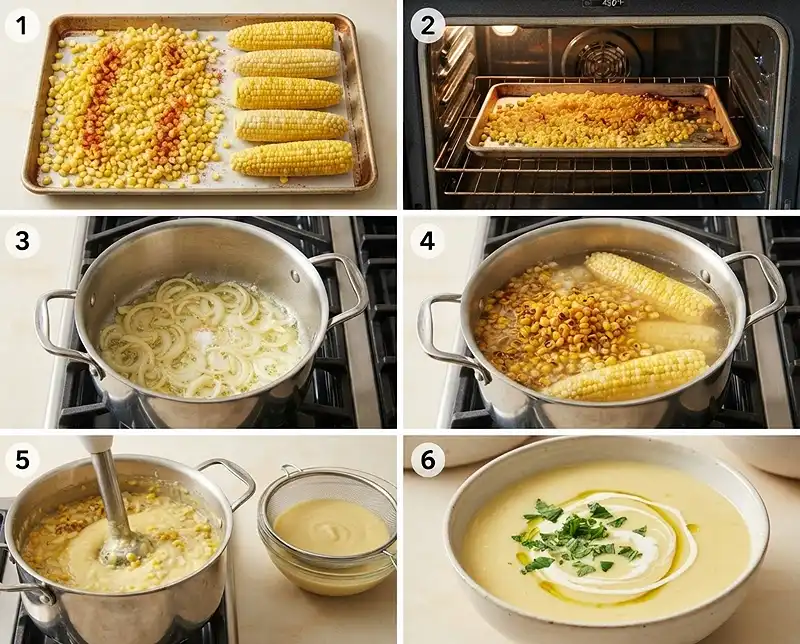
- Preheat and prep: Gather all the ingredients and place the oven rack in the center position. Preheat your oven to 450°F (230°C). If you’re using a convection oven, reduce the temperature to 425°F (215°C).
- Slice the corn: Stand each ear of sweet corn upright in a large bowl and use a sharp knife to slice downward, cutting the kernels off the cob. Work your way around each ear until all the kernels are removed. You should get about 3 to 4 cups of kernels total.
- Prepare for roasting: Spread the corn kernels on a rimmed baking sheet. Save those cobs—set them aside for later. They’re going into the soup.
- Season the corn: Drizzle 1 tablespoon of extra virgin olive oil over the kernels, then sprinkle with a pinch of kosher salt and the paprika. Use your hands to mix everything together, making sure the kernels are evenly coated, then spread them out in a single layer.
- Roast the corn: Place the baking sheet on the middle rack and roast for 15 minutes. The kernels should get slightly golden and caramelized in spots. You’ll smell that toasty sweetness—that’s the flavor you’re building. Remove from the oven and set aside.
- Sauté the onion: While the corn roasts, thinly slice half an onion against the grain. Heat the butter in a heavy-bottomed pot or Dutch oven over medium heat until melted and foamy.
- Cook the onion: Add the sliced onion and a pinch of kosher salt to the pot. Sauté, stirring occasionally, until the onion turns soft and translucent, about 5 minutes. You want it sweet and tender, not browned.
- Add the roasted corn: Scrape all the roasted corn kernels into the pot with the onion. Stir everything together and let it cook for a minute so the flavors start to meld.
- Add water and cobs: Pour in 3 cups of water, then nestle those reserved corn cobs right into the pot. Push them down to make sure they’re completely submerged. If they’re poking out, add a bit more water until they’re covered.
- Simmer the soup: Bring the mixture to a boil over medium heat. Once it’s boiling, cover the pot, reduce the heat to medium-low, and let it simmer for 15 minutes. Check occasionally and skim off any foam that rises to the surface with a spoon—this gives you a cleaner, more refined taste.
- Remove the cobs: After 15 minutes, carefully pull out the corn cobs with tongs and discard them. They’ve done their job and infused the soup with extra corn sweetness.
- Blend until smooth: Use an immersion blender to puree the soup right in the pot until it’s completely smooth and creamy. If you’re using a regular blender or food processor, let the soup cool for a few minutes first, work in batches, and cover the lid with a kitchen towel to prevent hot splatters.
- Strain for silkiness: For that authentic Japanese corn potage texture, strain the blended soup through a fine-mesh sieve set over a large bowl. Use a spatula or the back of a ladle to press the liquid through. This step removes any fiber or skin and gives you that signature velvety consistency.
- Add cream and milk: Pour the strained soup back into the pot. Add 1 cup of heavy cream and 1 cup of milk. You can adjust the ratio based on how rich you want it—more cream makes it richer, more milk makes it lighter.
- Simmer to concentrate: Bring the soup back to a gentle simmer over medium heat. Cook uncovered for 10 minutes or longer, stirring frequently to prevent scorching on the bottom. As the water evaporates, the flavors concentrate and the soup thickens slightly. Taste as you go.
- Season and garnish: Season the soup with kosher salt and freshly ground black pepper to taste. Start conservatively—you can always add more. Finely chop the parsley. Ladle the hot soup into bowls and drizzle each serving with a little heavy cream and olive oil, then sprinkle with fresh parsley.
The soup should coat the back of a spoon when it’s done. If it seems too thick, add a splash more milk. Too thin? Let it simmer a bit longer uncovered.

Expert Tips for Perfect Japanese Corn Potage
Use the freshest corn you can find. Corn starts converting its sugars to starch the moment it’s picked, so the fresher it is, the sweeter your soup will be. Farmers market corn picked that morning is ideal.
Don’t rush the roasting. Those caramelized bits on the corn kernels add a depth of flavor you just can’t get from boiling or steaming. Give the corn the full 15 minutes and let it get some color.
Keep the heat gentle during simmering. A rolling boil can make the soup taste bitter. You want a gentle simmer that coaxes out the corn’s natural sweetness.
Strain twice if you want it extra silky. Some restaurants strain the soup, then strain it again through cheesecloth. It’s a bit obsessive, but the result is incredibly refined.
Taste before you add salt at the end. The reduction concentrates the saltiness, so what seemed under-seasoned earlier might be perfect after the final simmer.
Serve with texture contrast. A drizzle of cream creates beautiful swirls, and a few crispy croutons or toasted corn kernels on top add a nice crunch.
Variations on Japanese Corn Potage
This base recipe is incredibly versatile. Once you’ve mastered the classic version, try these twists:
Miso corn potage: Whisk in 1 to 2 tablespoons of white or yellow miso paste after blending for an umami-rich version that’s popular in Japan. The miso adds complexity without overwhelming the corn.
Spicy version: Add a pinch of cayenne or a dash of hot sauce to the finished soup. A little heat plays beautifully with the sweetness of the corn.
Lighter version: Use all milk instead of cream, or substitute half-and-half. You’ll lose some richness but save calories, and the corn flavor still shines through.
Smoky corn potage: Use smoked paprika instead of regular paprika, or add a tiny bit of liquid smoke. This gives the soup a campfire quality that’s really comforting.
Herb variations: Try fresh thyme or basil instead of parsley. Basil is especially lovely in summer when both corn and basil are at their peak.
Bacon garnish: Crispy bacon crumbles on top add a salty, smoky crunch that turns this into a more substantial meal. Very non-traditional but absolutely delicious.
Troubleshooting Common Issues
My soup is too thin: Simmer it longer uncovered to evaporate more liquid, or make a quick slurry with 1 tablespoon cornstarch mixed with 2 tablespoons cold water, then whisk it into the simmering soup.
My soup is too thick: Just thin it out with more milk or cream, adding a quarter cup at a time until you reach your desired consistency. Reheat gently after adding liquid.
The soup tastes flat: You probably need more salt. Add it gradually and taste as you go. A squeeze of lemon juice can also brighten the flavors surprisingly well.
It’s not silky enough: You either need to blend longer or strain more thoroughly. Some blenders struggle with corn fiber—a high-powered blender works best. The straining step is also key for that Japanese corn soup texture.
The corn didn’t caramelize: Your oven might not have been hot enough, or the kernels were too crowded. Make sure they’re in a single layer with space between them, and give the oven time to fully preheat.
It scorched on the bottom: The heat was too high during the final simmer, or you didn’t stir frequently enough. Heavy cream can scorch easily, so keep the heat at medium or lower and stir every couple of minutes.
Storage and Reheating
This japanese corn potage keeps beautifully, which makes it perfect for meal prep or making ahead for a dinner party.
| Storage Method | Duration | Best Practices |
|---|---|---|
| Refrigerator | 3 days | Store in an airtight container; stir before reheating |
| Freezer | 2-3 weeks | Leave headspace in container; cream soups can separate slightly when frozen |
| Room temperature | 2 hours max | Dairy-based soups should not sit out long due to food safety concerns |
To reheat, warm the soup gently over medium-low heat, stirring frequently. Don’t let it boil, as high heat can cause the cream to separate or curdle. You might need to add a splash of milk or cream to restore the original consistency, since the soup thickens as it sits.
If you froze the soup and it looks a bit separated after thawing, don’t worry. Just give it a good whisk or hit it with the immersion blender again, and it’ll come back together beautifully.
According to the FDA’s food safety guidelines, cream-based soups should be cooled quickly and refrigerated within two hours of cooking to prevent bacterial growth.
Japanese Corn Potage FAQs
What is Japanese corn potage?
Japanese corn potage is a creamy, sweet corn soup that is popular in Japan. It has a smooth, velvety texture and is typically made from pureed sweet corn, milk or cream, butter, and seasonings. Unlike Western corn chowders, it is completely smooth with no chunky pieces and has a distinctly sweet flavor profile. It is commonly served hot and enjoyed as a comforting beverage or light meal, especially during colder months.
How is Japanese corn potage different from Western corn soup?
Japanese corn potage differs from Western corn soup in several ways. It has a much smoother, completely pureed consistency with no corn kernels or chunks, while Western corn soups often contain whole or creamed corn pieces. Japanese corn potage is notably sweeter and less savory than Western versions. It is also thinner in consistency and is often consumed as a drinkable soup or beverage rather than eaten with a spoon. The flavor profile emphasizes the natural sweetness of corn rather than savory herbs and spices.
Where can you find corn potage in Japan?
Corn potage is widely available throughout Japan in various forms. You can find it in vending machines as a hot canned beverage, particularly popular during autumn and winter. It is sold in convenience stores as instant soup packets or ready-to-drink cartons. Many supermarkets carry both instant powder versions and refrigerated or shelf-stable liquid versions. Restaurants, particularly family restaurants and cafes, often serve it as a soup course. It is also a popular item at school lunches across Japan.
Can you make Japanese corn potage at home easily?
Yes, Japanese corn potage is relatively simple to make at home. The basic method involves blending sweet corn (fresh, frozen, or canned) with milk, butter, and a small amount of sugar and salt until completely smooth. The mixture is then heated gently while stirring. Some recipes include onions sautéed in butter for added depth, and a small amount of cream or flour for extra richness and body. The key is to blend the soup very thoroughly to achieve the characteristic silky smooth texture, often straining it through a fine mesh sieve for the best results.
Why is corn potage so popular in Japan?
Corn potage became popular in Japan for several cultural and practical reasons. The sweet flavor appeals to Japanese taste preferences, which often favor slightly sweet savory foods. It emerged during the post-war period when Western foods were being adapted to Japanese tastes. The smooth, drinkable texture makes it convenient as a warm beverage from vending machines, fitting into Japanese drinking culture. Its comforting warmth and mild flavor make it appealing to all ages, including children. The convenience of instant versions and its availability in vending machines have helped maintain its popularity for decades.
More Delicious Recipes You’ll Love
If you enjoyed this japanese corn potage, you’ll definitely want to check out these other favorites from my kitchen:
Try my Berry Chantilly Cake for a stunning dessert that never fails to impress. The Heaven on Earth Cake is another crowd-pleaser, and if you’re looking for something quick and easy, my Viral Box Cake delivers maximum flavor with minimal effort.
Final Thoughts
This Japanese corn potage has become one of my favorite soups to make when corn is in season. Yes, it takes a bit more effort than opening a can, but the result is so far superior that it’s absolutely worth it. The roasting, the simmering with the cobs, the blending and straining—each step builds on the last to create something truly special.
Whether you serve it as an elegant starter for a dinner party or just make a big batch to enjoy throughout the week, this soup delivers comfort and sophistication in equal measure. The silky texture and concentrated corn flavor are like nothing else.
Give this recipe a try the next time you see beautiful fresh corn at the market. I’d love to hear how it turns out for you! Leave a comment below and let me know if you tried any of the variations, and don’t forget to share this recipe with anyone who loves a good bowl of soup.