Alfredo Cottage Cheese Sauce Recipe
This high-protein alfredo cottage cheese sauce recipe delivers creamy, restaurant-quality pasta in just 10 minutes with simple pantry ingredients.
I’ll be honest: the first time someone told me to put cottage cheese in my alfredo, I was skeptical. But after one taste of this silky, protein-packed sauce, I was completely sold. It’s become my go-to weeknight dinner when I want something comforting but also want to feel good about what I’m eating.
This cottage cheese alfredo sauce is one of those rare recipes that checks every box. It’s quick, it’s creamy, it doesn’t leave you feeling heavy, and it tastes absolutely delicious. Plus, you can blend it up while your pasta cooks, which means dinner is on the table in about the time it takes to boil noodles.
Table of Contents
What Makes This Cottage Cheese Alfredo Sauce Special
I have a feeling you’ll love what’s next. The Cottage Cheese Dips & Spreads favorites are packed with recipes that disappear fast at every gathering. Go check them out before someone else snags them!
Traditional alfredo sauce is basically butter, heavy cream, and parmesan. It’s incredible, sure, but it’s also a one-way ticket to food coma territory. This version uses cottage cheese as the base, which gives you that same luxurious creaminess but with way more protein and significantly less heaviness.
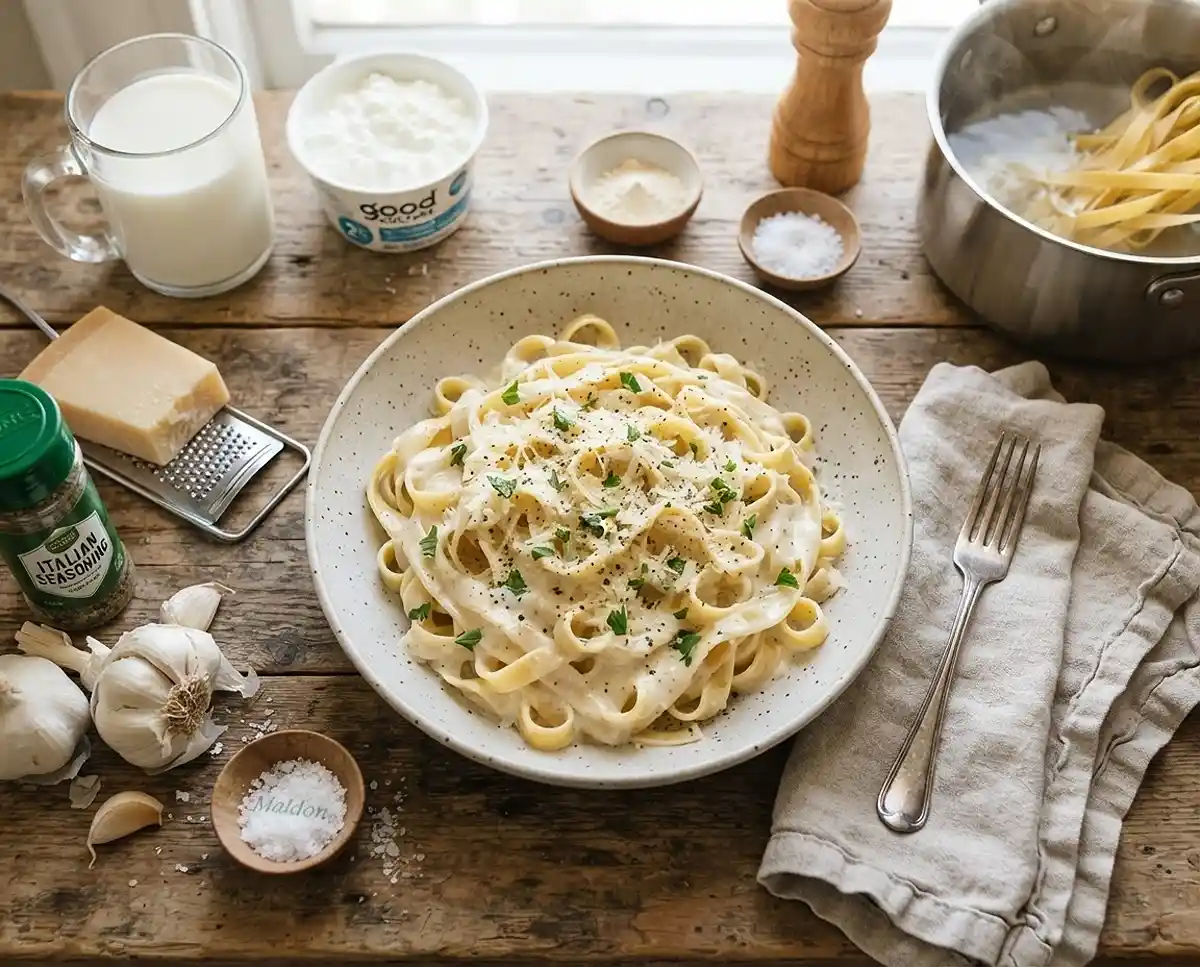
The magic happens in the blender. When you blend cottage cheese with milk, garlic, and parmesan, those curds completely disappear into this velvety smooth sauce. You’d never know it wasn’t made with cream. The arrowroot powder helps thicken everything up nicely, and the Italian seasoning adds that classic herb flavor you expect from good alfredo.
I use Good Culture 2% cottage cheese because I love the taste and texture, but honestly, any good quality cottage cheese will work. The key is blending it really well so you don’t have any lumps.
Why You’ll Love This Recipe
This isn’t just another “healthy swap” recipe that tastes like a compromise. This sauce genuinely tastes rich and indulgent while being packed with protein. Here’s why it’s earned a permanent spot in my dinner rotation:
It’s incredibly quick. From start to finish, you’re looking at about 10 minutes. The sauce blends in less than a minute, and then it’s just a quick toss with your cooked pasta. Perfect for those nights when you’re starving and need food now.
The protein content is impressive. Between the cottage cheese, milk (especially if you use Fairlife like I do), and parmesan, you’re getting a solid protein boost. This isn’t one of those pasta dishes that leaves you hungry an hour later.
It uses simple ingredients. No weird specialty items here. Just cottage cheese, milk, garlic, parmesan, and a few seasonings. You might already have everything in your fridge right now.
It’s naturally gluten-free friendly. Pair it with your favorite gluten-free pasta (I love Jovial Foods Tagliatelle), and you’ve got a meal that works for various dietary needs without sacrificing flavor.
Kids actually eat it. The sauce is mild and creamy, which means even picky eaters tend to like it. And you can feel good knowing they’re getting extra protein without realizing it.
Alfredo Cottage Cheese Sauce Recipe
Ingredients
Ingredients
- 1 cup cottage cheese I like to use Good Culture 2%
- 1 cup milk I used Fairlife milk for added protein, but almond milk works, too
- 2 cloves minced garlic
- ½ cup parmesan cheese
- 1 tsp arrowroot powder
- ½ tsp Italian seasoning
- ½ tsp salt
- ¼ tsp pepper
- 12 oz gluten free pasta I used Jovial Foods Tagliatelle
Instructions
- Cook pasta according to package directions. Drain and set aside. Meanwhile, combine all sauce ingredients in a high speed blender.
- Blend on high for 30-60 seconds until smooth and creamy.
- Pour the sauce into a large skillet.
- Add the cooked pasta. Turn on the heat (after adding the pasta) and set it to medium low. Toss the pasta with the sauce for 2-3 minutes. It will thicken as you toss it. Enjoy topped with fresh parsley!
Ingredients You’ll Need
This alfredo cottage cheese sauce recipe comes together with just a handful of everyday ingredients. The measurements matter here because the ratio of cottage cheese to milk is what gives you that perfect creamy consistency. Too much cottage cheese and it can taste tangy; too much milk and it won’t be thick enough.

| Ingredient | Amount | Notes |
|---|---|---|
| Cottage cheese | 1 cup | Good Culture 2% works great; full-fat is richer |
| Milk | 1 cup | Fairlife adds protein; almond milk works too |
| Garlic | 2 cloves, minced | Fresh garlic makes a big difference |
| Parmesan cheese | 1/2 cup | Freshly grated melts better than pre-shredded |
| Arrowroot powder | 1 tsp | Cornstarch works as a substitute |
| Italian seasoning | 1/2 tsp | A blend of oregano, basil, thyme |
| Salt | 1/2 tsp | Adjust to taste |
| Pepper | 1/4 tsp | Freshly ground is best |
| Gluten-free pasta | 12 oz | Jovial Foods Tagliatelle or your favorite |
A quick note on the cottage cheese: the brand and fat percentage do make a difference in flavor. I’ve tested this with several brands, and Good Culture consistently gives me the best results. The 2% strikes a nice balance between creamy and not-too-heavy, but if you want something even richer, go for full-fat. Low-fat or fat-free can work, but the sauce won’t be quite as luscious.
The milk you choose also affects both flavor and nutrition. Fairlife milk is ultra-filtered, so it has more protein and less sugar than regular milk, which is why I reach for it. But regular whole milk, 2%, or even unsweetened almond milk all work fine. Just know that almond milk will make the sauce slightly thinner and less protein-dense.
For the arrowroot powder, don’t skip it. This is your thickening agent, and it helps the sauce cling to your pasta instead of pooling at the bottom of the bowl. If you don’t have arrowroot, cornstarch is a fine substitute. They both work by absorbing liquid and creating that silky texture we’re after.
Step-by-Step Instructions
The beauty of this cottage cheese alfredo sauce is how straightforward it is. There’s no whisking over a hot stove, no worrying about the sauce breaking or curdling. Your blender does most of the work, and then it’s just a quick warm-through on the stove. Let me walk you through it.

- Cook the pasta according to package directions. Fill a large pot with water, salt it generously (the water should taste like the sea), and bring it to a rolling boil. Add your pasta and cook until al dente, which usually takes about 8-10 minutes depending on the shape. Don’t overcook it because it’ll continue cooking slightly when you toss it with the sauce. Drain the pasta in a colander and set it aside. Save about a cup of pasta water just in case you need to thin the sauce later.
- Combine all sauce ingredients in a high-speed blender. While your pasta is cooking, add the cottage cheese, milk, minced garlic, parmesan cheese, arrowroot powder, Italian seasoning, salt, and pepper to your blender. Make sure the lid is on tight because nobody wants cottage cheese on their ceiling.
- Blend on high for 30-60 seconds until completely smooth and creamy. Start on low speed if your blender has settings, then gradually increase to high. You want to blend long enough that all the cottage cheese curds completely break down and the sauce looks silky smooth. If you still see any lumps or texture, keep blending. A high-speed blender like a Vitamix or Blendtec works best, but a regular blender will get there with a little extra time. The sauce should look pale and creamy, almost like melted ice cream.
- Pour the sauce into a large skillet. Use a skillet that’s big enough to hold both the sauce and all your cooked pasta comfortably. You want room to toss everything together without making a mess. A 12-inch skillet usually works perfectly for this amount. Don’t turn on the heat yet.
- Add the cooked pasta to the skillet with the sauce. This is important: add the pasta before you turn on the heat. This prevents the sauce from cooking too fast and potentially getting grainy. Toss everything together with tongs or a pasta fork so the noodles are evenly coated.
- Turn the heat to medium-low and toss the pasta with the sauce for 2-3 minutes. Now you can turn on the burner. Keep the heat at medium-low because high heat can cause the proteins in the cheese to seize up and get stringy. As you toss and stir the pasta, you’ll notice the sauce starting to thicken. This is exactly what you want. The arrowroot powder activates with heat, and the sauce will cling beautifully to each noodle. If the sauce seems too thick, add a splash of that reserved pasta water. If it seems too thin, just keep tossing for another minute or two.
- Serve immediately topped with fresh parsley. Once the sauce has thickened to your liking and the pasta is heated through, turn off the heat and serve right away. A sprinkle of fresh parsley adds a nice pop of color and freshness. You can also add extra parmesan on top if you’re feeling fancy.
The whole process is genuinely that simple. The most time-consuming part is waiting for the pasta water to boil. Once you’ve got cooked pasta and blended sauce, you’re literally three minutes away from dinner.

Expert Tips for Perfect Results
Use a high-speed blender if you have one. The difference between a high-speed blender and a regular one really shows with cottage cheese. High-speed blenders break down those curds completely, giving you an ultra-smooth sauce. If you only have a regular blender, just blend a little longer and be patient. You’ll get there.
Don’t skip the fresh garlic. I know garlic powder is convenient, but fresh minced garlic makes this sauce taste so much better. It adds a bright, sharp flavor that garlic powder just can’t replicate. Two cloves gives you a nice garlicky flavor without being overwhelming, but if you’re a garlic lover like me, feel free to add three.
Grate your own parmesan. Pre-shredded parmesan often contains anti-caking agents that prevent it from melting smoothly. A block of real Parmigiano-Reggiano or Grana Padano that you grate yourself will melt into the sauce beautifully and taste noticeably better. It’s worth the extra two minutes of grating.
Adjust the consistency with pasta water. Pasta water is your secret weapon. It contains starch from the pasta, which helps the sauce cling better. If your sauce is too thick, add pasta water a tablespoon at a time until it’s perfect. If you add regular water, you’ll just dilute the flavor.
Taste and adjust the seasoning. Every brand of cottage cheese and parmesan has a different salt level, so you might need more or less salt than the recipe calls for. Always taste your sauce before serving and adjust with extra salt, pepper, or even a pinch of garlic powder if needed.
Serve it immediately. This sauce is best fresh. It will thicken as it sits, and while it’s still delicious as leftovers, it won’t be quite as silky as when you first make it. If you’re making this for meal prep, store the sauce separately and reheat it gently before tossing with freshly cooked pasta.
If you love finding creative ways to use cottage cheese, you might also enjoy my cottage cheese chocolate chip cookie dough recipe for a sweet treat.
Delicious Variations to Try
Garlic Lovers Alfredo: Double or even triple the garlic. You can also add a quarter teaspoon of garlic powder along with the fresh garlic for an extra punch. Some people also like to sauté minced garlic in a little olive oil before adding the sauce to the pan for even more garlic flavor.
Lemon Herb Version: Add the zest of one lemon and a tablespoon of fresh lemon juice to the blender. This brightens up the whole dish and adds a lovely freshness. Fresh basil or parsley blended right into the sauce is amazing too.
Spicy Alfredo: Add a pinch of red pepper flakes to the sauce, or stir in some calabrian chili paste for a spicy kick. You can also drizzle the finished dish with chili oil. It’s such a good contrast to the creamy sauce.
Veggie-Loaded: Toss in whatever vegetables you have on hand. Spinach, broccoli, cherry tomatoes, mushrooms, and peas all work beautifully. Add heartier veggies like broccoli to the pasta water during the last few minutes of cooking so everything finishes together.
Protein Power Bowl: Top your pasta with grilled chicken, shrimp, or even crispy chickpeas for extra protein. This turns it into a complete, well-rounded meal. My cottage cheese chicken wrap recipe uses similar high-protein principles if you’re looking for more meal ideas.
Truffle Alfredo: A drizzle of truffle oil at the end makes this feel incredibly fancy. Just a little goes a long way. You can also stir in some sautéed mushrooms for an earthy, umami-rich dish.
Cajun Style: Add a teaspoon of Cajun seasoning to the sauce and top with blackened chicken or shrimp. The spices add so much depth and turn this into something really special.
Troubleshooting Common Issues
My sauce is too tangy. This usually means the cottage cheese flavor is coming through too strongly. Next time, use a milder cottage cheese brand or increase the parmesan slightly to balance it out. Adding a pinch of sugar can also help mellow the tang without making the sauce taste sweet.
The sauce is lumpy. You didn’t blend it long enough. Put it back in the blender and give it another 30 seconds on high speed. If you’re using a less powerful blender, it might need a full two minutes to get completely smooth. Make sure you scrape down the sides halfway through if needed.
It’s too thin and won’t thicken. Make sure you’re heating it enough. The arrowroot powder needs heat to activate and thicken the sauce. Keep it on medium-low heat and keep tossing for another minute or two. Also, make sure you measured the arrowroot correctly. A full teaspoon is essential for the right consistency.
The sauce is too thick. This can happen if you cook it a little too long or if your cottage cheese was particularly thick. Just add pasta water a tablespoon at a time while tossing until it loosens up to your liking. The starch in the pasta water will help it stay creamy rather than watery.
It tastes bland. Cottage cheese and milk are both mild, so this sauce relies on the garlic, parmesan, and seasonings for flavor. Make sure you’re using good quality parmesan and fresh garlic. Also, don’t forget to taste and adjust your salt. A little extra salt can make all the flavors pop.
The sauce separated or looks grainy. This happens when the heat is too high. The proteins in the cheese can seize up and separate from the liquid. Unfortunately, once this happens, it’s hard to fix. Next time, keep your heat at medium-low and be patient. Gentle heat is key to a smooth, creamy sauce.
For more cottage cheese inspiration, check out my spinach cottage cheese oat pancakes recipe for a protein-packed breakfast option.
How to Store Alfredo Cottage Cheese Sauce
Leftover cottage cheese alfredo sauce keeps well, though it will thicken considerably as it sits in the fridge. The good news is it’s easy to revive and still tastes delicious the next day. Here’s everything you need to know about storing and reheating this sauce.
| Storage Method | Duration | Best Practices |
|---|---|---|
| Refrigerator (sauce only) | 3-4 days | Store in airtight container; reheat gently with added milk |
| Refrigerator (with pasta) | 3-4 days | Store in airtight container; pasta absorbs sauce over time |
| Freezer (sauce only) | Up to 2 months | Freeze in portions; thaw overnight in fridge before reheating |
| Freezer (with pasta) | Not recommended | Pasta texture suffers; sauce separates when thawed |
To store in the refrigerator: Let the pasta and sauce cool to room temperature, then transfer to an airtight container. Store in the fridge for up to four days. The sauce will thicken as it cools, which is totally normal. When you’re ready to eat it, reheat gently on the stovetop over low heat, adding a splash of milk or pasta water to loosen it back up. Stir frequently to prevent sticking.
To freeze the sauce: I recommend freezing the sauce separately from the pasta for best results. Pour cooled sauce into freezer-safe containers or bags, leaving a little room for expansion. Label with the date and freeze for up to two months. Thaw overnight in the refrigerator, then reheat gently on the stovetop, whisking in a little extra milk to bring back that creamy consistency.
Reheating tips: Whether from the fridge or freezer, always reheat this sauce over low to medium-low heat. High heat can cause the proteins to break down and the sauce to separate. Add milk or pasta water gradually while stirring until the sauce is smooth and heated through. A microwave works in a pinch, but use 30-second intervals at 50% power, stirring between each, and add liquid as needed. According to the USDA guidelines on food safety, always reheat leftovers to an internal temperature of 165°F to ensure they’re safe to eat.
I’ve found this sauce works wonderfully as a base for meal prep. Make a big batch on Sunday, store it separately, and cook fresh pasta throughout the week. It takes the same amount of time as opening a jar of store-bought sauce but tastes infinitely better.
My cottage cheese bread wrap recipe is another great meal prep option if you’re looking to use cottage cheese in different ways.
Alfredo Cottage Cheese Sauce Recipe FAQs
Can I use cottage cheese instead of heavy cream in Alfredo sauce?
Yes, cottage cheese is an excellent substitute for heavy cream in Alfredo sauce. Simply blend the cottage cheese until smooth to create a creamy base. This substitution significantly reduces calories and fat while adding protein. For best results, use full-fat cottage cheese and blend it with some pasta water to achieve the desired consistency. The taste will be slightly tangier but still delicious and creamy.
How do I make cottage cheese Alfredo sauce smooth and not lumpy?
To achieve a smooth cottage cheese Alfredo sauce, blend the cottage cheese in a high-speed blender or food processor for at least 1-2 minutes until completely smooth and creamy. Strain it through a fine-mesh sieve if any lumps remain. Adding a splash of milk or reserved pasta water while blending helps create a silkier texture. Heat the sauce gently over low heat while stirring constantly to maintain smoothness and prevent separation.
What ingredients do I need for a basic cottage cheese Alfredo sauce?
A basic cottage cheese Alfredo sauce requires cottage cheese as the base, grated Parmesan cheese for authentic Alfredo flavor, garlic for seasoning, salt and pepper to taste, and a small amount of butter or olive oil. Some recipes include milk or pasta water to thin the sauce to desired consistency. Optional additions include Italian herbs, nutmeg, or cream cheese for extra richness. The beauty of this recipe is its simplicity with just a handful of ingredients.
How long does cottage cheese Alfredo sauce last in the refrigerator?
Cottage cheese Alfredo sauce will last 3-4 days when stored properly in an airtight container in the refrigerator. Make sure to cool the sauce completely before storing. When reheating, add a splash of milk or pasta water and warm gently over low heat, stirring frequently to restore the creamy consistency. The sauce may thicken when cold, which is normal. Do not freeze this sauce as the cottage cheese may separate and become grainy when thawed.
Is cottage cheese Alfredo sauce healthy compared to traditional Alfredo?
Yes, cottage cheese Alfredo sauce is significantly healthier than traditional Alfredo sauce. It contains much less fat and calories since it replaces heavy cream and excessive butter with cottage cheese. Cottage cheese is high in protein, providing around 12-15 grams per half cup, and contains calcium and other nutrients. This version typically has about half the calories of traditional Alfredo while still delivering a creamy, satisfying texture. It’s an excellent choice for those watching their calorie intake or seeking more protein in their diet.
Final Thoughts on This Cottage Cheese Alfredo Recipe
This alfredo cottage cheese sauce recipe has honestly changed how I think about weeknight pasta. It’s proof that you don’t have to choose between food that tastes good and food that makes you feel good. You can have both, and it only takes ten minutes to pull together.
The first time I made this, I was just looking for a way to sneak more protein into dinner. What I found was a sauce that my whole family loves, that happens to be packed with nutrition, and that I actually look forward to making. There’s something satisfying about blending up this silky sauce and watching it come together so effortlessly.
Whether you’re trying to eat more protein, looking for a lighter take on alfredo, or just want a really quick dinner that doesn’t taste like a shortcut, this recipe delivers. And once you’ve mastered the basic version, the variations are endless. I’ve made this with roasted vegetables, with shrimp, with extra garlic, with lemon and herbs, and every version has been delicious.
Give this cottage cheese alfredo sauce a try this week. I think you’ll be surprised at just how creamy and satisfying it is, and how quickly it becomes one of your go-to recipes. Let me know in the comments how it turns out for you and what variations you try. Happy cooking!