Homemade Pasta Sauce Recipe
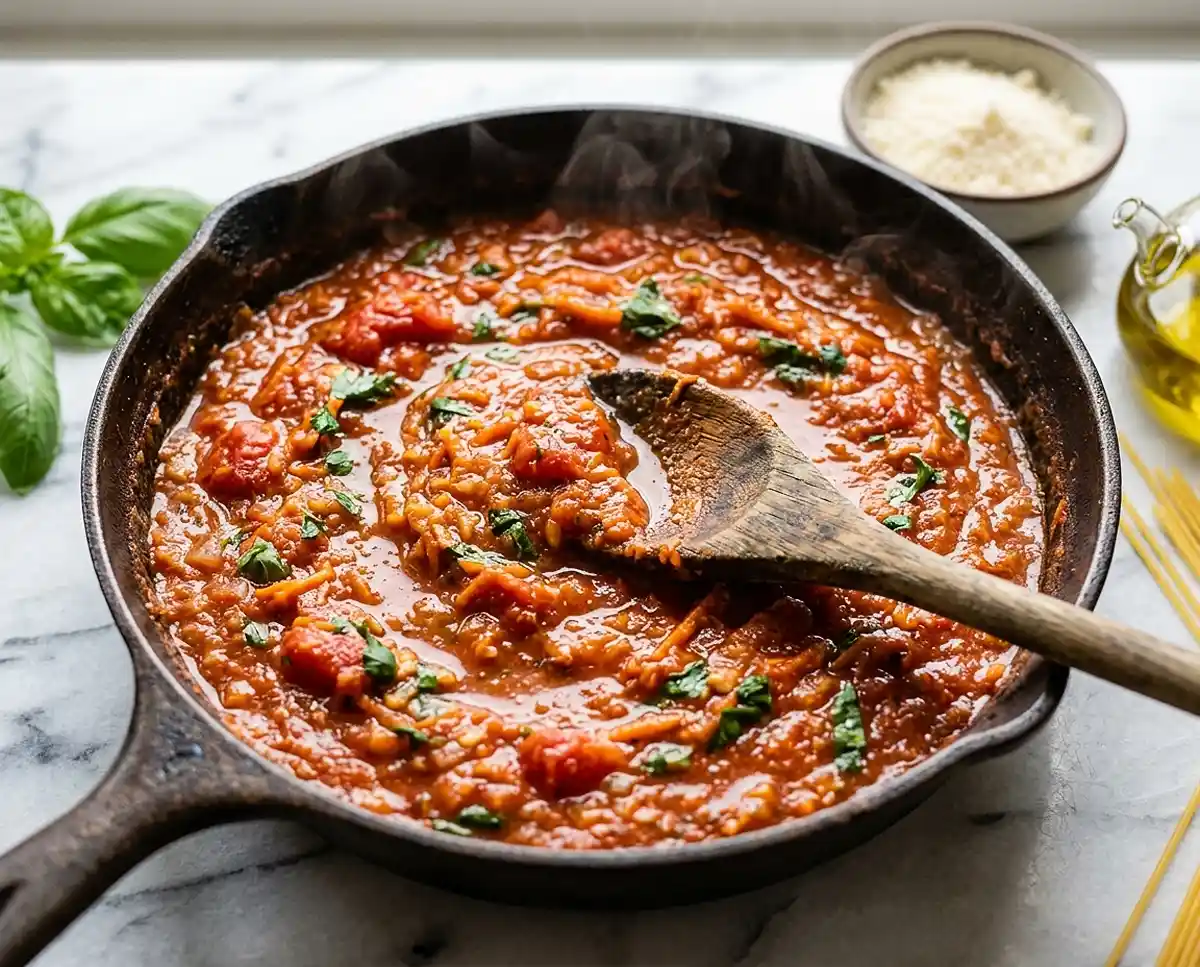
A simple, flavor-packed tomato sauce made with olive oil, aromatics, and fresh herbs that tastes better than anything from a jar—and it’s ready in about 30 minutes.
I’ll be honest: once I learned how to make homemade pasta sauce, I stopped buying jarred versions altogether. There’s something about the way fresh garlic and herbs bloom in olive oil, the way grated carrots add a subtle sweetness that balances the acidity of tomatoes, and the way your kitchen smells when it all simmers together. It’s not fancy cooking—it’s just real ingredients treated right. And the best part? This sauce comes together faster than waiting for delivery.
Table of Contents
Why This Homemade Pasta Sauce Is a Game-Changer
This isn’t one of those sauces that takes all day or requires exotic ingredients. It’s built on pantry staples and a handful of fresh herbs, but the flavor is deep, balanced, and far more vibrant than anything you’d twist open from a jar. The secret weapon here is the finely grated carrot—it melts into the sauce and adds a natural sweetness that rounds out the tomatoes without any added sugar. You get a sauce that tastes like it simmered for hours, but really only needed about twenty minutes on the stove.
It’s also incredibly flexible. You can keep it simple for a weeknight dinner, or dress it up with meatballs, sausage, or roasted vegetables. I’ve tossed it with everything from spaghetti to penne, spooned it over chicken, and even used it as a pizza base. Once you see how easy it is to make your own sauce, you’ll wonder why you ever settled for store-bought.
What You’ll Love About This Easy Homemade Spaghetti Sauce Recipe
First, it’s fast. You can have this sauce ready in the time it takes to boil water and cook your pasta. Second, it tastes fresh—like actual tomatoes and herbs, not like something that’s been sitting on a shelf for months. Third, you control the seasoning, the texture, and the heat level. Want it spicier? Add more red pepper flakes. Prefer it smoother? Blend it. Like it chunky? Leave it as is.
The ingredient list is short and forgiving. No hunting down San Marzano tomatoes or fancy Italian imports (though if you have them, go ahead). A good can of crushed tomatoes, some olive oil, an onion, garlic, a couple of carrots, and fresh herbs are all you need. It’s the kind of recipe that makes you feel competent in the kitchen, even if you’re just getting started.
And if you’re meal prepping? This sauce freezes beautifully. Make a double batch, freeze half, and you’ve got a head start on next week’s dinner.
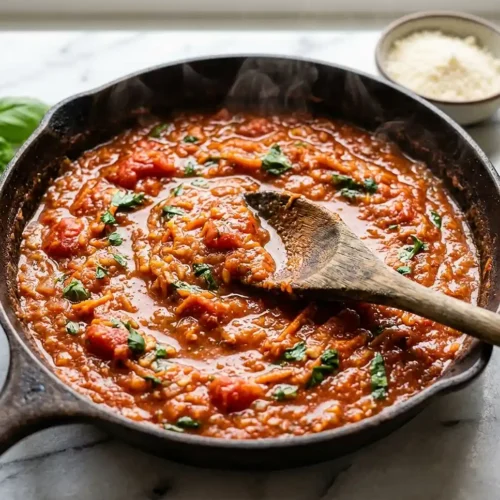
Homemade Pasta Sauce
Ingredients
Ingredients
- ¼ cup extra virgin olive oil I used Private Reserve Greek extra virgin olive oil
- 1 medium yellow onion grated
- 3 garlic cloves finely minced
- 2 carrots finely grated (use a food processor or a grater)
- 28 oz canned crushed tomatoes
- ½ cup water pasta cooking water, preferred
- Kosher salt and black pepper
- 1 tbsp dried oregano
- 1 tsp sweet Spanish paprika
- Pinch red pepper flakes optional
- Handful fresh basil about ½ cup packed, torn
- Handful fresh parsley about ½ cup packed, chopped
- ¾ lb to 1 lb of cooked pasta of your choice
Instructions
- In a large pan heat the extra virgin olive oil over medium heat until just shimmering. Add the onions, garlic, and finely grated carrots. Cook for about 5 minutes, stirring regularly until softened.
- Add the crushed tomatoes and about 1/2 cup water. Add a generous pinch of salt and pepper. Stir in oregano, paprika, crushed pepper flakes, if using. Finally, stir in the fresh basil and parsley.
- Bring the sauce to a boil, then turn heat to low. Cover and let simmer for about 15 to 20 minutes. Check partway through, and if you feel the sauce is too thick, you can add a bit more water (preferably some of your pasta cooking water). When sauce is ready, throw in more fresh basil, if you like.
- If serving for dinner, add cooked pasta of your choice to the sauce. Mix to combine and let the pasta cook in the sauce over low heat for about 5 minutes.
Ingredients You’ll Need to Make Homemade Pasta Sauce
Here’s everything you’ll need to make this simple, delicious sauce. Most of these ingredients are probably already in your kitchen, and the fresh herbs are easy to find at any grocery store.
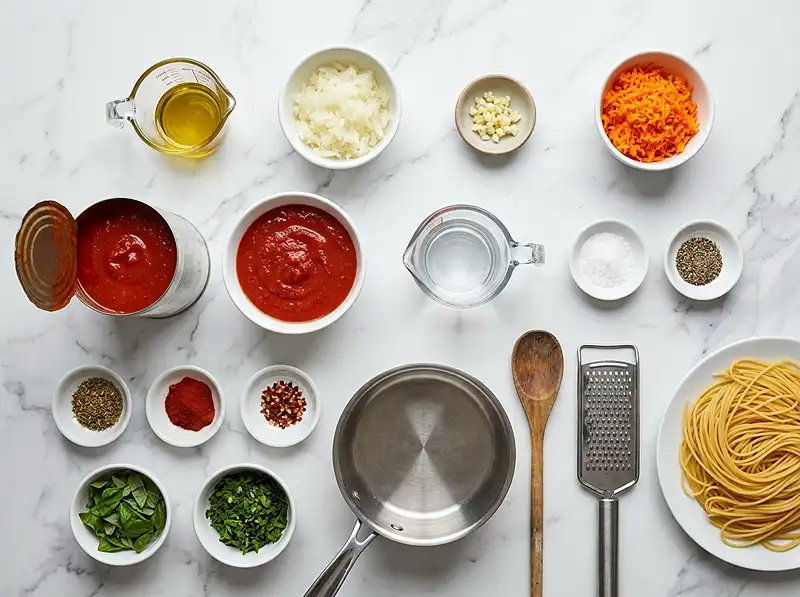
| Ingredient | Quantity | Notes |
|---|---|---|
| Extra virgin olive oil | 1/4 cup | Use a good quality oil—it’s the flavor base of the sauce |
| Yellow onion | 1 medium, grated | Grating helps it melt into the sauce |
| Garlic cloves | 3, finely minced | Fresh garlic is key here |
| Carrots | 2, finely grated | Adds natural sweetness and body |
| Canned crushed tomatoes | 28 oz | Use a quality brand—it makes a difference |
| Water | 1/2 cup | Pasta cooking water preferred for starch |
| Kosher salt and black pepper | To taste | Season generously |
| Dried oregano | 1 tbsp | Classic Italian herb flavor |
| Sweet Spanish paprika | 1 tsp | Adds warmth and depth |
| Red pepper flakes | Pinch, optional | For a gentle kick |
| Fresh basil | 1/2 cup packed, torn | Brightens the whole sauce |
| Fresh parsley | 1/2 cup packed, chopped | Adds fresh, herbal notes |
| Cooked pasta | 3/4 to 1 lb | Any shape you like |
The olive oil you choose really does matter here. Since it’s the foundation of the sauce, a fruity, peppery extra virgin olive oil will give you a much richer flavor than a bland, neutral one. I used Private Reserve Greek extra virgin olive oil, which has a lovely, robust flavor that holds up beautifully when heated.
Grating the onion and carrots might seem fussy, but it’s worth it. They practically dissolve into the sauce, creating a silky texture and a sweetness that balances the acidity of the tomatoes. If you have a food processor, it takes about thirty seconds. If not, a box grater works just fine.
Fresh herbs are non-negotiable in my book. Dried oregano gives you that classic Italian backbone, but the fresh basil and parsley at the end are what make this sauce taste alive. Don’t skip them, and don’t add them too early—they lose their brightness if they cook too long.
How to Make Homemade Pasta Sauce: Step-by-Step Instructions
This sauce comes together in one pan, and the method is straightforward. You’ll build flavor in layers, starting with the aromatics and finishing with the herbs. The key is letting everything soften and meld together without rushing it.
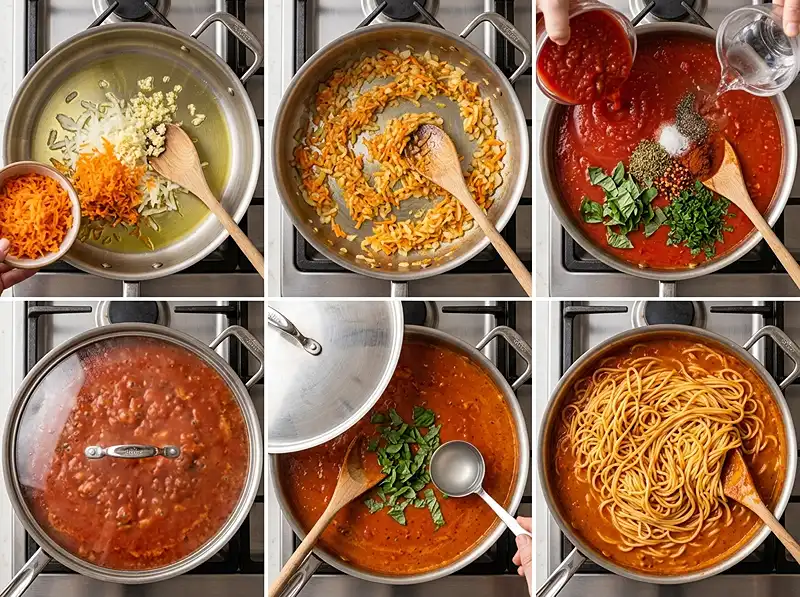
- Heat the olive oil. Set a large pan over medium heat and pour in the olive oil. Let it warm until it’s just shimmering—you’ll see the surface start to ripple slightly. You don’t want it smoking, just nicely heated so the aromatics sizzle gently when they hit the pan.
- Sauté the aromatics. Add the grated onion, minced garlic, and finely grated carrots to the pan. Stir them around so they’re coated in the oil, then let them cook for about 5 minutes, stirring regularly. You’ll notice the onion and carrot softening and the garlic becoming fragrant. This step builds the flavor foundation, so don’t rush it. If the garlic starts to brown too quickly, lower the heat a bit.
- Add the tomatoes and water. Pour in the crushed tomatoes and about half a cup of water—if you’ve got pasta cooking on another burner, use some of that starchy water. It helps the sauce cling to the pasta later. Add a generous pinch of salt and several grinds of black pepper. Stir everything together so it’s well combined.
- Season and add herbs. Stir in the dried oregano, sweet Spanish paprika, and red pepper flakes if you’re using them. Then tear in the fresh basil leaves and add the chopped parsley. Give it all a good stir so the herbs are distributed throughout the sauce.
- Simmer the sauce. Turn the heat up just until the sauce starts to bubble, then immediately lower it to a gentle simmer. Cover the pan and let it cook for 15 to 20 minutes. Check on it halfway through—if it looks too thick, add a splash more water. You want a sauce that’s rich and cohesive, not dry or pasty.
- Finish with more basil. Once the sauce has simmered and the flavors have melded, taste it and adjust the seasoning if needed. If you have extra fresh basil, tear in a few more leaves now for a burst of brightness.
- Toss with pasta. If you’re serving this right away, add your cooked pasta directly to the sauce. Stir it around so every piece is coated, then let it cook together over low heat for about 5 minutes. This lets the pasta absorb some of the sauce and really brings everything together. If you’re saving the sauce for later, you can stop after step six and store it separately.
The magic happens in that final simmer. The tomatoes lose their raw edge, the carrots and onions break down into the sauce, and the herbs infuse everything with their flavor. Your kitchen will smell absolutely incredible, and that’s how you know it’s working.
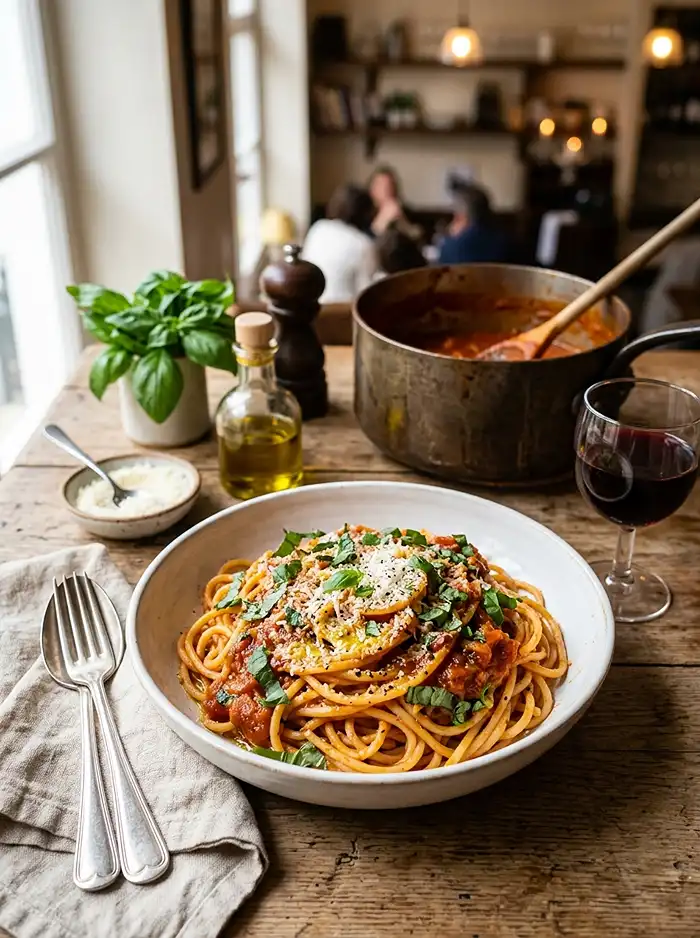
Expert Tips for the Best Homemade Pasta Sauce
Use quality canned tomatoes. Since tomatoes are the star here, a good brand makes a noticeable difference. Look for crushed tomatoes with minimal ingredients—just tomatoes, salt, and maybe a little citric acid. Avoid anything with added sugar or a bunch of preservatives.
Don’t skip the carrot. I know it sounds odd, but grated carrot is the secret to a naturally sweet, balanced sauce. It adds body and richness without any added sugar, and it completely melts into the sauce so no one will even know it’s there.
Save your pasta water. That starchy water is liquid gold. It helps loosen the sauce if it gets too thick, and the starch helps the sauce cling to the pasta. Always scoop out at least a cup before you drain your pasta.
Taste and adjust. Every brand of canned tomatoes is a little different in terms of acidity and saltiness. Taste your sauce before serving and adjust the seasoning. Sometimes I’ll add a pinch of sugar if the tomatoes are especially tart, or an extra pinch of salt if it tastes flat.
Let the pasta finish in the sauce. Don’t just dump sauce on drained pasta. Toss the pasta into the sauce and let it cook together for a few minutes. The pasta will soak up the flavors and the whole dish will be more cohesive.
Delicious Variations to Try
Add protein. Brown some Italian sausage, ground beef, or turkey before you add the aromatics, then proceed with the recipe. You can also nestle in some meatballs during the simmer.
Make it creamy. Stir in a few tablespoons of heavy cream or a dollop of ricotta at the end for a luxurious, creamy tomato sauce.
Go chunky. Swap the crushed tomatoes for diced tomatoes, or add some chopped bell peppers and zucchini with the aromatics for a chunky vegetable sauce.
Spice it up. If you like heat, double the red pepper flakes or add a finely chopped fresh chili pepper with the garlic.
Make it smoother. If you prefer a silky, smooth sauce, use an immersion blender to puree it after simmering. This is especially nice for picky eaters who don’t like visible vegetables.
Try different herbs. Swap the parsley for fresh thyme or add a few leaves of fresh sage for a different flavor profile. A sprig of rosemary simmered in the sauce and removed before serving adds a lovely, earthy note.
If you’re looking for more pasta inspiration, check out this easy garlic parmesan chicken pasta recipe or browse through all the recipes for more weeknight dinner ideas.
Troubleshooting Common Issues
My sauce is too acidic. Add a pinch of sugar or a grated carrot (if you didn’t already include one). A small amount of baking soda—just a pinch—can also neutralize acidity, but be careful not to add too much or it’ll taste soapy.
The sauce is too thick. Thin it out with pasta cooking water, a splash at a time, until it reaches your desired consistency. Regular water works too, but pasta water is better because of the starch.
It tastes flat. You probably need more salt. Tomato sauce needs a generous hand with seasoning. Taste it and keep adding salt in small pinches until the flavors pop. A squeeze of fresh lemon juice can also brighten things up.
The garlic burned. Burnt garlic tastes bitter and can ruin the whole sauce. If this happens early on, it’s best to start over. To prevent it, make sure your heat isn’t too high and add the garlic at the same time as the onion and carrot so it doesn’t cook alone.
It’s too watery. Let it simmer uncovered for a few extra minutes to reduce and thicken. You can also mash some of the tomatoes against the side of the pan to release more of their natural thickening power.
How to Store and Reheat Homemade Pasta Sauce
One of the best things about this easy homemade spaghetti sauce recipe is how well it keeps. You can make a big batch and use it all week, or freeze it for later when you need a fast, satisfying dinner.
| Storage Method | Duration | Instructions |
|---|---|---|
| Refrigerator | 4-5 days | Store in an airtight container; reheat gently on the stove or in the microwave |
| Freezer | 3-4 months | Cool completely, then freeze in portions in freezer-safe containers or bags |
| Room temperature | Not recommended | Tomato sauce should be refrigerated within 2 hours of cooking |
To reheat, I usually warm it gently on the stove over low heat, adding a splash of water or broth if it’s thickened up in the fridge. You can also microwave it in a covered dish, stirring every minute or so until it’s heated through. According to the FDA’s food safety guidelines, always reheat leftovers to at least 165°F to ensure they’re safe to eat.
If you’re freezing the sauce, let it cool completely first, then portion it into containers or freezer bags. I like to freeze it in two-cup portions—just the right amount for a quick weeknight dinner for two. Lay the bags flat in the freezer so they stack neatly and thaw faster.
To thaw, move the sauce to the fridge the night before you plan to use it, or defrost it gently in a pot on the stove over low heat. You can also microwave it on the defrost setting, stirring occasionally.
How to Make Homemade Pasta Sauce FAQs
What are the basic ingredients needed for homemade pasta sauce?
The basic ingredients for a classic homemade pasta sauce include canned or fresh tomatoes, olive oil, garlic, salt, and fresh basil. You can also add onions, oregano, red pepper flakes, and a pinch of sugar to balance the acidity of the tomatoes. For a richer sauce, some recipes include tomato paste, butter, or a splash of red wine.
How long does it take to make homemade pasta sauce?
A simple homemade pasta sauce can be ready in as little as 20-30 minutes if you’re making a quick fresh tomato sauce. For a deeper, more developed flavor, you can simmer your sauce for 1-2 hours on low heat. The longer cooking time allows the flavors to meld together and the sauce to thicken naturally.
Should I use fresh tomatoes or canned tomatoes for pasta sauce?
Both fresh and canned tomatoes work well for pasta sauce, depending on the season and your preference. Canned tomatoes, especially San Marzano varieties, are often preferred because they’re picked and canned at peak ripeness, providing consistent flavor year-round. Fresh tomatoes are best when they’re in season during summer months. If using fresh tomatoes, Roma or plum tomatoes are ideal due to their meaty texture and lower water content.
How can I thicken my homemade pasta sauce if it’s too watery?
To thicken a watery pasta sauce, continue simmering it uncovered over low to medium heat, stirring occasionally to allow excess moisture to evaporate. You can also add a tablespoon or two of tomato paste for both thickness and concentrated flavor. Another option is to remove some of the sauce, blend it until smooth, and stir it back in. Avoid adding flour or cornstarch as these can alter the authentic taste of your sauce.
How should I store homemade pasta sauce and how long does it last?
Homemade pasta sauce should be cooled completely before storing in airtight containers in the refrigerator, where it will last for 4-5 days. For longer storage, you can freeze the sauce in freezer-safe containers or zip-top bags for up to 3-4 months. Leave some space at the top of containers as the sauce will expand when frozen. Thaw frozen sauce overnight in the refrigerator or reheat directly from frozen on the stovetop over low heat.
Final Thoughts on Making Homemade Pasta Sauce
Learning how to make homemade pasta sauce is one of those small kitchen skills that pays off over and over again. It’s faster than you think, more flavorful than anything from a jar, and endlessly adaptable. Once you get the basic method down, you’ll start tweaking it to your taste—adding more garlic, trying different herbs, stirring in cream, or loading it up with vegetables.
This recipe is the one I come back to again and again. It’s comforting, reliable, and always delicious. Whether you’re tossing it with spaghetti for a quick weeknight dinner or serving it over pasta for a cozy weekend meal, it just works. And when someone asks how you made the sauce taste so good, you can just smile and say, “It’s homemade.”
Give this easy homemade spaghetti sauce recipe a try this week, and I bet you’ll never go back to jarred sauce again. If you’re looking for more simple, flavorful recipes, check out this quinoa pistachio cranberry salad or this refreshing mango and spinach smoothie for a lighter side or snack. Happy cooking!