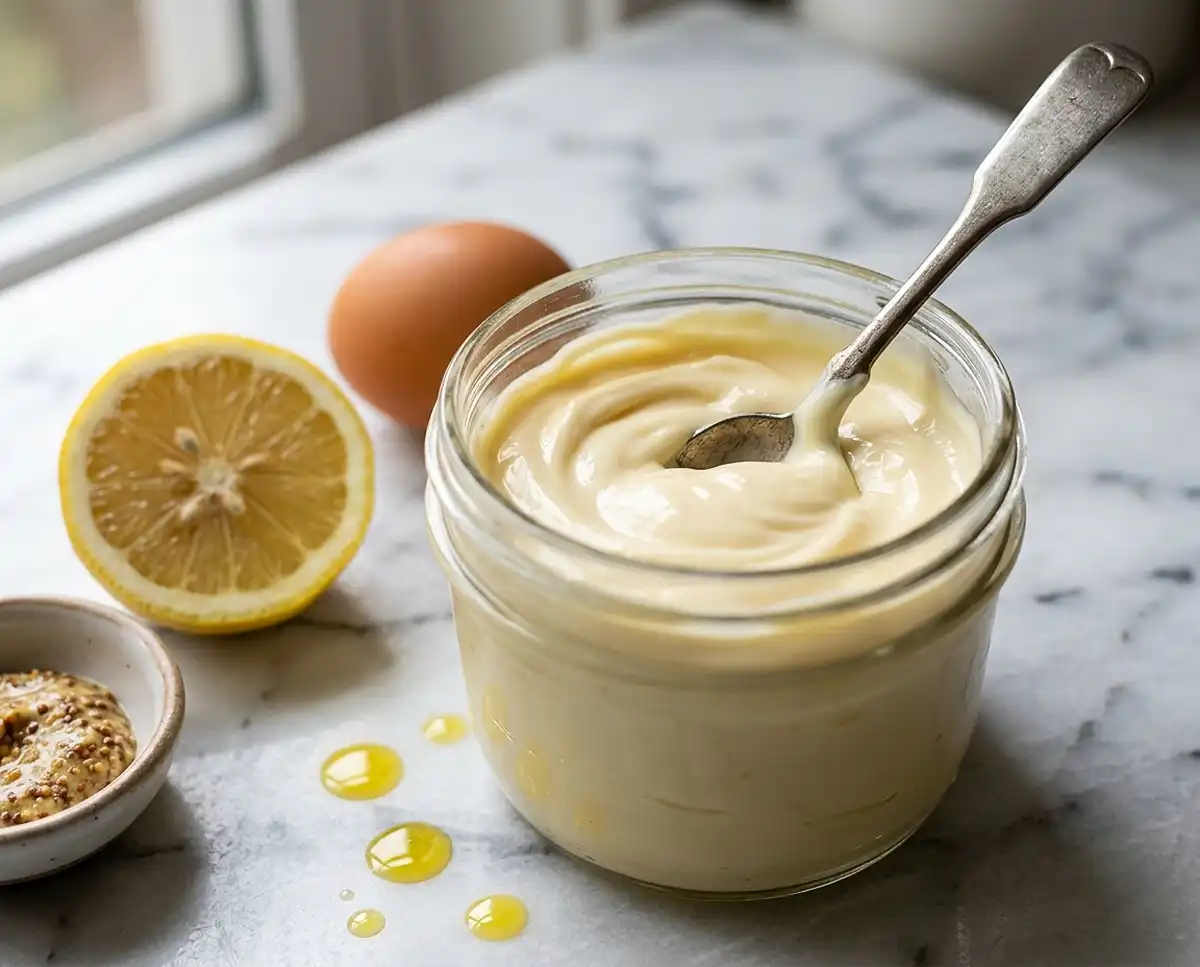
Homemade Mayonnaise Recipe
Making homemade mayonnaise takes just five minutes and transforms simple ingredients into something creamy, tangy, and infinitely better than store-bought.
I used to think making mayo at home was one of those chef-level skills I’d never master. Then I tried it with an immersion blender and realized it’s actually easier than running to the store. Once you taste the fresh, bright flavor of homemade mayo, those jarred versions feel flat and overly sweet. Plus, you control exactly what goes in, which means no weird preservatives or added sugar unless you want it.
This easy homemade mayonnaise recipe comes together in minutes with ingredients you probably already have in your kitchen. The trick is using the right technique with an immersion blender, which makes the whole process foolproof.
Table of Contents
Why You’ll Love This Recipe
This isn’t just mayo, it’s the mayo that makes you realize what you’ve been missing. Here’s why it works:
It’s ridiculously fast. We’re talking five minutes from start to finish, including cleanup. No whisking until your arm falls off, no elaborate techniques.
The flavor is bright and fresh in a way bottled mayo never achieves. You can taste the lemon juice, feel the slight tang from the mustard, and adjust everything to your exact preferences.
You control the ingredients completely. Use the best oil you have, adjust the salt, add more lemon if you love tang, or keep it mellow. It’s your kitchen, your rules.
The texture is incredibly creamy and smooth. When that immersion blender does its magic and the mixture suddenly transforms from liquid to thick, glossy mayo, it feels like actual kitchen sorcery.
It works with so many dishes. Spread it on sandwiches, mix it into salads, use it as a base for aioli or special sauces, or just appreciate having real, homemade mayo in your fridge.
Homemade Mayonnaise
Ingredients
Ingredients
- 1 large egg
- 1 Tbsp Dijon mustard
- 1 Tbsp white vinegar
- ½ Tbsp lemon juice plus more to taste
- ¼-½ tsp fine sea salt or added to taste
- ½ tsp sugar optional
- 1 cup extra light olive oil or other neutral oil (e.g., canola, avocado, or sunflower oil)
Instructions
- Combine Ingredients: In a tall container, such as a mason jar, add the egg, Dijon mustard, vinegar, lemon juice, and salt.
- Pour the oil over the top of the ingredients and let it rest for 15 seconds so the ingredients can settle.
- Insert the immersion blender into the container, touching the bottom. Start blending without moving the blender for about 10 seconds until the mixture begins to emulsify. Slowly lift and tilt the blender to incorporate the rest of the oil. Continue blending until thick and creamy.
- Taste the mayonnaise. Add more lemon juice, sugar, or salt to balance the flavors, if desired. Transfer the mayonnaise to a clean, airtight container. Refrigerate and use within 1 week.
Ingredients
The beauty of learning how to make homemade mayonnaise is realizing how few ingredients you actually need. Everything here plays a specific role in creating that signature creamy texture and balanced flavor.
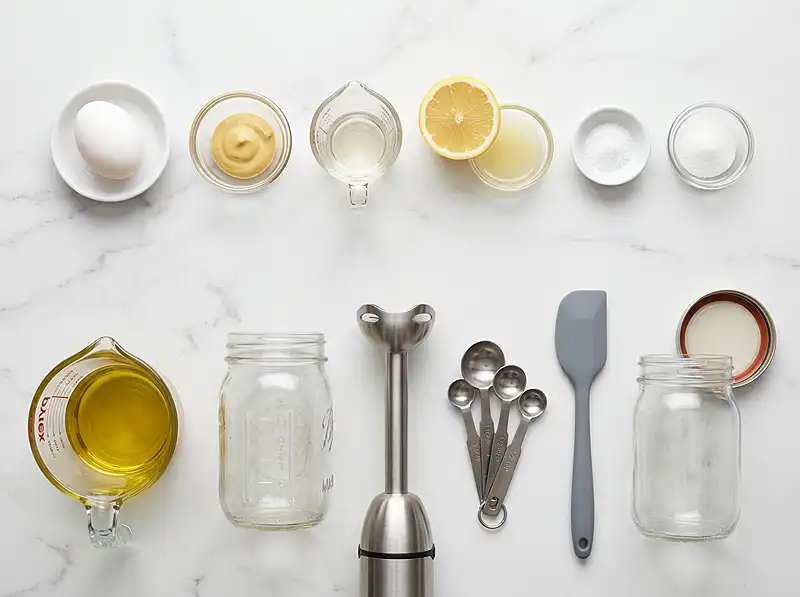
| Ingredient | Quantity | Notes |
|---|---|---|
| Large egg | 1 | Must be at room temperature for best emulsification |
| Dijon mustard | 1 Tbsp | Helps stabilize the emulsion and adds flavor |
| White vinegar | 1 Tbsp | Provides acidity and helps preserve the mayo |
| Lemon juice | ½ Tbsp (plus more to taste) | Fresh-squeezed is best for bright flavor |
| Fine sea salt | ¼-½ tsp | Start with less, you can always add more |
| Sugar | ½ tsp (optional) | Balances acidity if you find it too tangy |
| Extra light olive oil | 1 cup | Or any neutral oil like canola, avocado, or sunflower |
The egg acts as your emulsifier, which is a fancy way of saying it helps the oil and water-based ingredients blend together instead of separating. Room temperature eggs emulsify more reliably than cold ones, so if you remember, pull your egg out of the fridge about 30 minutes before you start.
Dijon mustard does double duty here. It adds a subtle depth of flavor that keeps the mayo from tasting flat, and it also contains natural emulsifiers that help stabilize everything. Don’t skip it, even if you’re not a huge mustard fan. You won’t taste mustard-forward flavor, just a well-rounded richness.
The oil choice matters more than you’d think. Extra virgin olive oil can taste too strong and sometimes bitter in mayo, so stick with extra light olive oil or another neutral option. I’ve used avocado oil with great results, and canola works perfectly if that’s what you have on hand.
Step-by-Step Instructions
The secret to perfect homemade mayonnaise is the immersion blender technique. It makes emulsification nearly foolproof, even if you’ve never made mayo before.
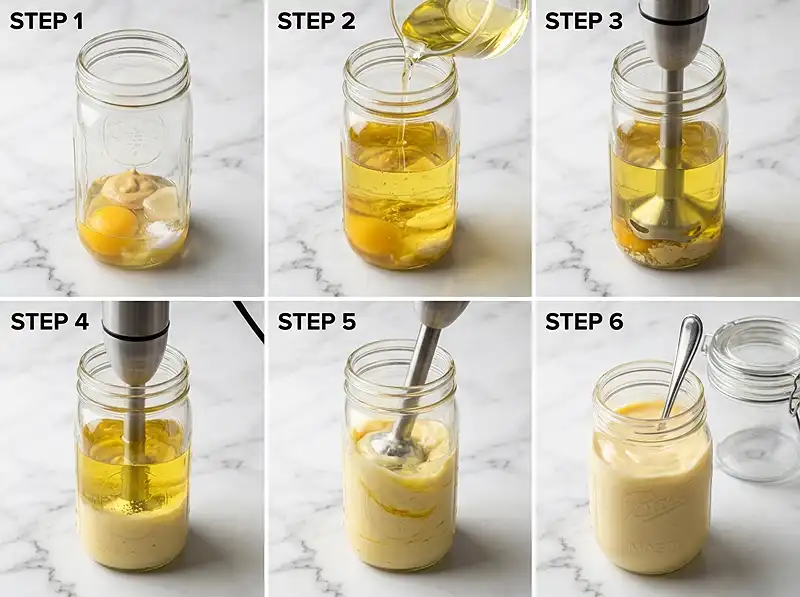
- Combine the base ingredients. Grab a tall, narrow container like a wide-mouth mason jar or the cup that came with your immersion blender. Add the egg, Dijon mustard, white vinegar, lemon juice, and salt. These are your flavor base and emulsifiers.
- Add the oil and let it settle. Pour the cup of oil right over the top of all the other ingredients. Don’t stir or mix anything yet. Just let the container sit undisturbed for about 15 seconds. This settling time lets the heavier ingredients sink to the bottom, which makes the blending process work much more smoothly.
- Start blending at the bottom. Insert your immersion blender all the way down so it’s touching the bottom of the container. Turn it on and keep it completely still for about 10 seconds. This is where the magic happens. You’ll see the mixture at the bottom start turning white and thick as the emulsion forms. It’s genuinely satisfying to watch.
- Slowly lift and incorporate. Once you have a thick, creamy base forming at the bottom, very slowly start lifting and tilting the blender. Move it up and down gently to pull the oil from the top down into the emulsified mixture. Keep blending until all the oil is incorporated and you have a thick, glossy mayonnaise. This usually takes another 20 to 30 seconds.
- Taste and adjust. This is my favorite part. Taste your mayo and see what it needs. Want more tang? Add another squeeze of lemon juice. Too sharp? A pinch of sugar mellows it out beautifully. Not enough salt? Add a little more. Blend briefly after each addition to incorporate. When you’re learning how to make homemade mayonnaise, this tasting step is where you make it truly yours.
- Store properly. Transfer your finished mayo to a clean, airtight container. A jar with a tight-sealing lid works perfectly. Pop it in the refrigerator and plan to use it within one week for the best quality and safety.
Expert Tips for Perfect Mayo Every Time
After making this easy homemade mayonnaise recipe dozens of times, I’ve picked up a few tricks that make the difference between good mayo and perfect mayo.
Temperature matters more than you think. Room temperature ingredients emulsify much more reliably than cold ones. If you forget to take your egg out ahead of time, place it in a bowl of warm (not hot) water for about five minutes.
The container width is crucial. You need a tall, narrow container so the immersion blender can reach all the ingredients properly. If the container is too wide, the blender won’t create enough force to emulsify everything. The cup that comes with most immersion blenders is perfectly sized.
Don’t rush the lifting motion. When you start moving the blender up and down, go slowly. If you lift too fast, you’ll break the emulsion and end up with a separated, oily mess instead of creamy mayo.
Use the freshest eggs you can find. Since you’re using a raw egg, quality and freshness matter for both flavor and food safety. Check the sell-by date and make sure your eggs have been properly refrigerated.
Clean equipment is essential. Any trace of water or grease on your blender or container can interfere with emulsification. Make sure everything is completely dry before you start.
Add flavor after the emulsion forms. Once you have your basic mayo made, you can blend in garlic for aioli, chipotle for smoky heat, herbs for green goddess dressing, or any other flavors you love. But get the emulsion solid first, then play with additions.
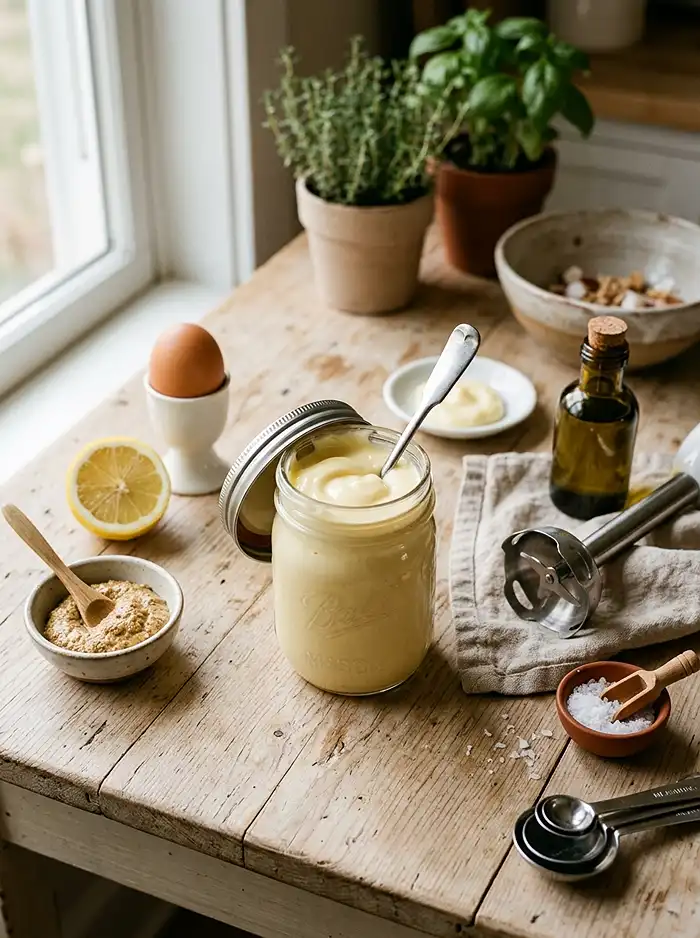
Variations to Try
Once you master the basic technique for how to make homemade mayonnaise, the flavor possibilities are endless. Here are my favorite variations:
Garlic Aioli: Add two cloves of minced fresh garlic to the finished mayo and blend briefly. Let it sit for 10 minutes so the garlic flavor mellows and infuses throughout. This is incredible on sandwiches or as a dip for fries.
Lemon Herb Mayo: Increase the lemon juice to one full tablespoon and add a tablespoon of chopped fresh dill, parsley, or chives. This is perfect for fish or chicken dishes.
Spicy Chipotle Mayo: Blend in one or two chipotle peppers in adobo sauce after the mayo emulsifies. Start with one and taste, then add more if you want extra heat. The smoky, spicy flavor is addictive on burgers or in wraps.
Japanese Kewpie-Style Mayo: Use rice vinegar instead of white vinegar, add an extra half tablespoon of sugar, and use only the egg yolk instead of the whole egg. The result is richer and slightly sweeter, perfect for sushi or rice bowls.
Avocado Oil Mayo: Swap the olive oil for avocado oil completely. It has a mild, buttery flavor and is packed with healthy fats. Some people find it even more neutral-tasting than light olive oil.
Troubleshooting Common Issues
Even with the immersion blender method, things can occasionally go wrong. Here’s how to fix the most common problems:
The mayo won’t thicken: This usually means the emulsion didn’t form properly. The most common cause is moving the blender too soon. Start over with a new egg in a clean container, then very slowly drizzle your broken mayo into it while blending. The new egg will re-emulsify everything.
It tastes too oily: You might have used an oil with too strong a flavor, or you simply need more acid to balance the richness. Add more lemon juice or vinegar, a teaspoon at a time, until it brightens up. A tiny pinch of salt can also help.
The texture is grainy: This can happen if your ingredients were too cold or if you blended too aggressively. The fix is gentle reblending with a small splash of room temperature water, which can smooth things out.
It separated during storage: Sometimes mayo separates in the fridge, especially if it gets too cold. Let it come to room temperature, then give it a quick stir or a very brief blend. Usually it comes right back together.
It’s too thick: Believe it or not, this can happen. If your mayo is more like butter than a creamy spread, blend in water one teaspoon at a time until you reach your desired consistency.
Storage
Proper storage is essential when you make homemade mayonnaise, since you’re working with raw eggs and no preservatives. The good news is that with the right handling, your mayo stays fresh and delicious for about a week.
| Storage Method | Duration | Notes |
|---|---|---|
| Refrigerator (airtight container) | Up to 1 week | Best quality within first 3-4 days |
| Freezer | Not recommended | Emulsion breaks when thawed |
Always store your mayo in a clean, airtight container in the refrigerator. Glass jars with tight-sealing lids work beautifully. Make sure to keep it in the main body of the fridge, not in the door, where temperatures fluctuate more.
Use a clean spoon every time you scoop out mayo. Introducing contaminants from used utensils or other foods can cause spoilage much faster. According to the FDA guidelines on safe food handling, homemade foods with raw eggs should be refrigerated immediately and used within a week.
Watch for signs that your mayo has gone bad. If it develops an off smell, changes color, shows any mold, or the texture becomes watery or separated in a way that won’t remix, toss it out. When in doubt, throw it out. Fresh mayo is so quick to make that it’s never worth the risk.
Don’t leave mayo out at room temperature for more than two hours, or one hour if your kitchen is particularly warm. It’s tempting to leave it on the counter during meal prep, but raw egg products need to stay cold to remain safe.
How to Make Homemade Mayonnaise FAQs
What ingredients do I need to make homemade mayonnaise?
To make basic homemade mayonnaise, you need egg yolks, neutral oil (such as vegetable or light olive oil), lemon juice or vinegar, salt, and optionally a small amount of Dijon mustard. The typical ratio is 1 egg yolk to about 3/4 to 1 cup of oil, with 1-2 teaspoons of lemon juice or vinegar and a pinch of salt.
Why did my mayonnaise break or separate?
Mayonnaise breaks when the emulsion fails, usually because the oil was added too quickly. The egg yolk can only absorb oil at a certain rate, so if you pour too fast, the mixture will separate into liquid and oil. Temperature differences between ingredients can also cause breaking. To fix broken mayonnaise, start with a fresh egg yolk in a clean bowl and slowly whisk in the broken mixture.
How long does homemade mayonnaise last in the refrigerator?
Homemade mayonnaise typically lasts 3 to 5 days when stored in an airtight container in the refrigerator. Because it contains raw egg yolks, it has a much shorter shelf life than store-bought versions which contain preservatives and pasteurized eggs. Always check for any off odors or discoloration before using, and discard if you notice any signs of spoilage.
Can I make mayonnaise without a whisk or blender?
While you can make mayonnaise by hand with a whisk, using an immersion blender, regular blender, or food processor makes the process much easier and faster. If whisking by hand, place a damp towel under your bowl to keep it steady, and be prepared to whisk vigorously for several minutes while adding oil in a very slow, steady stream. Hand-whisked mayonnaise takes more effort but is certainly possible.
What type of oil is best for making mayonnaise?
Neutral-flavored oils like canola, vegetable, grapeseed, or light olive oil work best for mayonnaise. Extra virgin olive oil can be used but often creates a bitter or too strongly flavored mayonnaise. Many cooks prefer using a blend, such as part neutral oil and part light olive oil, to achieve a balanced flavor. Avoid oils with strong flavors unless you specifically want that taste in your final product.
Make This Your New Kitchen Staple
Learning how to make homemade mayonnaise is one of those small kitchen skills that makes you feel ridiculously accomplished. It takes five minutes, uses ingredients you already have, and produces something genuinely better than what you can buy.
The first time you spread this fresh, tangy mayo on a sandwich or mix it into a salad, you’ll understand why it’s worth making. The flavor is brighter, the texture is creamier, and you know exactly what went into it.
This easy homemade mayonnaise recipe works perfectly as-is, but it’s also your starting point for countless variations. Make it your own with different acids, oils, and flavor additions. Check out more of my favorite recipes for ways to use your homemade mayo, from my quinoa salad to simple sandwiches alongside a refreshing mango smoothie.
Give it a try this week. Once you see how easy it is, I bet store-bought mayo starts looking a lot less appealing. Let me know how yours turns out and what flavors you add to make it your own!