German Potato Salad Recipe with Egg Recipe
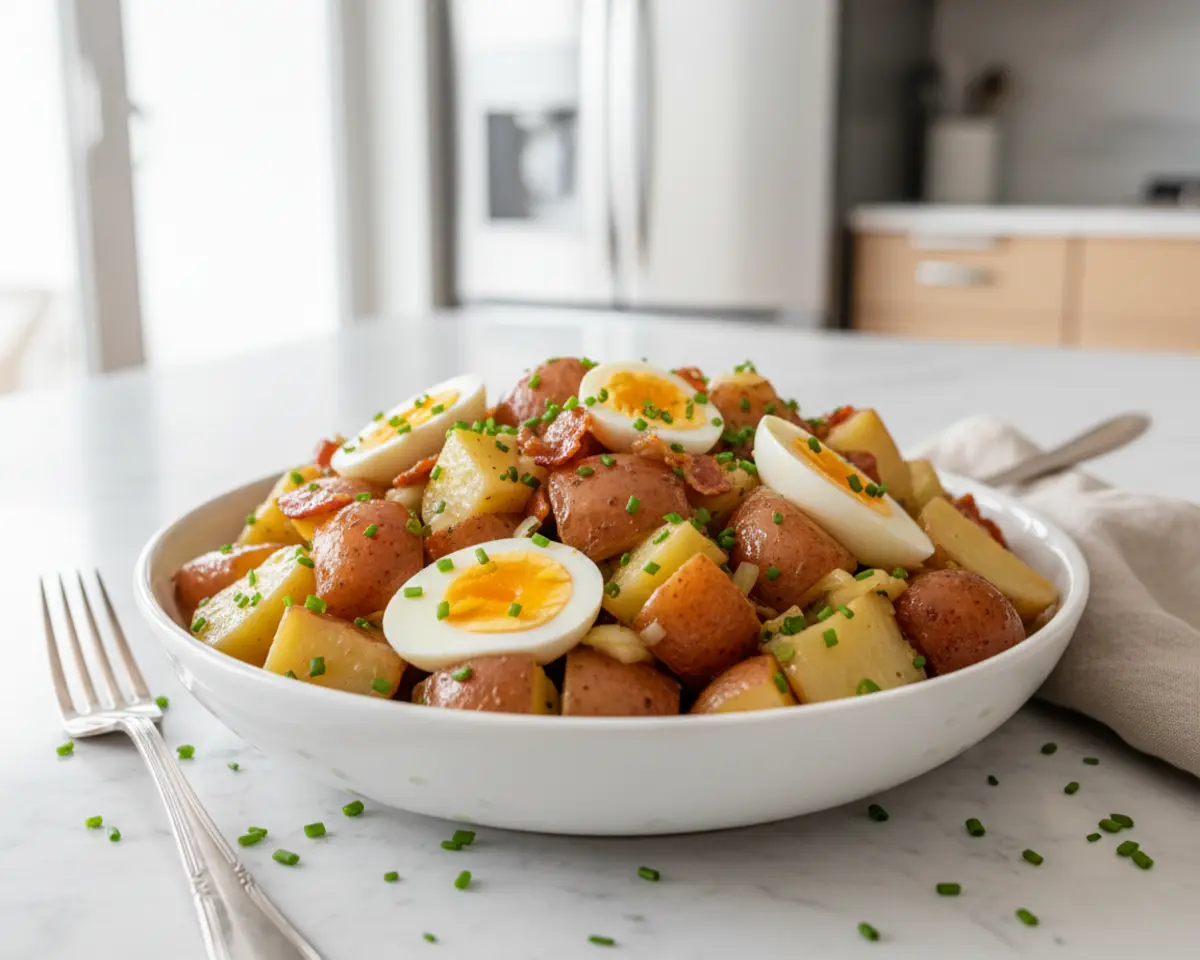
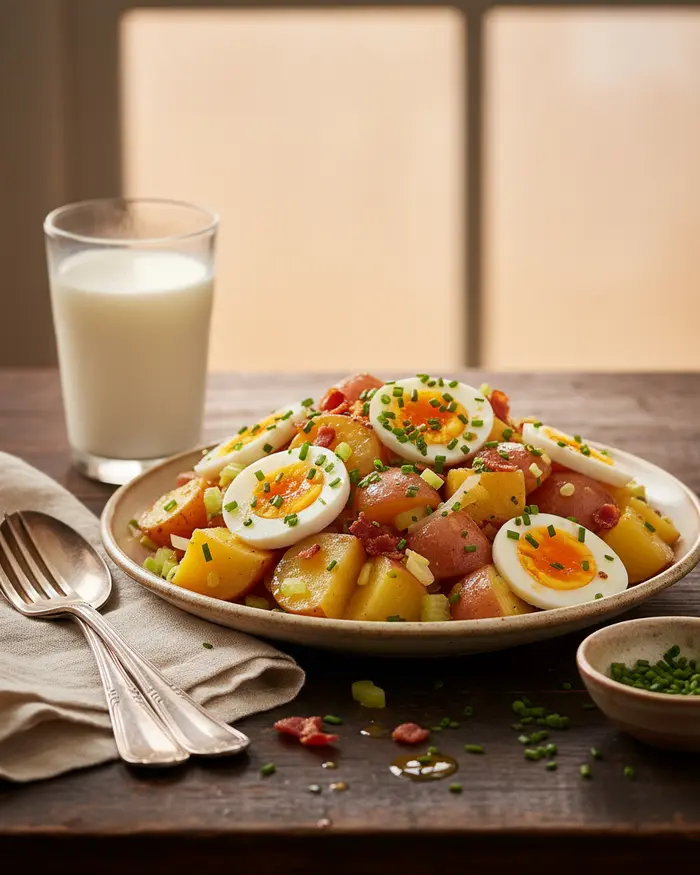
A warm, tangy, and irresistibly savory German potato salad recipe with egg that’s perfect for potlucks, picnics, or weeknight dinners—served warm or cold, with bacon and a sweet-sour dressing that makes every bite memorable.
I absolutely love German potato salad. There’s something about that warm, tangy dressing coating tender potatoes, with crispy bacon and creamy hard boiled eggs tucked throughout, that just hits differently than the mayo-heavy versions we’re used to seeing at summer cookouts.
The first time I made this, I was surprised by how simple it was—and how much flavor you get from just a handful of ingredients. No need to wait for it to chill overnight. You can serve it right away while it’s still warm, and honestly, that’s when it’s at its absolute best.
Table of Contents
Quick Recipe Snapshot
This German Potato Salad with Eggs is a tangy, bacon-studded side dish made with red potatoes, a warm vinegar-based dressing, and hard boiled eggs. Unlike traditional American potato salad, there’s no mayo here—just a sweet and sour dressing made right in the skillet with bacon fat, onions, celery, vinegar, and a touch of sugar. It’s hearty, flavorful, and can be served warm, at room temperature, or cold.
Why You’ll Love This German Potato Salad Recipe with Egg
This recipe checks all the boxes. It’s easy enough for a weeknight but impressive enough to bring to a potluck or backyard BBQ. The warm vinegar dressing soaks into the potatoes while they’re still hot, which means every bite is packed with flavor.
You don’t need any fancy equipment or hard-to-find ingredients. Just a couple of pots, a skillet, and about 30 minutes from start to finish. The bacon adds a smoky richness, the eggs bring creaminess, and the vinegar dressing ties it all together with that classic German tang.
Plus, it’s versatile. Serve it warm alongside grilled sausages, or make it ahead and serve it cold at your next picnic. Either way, it disappears fast.

German Potato Salad Recipe with Egg
Ingredients
Ingredients
- 6 large red potatoes (chopped into ¾ inch cubes)
- 2 eggs
- 4 slices bacon
- 1 yellow onion (finely diced)
- 2 stalks celery (finely diced)
- 1 tablespoon flour
- ½ cup white wine vinegar
- ¼ cup water
- ¼ cup granulated sugar
- ½ teaspoon dry mustard
- 3½ teaspoons kosher salt
- chopped fresh chives for garnish
Instructions
- Place the cubed potatoes in a large saucepan. Add cold water to the pan, covering the potatoes by one inch. Place the pan over high heat and add 2 teaspoons kosher salt to the water. Bring the mixture to a boil. Reduce to a simmer and let cook for 12–14 minutes, or until the potatoes are fork tender. Drain.
- Meanwhile, place the 2 eggs in a small saucepan. Add cold water to the pan, covering the eggs by one inch. Place the pan over high heat and bring to a boil. Once the water boils, cover the pan and turn off the heat. Let the eggs sit for 10 minutes. Drain the eggs and place in a bowl of ice water. Allow to cool. Peel the eggs by gently tapping the egg on the countertop until the shell is cracked all over. Slide your thumb under the cracked shell and gently remove all pieces of shell from the egg. Chop one egg and slice the other one thinly.
- While the potatoes and eggs are cooking, place the bacon in a large skillet over medium heat. Cook the bacon, flipping occasionally, until crisp. Remove the bacon and place on a paper towel lined plate. Set aside. Do not drain the bacon grease.
- Add the onion and celery to the bacon grease and cook until soft, about 4–5 minutes. Add 1 tablespoon flour and cook, stirring occasionally, for 1 minute. Add the white wine vinegar, water, sugar, dry mustard, and remaining 1½ teaspoons salt. Cook for 2–3 minutes until the mixture thickens slightly. Turn off the heat.
- Add the potatoes to the onion and vinegar mixture, and stir to combine.
- Crumble the bacon and stir half of the bacon into the potato mixture.
- Transfer the potato salad to a serving dish and top with the remaining bacon, sliced hard boiled egg, and chopped chives. Serve hot, at room temperature, or cold.
Ingredients You’ll Need
This German potato salad recipe with egg uses simple, pantry-friendly ingredients that come together to create something truly special. Here’s what you’ll need and why each one matters.
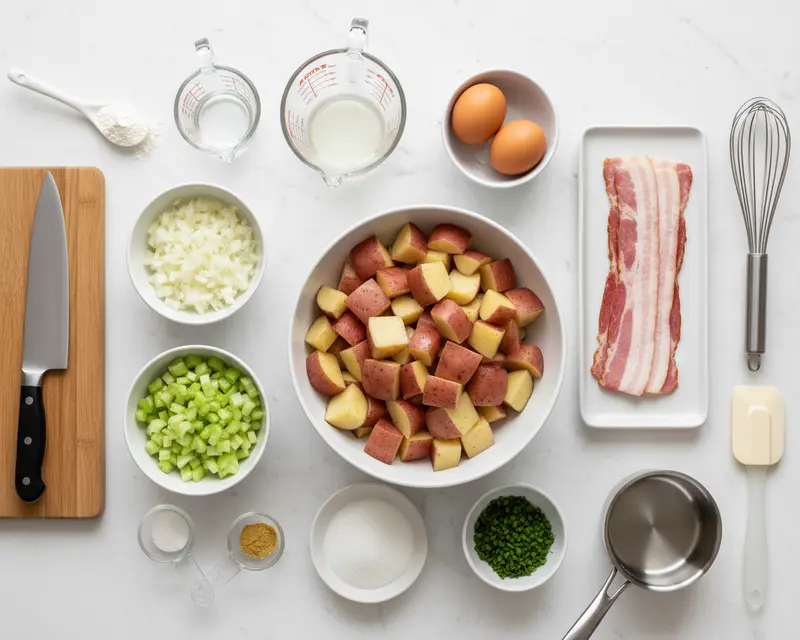
| Ingredient | Amount | Notes |
|---|---|---|
| Red potatoes | 6 large, chopped into ¾ inch cubes | Red potatoes hold their shape well and have a creamy texture |
| Eggs | 2 | One chopped, one sliced for garnish |
| Bacon | 4 slices | Provides smoky flavor and the fat base for the dressing |
| Yellow onion | 1, finely diced | Adds sweetness and depth to the dressing |
| Celery | 2 stalks, finely diced | Brings a subtle crunch and fresh flavor |
| Flour | 1 tablespoon | Thickens the dressing slightly |
| White wine vinegar | ½ cup | The tangy backbone of the dressing |
| Water | ¼ cup | Balances the acidity |
| Granulated sugar | ¼ cup | Sweetens the dressing for that classic sweet-sour balance |
| Dry mustard | ½ teaspoon | Adds a subtle kick and complexity |
| Kosher salt | 3½ teaspoons total | Divided between cooking the potatoes and the dressing |
| Fresh chives | For garnish | Optional but adds a pop of color and freshness |
Red potatoes are ideal here because they’re waxy and hold their shape after boiling. Russets tend to fall apart and get too starchy for this style of salad. If you can’t find red potatoes, Yukon Golds work beautifully too.
The bacon fat is essential—it’s what gives the dressing that rich, savory base. Don’t drain it after cooking the bacon. That golden, flavorful fat is where the magic happens.
White wine vinegar is traditional, but apple cider vinegar works in a pinch. Just know it’ll taste a bit fruitier and less sharp.
Step-by-Step Instructions
Making this German Potato Salad with Eggs is straightforward, but timing helps. You’ll be cooking the potatoes, eggs, and bacon all at once, so read through the steps first and you’ll breeze right through.
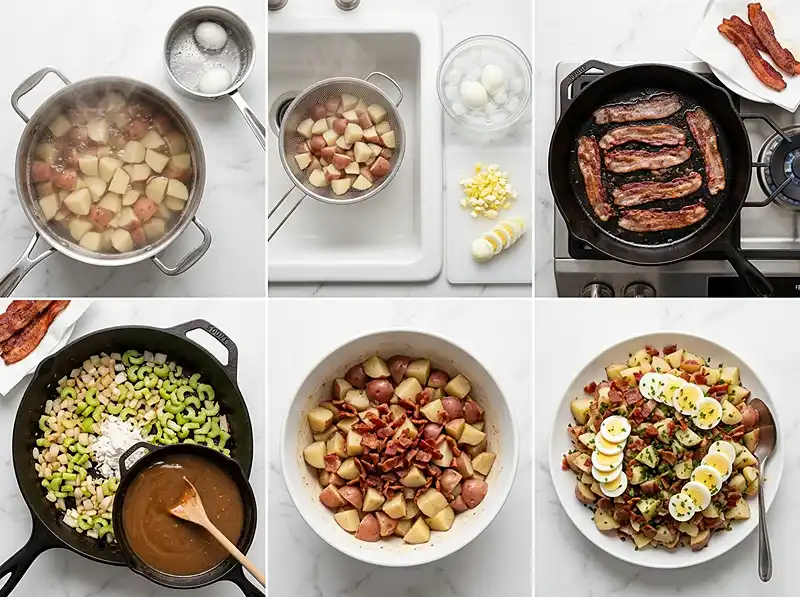
- Cook the potatoes. Place the cubed potatoes in a large saucepan and add cold water to cover them by about an inch. Add 2 teaspoons of kosher salt and bring everything to a boil over high heat. Once boiling, reduce the heat to a simmer and let the potatoes cook for 12 to 14 minutes, or until they’re fork tender. You want them cooked through but not mushy. Drain them well and set aside.
- Boil the eggs. While the potatoes are cooking, place the 2 eggs in a small saucepan and cover them with cold water by about an inch. Bring the water to a boil over high heat. As soon as it boils, cover the pan and turn off the heat. Let the eggs sit in the hot water for 10 minutes. This method gives you perfectly cooked eggs with creamy yolks every time. After 10 minutes, drain the eggs and place them in a bowl of ice water to stop the cooking. Once cool, peel them by gently tapping all over and sliding your thumb under the cracked shell. Chop one egg and slice the other thinly for garnish.
- Cook the bacon. While the potatoes and eggs are going, place the bacon in a large skillet over medium heat. Cook it, flipping occasionally, until it’s crisp and golden—about 6 to 8 minutes depending on thickness. Remove the bacon and let it drain on a paper towel lined plate, but leave the bacon grease in the skillet. That’s the base of your dressing.
- Sauté the vegetables. Add the diced onion and celery to the bacon grease in the skillet. Cook over medium heat, stirring occasionally, until they’re soft and translucent—about 4 to 5 minutes. They should smell sweet and fragrant.
- Make the dressing. Sprinkle the flour over the onions and celery and stir it in. Cook for about a minute, stirring constantly, to get rid of the raw flour taste. Then add the white wine vinegar, water, sugar, dry mustard, and the remaining 1½ teaspoons of salt. Stir everything together and let it cook for 2 to 3 minutes until the mixture thickens slightly. It should coat the back of a spoon. Turn off the heat.
- Combine the potatoes and dressing. Add the drained potatoes to the skillet with the warm dressing. Stir gently to coat every piece. The potatoes will absorb some of the dressing as they sit, which is exactly what you want.
- Add the bacon and eggs. Crumble the cooked bacon and stir half of it into the potato mixture along with the chopped egg. This distributes the smoky, savory flavors throughout.
- Serve and garnish. Transfer the potato salad to a serving dish and top with the remaining crumbled bacon, the sliced hard boiled egg, and a generous sprinkle of chopped fresh chives. Serve it warm, at room temperature, or cold—it’s delicious any way you go.
Expert Tips for the Best Results
Here are a few things I’ve learned from making this German potato salad recipe with egg more times than I can count.
Salt the potato water generously. This is your chance to season the potatoes from the inside out. The 2 teaspoons of salt in the cooking water makes a noticeable difference.
Don’t overcook the potatoes. You want them fork tender, not falling apart. Test them at the 12-minute mark. If a fork slides in easily but they still hold their shape, you’re good.
Add the potatoes to the dressing while they’re still warm. Warm potatoes absorb the vinegar dressing much better than cold ones. This is the secret to deeply flavorful German potato salad.
Taste and adjust. Everyone’s taste is different. If you like it tangier, add a splash more vinegar. If you prefer it sweeter, stir in a teaspoon or two of sugar. This is your potato salad—make it your own.
Use thick-cut bacon if you can. It crisps up beautifully and gives you more bacon fat to work with, which means more flavor in the dressing.
Let it sit for a few minutes before serving. Even if you’re serving it warm, letting it sit for 5 to 10 minutes allows the flavors to meld together beautifully.
Variations to Try
This recipe is a classic, but there are plenty of ways to make it your own.
Add fresh herbs. Dill, parsley, or tarragon all work beautifully in place of or alongside the chives. Dill is especially traditional in German cooking.
Swap the bacon for sausage. Diced cooked bratwurst or kielbasa adds a different kind of smokiness and makes the salad even heartier.
Make it vegetarian. Skip the bacon and use olive oil or butter to sauté the onions and celery. You’ll lose some of the smoky depth, but the tangy dressing still shines.
Add pickles or capers. A few tablespoons of chopped dill pickles or capers stirred in at the end adds a briny punch that pairs beautifully with the vinegar dressing.
Use Dijon mustard instead of dry mustard. Swap the dry mustard for a tablespoon of Dijon for a creamier, sharper flavor.
Throw in some greens. Stir in a handful of fresh spinach or arugula right before serving. The warmth of the potatoes will wilt the greens slightly and add a peppery bite.
If you’re looking for other creative salad ideas, check out this dense bean salad recipe or try the Mediterranean dense bean salad recipe for something protein-packed and hearty.
Troubleshooting Common Issues
Even simple recipes can have hiccups. Here’s how to fix the most common ones.
My potatoes are mushy. You probably cooked them a bit too long. Next time, check them at the 12-minute mark and drain them as soon as a fork slides in easily. Red potatoes should hold their shape even when fully cooked.
The dressing is too thin. Let it simmer a bit longer to thicken, or whisk in a tiny bit more flour. Just remember to cook the flour for at least a minute so it doesn’t taste raw.
The dressing is too thick. Thin it out with a tablespoon or two of water or vinegar. Stir it in while the dressing is still warm so it incorporates smoothly.
The salad tastes flat. You probably need more salt. Potatoes absorb a lot of seasoning, so don’t be shy. Taste and add a pinch at a time until the flavors pop.
The eggs are hard to peel. This usually happens with very fresh eggs. Older eggs peel more easily. If you’re struggling, peel them under running water—it helps loosen the membrane.
The bacon didn’t get crispy. Make sure your skillet is hot enough and don’t overcrowd the pan. If needed, cook the bacon in batches so each slice has room to crisp up.
Storage and Reheating
This German Potato Salad with Eggs keeps beautifully, which makes it perfect for meal prep or making ahead for gatherings.
| Storage Method | Duration | Notes |
|---|---|---|
| Refrigerator | Up to 4 days | Store in an airtight container |
| Freezer | Not recommended | Potatoes and eggs don’t freeze well |
| Room temperature | Up to 2 hours | Follow USDA food safety guidelines |
To store, transfer the potato salad to an airtight container and refrigerate within two hours of cooking. The flavors actually deepen overnight, so it’s even better the next day.
You can serve it cold straight from the fridge, or warm it gently in the microwave or on the stovetop. If reheating on the stove, add a splash of water or vinegar to loosen the dressing and prevent sticking.
According to the USDA guidelines on leftovers, cooked potato salad should not sit out at room temperature for more than two hours to prevent bacterial growth, especially in warm weather.
I don’t recommend freezing this salad. Potatoes and hard boiled eggs both get grainy and watery after freezing, and the texture just isn’t the same.
German Potato Salad Recipe with Egg FAQs
What makes German potato salad different from regular potato salad?
German potato salad is typically served warm and uses a tangy vinegar-based dressing instead of mayonnaise. It features bacon, onions, and a warm bacon fat vinaigrette. When eggs are added, they provide additional protein and richness. The potatoes are usually waxy varieties that hold their shape well, and the salad has a more savory, tangy flavor profile compared to creamy American-style potato salad.
How do you prepare the eggs for German potato salad?
For German potato salad with eggs, hard-boil the eggs by placing them in cold water, bringing to a boil, then simmering for 10-12 minutes. After cooling in ice water, peel and either slice or chop them. Some recipes call for chopping the eggs and mixing them throughout the salad, while others prefer slicing them and arranging them on top as a garnish. The eggs should be added after the warm dressing is mixed with the potatoes.
What type of potatoes work best for German potato salad?
Waxy potatoes are best for German potato salad because they hold their shape well after cooking and don’t become mushy. Recommended varieties include Yukon Gold, red potatoes, or fingerling potatoes. These potatoes have less starch than russets and maintain a firm texture when tossed with the warm vinegar dressing. Cut them into uniform pieces, about quarter-inch slices or bite-sized chunks, for even cooking and better flavor absorption.
Can German potato salad with egg be made ahead of time?
Yes, German potato salad with egg can be made several hours ahead or even the day before. The flavors actually improve as the salad sits and the potatoes absorb the dressing. Store it covered in the refrigerator, then reheat gently before serving, as German potato salad is traditionally served warm. You can reheat it in the microwave or in a covered dish in a low oven. If making ahead, consider adding the sliced eggs just before serving to maintain their appearance.
What ingredients go into the dressing for German potato salad?
The traditional German potato salad dressing is made from bacon drippings, apple cider vinegar or white vinegar, mustard (usually Dijon or whole grain), sugar, salt, and pepper. Chopped onions are typically cooked in the bacon fat until softened. Some recipes add beef or chicken broth to thin the dressing slightly. The dressing is poured warm over the sliced potatoes, allowing them to absorb the tangy, savory flavors. Fresh herbs like parsley are often added for brightness.
Final Thoughts
This German potato salad recipe with egg is one of those dishes that feels special but doesn’t require any fancy skills or ingredients. It’s tangy, savory, and full of texture—from the tender potatoes to the crispy bacon and creamy eggs. Whether you’re serving it at a summer cookout, a holiday dinner, or just a weeknight meal, it’s always a hit.
The best part? You can make it your own. Adjust the sweetness, add extra vinegar, throw in some fresh herbs, or swap the bacon for sausage. It’s flexible, forgiving, and always delicious.
Give this recipe a try and let me know how it turns out. I’d love to hear what you think—and if you make any fun variations, share them in the comments below!