Perfect Greek Yogurt Lemon Blueberry Loaf Recipe
This Greek Yogurt Lemon Blueberry Loaf is one of those recipes I turn to when I need something that feels special but doesn’t require a culinary degree to pull off.
Meta description: This Greek Yogurt Lemon Blueberry Loaf is moist, tangy, and bursting with berries. Simple ingredients, one bowl, and a zesty glaze make it irresistible.
I started making this loaf during the summer when I had way too many lemons and a carton of Greek yogurt that needed using. The result was so good that it’s now my go-to recipe whenever I want something that looks impressive but comes together without fuss. The tangy yogurt keeps everything tender, the lemon adds brightness, and those little bursts of blueberry throughout? Pure joy.
If you love baking with citrus and creamy ingredients, you might also enjoy this lemon curd blueberry loaf recipe or even this savory Greek lemon and rice soup recipe for a completely different take on lemon-forward cooking.
Table of Contents
What Makes This Greek Yogurt Lemon Blueberry Loaf Special
This isn’t your average quick bread. The Greek yogurt does something magical to the crumb—it makes it incredibly moist without being heavy or dense. You get that perfect balance of tender cake texture with enough structure to hold up to a thick slice.
The lemon works double duty here. First, the zest goes right into the batter, giving you those tiny pops of citrus oil throughout every bite. Then you’ve got a lemon syrup that soaks into the warm cake, followed by a glossy lemon glaze on top. It’s a full lemon experience without being overwhelmingly tart.
And those blueberries? Tossing them in a bit of flour before folding them in is an old baker’s trick that actually works. It helps them stay suspended in the batter instead of sinking straight to the bottom. You end up with berries distributed throughout the loaf, not just sitting in a sad little puddle at the base.
Why You’ll Love This Lemon Blueberry Loaf
This recipe checks all the boxes for a crowd-pleaser that’s still easy enough for a weeknight bake. Here’s what makes it a keeper:
The texture is absolutely perfect—moist enough that it doesn’t need butter, but not so wet that it falls apart when you slice it. That Greek yogurt brings a slight tang that plays beautifully against the sweetness of the glaze.
You probably have most of these ingredients in your pantry already. No specialty flours, no hard-to-find extracts, just straightforward baking staples plus fresh lemons and blueberries.
It’s flexible with fresh or frozen berries. I’ve made this in January with frozen blueberries and in July with fresh ones from the farmers market, and both versions turned out beautifully. No need to thaw frozen berries either—just toss them straight from the freezer into that flour coating.
The triple lemon treatment (zest, syrup, and glaze) means you get layers of flavor that build on each other. The zest is bright and aromatic, the syrup adds moisture and a subtle sweetness, and the glaze gives you that pretty finish with an extra punch of citrus.
It keeps well for days. Thanks to the yogurt, this loaf stays tender even after sitting on the counter for a few days. Actually, some people say it’s even better on day two once all those flavors have had time to meld together.

Greek Yogurt Lemon Blueberry Loaf
Ingredients
Loaf
- 1½ cups all-purpose flour
- 2 teaspoons baking powder
- ½ teaspoon salt
- 1 cup Greek yogurt
- 1 cup sugar
- 3 large eggs
- 2 tablespoons lemon zest
- 1 teaspoon vanilla extract
- ½ cup vegetable oil
- 1½ cups blueberries fresh or frozen
- 1 tablespoon all-purpose flour
Lemon Syrup
- ⅓ cup lemon juice freshly squeezed
- 1 tablespoon sugar
Lemon Glaze
- 1 cup icing sugar
- ¼ cup lemon juice freshly squeezed
- 1 teaspoon vanilla extract
- milk if needed to thin out the glaze
Instructions
- Preheat the oven to 350℉. Grease an 8.5×4.5×2.5 inch loaf pan with butter or cooking spray then flour it.
- In a large bowl whisk together the 1½ cups of flour, baking powder and salt. Set aside. In another bowl, whisk together the yogurt, sugar, eggs, lemon zest, vanilla extract and vegetable oil.
- Add the wet ingredients to the dry ingredients and whisk until combined.
- In another small bowl mix together the blueberries with the 1 tbsp of flour. This will prevent the blueberries from sinking to the bottom of the loaf. Gently fold the blueberries into the batter.
- Pour the batter into the prepared loaf pan and bake for 50 minutes or until an inserted toothpick in the center of the loaf comes out clean. Each oven is different so baking time could vary greatly. Mine took about 1 hour and 10 minutes to be completely done.
- While the loaf is baking make the lemon syrup by cooking the lemon juice and 1 tbsp of sugar in a small saucepan just until the sugar dissolves and the mixture is clear. Set aside.
- Make the lemon glaze by whisking the icing sugar, lemon juice and vanilla extract. This glaze needs to be quite runny, so add milk as needed, about a tbsp at a time until the desired consistency is achieved.
- When the cake is done, remove it from the oven and allow it to cook in the loaf pan for about 10 minutes. Remove from loaf pan onto a baking rack, then place the baking rack over a baking sheet. Poke holes in the cake using a skewer or toothpick then pour the lemon syrup all over the cake. Allow it to cool.
- Once the cake is cooled, drizzle with the lemon glaze, cut into slices and serve.
Ingredients for Greek Yogurt Lemon Blueberry Loaf
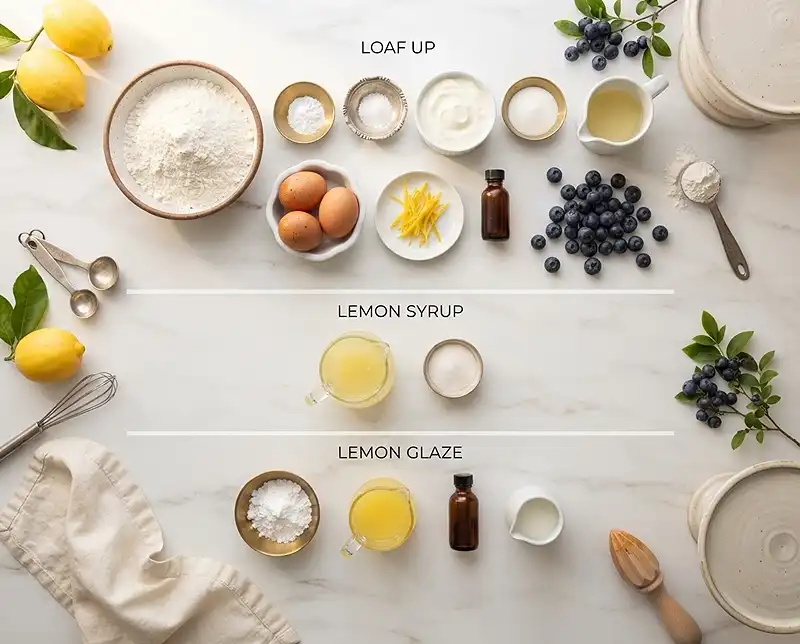
This recipe is straightforward, but a few ingredient notes will help you get the best results. Greek yogurt is the star here—its thick, creamy texture and tangy flavor make the loaf incredibly moist without adding extra fat. Don’t substitute regular yogurt unless you drain it first, or your batter will be too thin.
Fresh lemon zest and juice are non-negotiable. Bottled lemon juice just doesn’t have the same bright, aromatic quality. You’ll need about 3-4 medium lemons total for the zest, syrup, and glaze. When zesting, only get the yellow part—the white pith underneath is bitter.
For the blueberries, either fresh or frozen work beautifully. If using frozen, don’t thaw them or they’ll bleed too much color into your batter. The tablespoon of flour you toss them in creates a light coating that helps them stay put during baking.
| Ingredient | Quantity | Notes |
|---|---|---|
| All-purpose flour | 1½ cups + 1 tablespoon | Divided; most for batter, 1 tbsp for coating berries |
| Baking powder | 2 teaspoons | Make sure it’s fresh for proper rise |
| Salt | ½ teaspoon | Balances sweetness |
| Greek yogurt | 1 cup | Full-fat or 2% works best |
| Granulated sugar | 1 cup + 1 tablespoon | Divided; most for batter, 1 tbsp for syrup |
| Large eggs | 3 | Room temperature preferred |
| Lemon zest | 2 tablespoons | From about 2-3 lemons |
| Vanilla extract | 1 teaspoon + 1 teaspoon | Divided; for batter and glaze |
| Vegetable oil | ½ cup | Canola or light olive oil also work |
| Blueberries | 1½ cups | Fresh or frozen (don’t thaw) |
| Lemon juice | ⅓ cup + ¼ cup | Freshly squeezed; divided for syrup and glaze |
| Icing sugar (powdered sugar) | 1 cup | For the glaze |
| Milk | As needed | To thin glaze if necessary |
Step-by-Step Instructions for Making This Loaf
This comes together like most quick breads—wet ingredients meet dry ingredients, you fold in your add-ins, and into the oven it goes. The key is not to overmix once you combine everything, or you’ll develop too much gluten and end up with a tough loaf.

- Prep your pan and preheat: Set your oven to 350°F. Grease an 8.5×4.5×2.5 inch loaf pan generously with butter or cooking spray, then dust it with flour, tapping out any excess. This double coating prevents sticking and helps create a nice crust on the sides of your loaf.
- Mix the dry ingredients: In a large mixing bowl, whisk together the 1½ cups of flour, baking powder, and salt. Set this aside. Whisking helps distribute the leavening agent evenly so you don’t get pockets of baking powder in your finished loaf.
- Combine the wet ingredients: In another bowl, whisk together the Greek yogurt, 1 cup of sugar, eggs, lemon zest, vanilla extract, and vegetable oil. Really whisk it well until everything is smooth and the sugar starts to dissolve. The mixture should look creamy and slightly thick.
- Bring wet and dry together: Pour the wet ingredients into the bowl with the dry ingredients. Whisk just until you don’t see any more flour streaks. It’s okay if there are a few small lumps—overmixing at this stage is the enemy of a tender crumb.
- Coat the blueberries: In a small bowl, toss the blueberries with that 1 tablespoon of flour until they’re lightly coated. This helps prevent them from sinking to the bottom during baking. Gently fold the coated berries into your batter using a spatula, being careful not to crush them or overmix.
- Bake the loaf: Pour the batter into your prepared loaf pan and smooth the top gently. Bake for 50 minutes, then start checking for doneness. Insert a toothpick or cake tester into the center—it should come out clean or with just a few moist crumbs. Depending on your oven, this could take anywhere from 50 minutes to 1 hour and 10 minutes. Don’t panic if yours takes longer; ovens vary wildly.
- Make the lemon syrup: While your loaf bakes, combine the ⅓ cup of lemon juice and 1 tablespoon of sugar in a small saucepan over medium heat. Stir just until the sugar dissolves and the mixture turns clear, about 2-3 minutes. Don’t let it boil or reduce—you want to keep it thin so it can soak into the cake. Set aside to cool slightly.
- Prepare the lemon glaze: In a small bowl, whisk together the icing sugar, ¼ cup of lemon juice, and 1 teaspoon of vanilla extract. The glaze should be quite runny—thinner than you might expect. If it’s too thick, add milk one tablespoon at a time until it reaches a pourable consistency that will drip down the sides of your loaf.
- Soak with syrup: When your loaf is done baking, remove it from the oven and let it cool in the pan for about 10 minutes. Then carefully turn it out onto a wire cooling rack set over a baking sheet (this catches the drips). While the loaf is still warm, use a toothpick or skewer to poke holes all over the top and sides. Pour the lemon syrup slowly over the entire loaf, letting it soak in. You’ll see it absorb into those holes and create little pools of lemony goodness.
- Glaze and serve: Let the loaf cool completely—this is important because the glaze will just slide off if the cake is too warm. Once cooled, drizzle the lemon glaze over the top, letting it cascade down the sides. Let the glaze set for a few minutes, then slice and serve. Each piece should be beautifully moist with a sweet-tart glaze on top.

Expert Tips for Perfect Results
After making this Greek Yogurt Lemon Blueberry Loaf dozens of times, I’ve picked up a few tricks that make a real difference in the final result.
Room temperature ingredients mix better. If your eggs and yogurt are cold from the fridge, they won’t incorporate as smoothly into the batter. I usually pull them out about 30 minutes before I start baking. If you forget, you can quick-warm eggs by placing them in a bowl of warm water for 5 minutes.
Don’t skip the flour coating on the blueberries. I used to think this was one of those optional “baker superstition” steps, but it genuinely works. The flour creates a barrier that helps suspend the berries in the batter instead of letting gravity pull them down.
Check your loaf early and often after the 50-minute mark. Every oven has hot spots and quirks. Mine runs cool, so my loaves always take longer than the recipe says. Start testing with a toothpick at 50 minutes, then check every 5 minutes after that. You want it just barely done in the center—it will continue cooking slightly as it cools.
If the top is browning too quickly, tent it with foil. Sometimes the top of the loaf gets dark before the center is fully baked. Just loosely drape a piece of aluminum foil over the top for the last 15-20 minutes of baking.
Let the syrup soak in while the loaf is still warm. This is when the cake is most porous and will absorb the most flavor. If you wait until it’s completely cool, the syrup will just sit on top instead of soaking through.
Make the glaze thin enough to drip. It should be more like a thick liquid than a paste. If you can’t easily drizzle it from a spoon, add more milk. A properly thin glaze will create that bakery-style glossy coating with beautiful drips down the sides.
Variations to Try
This recipe is wonderfully adaptable once you’ve mastered the basic version. Here are some of my favorite ways to change it up.
Raspberry lemon loaf: Swap the blueberries for fresh or frozen raspberries. They’re a bit more delicate, so fold them in extra gently. The tartness of raspberries pairs beautifully with the lemon.
Lemon poppy seed version: Skip the blueberries and add 2 tablespoons of poppy seeds to the batter instead. You’ll get that classic bakery-style lemon poppy seed loaf with the added benefit of Greek yogurt’s tenderness.
Orange blueberry twist: Replace the lemon zest and juice with orange for a sweeter, less tart version. You’ll need about 3 tablespoons of orange zest since orange flavor is more subtle than lemon.
Mixed berry loaf: Use a combination of blueberries, raspberries, and blackberries for a more complex berry flavor. Keep the total amount at 1½ cups.
Reduced sugar version: You can cut the sugar in the batter down to ¾ cup if you prefer a less sweet loaf. Keep the sugar in the syrup and glaze the same, or the texture won’t be quite right.
Add almond extract: Replace half the vanilla with almond extract for a subtle nutty undertone that complements both the lemon and berries beautifully.
For more ways to use Greek yogurt in baking and cooking, check out these creamy yogurt noodles—completely different application, but just as delicious.
Troubleshooting Common Issues
Even straightforward recipes can have hiccups. Here’s how to fix the most common problems I’ve seen with this loaf.
The center is gummy or undercooked: This usually means it needed more time in the oven. The edges can look perfectly done while the center is still raw. Always check with a toothpick in the very center of the loaf. If this keeps happening, your oven might run cool—consider using an oven thermometer to verify the temperature.
The blueberries all sank to the bottom: You either didn’t coat them in flour, or your batter was too thin. Make sure you’re measuring flour correctly (spoon it into the measuring cup and level it off—don’t scoop directly with the cup or you’ll pack in too much). Also, frozen berries work better than thawed ones for staying suspended.
The loaf is dry: Overbaking is the usual culprit. Remove it from the oven as soon as that toothpick comes out clean or with just a few moist crumbs. Also make sure you’re not accidentally using low-fat Greek yogurt—full-fat or 2% gives much better moisture.
The top cracked dramatically: Some cracking is normal and actually looks quite rustic and appealing. But if it’s splitting wide open, your oven might be too hot. Try reducing the temperature to 325°F and baking a bit longer.
The glaze is too thick or too thin: Powdered sugar can vary in texture between brands. If your glaze is too thick, add milk one teaspoon at a time. If it’s too thin and sliding right off, whisk in more powdered sugar a tablespoon at a time until it thickens slightly.
The loaf stuck to the pan: Next time, make sure you both grease and flour the pan generously. Don’t skip the flouring step—it creates a barrier that prevents sticking. Also, let the loaf cool in the pan for 10 minutes before trying to remove it. Too soon and it falls apart; too long and it sticks.
Storage and Freezing Instructions
This Greek Yogurt Lemon Blueberry Loaf actually keeps really well, making it perfect for meal prep or making ahead for gatherings. The Greek yogurt helps maintain moisture even after a few days on the counter.
At room temperature, store the loaf in an airtight container or wrap it tightly in plastic wrap. It will stay fresh and moist for 3-4 days. Some people even say it tastes better on day two once all the flavors have had time to blend together. I tend to agree—the lemon syrup continues to work its way through the crumb, and everything just gets more cohesive.
If you know you won’t eat it within a few days, the freezer is your friend. This loaf freezes beautifully for up to 3 months. I recommend slicing it first, then wrapping individual slices in plastic wrap and placing them all in a freezer bag. That way you can pull out just what you need for breakfast or a snack.
According to the FDA’s food storage guidelines, baked goods with dairy should be consumed within a few days at room temperature or refrigerated for longer storage.
| Storage Method | Duration | Notes |
|---|---|---|
| Room temperature | 3-4 days | Store in airtight container or wrapped tightly |
| Refrigerated | Up to 1 week | Bring to room temp before serving for best texture |
| Frozen (whole loaf) | Up to 3 months | Wrap tightly in plastic wrap, then foil |
| Frozen (slices) | Up to 3 months | Wrap individually for easy single servings |
To thaw, leave frozen slices on the counter for about 30 minutes, or microwave for 15-20 seconds. A whole loaf will take 2-3 hours at room temperature or overnight in the refrigerator.
If you’re looking for more citrus desserts that store well, this angel food cake with lemon pie filling is another fantastic option.
Greek Yogurt Lemon Blueberry Loaf FAQs
Can I use frozen blueberries instead of fresh in Greek Yogurt Lemon Blueberry Loaf?
Yes, you can use frozen blueberries in this loaf. Do not thaw them before adding to the batter, as this prevents excess moisture and color bleeding. Toss the frozen blueberries in a tablespoon of flour before folding them into the batter to help prevent them from sinking to the bottom during baking.
What can I substitute for Greek yogurt in this recipe?
You can substitute Greek yogurt with sour cream, regular plain yogurt, or buttermilk in equal amounts. Sour cream will give the most similar texture and moisture. If using regular yogurt, the loaf may be slightly less dense. Each substitute will still create a moist, tender loaf with excellent flavor.
How should I store Greek Yogurt Lemon Blueberry Loaf and how long does it last?
Store the loaf at room temperature, wrapped tightly in plastic wrap or in an airtight container, for up to 3 days. For longer storage, refrigerate it for up to 1 week. You can also freeze the loaf, wrapped well in plastic wrap and aluminum foil, for up to 3 months. Thaw overnight in the refrigerator or at room temperature before serving.
Why is my Greek Yogurt Lemon Blueberry Loaf dense or heavy?
A dense loaf can result from overmixing the batter, which develops too much gluten. Mix only until the ingredients are just combined. Other causes include using too much flour, not enough leavening agent, or using yogurt that is too cold. Make sure to measure flour correctly by spooning it into the measuring cup and leveling it off, and bring ingredients to room temperature before mixing.
Can I make Greek Yogurt Lemon Blueberry Loaf into muffins instead?
Yes, this batter works perfectly for muffins. Fill muffin cups about two-thirds full and bake at the same temperature for 18-22 minutes, or until a toothpick inserted in the center comes out clean. The recipe typically yields 12-14 standard muffins. Check for doneness earlier than you would for the loaf, as muffins bake faster.
Enjoy Every Lemony, Berry-Filled Bite
This Greek Yogurt Lemon Blueberry Loaf has become one of those recipes I make on repeat, and I think once you try it, you’ll understand why. There’s something about that combination of tangy yogurt, bright lemon, and sweet bursts of blueberry that just works on every level.
Whether you’re making it for a weekend brunch, bringing it to a potluck, or just want something sweet with your afternoon coffee, this loaf delivers. It looks impressive with that glossy glaze dripping down the sides, but it’s genuinely easy enough for beginner bakers to tackle with confidence.
The best part? Your kitchen will smell absolutely amazing while it bakes. That combination of lemon zest and warm berries is better than any candle you could buy.
So grab those lemons, pull out your Greek yogurt, and give this recipe a try. I’d love to hear how it turns out for you—drop a comment below and let me know if you tried any of the variations or if you have your own twist to share. Happy baking!