Sourdough Lemon Blueberry Focaccia Bread You’ll Make Every Weekend
This sourdough lemon blueberry focaccia bread is everything your weekend baking dreams are made of — golden, pillowy, bursting with juicy berries, and finished with a dreamy lemon glaze. Whether you’re a seasoned sourdough baker or just getting comfy with your starter, this sweet focaccia is a total showstopper.
Okay, so I’ll be honest — the first time I made this, I stood at the counter eating it straight off the wire rack like it was a completely normal thing to do. No plates. No shame. Just me, a drizzle of lemon glaze, and zero regrets. This sourdough lemon blueberry focaccia bread is one of those recipes that makes your whole kitchen smell unbelievable, and the end result is even better than it sounds.
Table of Contents
Why You’ll Love This Recipe
This isn’t your average savory focaccia. This is the sweet, citrusy, berry-loaded version that sits somewhere between a dessert bread and a weekend brunch centerpiece. The sourdough base gives it incredible depth of flavor, the blueberries get all jammy and gorgeous in the oven, and that lemon glaze? Chef’s kiss.
If you’re already obsessed with lemon baked goods (hi, same), you might also want to check out these soft and chewy lemon cookies or these lemon raspberry cookies — they give the same bright, zingy vibes in cookie form.
Quick Overview
Think of this as your new favorite sweet sourdough project. The dough is high-hydration, which means it’s extra soft and airy. The lemon juice and zest go straight into the dough itself, so every single bite has that bright citrus flavor — not just the glaze. The blueberries bubble up and caramelize a little on top while the butter gives the crust that rich golden finish. It’s giving bakery-level results from your own kitchen, and I’m here for it.

Sourdough Lemon Blueberry Focaccia Bread
Equipment
- Large mixing bowl
- Danish dough whisk
- Bowl scraper
- 9×13 inch baking pan
- Parchment paper
- Wire rack
- Instant-read thermometer
- Small whisk
- Small bowl
Ingredients
Dough
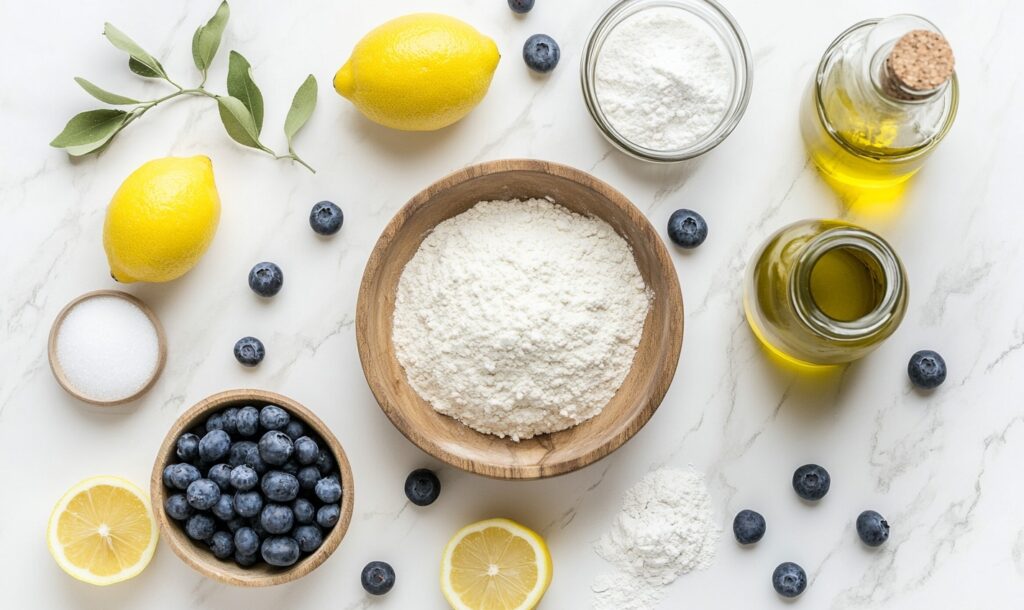
- 100 g Active sourdough starter ⅓ cup, fed and at peak
- 400 g Warm water 1⅔ cups
- 50 g Granulated sugar ¼ cup
- 10 g Salt
- 500 g Bread flour 4 cups
- 3 tbsp Lemon juice from about 1 large lemon
- 3 tsp Lemon zest from about 1 large lemon
Pan
- 30 g Olive oil 2 tbsp — for the pan only, do NOT add to the dough
Topping
- 1 cup Fresh blueberries
- 62 g Unsalted butter, melted ¼ cup
Lemon Glaze
- 2-3 tbsp Lemon juice freshly squeezed
- 130 g Powdered sugar 1 cup
Instructions
- Feed your starter. 4–6 hours before mixing the dough, feed your sourdough starter a 1:1:1 ratio — equal parts starter, flour, and water. Allow it to rise to its peak. Timing will vary based on kitchen temperature and starter strength.
- Mix the dough. Add the active sourdough starter, bread flour, warm water, salt, lemon juice, lemon zest, and sugar to a large bowl. Mix using a Danish dough whisk until fully combined. Cover and let rest at room temperature for 30 minutes to hydrate the flour.
- Stretch and fold — Set 1. Grab one side of the dough, lift it straight up, and fold it over itself into the center of the bowl. Rotate a quarter turn and repeat for a total of 12–15 stretches. Cover and rest 30 minutes.
- Stretch and fold — Sets 2 and 3. Repeat the stretch-and-fold process two more times, resting 30 minutes between each set. The dough will remain loose and sticky due to the high hydration and lemon juice — this is completely normal. Keep going with confidence!
- Bulk fermentation (first rise). After the final set of stretch and folds, cover the bowl and let the dough rest in a warm spot for 3–6 hours, until visibly puffy with bubbles throughout. If your kitchen is cool, place the bowl in the oven with just the light on.
- Cold ferment. Cover the bowl tightly and refrigerate overnight. This slow ferment develops deep flavor and makes the dough easier to work with the next morning.
- Prepare the pan and shape. Line a 9×13-inch baking pan with parchment paper and drizzle 30g olive oil evenly over it. Using a bowl scraper, turn the cold dough out into the pan. Rub a little olive oil on your fingers and gently stretch and pull the dough to fill the pan.
- Second rise. Cover the pan with a tea towel or plastic wrap and place in a warm spot for 4–5 hours. The dough should rise visibly with plenty of air bubbles showing beneath the surface. If your kitchen is cool, use the oven-with-light trick again — just remember to remove it before preheating.
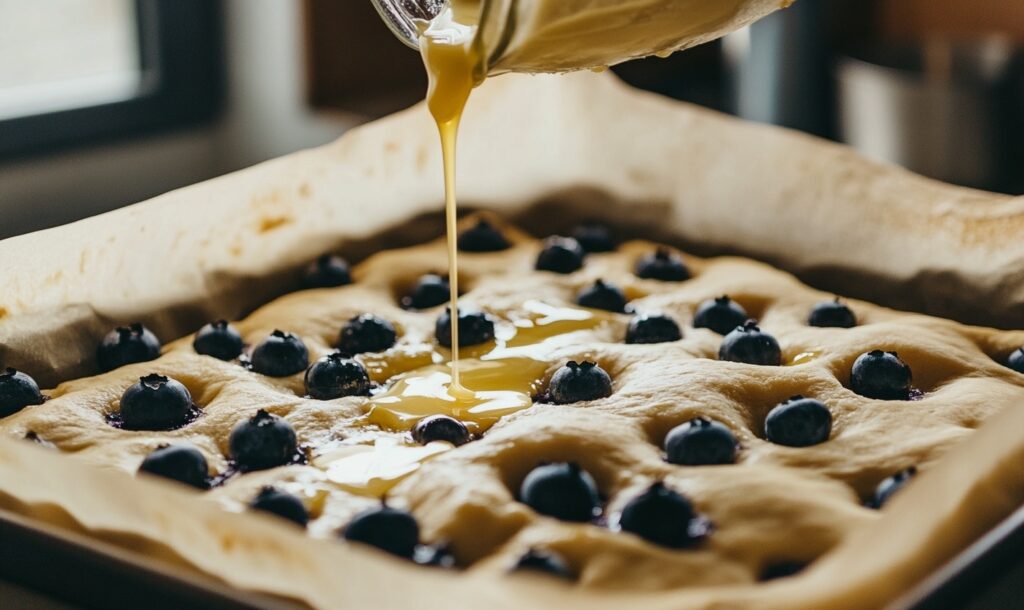
- Dimple and bake. Preheat oven to 400°F (200°C). Scatter the fresh blueberries over the top of the dough, then pour the melted butter evenly over everything. Press your fingertips firmly into the dough to create dimples across the entire surface. Bake for 30–40 minutes, until the top is light golden brown and the internal temperature reads 200°F.
- Make the lemon glaze. While the focaccia bakes, whisk together 2–3 tablespoons lemon juice and 130g powdered sugar in a small bowl until smooth and pourable. Add more lemon juice as needed to reach a drizzleable consistency.
- Cool and glaze. Remove the focaccia from the pan and discard the parchment paper. Transfer to a wire rack and allow to cool completely to room temperature before drizzling the lemon glaze over the top. Slice and serve!
Notes
Ingredients
| Component | Ingredient | Amount |
|---|---|---|
| Dough | Active sourdough starter | 100g (⅓ cup) |
| Warm water | 400g (1⅔ cups) | |
| Granulated sugar | 50g (¼ cup) | |
| Salt | 10g | |
| Bread flour | 500g (4 cups) | |
| Lemon juice (about 1 large lemon) | 3 tbsp | |
| Lemon zest (about 1 large lemon) | 3 tsp | |
| Pan | Olive oil (for the pan only — NOT the dough) | 30g (2 tbsp) |
| Topping | Fresh blueberries | 1 cup |
| Unsalted butter, melted | 62g (¼ cup) | |
| Lemon Glaze | Lemon juice | 2–3 tbsp |
| Powdered sugar | 130g (1 cup) |
Note: Make sure your sourdough starter is active and bubbly before you start — this is what makes the magic happen!
Step-by-Step Instructions
Step 1: Feed Your Starter
About 4–6 hours before you’re ready to mix the dough, give your sourdough starter a 1:1:1 feed — equal parts starter, flour, and water. Let it hang out at room temperature until it hits its peak (that bubbly, domed top moment). The timing totally depends on how warm your kitchen is, so keep an eye on it rather than just watching the clock.
Tip: If you’re new to sourdough, check out this guide on working with sourdough starter for a deeper dive into reading your starter’s peak.
Step 2: Mix the Dough
In a large bowl, combine 100g active sourdough starter, 500g bread flour, 400g warm water, 10g salt, 3 tbsp lemon juice, 3 tsp lemon zest, and 50g sugar. Use a Danish dough whisk (or just your hands — no judgment) to mix everything together until it’s fully combined. Cover the bowl and let it rest for 30 minutes so the flour can fully hydrate.
The dough is going to smell absolutely amazing right from the start. That lemon zest in there? Oh yeah.
Step 3: Stretch and Fold
After the 30-minute rest, it’s time to build some structure. Grab one side of the dough, lift it straight up, and fold it over itself into the center. Rotate the bowl a quarter turn and repeat — do this about 12–15 times. That’s one set. Cover and rest 30 minutes, then repeat for a total of 3 sets.
Fair warning: because of the lemon juice and the high hydration, this dough is going to feel loose and a little sticky. That’s completely normal! Don’t panic and don’t add more flour. Just keep going — confidence is the secret ingredient here. The blueberry lemon focaccia dough comes together beautifully with time.
Step 4: Bulk Fermentation (First Rise)
After your last set of stretches, cover the bowl and let the dough rest somewhere warm in your kitchen for about 3–6 hours. You’re looking for the dough to look puffy and airy, with visible bubbles throughout. It should have grown noticeably but doesn’t need to double in size like traditional yeasted bread.
Kitchen too cold? Try placing the bowl in the oven with just the light on — it creates the perfect cozy little proofing environment.
Step 5: Cold Ferment (Overnight)
Once bulk fermentation is done, cover the bowl tightly and slide it into the fridge overnight. This slow cold ferment is where so much flavor develops. It’s also what makes this a perfect make-ahead recipe — you do the work one day and bake the next morning like a total legend.
This overnight approach is actually something I love about sourdough baking in general. You can see the same slow-and-low magic in recipes like this overnight croissant breakfast casserole — totally worth the wait.
Step 6: Shape and Second Rise
The next morning, line your baking pan with parchment paper and drizzle 30g of olive oil evenly over it. Using a bowl scraper, turn the cold dough out into the pan. Rub a little olive oil on your fingers (this keeps it from sticking) and gently stretch and pull the dough to fill the pan.
Cover the pan with a tea towel or plastic wrap and let it proof in a warm spot for 4–5 hours. By the end, you should see lots of air bubbles bubbling up under the surface — that’s exactly what you want. That’s your sourdough doing its thing and getting ready to be the best thing you’ve ever baked.
Step 7: Dimple and Bake
Preheat your oven to 400°F. Scatter the fresh blueberries generously over the top of the dough, then pour the melted butter all over everything. Now comes the most satisfying part — press your fingertips firmly into the dough to create those iconic focaccia dimples across the entire surface.
Bake for 30–40 minutes until the top is a beautiful light golden brown and the internal temperature reads 200°F. Your kitchen is going to smell absolutely incredible. Fair warning: it’s hard to wait.
Step 8: Make the Lemon Glaze
While the focaccia is baking, whisk together 2–3 tablespoons of fresh lemon juice and 130g powdered sugar until smooth and pourable. Add a little more lemon juice if you need to loosen it up — you want it to be drizzleable, not a thick paste.
Once the focaccia is out of the oven, transfer it to a wire rack and let it cool completely before drizzling on the glaze. I know. Waiting is brutal. But if you glaze it hot, it all just melts off and disappears into the bread instead of sitting beautifully on top.

Expert Tips, Variations & Troubleshooting
Tips for the Best Sourdough Lemon Blueberry Focaccia
Use an active, healthy starter. This is the one thing that makes or breaks sourdough baking. If your starter isn’t rising reliably, your focaccia won’t have the lift and flavor you’re looking for. Feed it and give it time.
Don’t skip the cold ferment. It’s tempting to rush, but that overnight fridge rest adds so much flavor to the final bread. It’s where the real sourdough character comes from.
Check internal temp. Instead of guessing by color alone, use an instant-read thermometer. 200°F is your target — that’s when you know the inside is fully cooked through.
Fun Variations to Try
Swap the fruit. Raspberries or sliced strawberries work beautifully in place of blueberries for different sweet focaccia flavors. You can even do a mix!
Add a cream cheese drizzle. Whip together some softened cream cheese, powdered sugar, and a splash of lemon juice for a thicker, creamier topping that leans even more into dessert territory.
Make it extra lemony. If you’re a true lemon fanatic (no shame), add an extra teaspoon of lemon zest to the glaze. The bright citrus pop really complements the sweet blueberries.
Love adventurous baking flavors? These espresso chocolate chip cookies and swirled brownie cookies are a great way to keep the baking momentum going.
Troubleshooting
Dough won’t come together? Give it time. This is a high-hydration dough with added lemon juice, so it naturally feels looser than a typical bread dough. The stretch-and-fold process builds the structure gradually.
Focaccia didn’t rise well? Your kitchen might be too cold, or your starter might not have been at its peak when you mixed. Make sure both conditions are met before you start — it makes all the difference.
Glaze too thick? Add lemon juice a tiny bit at a time and whisk until it flows smoothly. Too thin? Add a little more powdered sugar.
Storage Instructions
| Storage Method | Duration | Notes |
|---|---|---|
| Room temperature (airtight container) | 1–2 days | Best eaten the same day it’s baked |
| Refrigerator (airtight container) | Up to 3 days | May lose some softness |
| Freezer (wrapped tightly) | Up to 1 month | Freeze before glazing; glaze after reheating |
Reheating Tips
To bring slices back to life, pop them in a 300°F oven for about 5–8 minutes. This revives the crust and warms everything through without drying it out. You can also microwave for 15–20 seconds in a pinch, though the texture won’t be quite as good.
No-Waste Kitchen Ideas
Got a couple of leftover slices? Cube them up and use them as the base of a sweet bread pudding — the lemon flavor carries over beautifully. You can also toast slices lightly and serve with a dollop of whipped cream or yogurt for a super easy dessert.
Nutritional Information
Values are approximate and based on 12 servings.
| Nutrient | Per Serving |
|---|---|
| Calories | ~270 kcal |
| Carbohydrates | ~48g |
| Protein | ~6g |
| Fat | ~7g |
| Sugar | ~14g |
| Fiber | ~1.5g |
| Sodium | ~200mg |
Sourdough Lemon Blueberry Focaccia Bread FAQs
Can I use discard instead of active starter?
For this recipe, you really do want an active, fed starter at its peak. Discard won’t have enough leavening power to give the focaccia that beautiful open, airy crumb. Save your discard for cinnamon roll cookies or pancakes!
Can I use frozen blueberries?
Fresh blueberries are strongly recommended here. Frozen ones release a lot of liquid as they bake and can make the top of the focaccia a bit soggy and wet. If fresh isn’t available, let frozen ones thaw and pat them dry very well before using.
What size pan should I use?
A 9×13-inch baking pan works perfectly for this recipe. You want the dough to be able to spread out into a relatively thin layer so it bakes evenly and gets those gorgeous crispy edges.
Can I make this without a sourdough starter?
This recipe is specifically designed as a sourdough focaccia, so a starter is essential for the flavor and texture. That said, if you’re curious about other fun bakes, check out these fried croissant beignets — no starter required and absolutely delicious.
Why does my dough feel so sticky and loose?
That’s completely intentional! This is a very high-hydration dough, and the addition of lemon juice makes it even more so. It won’t behave like a typical bread dough, and that’s perfectly fine. Trust the process, do your stretch-and-folds, and it’ll come together beautifully.
Try It and Tell Me Everything!
If you make this sourdough lemon blueberry focaccia bread, I seriously want to hear about it! Did you eat the first piece standing at the counter? Same. Drop a comment below with how it turned out, and if you loved it, please share it on Pinterest — it really helps others find the recipe and discover their new favorite weekend bake. Happy baking!